

Minefields in the war in Iraq
Advertisement
Read this article for free:
or
Already have an account? Log in here »
To continue reading, please subscribe:

Digital Subscription
One year of digital access for only $205*
- Enjoy unlimited reading on winnipegfreepress.com
- Read the E-Edition, our digital replica newspaper
- Access News Break, our award-winning app
- Play interactive puzzles
*First annual payment billed as $205.00 + GST for one year. This annual subscription will automatically renew at $233.00 + GST every 52 weeks (10% off the regular annual price of $259.35). Offer available to new and qualified returning subscribers only. Cancel any time.
To continue reading, please subscribe:
Add Free Press access to your Brandon Sun subscription for only an additional
$1 for the first 4 weeks*
- Enjoy unlimited reading on winnipegfreepress.com
- Read the E-Edition, our digital replica newspaper
- Access News Break, our award-winning app
- Play interactive puzzles
*Your next Brandon Sun subscription payment will increase by $1.00 and you will be charged $17.95 plus GST for four weeks. After four weeks, your payment will increase to $24.95 plus GST every four weeks.
Read unlimited articles for free today:
or
Already have an account? Log in here »
Hey there, time traveller!
This article was published 05/01/2015 (4274 days ago), so information in it may no longer be current.
The future of the war against the Islamic State in Iraq and Syria will be one of the first foreign-policy issues facing Parliament when it returns at the end of the month.
Barring any unforeseen catastrophe, the Harper government will almost certainly recommend renewing Canada’s modest six-month commitment, which expires in April. The military is already preparing to rotate troops in and out of the theatre.
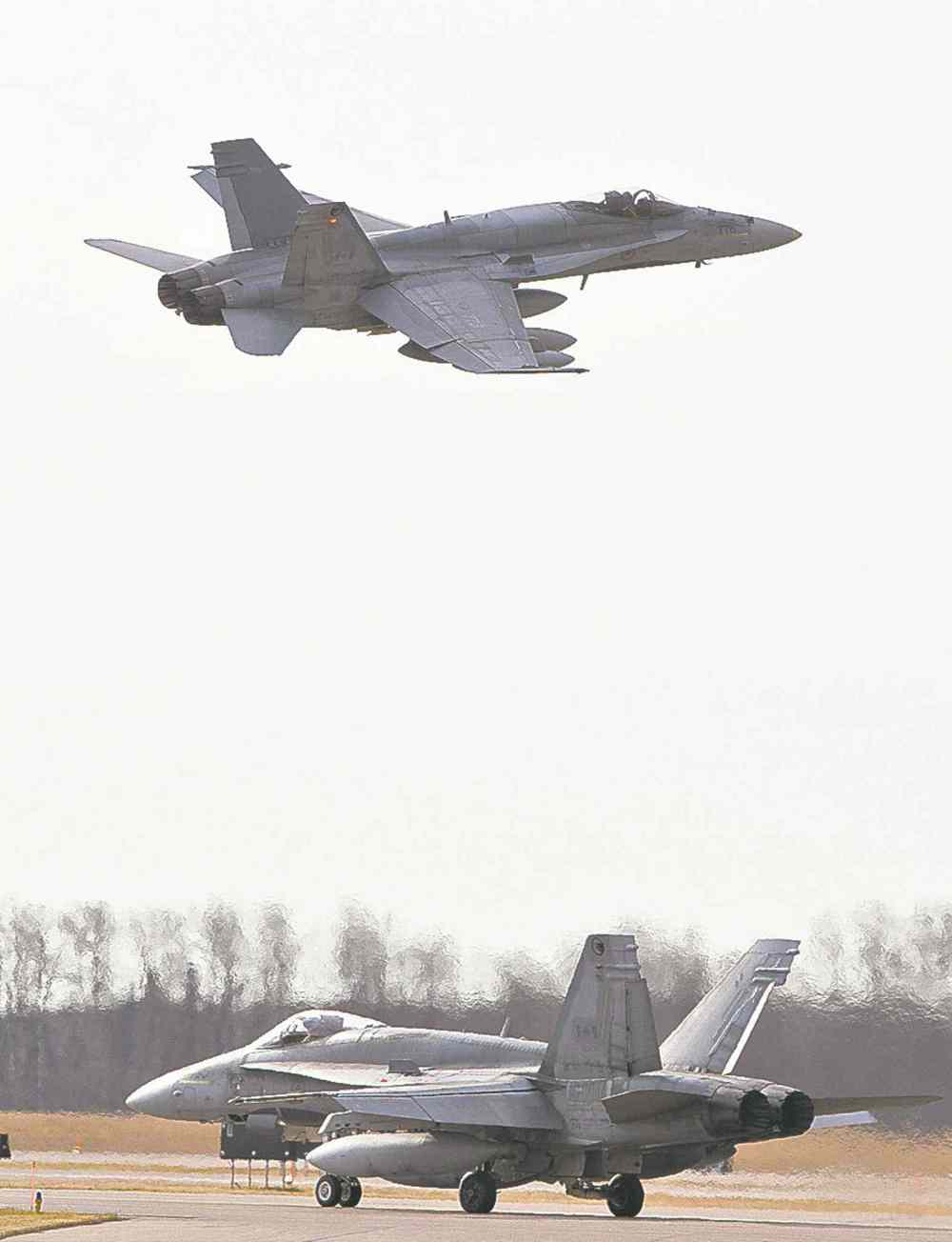
About 600 military personnel and nine aircraft are currently deployed in the Mideast conflict, including six CF-18s, two Aurora search planes, a refuelling jet and a small group of trainers.
The decision will be an easy and obvious one for Prime Minister Stephen Harper, while NDP Leader Thomas Mulcair can be expected to toe the usual line that Canada should be doing more on the humanitarian front, which he believes is the only effective way to deliver meaningful assistance to the region.
For Liberal Leader Justin Trudeau, however, the issue could be a minefield and another test of his abilities.
When the question of deploying troops against the Islamic State first came up last fall, Mr. Trudeau stumbled badly. He not only opposed it outright, he talked in vague terms about understanding “the root causes” of terrorism.
It was an immature political performance that played perfectly into Mr. Harper’s portrayal of Mr. Trudeau as a leader-in-training. With a general election expected in the fall, however, Mr. Trudeau cannot afford too many more missteps, particularly since the Tory campaign is likely to turn on the question of whom Canadians trust to manage the country on critical issues far and near.
The murder of two soldiers last fall — one in Quebec and the other in Ottawa — has also boosted support for the military due to concerns that the Islamic State, a genocidal group that kills indiscriminately and enslaves women in the territories it controls in Iraq and Syria, may be making inroads on domestic soil.
When Canada joined the war against the Islamic State, the limited goals of the U.S.-led coalition were met with derision among those who wanted a more decisive campaign and from others who believed it would be another indiscriminate bombing campaign.
Three months later, however, the coalition has succeeded in stalling and even reversing the Islamic State’s advance into Iraq and against the Kurds on the Turkish border. Many of its leaders have reportedly been killed, while the oil wells that provided much of its revenue have been taken out of action.

Iraqis have elected a new prime minister who claims to understand the importance of national reconciliation between Sunnis and Shia — in theory, so did his predecessor — and the army is rebuilding its capacity to take over the defence of the country.
The allied view has always been that Iraq must take the lead in repelling the Islamic State. If that doesn’t happen in a reasonable period of time, however, it will be hard for countries such as Canada to justify continuing military operations.
The bombing campaign has so far been fairly rigorous in its effort to avoid civilian casualties and seek authentic military targets. As such, our small squadron of CF-18s has flown many sorties without firing a shot or dropping a single bomb. (The Royal Canadian Air Force usually travels with its lawyers in tow.)
One misplaced bomb or other outrage, however, could undermine support for the campaign. Canadian have tended to be fickle in their support if they sense a war is not achieving results, or at least not results that are worth the cost in blood and treasure.
Adding up the pros and cons, however, there is a good case to be made for Canada to continue supporting its allies in the region. Even Mr. Trudeau should see that.