

Terrifying doc dissects the disastrous Woodstock ’99

Advertisement
Read this article for free:
or
Already have an account? Log in here »
To continue reading, please subscribe:
Digital Subscription
One year of digital access for only $1.44 a week*
- Enjoy unlimited reading on winnipegfreepress.com
- Read the E-Edition, our digital replica newspaper
- Access News Break, our award-winning app
- Play interactive puzzles
*Billed as $5.77 plus GST every four weeks. After 52 weeks, price increases to the regular rate of $19.95 plus GST every four weeks. Offer available to new and qualified returning subscribers only. Cancel any time.
To continue reading, please subscribe:
Add Free Press access to your Brandon Sun subscription for only an additional
$1 for the first 4 weeks*
- Enjoy unlimited reading on winnipegfreepress.com
- Read the E-Edition, our digital replica newspaper
- Access News Break, our award-winning app
- Play interactive puzzles
*Your next Brandon Sun subscription payment will increase by $1.00 and you will be charged $17.95 plus GST for four weeks. After four weeks, your payment will increase to $24.95 plus GST every four weeks.
Read unlimited articles for free today:
or
Already have an account? Log in here »
Hey there, time traveller!
This article was published 27/07/2021 (1769 days ago), so information in it may no longer be current.
Dave Konig is an American EMT who has been a first responder at devastating natural disasters, including Hurricane Katrina.
But if you ask him about the worst disaster he’s ever worked, he’ll tell you it’s Woodstock ’99.
Riots, looting, fires, sexual violence, three deaths — these ended up being the hallmarks of a three-day music festival that was supposed to capture the peace, love and music of the original 1969 Woodstock. The infamous festival, held over the weekend of July 23 to 25, 1999 at the former Griffiss Air Force Base in Rome, N.Y, is now the subject of a terrifying new HBO documentary, Woodstock 99: Peace, Love, and Rage, now streaming on Crave. It’s the first instalment in Ringer Films’ Music Box series of music docs.
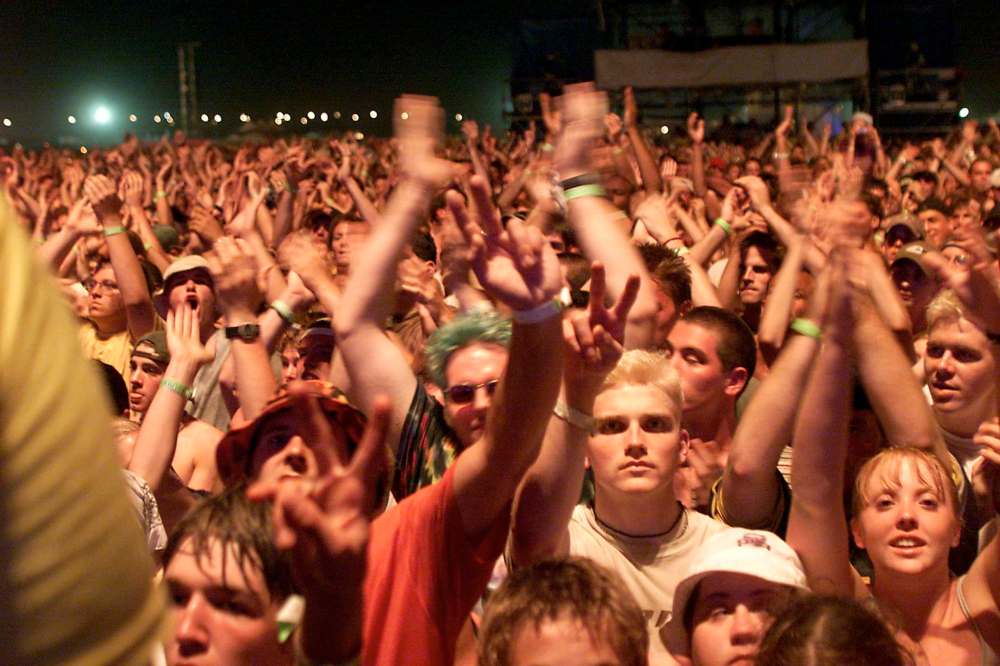
Konig’s insights are just some of many in this 110-minute documentary that explores the failures of Woodstock ’99 as an event (oh boy, mistakes were made) and places it into a wider cultural context. That’s what’s fascinating about Woodstock ’99: it was a cultural powder keg, the nadir of a period in both American and popular culture defined by white male rage and toxic masculinity.
In many ways, Woodstock ’99 was built on a false promise, that it could capture the idealism of Woodstock ’69 — or even Woodstock ’94 just five years prior. Unlike the early ’90s, which saw Kurt Cobain subvert gender norms by wearing dresses, the rise of Riot grrrl, and bands such as Pearl Jam and Beastie Boys engaging in political activism, the late ’90s saw the Monica Lewinsky scandal, the Columbine High School massacre, and the explosive popularity of an aggressive genre called nu metal. The culture had shifted.
Many of that era’s most aggressive nu metal acts — Kid Rock, Limp Bizkit, Korn — were headliners at Woodstock ’99, as were other acts beloved by white males aged 18 to 24, the demographic to whom this festival was clearly geared based on the sea of sunburned bodies churning in the pit: Metallica, Red Hot Chili Peppers, Rage Against the Machine. (The headlining lineup had three women: Sheryl Crow, Alanis Morissette and Jewel. One for each day of the festival.)
Logistically, the festival was a doomed mess. Hosting 350,000 people on mostly concrete tarmacs in 100 degree weather; $4 water and unusable refill sites; overflowing and unusable porta potties that turned into a slip ‘n’ slide of human waste — yeah, that’s not mud you’re rolling around in, kids — poorly trained security, truly, take your pick. By Saturday night, when Limp Bizkit took the stage for its infamous set — during which a rape reportedly happened in the mosh pit while people were crowd surfing on plywood — the festival had started its descent into chaos. The footage from the Sunday night fires, set, in grim irony, by candles intended for a vigil against gun violence, is end-times stuff. People look dazed and feral. (The three-day event was available on Pay-Per-View and was covered extensively by both MuchMusic and MTV as well as other media, so the filmmakers had a trove of footage to work with.)
The unofficial tagline for Woodstock ‘99 was “show us your t*ts.” Sexual assault was likely far more rampant than what was reported. Those who watch the doc will see multiple women being groped on screen. Maureen Callahan, a journalist who co-wrote an award-winning piece on Woodstock ‘99 for Spin, recalls the stories of sexual violence victims shared with her that still haunt her. (For his part, festival co-founder John Scher still blames MTV for making the festival seem worse than it was, and victim-blamed women for taking their tops off.)
I was a 14-year-old girl in 1999, so I know what it was like coming of age in that particular cultural nexus of Girls Gone Wild, the rise of nu metal, and a hatred of pop music that was rooted in misogyny. The Columbine massacre happened that April; Woodstock ‘99 happened that summer. It was a violent, angry time. Music was my whole identity at that age and I remember, vividly, watching Woodstock ‘99 on TV that summer; I remember feeling like this culture was not for me — and, in fact, actively hated me because I was a girl.

As with Columbine, the debate became whether or not a certain kind of music makes kids angry enough to do unspeakable things. Plenty of blame for Woodstock ‘99 was laid at the feet of Limp Bizkit frontman Fred Durst — who, to be fair, does deserve his share of criticism — but as Callahan points out, “To blame the artists, I think it’s too easy. We never ask the deeper, existential question: Why are so many young men in America, why are they so angry?”
That question is asked but not really answered in Woodstock ‘99: Peace, Love, and Rage. The suggestion that kids were rallying against corporate greed in Sunday night’s riots is a bit hard to fully buy into — it’s just as likely many of them simply wanted to break stuff and then watch it all burn.
And some people were there for the music and ended up paying the ultimate price — like 24-year-old David DeRosia, who died of hyperthermia. The inclusion of his daily festival logs in the doc is heartbreaking. He just wanted to see his favourite band, Metallica.
jen.zoratti@freepress.mb.ca
Twitter: @JenZoratti
Jen Zoratti is a columnist and feature writer working in the Arts & Life department, as well as the author of the weekly newsletter NEXT. A National Newspaper Award finalist for arts and entertainment writing, Jen is a graduate of the Creative Communications program at RRC Polytech and was a music writer before joining the Free Press in 2013. Read more about Jen.
Every piece of reporting Jen produces is reviewed by an editing team before it is posted online or published in print – part of the Free Press‘s tradition, since 1872, of producing reliable independent journalism. Read more about Free Press’s history and mandate, and learn how our newsroom operates.
Our newsroom depends on a growing audience of readers to power our journalism. If you are not a paid reader, please consider becoming a subscriber.
Our newsroom depends on its audience of readers to power our journalism. Thank you for your support.
Jen Zoratti is a columnist and feature writer working in the Arts & Life department, as well as the author of the weekly newsletter NEXT. A National Newspaper Award finalist for arts and entertainment writing, Jen is a graduate of the Creative Communications program at RRC Polytech and was a music writer before joining the Free Press in 2013. Read more about Jen.
Every piece of reporting Jen produces is reviewed by an editing team before it is posted online or published in print – part of the Free Press‘s tradition, since 1872, of producing reliable independent journalism. Read more about Free Press’s history and mandate, and learn how our newsroom operates.
Our newsroom depends on a growing audience of readers to power our journalism. If you are not a paid reader, please consider becoming a subscriber.
Our newsroom depends on its audience of readers to power our journalism. Thank you for your support.
Advertisement Advertise With Us
Advertisement Advertise With Us