

Second Marriage feels intimate but largely unnecessary

Advertisement
Read this article for free:
or
Already have an account? Log in here »
To continue reading, please subscribe:
Monthly Digital Subscription
$1 per week for 24 weeks*
- Enjoy unlimited reading on winnipegfreepress.com
- Read the E-Edition, our digital replica newspaper
- Access News Break, our award-winning app
- Play interactive puzzles
*Billed as $4.00 plus GST every four weeks. After 24 weeks, price increases to the regular rate of $19.95 plus GST every four weeks. Offer available to new and qualified returning subscribers only. Cancel any time.
Monthly Digital Subscription
$4.99/week*
- Enjoy unlimited reading on winnipegfreepress.com
- Read the E-Edition, our digital replica newspaper
- Access News Break, our award-winning app
- Play interactive puzzles
*Billed as $19.95 plus GST every four weeks. Cancel any time.
To continue reading, please subscribe:
Add Free Press access to your Brandon Sun subscription for only an additional
$1 for the first 4 weeks*
*Your next subscription payment will increase by $1.00 and you will be charged $16.99 plus GST for four weeks. After four weeks, your payment will increase to $23.99 plus GST every four weeks.
Read unlimited articles for free today:
or
Already have an account? Log in here »
Hey there, time traveller!
This article was published 18/09/2021 (1665 days ago), so information in it may no longer be current.
We like to talk about living in the golden age of television. It’s worth remembering there was prestige TV before there was “Prestige TV.” Way back in 1973, Ingmar Bergman, a towering figure of European arthouse cinema, created a six-episode series for Swedish television. In Scenes From a Marriage, he brought a devastating mix of bourgeois angst, existential dread and Volvo station wagons to the small screen, in a pain-filled portrait of marital breakdown.
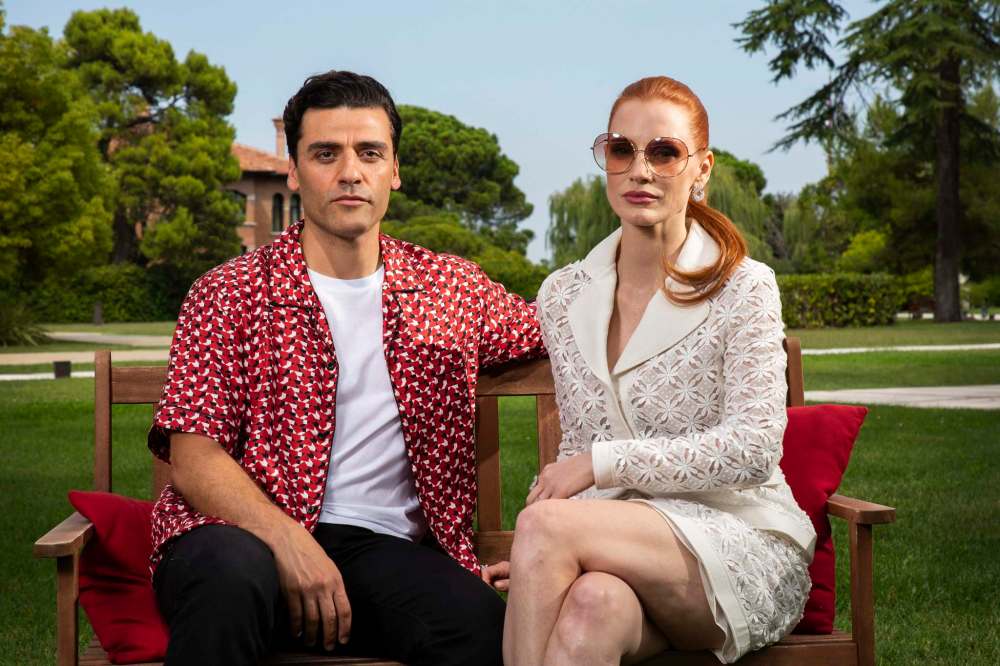
As HBO releases a contemporary reimagining of Scenes From a Marriage, starring Jessica Chastain and Oscar Isaac (with new episodes airing on Sundays), I wanted to see if the original series was as harrowing as I recalled.
Yes, it is. And then some. (Bergman’s six-episode work is currently available on the Criterion Channel, and he also created a condensed feature film version, which was released in 1974.)
I didn’t see Scenes until the 1990s — with a VHS box set from the library, I think — but even then it seemed startlingly modern and grown-up, quite unlike anything I’d seen on television.
In a series of long, close, uninterrupted scenes, with each sequence moving abruptly to the next, sometimes skipping months or years, we watch the slow breakdown of a marriage. What makes it especially excruciating is that the husband and wife still love each other. (And also hate each other.) Watching Scenes is uncomfortable, exhausting, almost unbearable at times. It’s also riveting.
Liv Ullmann is Marianne, a lawyer specializing in divorce (convenient!), and Erland Josephson is Johan, a psychology professor specializing in the unreliability of perception (also convenient!). Both leads do extraordinary work. Ullman’s open, vulnerable face shows every emotional bruise, while Josephson, though initially more evasive and brittle, also conveys deep recesses of suffering.
Bergman uses the smaller scale and longer duration of the TV miniseries to get intimate, almost too intimate. Most of Scenes involves Johan and Marianne in a room, talking. Wounded and wounding, their exchanges are packed with weeping and shouting, regret and recrimination, terrible cruelty and even more terrible tenderness.
The mobility of their emotions is just astonishing. Marianne and Johan never harden into fixed characters, because the marriage itself is a living thing, something between them that constantly knocks them out of their equilibrium and into messy, human confusion.
“We love each other in an earthly and imperfect way,” Johan concludes, which is about as close as you can get to a happy ending with Bergman.
You might not want to watch Scenes From a Marriage if you’re unhappily married. (Or it might help clarify things. This could be a cineaste urban myth, but there was reportedly a big spike in the Swedish divorce rate after the series aired.) It’s almost as risky if you consider yourself happily married, since the first episode seems, at first, like an elaborate showing of marital bliss. Johan and Marianne talk up their two sweet children, their fulfilling work, their good relations with friends and family, their lovely home and beautiful cottage, which makes it even more devastating when we see how easily the shored-up comforts and rituals of middle-class family life can unravel.
Bergman also uses marriage to get at his characteristic philosophical and moral preoccupations: the inevitability of human isolation, the malaise of modern life, the encroachments of age and death and irrelevance. These big questions unfold alongside a realistic, even scruffy sense of everyday domestic life, with Marianne and Johan staring into the abyss while also chatting about dry-cleaning receipts, dentist appointment and dirty dishes.
The original series cast a long, tortuous shadow. It has influenced Woody Allen’s Husbands and Wives, Richard Linklater’s Before Midnight, Noah Baumbach’s semi-autobiographical takes on his parents’ divorce (The Squid and the Whale) and then his own (Marriage Story), as well as Master of None’s third season, Moments in Love.
And of course, there’s my personal fave, the classic SCTV sketch starring Martin Short as Jerry Lewis in Scenes From an Idiot’s Marriage.
And now, Hagai Levi (the creator of the Israeli and American versions of In Treatment) is taking on this heavy legacy with a straight-up remake
The new series lifts lines and gestures from Bergman’s original, sometimes beat for beat. The introductory scene even features a callback to the distinctive moss green sofa from 1973. Like Ullman and Josephson, Chastain and Isaac — as Mira and Jonathan — offer an acting masterclass, and being old friends in real life, they pull off a lived-in sense of familiarity and intimacy. (A video of them nuzzling each other on the red carpet has gone viral.)
https://www.youtube.com/watch?v=mRuVWHnQlV8

There are updates, of course. Set in modern-day Boston, the new series features iPhones and home pregnancy tests. The couple who drop in for the Who’s Afraid of Virginia Woolf dinner party are now consciously polyamorous, compared with the pair from the original, who were perhaps just, you know, sleeping around.
The new series takes a more head-on look at feminism, which was still called “Women’s Lib,” at least in the English translation, in the original series. There is a gender flip — in some ways but not all ways — with Jonathan, an academic, as the primary caregiver for their daughter, while Mira, a tech exec, is the primary breadwinner.
There is even a reference to the pandemic, as Levi makes the peculiar decision to start the episodes with a kind of COVID-19 framing device, showing the actors moving through the set, surrounded by masked-up crew members, as they prepare to work.
The 2021 series feels new, then, but maybe not necessary, especially when the emotional truths of the original hold up so powerfully.
alison.gillmor@freepress.mb.ca
Studying at the University of Winnipeg and later Toronto’s York University, Alison Gillmor planned to become an art historian. She ended up catching the journalism bug when she started as visual arts reviewer at the Winnipeg Free Press in 1992.
Our newsroom depends on a growing audience of readers to power our journalism. If you are not a paid reader, please consider becoming a subscriber.
Our newsroom depends on its audience of readers to power our journalism. Thank you for your support.
Studying at the University of Winnipeg and later Toronto’s York University, Alison Gillmor planned to become an art historian. She ended up catching the journalism bug when she started as visual arts reviewer at the Winnipeg Free Press in 1992.
Our newsroom depends on a growing audience of readers to power our journalism. If you are not a paid reader, please consider becoming a subscriber.
Our newsroom depends on its audience of readers to power our journalism. Thank you for your support.
Advertisement Advertise With Us
Advertisement Advertise With Us
History
Updated on Saturday, September 18, 2021 9:57 AM CDT: Amends opening paragraph, removes broken link, corrects formatting.