Searing one-person drama antidote to playwright’s rage

Advertisement
Read this article for free:
or
Already have an account? Log in here »
To continue reading, please subscribe:

Digital Subscription
One year of digital access for only $205*
- Enjoy unlimited reading on winnipegfreepress.com
- Read the E-Edition, our digital replica newspaper
- Access News Break, our award-winning app
- Play interactive puzzles
*First annual payment billed as $205.00 + GST for one year. This annual subscription will automatically renew at $233.00 + GST every 52 weeks (10% off the regular annual price of $259.35). Offer available to new and qualified returning subscribers only. Cancel any time.
To continue reading, please subscribe:
Add Free Press access to your Brandon Sun subscription for only an additional
$1 for the first 4 weeks*
- Enjoy unlimited reading on winnipegfreepress.com
- Read the E-Edition, our digital replica newspaper
- Access News Break, our award-winning app
- Play interactive puzzles
*Your next Brandon Sun subscription payment will increase by $1.00 and you will be charged $17.95 plus GST for four weeks. After four weeks, your payment will increase to $24.95 plus GST every four weeks.
Read unlimited articles for free today:
or
Already have an account? Log in here »
Hey there, time traveller!
This article was published 19/04/2022 (1616 days ago), so information in it may no longer be current.
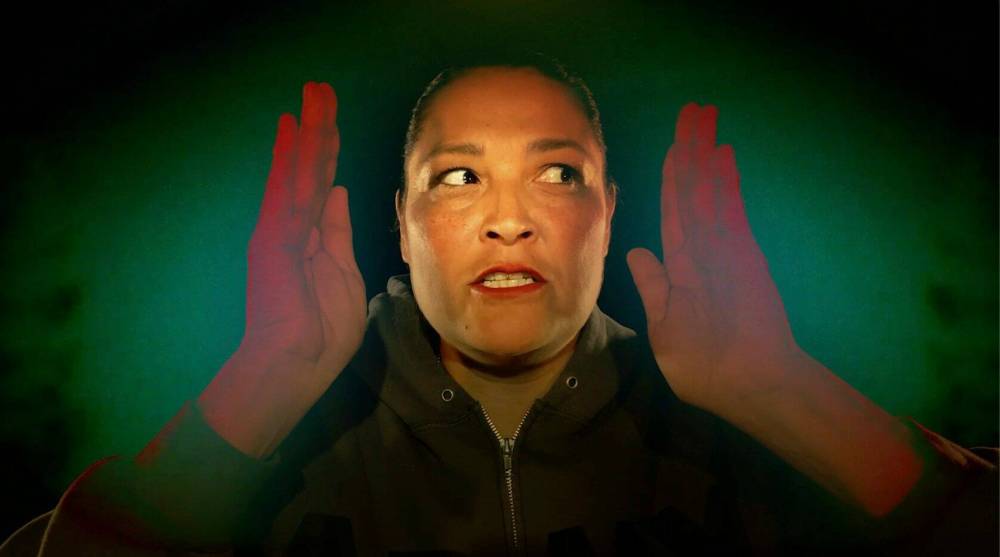
Notwithstanding its at-home viewing availability, Tara Beagan’s Deer Woman is a play far removed from the usual night out at the theatre. The digital production, shot by Calgary’s Downstage Theatre (the first Canadian theatre to showcase it) has the impact of a depth charge.
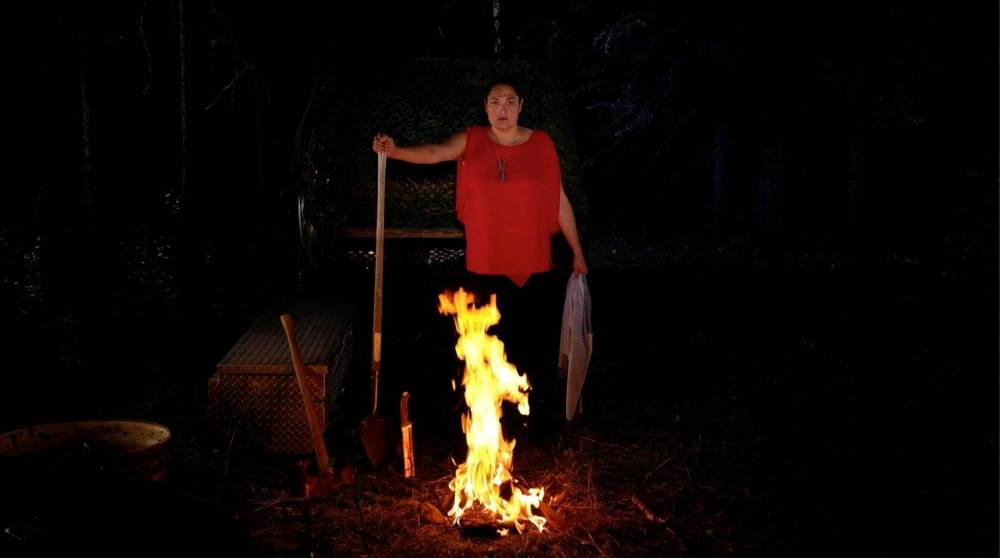
The play begins out in the bush, where Lila (Cherish Violet Blood) is seen unpacking a beat-up pickup truck with a grim resolve.
Over the next hour or so, Lila will unpack much more, recording details of a troubled life on her cellphone, encompassing early abuse, an alcoholic mother, a hunter father and a younger sister brutally taken from her in an endless cycle of murdered and missing Indigenous women. The show’s final minutes includes material that wouldn’t be out of place in a horror movie.
In a phone interview from her home in Calgary, Beagan, 46, a Ntlakapamux and Irish Canadian theatre artist, acknowledges the play emerged from a place of rage.
“It really comes from a feeling of powerlessness over the brutality (endured by) way too many Indigenous women, girls and two spirit people,” Beagan says. “What little I could do was articulate this fantasy that a lot of us have had in the face of this powerlessness… which is being able to hunt down every last perpetrator and make sure that they suffer.
“It’s not a healthy impulse,” she acknowledges. “But channelling it into theatre is one way to deal with it.”
In a way, Beagan is also taking ownership of this specific kind of revenge story in the face of white appropriation. The 2017 movie Wind River, for example, is one of the rare American films to even touch on the issue of MMIGW, but the business of avenging murders in the context of the film is taken up by a white hunter (Jeremy Renner) and a white FBI agent (Elizabeth Olsen).
“I had a friend mention (the movie) to me, but they said: ‘Oh, by the way, it is made by white people,’” she says. “I was like: Ah, I’ll skip it. I’ve seen a lot of white saviour shows.”
That feeling was another of the motivating forces behind the creation of Deer Woman.
“There have been a lot of non-Indigenous people writing these stories and essentially profiting off of the pain that is very, very real for our community,” Beagan says. “I find that not only crass but so frustrating, to have our lives stolen and then to have the stories of our lives stolen and appropriated.
“It’s just one of those things that enrages me,” she says. “And you can’t really complain about a thing unless you try to write some kind of an antidote.”
In the course of the play, Beagan takes a shot at fellow playwright Colleen Murphy and her Governor General Award-winning 2015 drama Pig Girl, a show based on the crimes of serial killer Robert Pickton, dramatizing a brutal encounter with an Indigenous victim. In the course of Beagan’s play, Lila recalls sitting through the first act of that show and leaving, labelling it “torture porn.”
“I’ve only read it,” Beagan says. “I couldn’t possibly sit through it.”
Beagan says Blackfoot actress Cherish Violet Blood was a major inspiration for the play, though she didn’t have her in mind when she started writing.
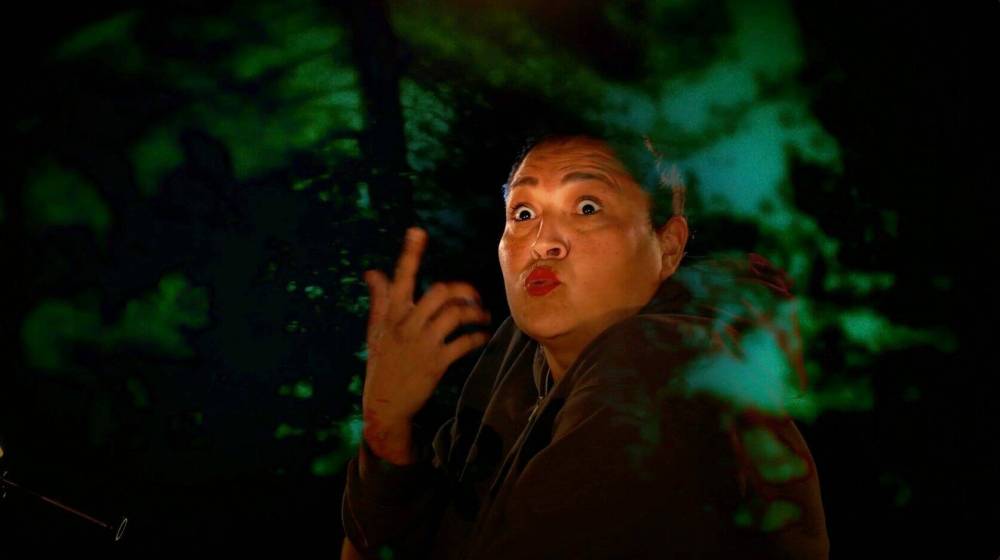
“I literally wrote three-quarters of the draft and then I was stuck,” Beagan recalls. “So on a car trip, I read it aloud to my partner (director Andy Moro) and I said: ‘And that’s where I’m stuck.’ And he goes: ‘It’s Cherish.’
“’Oh… Cherish.’ And by the time we landed on our little road trip, I finished the draft that day, picturing Cherish in my head.”
For her part, Blood found “her legs were a bit knocked out from under her when we did the first public reading,” Beagan recalls.
“We finished — and it was largely an Indigenous audience — and it met with a wall of silence,” Beagan says. “And then a friend of ours just started wailing, just bawling her eyes out. And then people suddenly cracked and all of the strong emotions in the room were really overpowering.
“Cherish ran backstage and phoned her mom and said: ‘Oh my gosh, mom, I just read this play and it’s really powerful,’ and she explained it to her. And her mom said: ‘You get it, my girl. After all the things they’ve done to us, you have to tell this story.’
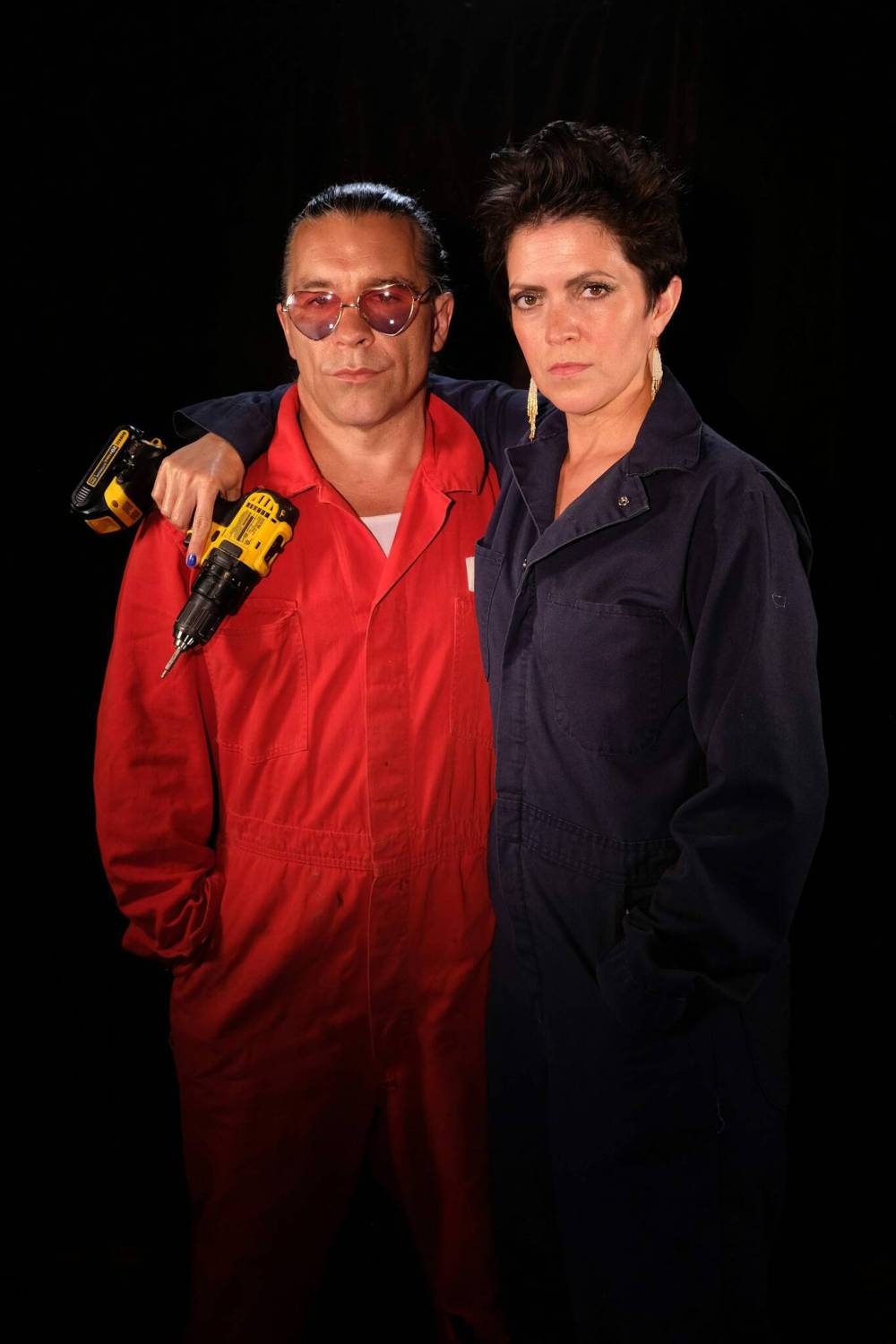
“What Cherish always says is: ‘Performing it is challenging, but it’s not even close to the reality of being a woman who’s life is stolen.’”
Beagan says the material has apparently scared off many Canadian theatre companies.

“The first company in Canada that invited us to perform was Downstage Theatre in Calgary, and they helped us produce this film. Prior to that, nobody else would touch it.
“But we were a hit out in Wellington, New Zealand, and we were a hit at the Sydney Festival, we played to sold-out houses in Edinburgh, so basically everywhere but home was willing to go there with us.
“It doesn’t surprise me, but it does disappoint,” Beagan says. “It’s an accusation of the whole country. And unless we are willing to look at what’s happening, we can’t really understand why it’s happening or how to make it stop.”
randall.king.arts@gmail.com
Twitter: @FreepKing
Our newsroom depends on a growing audience of readers to power our journalism. If you are not a paid reader, please consider becoming a subscriber.
Our newsroom depends on its audience of readers to power our journalism. Thank you for your support.
THEATRE PREVIEW
Deer Woman
By Tara Beagan
● Prairie Theatre Exchange, online
● Wednesday to Sunday
● Tickets $20 (individual) $35 (household) at tickets.pte.mb.ca
Our newsroom depends on a growing audience of readers to power our journalism. If you are not a paid reader, please consider becoming a subscriber.
Our newsroom depends on its audience of readers to power our journalism. Thank you for your support.
Advertisement Advertise With Us
Advertisement Advertise With Us