Memory palace
Without new purpose, once-vital North End theatre could face the wrecking ball
Advertisement
Read this article for free:
or
Already have an account? Log in here »
To continue reading, please subscribe:

Digital Subscription
One year of digital access for only $205*
- Enjoy unlimited reading on winnipegfreepress.com
- Read the E-Edition, our digital replica newspaper
- Access News Break, our award-winning app
- Play interactive puzzles
*First annual payment billed as $205.00 + GST for one year. This annual subscription will automatically renew at $233.00 + GST every 52 weeks (10% off the regular annual price of $259.35). Offer available to new and qualified returning subscribers only. Cancel any time.
To continue reading, please subscribe:
Add Free Press access to your Brandon Sun subscription for only an additional
$1 for the first 4 weeks*
- Enjoy unlimited reading on winnipegfreepress.com
- Read the E-Edition, our digital replica newspaper
- Access News Break, our award-winning app
- Play interactive puzzles
*Your next Brandon Sun subscription payment will increase by $1.00 and you will be charged $17.95 plus GST for four weeks. After four weeks, your payment will increase to $24.95 plus GST every four weeks.
Read unlimited articles for free today:
or
Already have an account? Log in here »
Hey there, time traveller!
This article was published 27/08/2022 (1495 days ago), so information in it may no longer be current.
Don’t it always seem to go,
That you don’t know what you got ’til it’s gone.
They paved paradise put up a parking lot.
— Joni Mitchell, Big Yellow Taxi
Before COVID-19 brought it to a halt, for 10 years I hosted the Magical Musical History Tour of Winnipeg’s many points of historical musical significance. The tours lasted three hours as we covered a lot of miles and dozens of sites of interest. People came from around the world to take the tour, recognizing the significant contributions to popular music our city has made.
ETHAN CAIRNS / WINNIPEG FREE PRESS
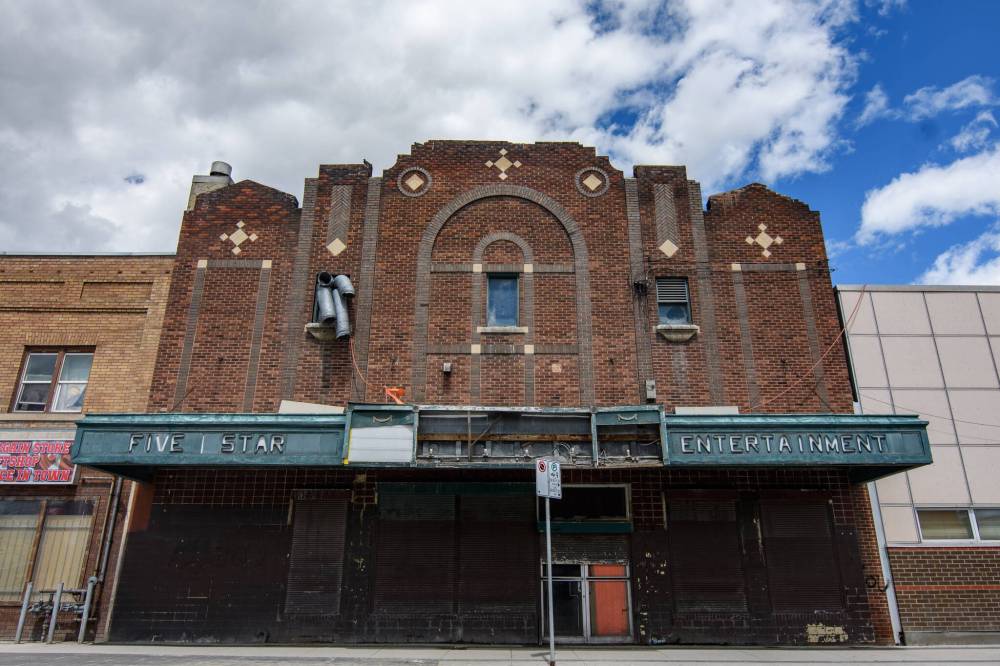
If the University of Manitoba, current owners of the historic Palace Theatre at 501 Selkirk Ave., can’t find any use for the building, it could face demolition.
I found myself often pointing to a vacant lot, an office building, strip mall or a parking lot where a club, hall or residence once stood. While I realize progress marches on, we have nonetheless lost many of our important cultural markers.
The recent public discussion of what to do with the abandoned Palace Theatre at 501 Selkirk Ave. in Winnipeg’s vibrant North End raises the question of whether to preserve and celebrate a historical building and if so, how to do it.
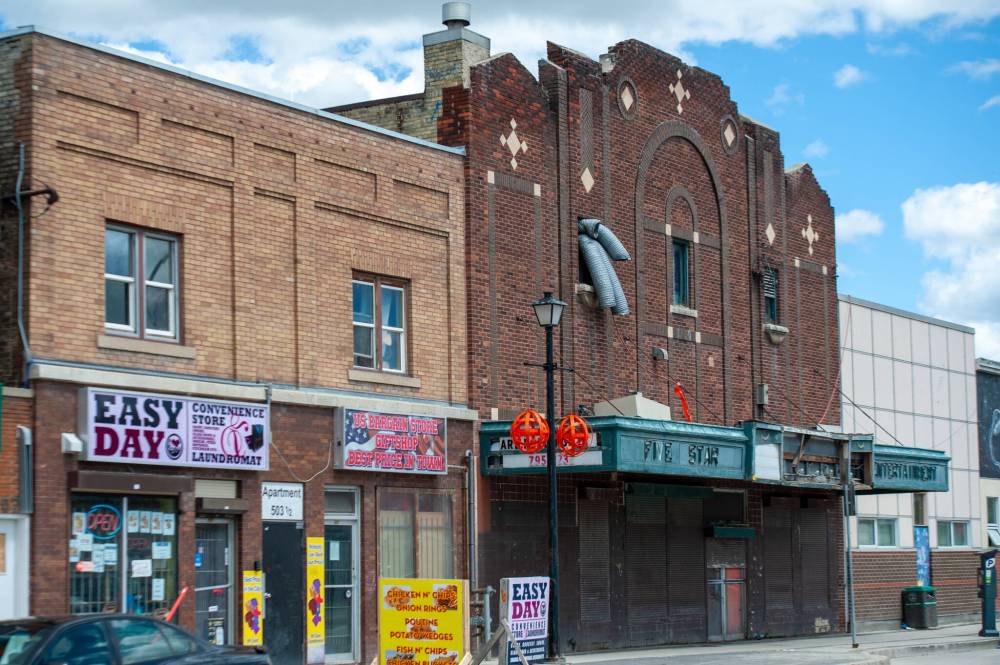
For many who grew up in the North End, Selkirk Avenue was the community’s very own Portage Avenue, its sidewalks bustling with shoppers each and every day.
“Selkirk Avenue was booming back then,” recalls Cindy Zee.
“I remember the Selkirk Avenue of my youth,” notes Ingrid Kerger. “My parents regularly took us shopping there. Oretski’s department store was a must stop, Clifford’s, the Dress Shoppe, Avenue Meat Market, Gunn’s Bakery.”
ETHAN CAIRNS / WINNIPEG FREE PRESS
The Palace Theatre opened in 1912 and became the centre of cultural life in and around the North End.
The ever-evolving immigrant character of the community gave Selkirk Avenue a colourful cacophony of sounds and smells.
When two former North Enders, Perry Rosemond and Aubrey Tadman, set out to create a television show centred on a cosmopolitan neighbourhood, they drew from their childhood recollections of Selkirk Avenue. CBC preferred a Toronto location, so what was ostensibly a celebration of Selkirk Avenue instead became King of Kensington.
The North End has always been Winnipeg’s heart and soul. Between 1875 and 1930 hundreds of thousands of eastern and central Europeans — Ukrainians, Jews, Slavs, Germans, Poles, Russians — settled on the north side of the CPR main line.
They brought with them their distinctive cultural characteristics including music. Some of our first organized choral and philharmonic organizations and dance bands began in the North End as musicians trained in the old country brought their skills and dedication with them to Winnipeg.
As the source countries for immigrants shifted in the middle of the 20th century, new cultural groups introduced their own music and arts traditions to the community. Alongside all this, a growing Indigenous (First Nations and Métis) music scene emerged.
ETHAN CAIRNS / WINNIPEG FREE PRESS
A presentation was made that focused on restoring the Palace Theatre structure to house an interactive museum and interpretive centre to celebrate the achievements of the many ethnicities in the North End over the decades.
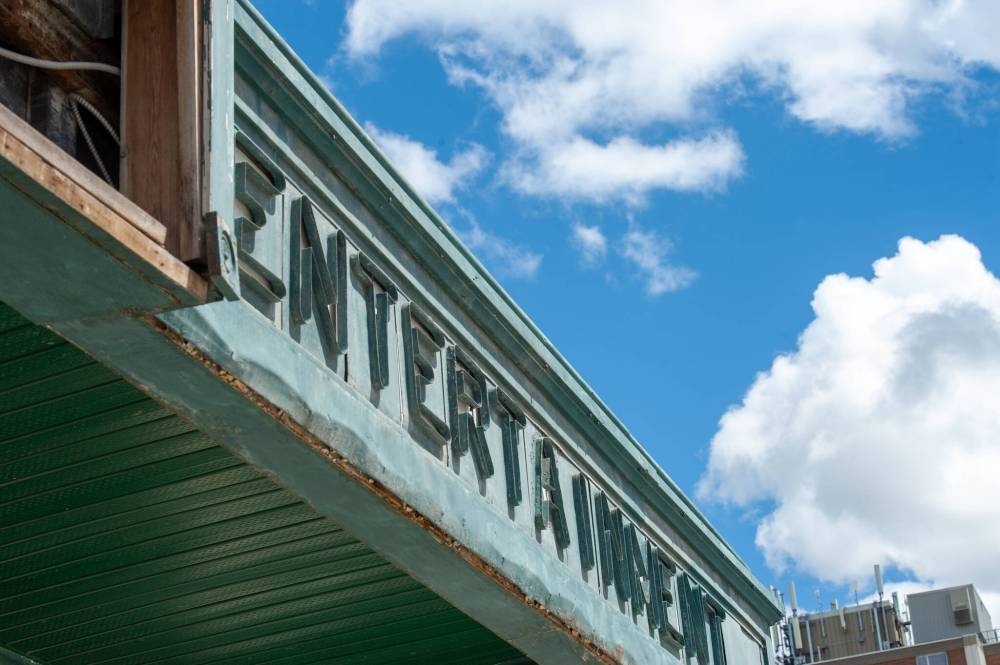
Designed by Russian immigrant Max Blankstein, a North Ender himself and patriarch to Winnipeg’s first family of architecture, the Palace Theatre, which opened in 1912, became the centre of cultural life in and around the neighbourhood.
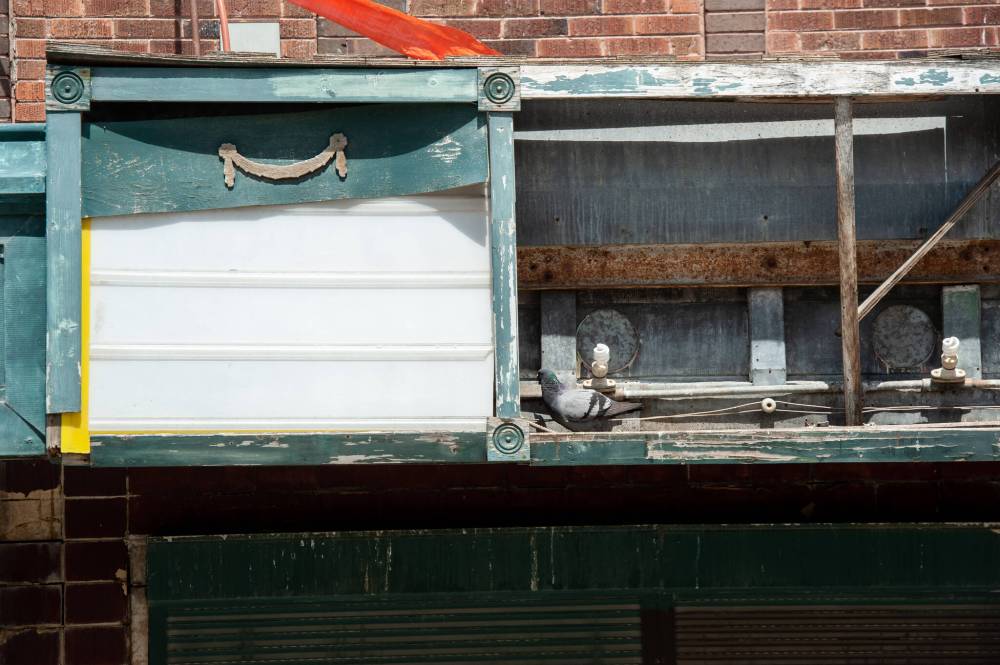
With a regal-looking outer façade (still visible) and ornate interior, the theatre hosted live theatrical productions, vaudeville shows, community meetings and later, movies. Kids from across the North End would take in the Saturday matinées which ran from 10 a.m.
“I remember going to the Palace on Saturday afternoons,” says Cindy Zee. “It was 10 cents to get in and they had door prizes, too.”
Kids often brought their own lunches from home and stayed all day.
A balcony was added in 1927 which boosted capacity to 800 people. But times changed and the Palace Theatre closed its doors in 1964, only to reopen briefly as a variety of retail outlets.
ETHAN CAIRNS / WINNIPEG FREE PRESS
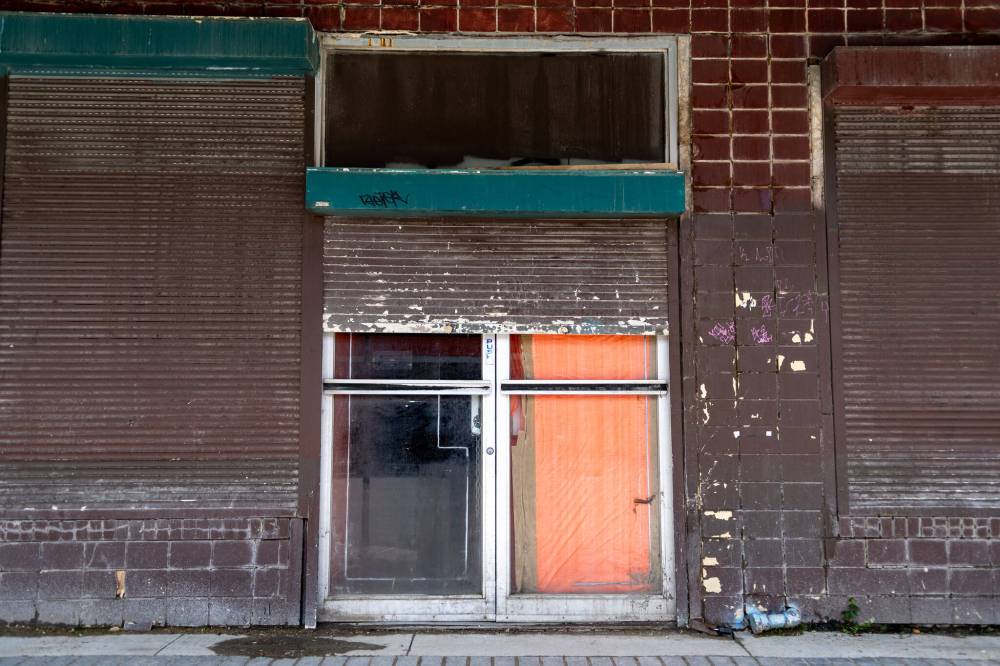
Today, the theatre’s doors are locked up and pigeons have taken up residence inside the marquee.

Currently the University of Manitoba owns the property and has paid for removal of asbestos and mould before determining the viability of the structure. They are open to proposals for the future of the once-vital theatre. Sadly, the alternative is the wrecking ball.
This past spring, I made a presentation to the newly minted North End Historical Society, under the enthusiastic direction of Michael Champagne, that focused on restoring the Palace Theatre structure to house an interactive museum and interpretive centre to celebrate the achievements of the many ethnicities in the North End over the decades, across a broad spectrum of culture including music, arts and entertainment.
There would be a significant focus on those who had their origins in the North End over the decades such as Burton Cummings, Juliette, David Steinberg and Billy Joe Green. An interactive component could preserve the stories and recollections of those who frequented the theatre or the neighbourhood.
The plan could be similar to the Merchant’s Hotel restoration where the community was able to come together and repurpose the property. Not only would such a facility preserve the original theatre’s function as the entertainment hub of the North End but it could also serve to inspire and educate younger generations about the many accomplishments that have made the North End Winnipeg’s cultural capital.
John Einarson is an acclaimed musicologist, broadcaster, educator and author of 14 music biographies published worldwide.
ETHAN CAIRNS / WINNIPEG FREE PRESS
The building was designed by Russian immigrant Max Blankstein.