Volleyball court a sandy setting for short film mulling land rights

Advertisement
Read this article for free:
or
Already have an account? Log in here »
To continue reading, please subscribe:

Digital Subscription
One year of digital access for only $205*
- Enjoy unlimited reading on winnipegfreepress.com
- Read the E-Edition, our digital replica newspaper
- Access News Break, our award-winning app
- Play interactive puzzles
*First annual payment billed as $205.00 + GST for one year. This annual subscription will automatically renew at $233.00 + GST every 52 weeks (10% off the regular annual price of $259.35). Offer available to new and qualified returning subscribers only. Cancel any time.
To continue reading, please subscribe:
Add Free Press access to your Brandon Sun subscription for only an additional
$1 for the first 4 weeks*
- Enjoy unlimited reading on winnipegfreepress.com
- Read the E-Edition, our digital replica newspaper
- Access News Break, our award-winning app
- Play interactive puzzles
*Your next Brandon Sun subscription payment will increase by $1.00 and you will be charged $17.95 plus GST for four weeks. After four weeks, your payment will increase to $24.95 plus GST every four weeks.
Read unlimited articles for free today:
or
Already have an account? Log in here »
Hey there, time traveller!
This article was published 07/10/2022 (1448 days ago), so information in it may no longer be current.
A beach volleyball court doesn’t seem like the ideal place to stage a dance performance about Indigenous land rights — unless you’re Cameron Fraser-Monroe.
The 24-year-old dancer, who trained with the Royal Winnipeg Ballet, looked at the court and saw a country. He looked at the net and saw a border. He saw two opponents standing on either side, ankles dusted by sand. He saw that sand, and he saw the lines drawn in it.
“I really like the idea of doing something I can’t do in a theatre,” he says.

SUPPLIED
Solstice Tait (right) and Fraser-Monroe trade solos, each drawing from their own respective styles, before meeting for a duet at the net.
Fraser-Monroe, a member of the Tla’amin First Nation from Powell River, B.C., says that when the question of land rights arises in Canada and around the world, Indigenous people are forced to defend their legitimacy and heritage to settlers and corporations, who consistently infringe on those ancestral borders.
In his latest piece, cišєt, Fraser-Monroe wanted to show audiences that even if individual nations disagree on territory, and how it’s used, those nations’ rights to that territory isn’t inherently less legitimate or devalued. Cišєt, pronounced Chi-shet, means “to challenge” in Ayajuthem, a Coast Salish language spoken by the Tla’amin nation.
The perfect theatre to illustrate that concept happened to be a sandy expanse in Kildonan Park, normally reserved for sets, spikes and bumps. “I wanted to see it as a sporting disagreement between two First Nations artists, arguing over who gets what side of the net,” he says.
This summer, Fraser-Monroe and local dancer Emily Solstice Tait stood barefoot in the sediment, each on opposing end lines, wearing shorts and tanktops. They slowly crept toward the centre, lunging and lifting, doing a dance as old as this country. Sand flew in the air, with the dancers carving their own borders under the net, swaying but remaining firmly in place. Solstice Tait —who is of mixed Ojibway and settler descent — and Fraser-Monroe traded solos, each drawing from their own respective styles, before meeting for a duet at the net, passing back and forth under the ropes before finally reaching a physical and emotional compromise at centre court.
The three-minute film, directed and choreographed by Fraser-Monroe with a score by Juno-nominated Cree cellist Cris Derksen and videography from Michael B. Osikoya, was produced for the Artists Climate Collective, a North American non-profit which uses artwork to shed light on environmental topics such as climate change. For Fraser-Monroe, Indigenous land ownership is an inherently environmental issue.
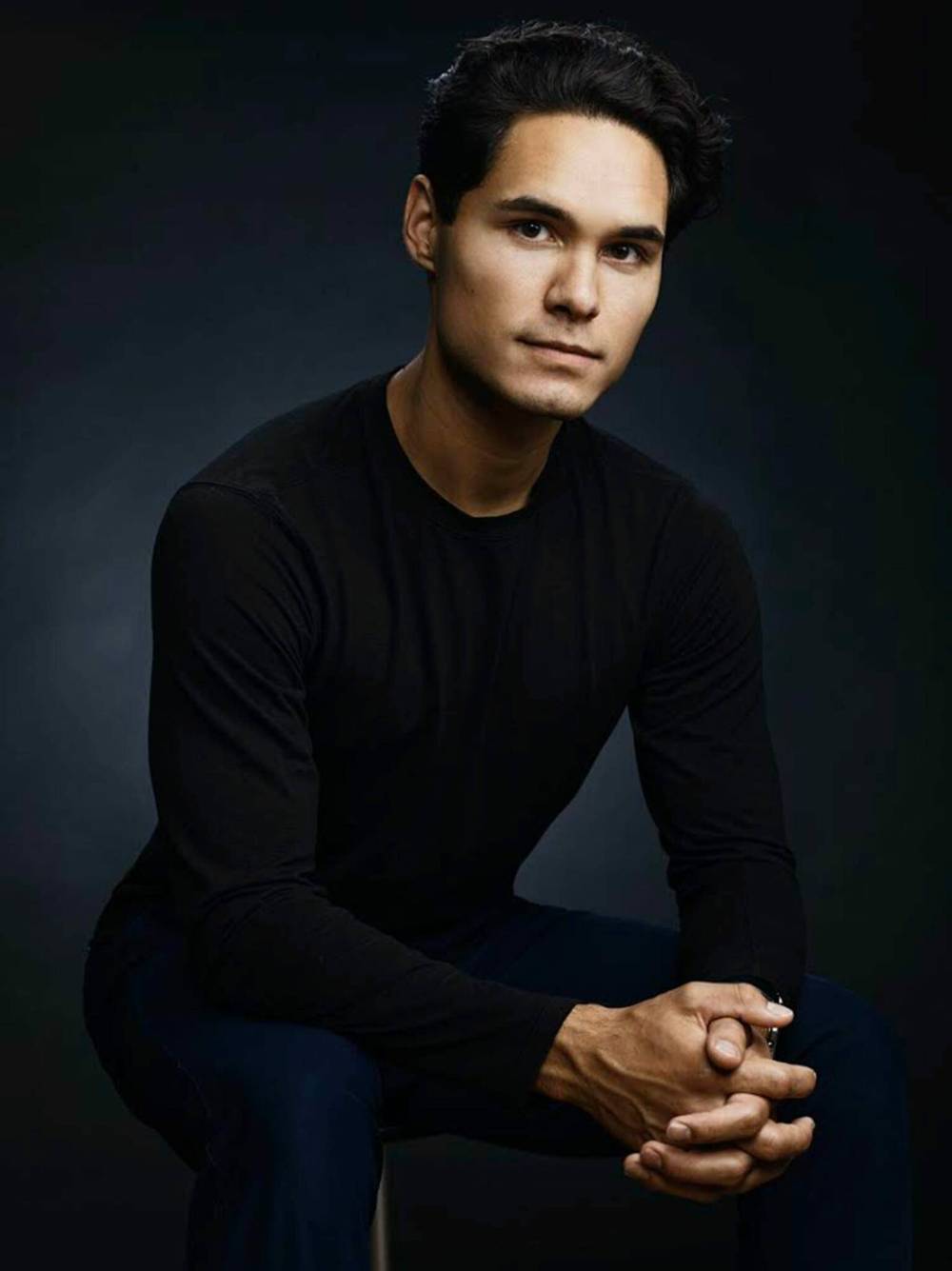
DENIS DUQUETTE PHOTO
Dancer Cameron Fraser-Monroe’s latest project examines borders, territories, and ancestral land rights in a three-minute film set on a beach volleyball court.
“The climate fight and the fight for land back are absolutely interlinked. Indigenous people maintain 80 per cent of the world’s biodiversity, and we’ve always had an important role in preserving the natural beauty of the places we live,” he says. “Because of that, we’re frequently the first people to experience the negative impact of the climate crisis. It’s two-pronged. We’re very linked to the natural world around us.”

“Land is culture, land is language, land is worldview,” he adds. “It was important for me to recognize that.”
When the filming finished, Solstice Tait and Fraser-Monroe dusted themselves off and celebrated a job well done. And not a moment too soon: a volleyball team had just shown up for its afternoon match.
“They asked us what we were doing,” recalls Fraser-Monroe. “I told them, ‘Oh, we were not playing volleyball.’”
ben.waldman@winnipegfreepress.com

SUPPLIED
Emily Solstice Tait (left) and Cameron Fraser-Monroe are seen in a still from the short film čišɛt, which was filmed at a beach volleyball court in Kildonan Park.
Čišєt will be available to purchase at artistsclimatecollective.org as part of the Art 2 Action collection, which features performances from four choreographers in Winnipeg, Portland, San Francisco and Atlanta. All proceeds will go to non-profits fighting climate change.
Ben Waldman is a National Newspaper Award-nominated reporter on the Arts & Life desk at the Free Press. Born and raised in Winnipeg, Ben completed three internships with the Free Press while earning his degree at Ryerson University’s (now Toronto Metropolitan University’s) School of Journalism before joining the newsroom full-time in 2019. Read more about Ben.
Every piece of reporting Ben produces is reviewed by an editing team before it is posted online or published in print — part of the Free Press‘s tradition, since 1872, of producing reliable independent journalism. Read more about Free Press’s history and mandate, and learn how our newsroom operates.
Our newsroom depends on a growing audience of readers to power our journalism. If you are not a paid reader, please consider becoming a subscriber.
Our newsroom depends on its audience of readers to power our journalism. Thank you for your support.
Ben Waldman is a National Newspaper Award-nominated reporter on the Arts & Life desk at the Free Press. Born and raised in Winnipeg, Ben completed three internships with the Free Press while earning his degree at Ryerson University’s (now Toronto Metropolitan University’s) School of Journalism before joining the newsroom full-time in 2019. Read more about Ben.
Every piece of reporting Ben produces is reviewed by an editing team before it is posted online or published in print — part of the Free Press‘s tradition, since 1872, of producing reliable independent journalism. Read more about Free Press’s history and mandate, and learn how our newsroom operates.
Our newsroom depends on a growing audience of readers to power our journalism. If you are not a paid reader, please consider becoming a subscriber.
Our newsroom depends on its audience of readers to power our journalism. Thank you for your support.
Advertisement Advertise With Us
Advertisement Advertise With Us