

Between ripe and rot
Slow, pungent drama unfolds during peach harvest

Advertisement
Read this article for free:
or
Already have an account? Log in here »
To continue reading, please subscribe:
Monthly Digital Subscription
$1 per week for 24 weeks*
- Enjoy unlimited reading on winnipegfreepress.com
- Read the E-Edition, our digital replica newspaper
- Access News Break, our award-winning app
- Play interactive puzzles
*Billed as $4.00 plus GST every four weeks. After 24 weeks, price increases to the regular rate of $19.95 plus GST every four weeks. Offer available to new and qualified returning subscribers only. Cancel any time.
Monthly Digital Subscription
$4.99/week*
- Enjoy unlimited reading on winnipegfreepress.com
- Read the E-Edition, our digital replica newspaper
- Access News Break, our award-winning app
- Play interactive puzzles
*Billed as $19.95 plus GST every four weeks. Cancel any time.
To continue reading, please subscribe:
Add Free Press access to your Brandon Sun subscription for only an additional
$1 for the first 4 weeks*
*Your next subscription payment will increase by $1.00 and you will be charged $16.99 plus GST for four weeks. After four weeks, your payment will increase to $23.99 plus GST every four weeks.
Read unlimited articles for free today:
or
Already have an account? Log in here »
Hey there, time traveller!
This article was published 30/03/2023 (1084 days ago), so information in it may no longer be current.
This indie Canadian film, which screened at last year’s TIFF, opens with a long sequence that follows peaches from an Okanagan orchard through an assembly line in a corporate food plant to the packages that will make it to our supermarkets.
Writer-director Sophie Jarvis makes a promising feature-film debut with a thoughtful, underplayed drama that quietly thrums with apocalyptic undertones. She concisely sketches in a human economy of orchard owners and seasonal pickers, sellers and consumers, all balanced around a fruit that’s sweet but delicate, with such a short time between ripeness and rot.
When Robin (Grace Glowicki), who works as a packer, finds a seemingly healthy peach and breaks it open to find a strange beetle inside, we see how precarious that balance is. She takes the beetle to her older, married boss, Dennis (Lochlyn Munro), who tells her “it’s a bad time to make a big deal about something like this.” Their disagreement over what to do next is complicated by the fact that the two are involved in a desultory sexual relationship. And the desultory sexual relationship is complicated by the fact that Robin has just found out she’s unexpectedly pregnant.
When rumours about the beetle make it to the media, the reactions from different factions in this small community suggest a tension between long-term and short-term thinking. This enigmatic invasive insect could potentially devastate the local orchards — Robin has bad memories of an earlier moth infestation that bankrupted her family’s fruit farm — but shutting down the plant even for a few days to contain a possible outbreak means lost income for people who are barely making it paycheque to paycheque.
Meanwhile, Robin’s fears are becoming obsessive, compounded perhaps by the stress of her personal life. Her parents are dead, and she has been left to care for her younger sister, Laney (Alexandra Roberts), who’s currently involved with one of the rich university kids in town for seasonal fruit-picking and maybe a taste of “authenticity.” (“He calls me ‘Local,’ and it’s not even annoying,” Laney tells Robin.)
Glowicki, who really carries the film, is fascinating to watch. Robin’s body language can be both awkward and graceful. She’s seemingly self-contained but given to blurting things out in a rush. Munro is well cast as Dennis, looking like a once-popular high-school boy who has since gone to seed.
Of course, that beetle in the peach is doing symbolic duty for even more massive destruction. Almost hidden in the noise of the background are references to climate change and environmental disasters, pesticide overuse and water depletion, the growing reach of large-scale agri-business and the devastation of Indigenous communities.
Like the American director Kelly Reichardt, Jarvis has a feeling for low-key naturalism, an eye for subtle socioeconomic realities, and an intense interest in the emotional lives of women.

But Jarvis also seems to draw on the horror genre. There’s a pervasive disquiet looming over the film, in the teeth-on-edge choral score and in brief shots that suggest decay and dread (bugs thronging round a buzzing light in the dark, a pile of fleshy, rotting peaches starting to gather flies).
There are a lot of levels, from the docudrama realism of life in a small one-resource town, to the psychological exploration of an overburdened young woman possibly cracking under emotional strain, to the apocalyptic threat of a disaster movie.
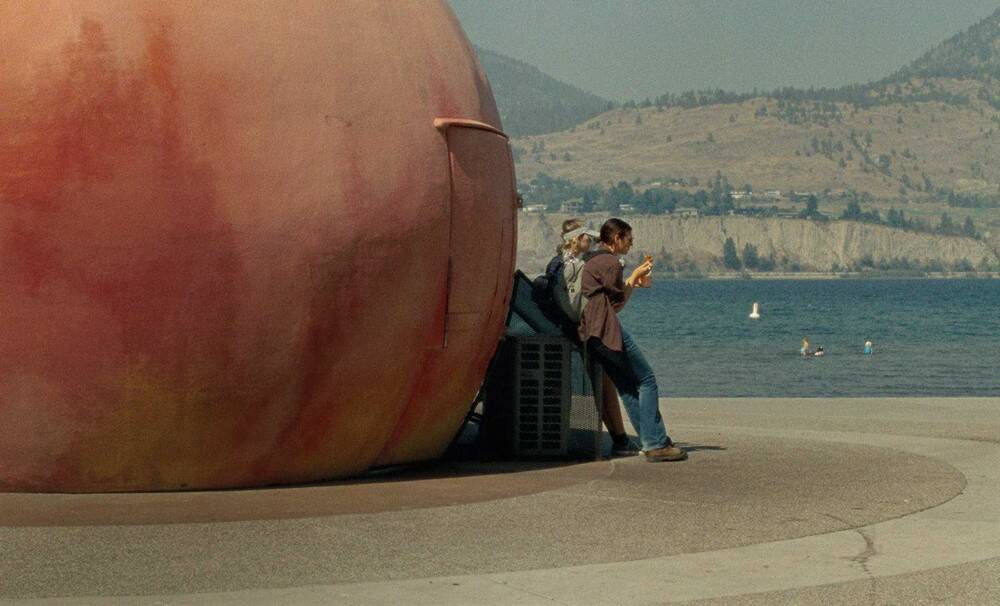
Photon Films
Until Branches Bend is a thoughtful, underplayed drama with apocalyptic undertones.
Jarvis makes some interesting explorations at all these levels, but she never quite pulls them together. In fact, sometimes the strengths of the film actually work against each other. The realistic mechanics of the day-to-day story aren’t given enough time to become convincing, while the metaphorical layer, though undeniably unsettling, even spooky, gets interrupted too much to build up consistent suspense.
With a strong centring performance and an intriguing but sometimes underwritten narrative, Until Branches Bend ends up feeling uneven, but it’s still a promising debut.
alison.gillmor@freepress.mb.ca
Studying at the University of Winnipeg and later Toronto’s York University, Alison Gillmor planned to become an art historian. She ended up catching the journalism bug when she started as visual arts reviewer at the Winnipeg Free Press in 1992.
Our newsroom depends on a growing audience of readers to power our journalism. If you are not a paid reader, please consider becoming a subscriber.
Our newsroom depends on its audience of readers to power our journalism. Thank you for your support.
Movie Review
Until Branches Bend
Starring Grace Glowicki
● Cinematheque, March 29, 30, April 2, 5, 6
● 98 minutes, PG
★★★ 1/2 out of five
Studying at the University of Winnipeg and later Toronto’s York University, Alison Gillmor planned to become an art historian. She ended up catching the journalism bug when she started as visual arts reviewer at the Winnipeg Free Press in 1992.
Our newsroom depends on a growing audience of readers to power our journalism. If you are not a paid reader, please consider becoming a subscriber.
Our newsroom depends on its audience of readers to power our journalism. Thank you for your support.
Advertisement Advertise With Us
Advertisement Advertise With Us