New music
Reviews of this week’s CD releases
Advertisement
Read this article for free:
or
Already have an account? Log in here »
To continue reading, please subscribe:

Digital Subscription
One year of digital access for only $205*
- Enjoy unlimited reading on winnipegfreepress.com
- Read the E-Edition, our digital replica newspaper
- Access News Break, our award-winning app
- Play interactive puzzles
*First annual payment billed as $205.00 + GST for one year. This annual subscription will automatically renew at $233.00 + GST every 52 weeks (10% off the regular annual price of $259.35). Offer available to new and qualified returning subscribers only. Cancel any time.
To continue reading, please subscribe:
Add Free Press access to your Brandon Sun subscription for only an additional
$1 for the first 4 weeks*
- Enjoy unlimited reading on winnipegfreepress.com
- Read the E-Edition, our digital replica newspaper
- Access News Break, our award-winning app
- Play interactive puzzles
*Your next Brandon Sun subscription payment will increase by $1.00 and you will be charged $17.95 plus GST for four weeks. After four weeks, your payment will increase to $24.95 plus GST every four weeks.
Read unlimited articles for free today:
or
Already have an account? Log in here »
Hey there, time traveller!
This article was published 27/04/2023 (1230 days ago), so information in it may no longer be current.
POP
Feist
Multitudes (Interscope)
Multitudes is a pandemic album, in that its songs were largely written and conceived in the darkest days of 2020 and 2021, when we were all isolated and, to varying degrees, assessing our lives and places in the world.
Canadian singer-songwriter Leslie Feist found herself at a particularly cathartic crossroads in that period. Feist adopted an infant daughter in 2019, and she and the baby spent most of their 2020-21 quarantine time with Leslie’s father, Harold, an abstract expressionist painter and fine arts professor.
Harold died in the spring of 2021, just as Feist was preparing for a series of intimate, works-in-progress multimedia residency shows she called Multitudes. The residencies went ahead that summer and fall, and Feist now says that she found herself “singing through the grief,” while also working through material that reflected the stock-taking that comes naturally with parenthood.
The 12 songs that make up Multitudes the album are thus the result of massive tectonic shifts in the foundations of Feist’s world and, to her credit, she faces them all head on. As she sings on Martyr Moves, “My hope is a flickering flame / Which I’ve found it increasingly hard to explain / But I’ll try.”
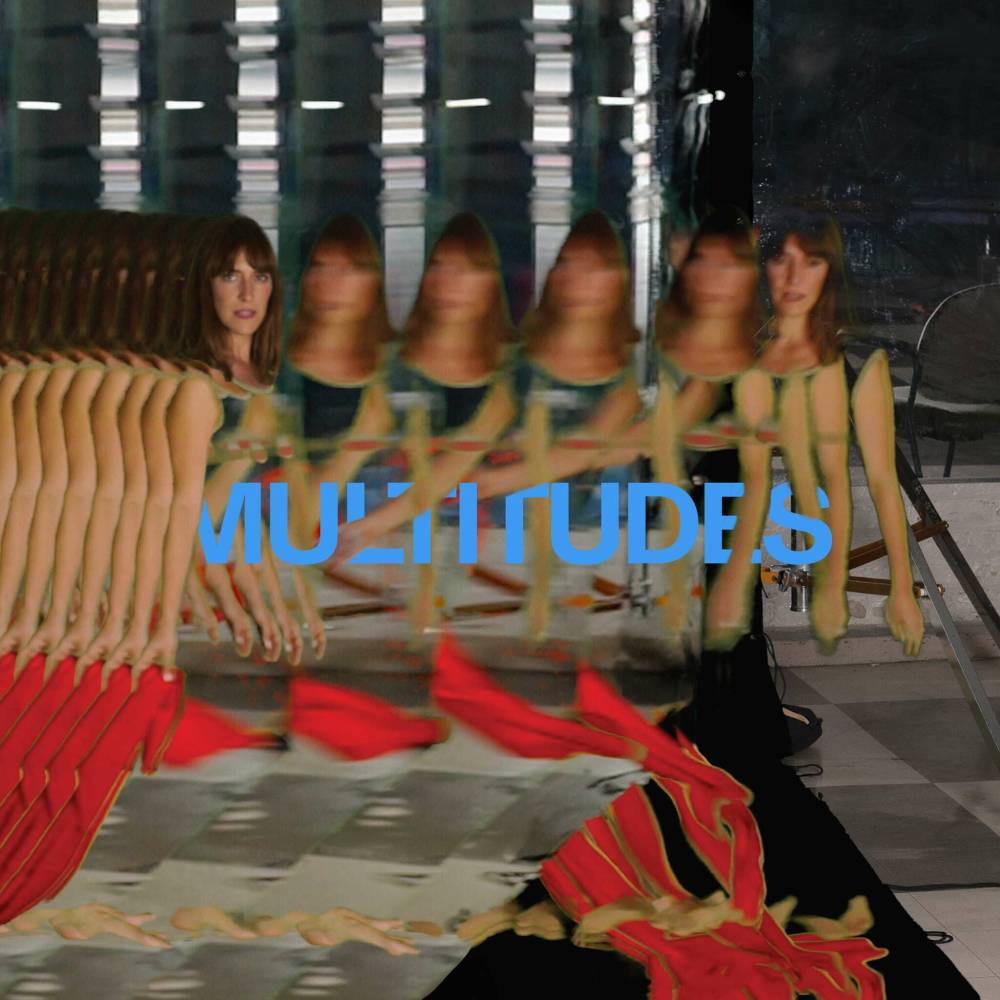
At its core, Multitudes is the culmination of Feist’s artistic journey, both musically and poetically. It opens with In Lightning, a contemporary, indie-pop exploration of stacked vocals, staccato drumbeats and ethereal synthesizer washes that captures her experience of creativity as shards or slivers of light.
Working with co-producers Robbie Lackritz, Blake Mills and Dominic (Mocky) Salole, Feist combines her St. Vincent-ish artistic spirit with the beauty of her dreamy pop sensibilities throughout this record, and leans heavily into the newly realized weight of motherhood and mortality. Second song Forever Before addresses the fearlessness and fear that come with both realities and suggests that the embodiment of both is her daughter: “She’s sleeping right over there.”
Several of these songs capture the vibe of Feist’s earliest, startlingly intimate works — lots of exquisite acoustic guitar and sharply recorded vocals (listen on headphones). But, as her Metals album revealed, she also has a healthily rowdy side, which she explores marvellously on Borrow Trouble, a slowly swelling orchestral cut that swirls and skronks (with sax by David Ralicke) and layers vocal melodies until it ends with a righteous scream. ★★★★ out of five
STREAM THESE: In Lightning, Hiding Out in the Open, Borrow Trouble
Watch Feist’s Multitudes mini-concert at wfp.to/0gd.
— John Kendle
POP
Wadada Leo Smith Orange Wave Electric
Fire Illuminations (Kabell Records)
Trumpeter/composer and acclaimed master Wadada Leo Smith has been a restless innovator for decades. Always an adventurer, his work has run the gamut of the avant-garde, and he celebrated his 80th birthday with a burst of releases that prove he is still at the top of his game.
This new album is yet another remarkable contribution to the contemporary jazz scene. His Orange Wave Electric band has a wildly unconventional lineup: guitarists Nels Cline, Brandon Ross and Lamar Smith, bassists Bill Laswell and Melvin Gibbs, electronic musician Hardedge, percussionist Mauro Refosco and drummer Pheeroan akLaff. One can clearly expect surprises.

The music is at one level funkier than many earlier releases; in fact, there are times when the link with “electric Miles” is apparent. There are shades of Bitches Brew and other later Miles Davis music, although this is in no way a cover or copy. It is pure Wadada Leo Smith, and his full-throated horn soars and twists over each track.
His compositions were apparently put together in the studio from years of recordings. The result is enthralling. As with many Smith albums, there are tribute tracks. Two are references to Muhammad Ali, including one called Muhammad Ali and George Forman Rumble in Zaire Africa. Several long tracks are amazing. Ntozake, named for the playwright and poet Ntozake Shange, opens the album with a driving and intense mood. The 15-minute track Tony Williams is an extraordinary tribute to the late classic drummer.
The tempos rarely get above mid-range, with several employing a powerful, relentless “walking bass” foundation. The guitars and the ensemble generally sound collectively challenging on this intense and thoroughly engaged music. An amazing album from an amazing musician who defies aging, and contemporary jazz at its absolute best. ★★★★ out of five
STREAM THESE: Tony Williams, Ntozake
— Keith Black
Cuarteto Casals
J.S. Bach: The Art of Fugue BWV 1080 / Die Kunst der Fuge / L’Art de la fugue (Harmonia Mundi)
Still shrouded in mystery and widely regarded as J. S. Bach’s musical last ode and testament, The Art of Fugue, BWV 1080 has been performed in many guises since first composed during the 1740s.
Spain’s Cuarteto Casals tackles the baroque masterwork, presumed for keyboard instruments, albeit notated on four separate staves, that adapts remarkably well to the modern-day string-quartet genre.
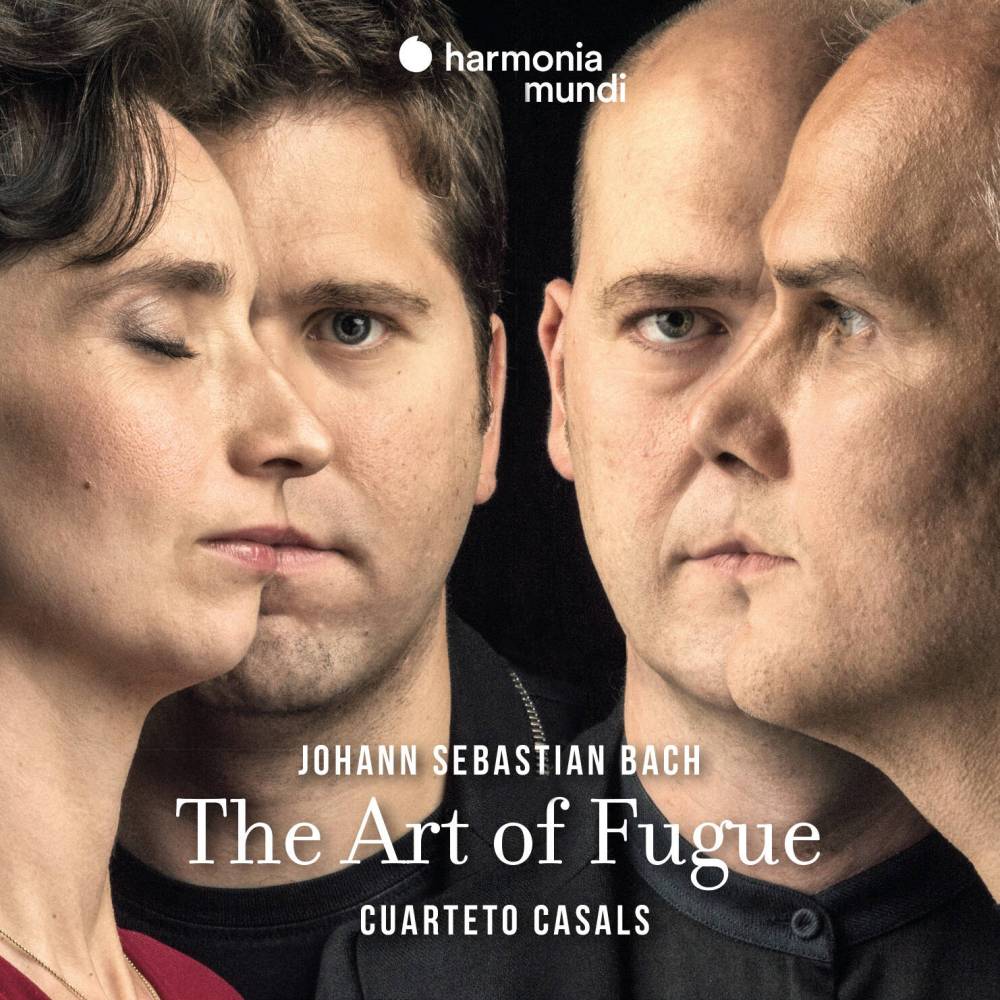
The ensemble — Abel Tomàs Realp, violin; Vera Martínez Mehner, violin; Jonathan Brown, viola; and Arnau Tomàs Realp, cello — brings clarity to each of its 14 fugues and four canons, with light baroque bows instilling the performance with effective buoyancy. The Cardona monastery as recording venue — referred to as the fifth member of the ensemble in the album’s insightful liner notes — provides warm, resonant acoustics throughout, while never becoming overbearing.
Particular highlights include the opening fugue that first introduces the primary theme, Contrapunctus 1, as well as the later Contrapunctus VI, performed in French style, laced with peppy, double dotted rhythms. The four individual players prove well balanced throughout, most notably during the more densely written fugues, Contrapunctus IX and X, in which they take turns bringing out their respective subject and countersubjects, as well as during each of the canons.
However, the best is saved for last, with the mighty, unfinished triple fugue, Contrapunctus XIV. The group performs it here as a “finished” form, made complete by segueing into Vor deinen Thron tret’ ich, BWV 668 chorale, believed to have been written by Bach from his deathbed. It’s final utterance of his still enthralling musical genius. ★★★★ out of five
STREAM THIS: Contrapunctus XIV, a 4 Fuga a tre soggetti
— Holly Harris