First mayor fast friends with city’s anti-Métis elite
Advertisement
Read this article for free:
or
Already have an account? Log in here »
To continue reading, please subscribe:

Digital Subscription
One year of digital access for only $205*
- Enjoy unlimited reading on winnipegfreepress.com
- Read the E-Edition, our digital replica newspaper
- Access News Break, our award-winning app
- Play interactive puzzles
*First annual payment billed as $205.00 + GST for one year. This annual subscription will automatically renew at $233.00 + GST every 52 weeks (10% off the regular annual price of $259.35). Offer available to new and qualified returning subscribers only. Cancel any time.
To continue reading, please subscribe:
Add Free Press access to your Brandon Sun subscription for only an additional
$1 for the first 4 weeks*
- Enjoy unlimited reading on winnipegfreepress.com
- Read the E-Edition, our digital replica newspaper
- Access News Break, our award-winning app
- Play interactive puzzles
*Your next Brandon Sun subscription payment will increase by $1.00 and you will be charged $17.95 plus GST for four weeks. After four weeks, your payment will increase to $24.95 plus GST every four weeks.
Read unlimited articles for free today:
or
Already have an account? Log in here »
Hey there, time traveller!
This article was published 27/05/2023 (1207 days ago), so information in it may no longer be current.
AS hosts of the One Great History podcast, Sabrina Janke and Alex Judge love exploring Winnipeg’s past. With Winnipeg’s sesquicentennial approaching, the two have produced a podcast series that explores the city’s colourful history. The series is presented through the lens of 15 historical figures, focusing on critical events surrounding their lives and their impact on Winnipeg. The series will conclude Nov. 9, the day when Winnipeg became a city 150 years ago. Summaries from each podcast will be republished in the Free Press. The podcast can be found on Apple Podcasts, Spotify and through the One Great History website — onegreathistory.wordpress.com
Winnipeg’s first mayor was, put politely, something of a scoundrel.
Put less politely, Francis Evans Cornish was a belligerent bigoted drunk.
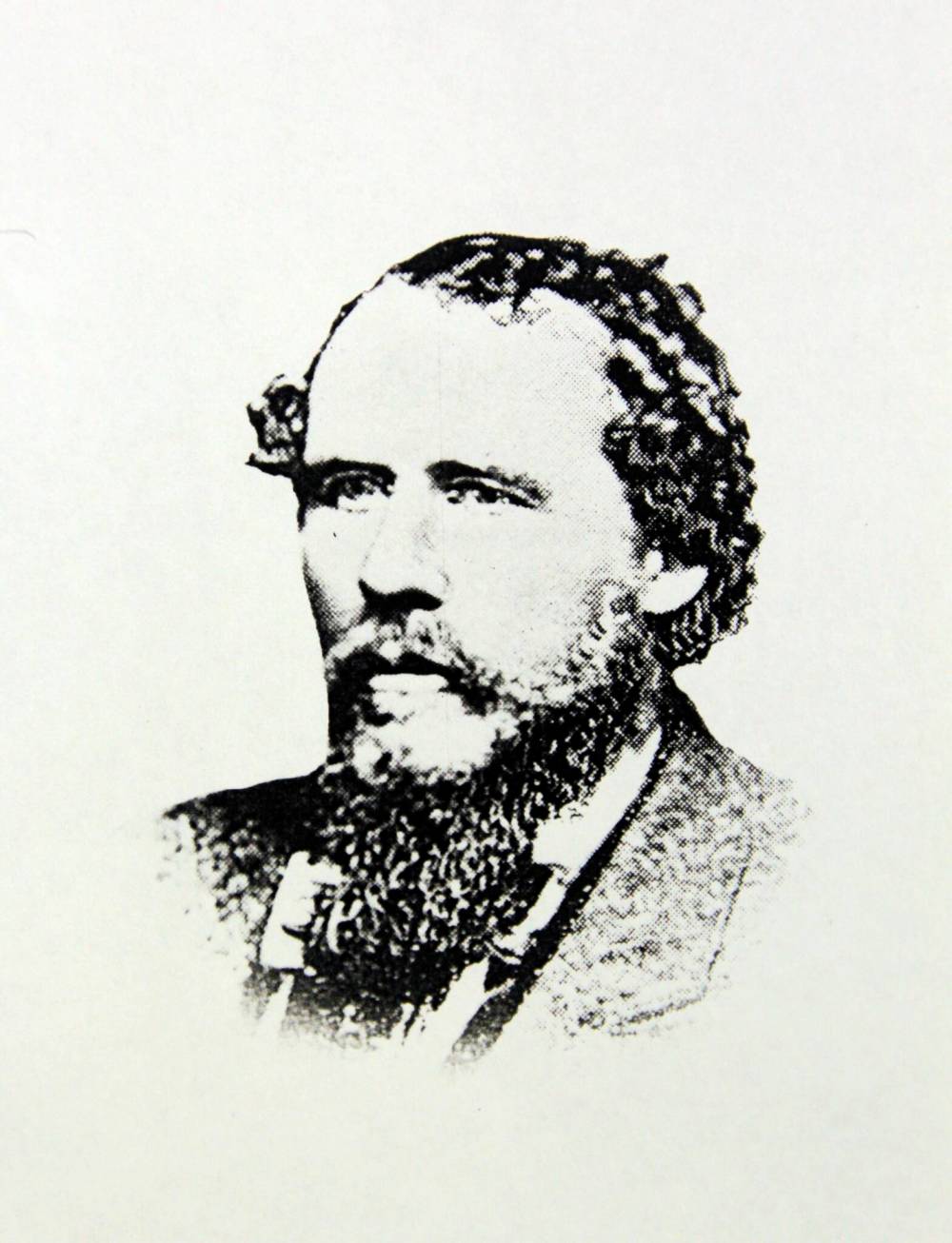
Francis Evans Cornish. (Photos from manitoba Archives / Boris Minkevich / Winnipeg Free Press files)
Cornish arrived in Winnipeg in 1872 from London, Ont., in the aftermath of the Red River Resistance and amid the Wolseley Expedition’s Reign of Terror. In short order, Cornish had found friends among Winnipeg’s notoriously anti-Métis elite and joined them in a federal election riot in November 1872. Three newspapers had their offices ransacked, a poll book was burned and boisterous speeches were given along Main Street on overturned carts. Lt.-Gov. Alexander Morris later identified Cornish as one of the main agitators in the riots in a letter to Prime Minister John A. Macdonald, though nothing was done in response. Business, it would seem, would carry on as usual.
Those involved in the riots took up a new cause in 1873: the incorporation of Winnipeg as a city. At the time, with only 1,400 residents within vague and disputed boundaries, Winnipeg could hardly be called a town — let alone a city. Yet residents were insistent that the newly formed province of Manitoba sign an incorporation act. They did have their reasons — incorporation would allow sidewalks to be built, roads to be paved, proper fire-safety precautions to be enacted and, of course, if they didn’t incorporate, some other town could and would achieve the lofty aspiration of being Manitoba’s first city. That wouldn’t do — it had to be Winnipeg.
It took months, and the tarring and feathering of a government official, but the papers were signed on Nov. 9, 1873. It was official: Winnipeg was the first city in Manitoba. The Daily Manitoban & Nor-Wester Free Press wrote optimistically about the decision:
“Although four years ago we were hardly entitled to the name of village, in a few years we may reasonably expect to have the right to be called not only a city, but a large one at that. Gas in our streets and houses, city passenger railways running in every direction, Nicholson’s pavement on our streets, a grand central railway station, fire alarm telegraph and steam fire engines, waterworks, and small boys running around selling Daily Manitobans.”
The next step was to elect a civic government. After a brief period of campaigning, the polls opened on Jan. 5, 1874, and residents (or at least the property-owning men who were eligible to vote) rushed to the polls at 10 a.m. Votes were tallied, with Cornish coming in with 383 votes and his opponent, newspaper owner William Luxton, at 178.
There was a catch: there were only 388 registered voters in Winnipeg. Technically, this was legal, as election laws allowed property owners a vote for each piece of property they owned. Unsurprisingly, this law was changed after the election. Regardless, and despite the accusations of bribery, Francis Evans Cornish was Winnipeg’s first mayor.
Despite Cornish’s rowdy reputation, his one-year term was remarkably quiet. The City of Winnipeg began developing new and necessary infrastructure. Plank sidewalks were laid down, roads were smoothed and paved, and work on a sewer system began.
Being Winnipeg’s mayor was not Cornish’s only job. In his spare time, Cornish was also a practising lawyer. During his mayoral term, Cornish was present at the inquest over the death of Lord Gordon Gordon, a con man posing as a Scottish Lord, and the trial of Louis Riel’s cabinet member Ambrose Lepine.
Cornish had also been involved in Lepine’s arrest (for which he received part of a $1,000 reward). Determined to obtain a murder conviction, Cornish assisted the prosecution during Lepine’s lengthy trial. After many months, Lepine was found guilty — though the jury recommended mercy. It was not given; the judge sentenced Lepine to hang (his sentence would later be commuted).

Cornish only served one term as mayor. In the fall of 1874, he won a seat in the provincial legislature for Poplar Point, which he would hold for the rest of his life. This did not stop Cornish from getting into trouble.
Cornish was removed from the legislature after launching into a two-hour speech that threatened to “disgrace” the legislative assembly. On one occasion, during the 1876 municipal election, Cornish and three others attempted to steal a local poll book (and then returned to the scene of the crime shortly afterwards to ask for their hats back). On another, after being appointed as an alderman due to a vacancy on the city council, Cornish picked a fight with fellow alderman William Alloway. The mayor forced Cornish to apologize after the alderman called Alloway “a full-grown dog.”
Cornish’s apology was not at all earnest. The Manitoba Free Press recounted his response: “(Cornish) would take it all back, as he did not wish to cast reflections on the whole canine race, for which he had the most profound respect.”
He died in 1878 after a brief bout with stomach cancer.
London residents were not surprised to hear of his antics in Winnipeg. Before he arrived in Manitoba, Cornish had served as London’s mayor and had a similarly colourful history there. He’d ridden a horse up and down the stairs of city hall, placed himself on trial and served as both the judge and defendant, and, as local legend goes, was only stopped from winning the 1864 election when locals hired militiamen to guard the poll booths to prevent Cornish from tampering with the vote. And, according to the London Free Press, when Cornish announced his intention to move to Winnipeg he made this bold proclamation: “I am going to Manitoba, and we will raise hell there!”