Tasting — and testing — nature’s bounty The ancient practice of foraging gains popularity and prickly pushback
Read this article for free:
or
Already have an account? Log in here »
To continue reading, please subscribe:

Digital Subscription
One year of digital access for only $205*
- Enjoy unlimited reading on winnipegfreepress.com
- Read the E-Edition, our digital replica newspaper
- Access News Break, our award-winning app
- Play interactive puzzles
*First annual payment billed as $205.00 + GST for one year. This annual subscription will automatically renew at $233.00 + GST every 52 weeks (10% off the regular annual price of $259.35). Offer available to new and qualified returning subscribers only. Cancel any time.
To continue reading, please subscribe:
Add Free Press access to your Brandon Sun subscription for only an additional
$1 for the first 4 weeks*
- Enjoy unlimited reading on winnipegfreepress.com
- Read the E-Edition, our digital replica newspaper
- Access News Break, our award-winning app
- Play interactive puzzles
*Your next Brandon Sun subscription payment will increase by $1.00 and you will be charged $17.95 plus GST for four weeks. After four weeks, your payment will increase to $24.95 plus GST every four weeks.
Read unlimited articles for free today:
or
Already have an account? Log in here »
Hey there, time traveller!
This article was published 06/06/2023 (1199 days ago), so information in it may no longer be current.
Erica Lindell prepares a salad with aromatic yarrow, earthy plantain, bitter dandelion and sweet clover leaves. On her kitchen counter there are wraps filled with lambsquarters (a green annual also known as white goosefoot) and, on the stove, a wild chanterelle risotto.
Dessert is spruce tip cookies and stinging nettle cake, with iced tea made from wild violet, lilac and rose petals to quench the thirst.
It’s a feast Lindell has foraged from the land surrounding her homestead in Eastern Manitoba, where she lives with her partner and their five children. Approximately 70 per cent of the food they consume is foraged or comes from their garden.
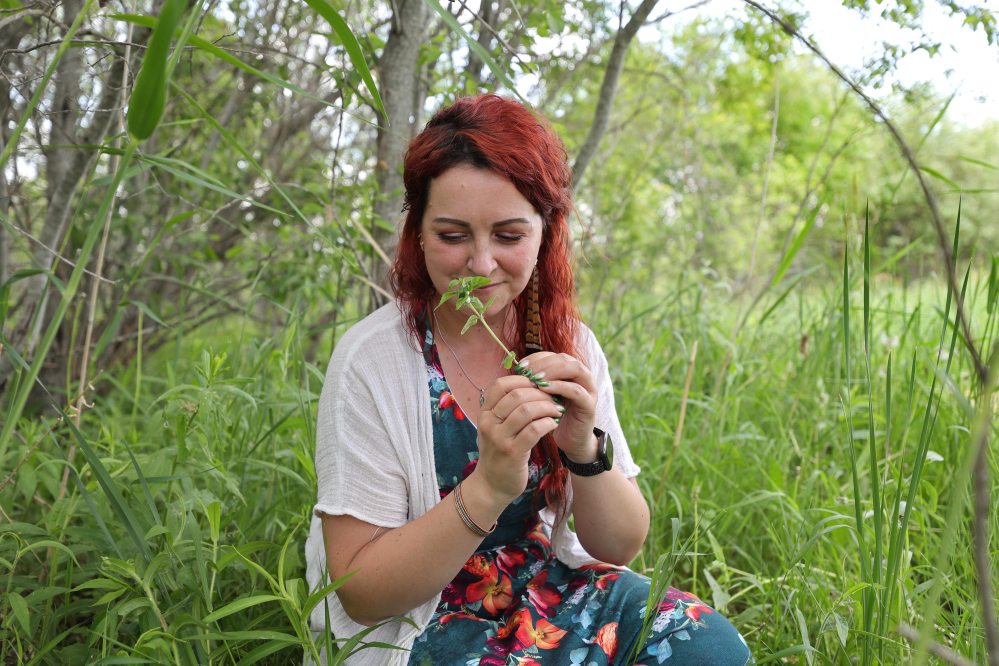
“For my family, we forage with the season,” Lindell says. “It’s a major part of our lifestyle; we use what a lot of people call weeds for food. We buy from the grocery store but we are also out foraging almost daily.”
A Métis woman, Lindell grew up on an acreage with her parents and siblings. By the time she was four years old, she was out on a trapline, hunting and fishing. She’s been out looking for berries and mushrooms for as long as she can remember.
“I grew up doing this. My parents taught me about the relationship with the land. They taught me how to create a good, sustainable, ethical one,” she explains.
Humans have been foraging since time began. Long before we farmed, we foraged, acquiring food from our environment in order to sustain us. It’s an ancient practice that has experienced a resurgence in recent times.
“For my family, we forage with the season… we use what a lot of people call weeds for food.”–Erica Lindell
Wendy Pearce, who forages for wild vegetables, herbs, mushrooms and berries in the Interlake area surrounding her home, says she feels a “primitive and primal” sense of pride when she goes out into the wild.
“When you go into a field, come out with clothing, shelter, food, it is very meaningful on an innate level,” she says. “I bring my children to forage for blueberries, saskatoon berries, all the better-known plants… they are 14, 12, and five and they love to go into the fields to find strawberries to have for their breakfast; what a beautiful life,” she says.
But renewed interest has also exposed some rather dubious practices within certain sections of the foraging community.
In a Facebook group, Foraging Manitoba, some attitudes are hostile.
A post from the Free Press seeking foragers to interview was met with hostility from certain members, with one person flatly commenting “don’t do it,” while another advised silence, writing “keep your spots secret.”
There are as many people who share their knowledge freely as there are others who openly admit to clipping down bushes and hiding bountiful spots so nobody else can find them.
A heated online debate broke out over the ethical implications of selling foraged food, with both sides adamant that theirs was the right answer.
Should foragers benefit financially from harvesting free food from the land? If spots are hidden and revisited seasonally, has the definition of foraging changed?
“If you are selling what you forage, you are like a farmer of a different feather. You may not be growing what you’re selling, but you’re taking the risk to procure the food, and your time is worth money,” says Pearce, who is currently writing a foraging guide for southern Manitoba. Her book, Foraging for a Meaningful Life, is sectioned seasonally, starting from late winter through to autumn.
“People think it’s easy work, but just because it’s free for the finding doesn’t mean it’s easy.”–Wendy Pearce
For her, balance is key.
“If you can do it sustainably, go for it!” she says. “People think it’s easy work, but just because it’s free for the finding doesn’t mean it’s easy.”
However she draws the line at hiding spots, calling it “unconscionably greedy.”
“The earth gives freely to us. You don’t take more than what you need, you share what you have and freely share as the earth has shared with you,” she says.
While Lindell doesn’t sell the food she forages, she does create products such as salves made from poplar and pine resin, mushroom and dandelion root instant coffee granules, and herbal bath products, which she sells on her website.
For her, it’s about the person and their intentions.
“We are paying people for their time to go out and hunt morels, not the item itself,” she says. “If it is done in an ethical and sustainable way then have at it.”
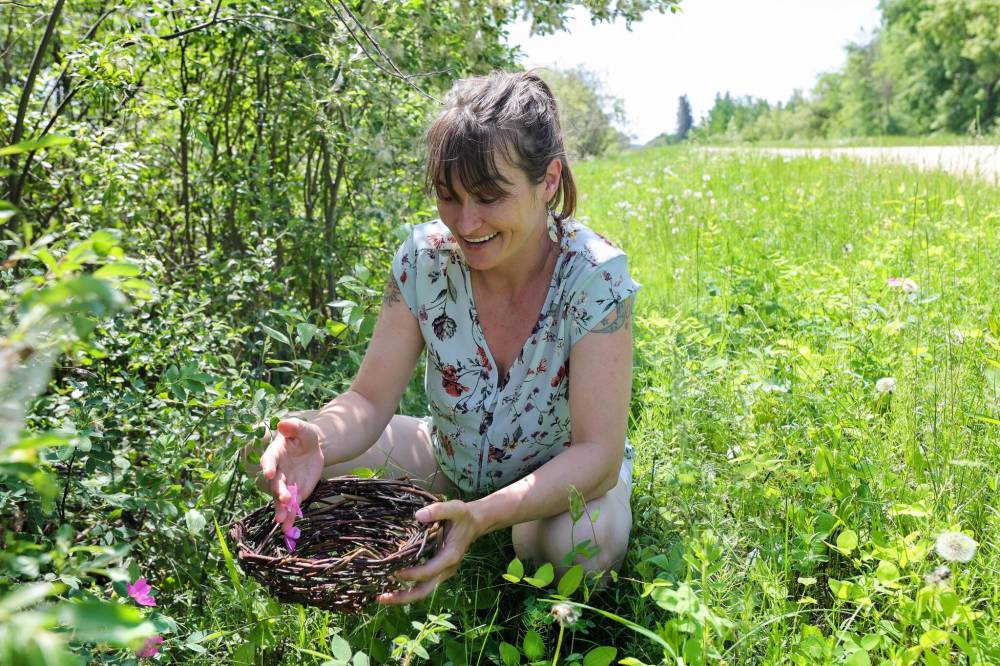
RUTH BONNEVILLE / WINNIPEG FREE PRESS Wendy Pearce says balance is the key to foraging. ‘The earth gives freely to us. You don’t take more than what you need, you share what you have and freely share as the earth has shared with you.’
Naturalist Barret Miller, who runs foraging workshops at FortWhyte Alive, says large-scale foraging or “using up rather than simply using a resource” will have ripple effects throughout the ecosystem. However, when done properly, foraging has very little impact on habitat as no large-scale landscape changes take place.
Forage your feast
FortWhyte Alive is holding evening Wild Edible workshops from June 13 to Sept. 12. These beginner foraging workshops ($15 each or $13 for members at FortWhyte Alive website) will teach tips and tricks for identifying, harvesting and preparing wild foods.
Here are four plants in season right now that can be found in the city:
Dandelion: young leaves for salad, flower petals for flavour and colour, and the root as a vegetable or roasted as a cocoa/coffee substitute
FortWhyte Alive is holding evening Wild Edible workshops from June 13 to Sept. 12. These beginner foraging workshops ($15 each or $13 for members at FortWhyte Alive website) will teach tips and tricks for identifying, harvesting and preparing wild foods.
Here are four plants in season right now that can be found in the city:
Dandelion: young leaves for salad, flower petals for flavour and colour, and the root as a vegetable or roasted as a cocoa/coffee substitute
Burdock: roots add a meatiness to stews and soups
Prickly lettuce: the wild ancestor of romaine, a good springtime addition to a salad
Wild Rose flower petals: taste like unsweetened Juicy Fruit gum
— Barret Miller, naturalist, FortWhyte Alive
“I do have a problem if people are using up a resource for their own personal gain without thought for others,” he says. “We need to teach ethics with all our interactions with nature. Stick to public places, take what you need and never more. Think, ‘What does it look like for the next person on the trail… am I compromising the ecological integrity of the place?’”
Gathering food from the land seems a wholesome premise at first glance. But if too many people harvest too much of something, won’t wildlife and surrounding habitats be at risk? Is nature’s larder able to infinitely replenish or should there be foraging regulations similar to those associated with hunting and fishing licences?
“If done ethically, as has been done by traditional harvesters and by those who learn and respect land ethics nowadays, the impact on wildlife food supply is minimal,” Miller says. “Animals tend to be better at getting forageable food first, before people have a chance.
“If people are not respecting those ethics, then perhaps we need something more, but right now I have not seen an impact that would require regulations. I think there are protected areas that should remain protected, and I support the right of Indigenous people to hunt, fish and forage to feed their families.”
Lindell says it’s important to teach people how to have an ethical relationship with the environment. She runs foraging classes in the lands surrounding her homestead, teaching adults and children how to identify edible plants.

“We are supposed to be stewards of the land; maybe it should go back to learning how to decolonize our relationship with the land,” she says. “If you are going to take something, then give something back. Creator is giving to us, so we should be giving back. You can put a strand of hair down, you can sing a song, you can say a prayer or a word of thanks.”
For Pearce, who also runs foraging classes during the growing season, the practice should be celebrated as a human right.
“I do not think people should need a licence to forage,” she says. “True foragers should seek community where others may seek competition. You don’t take more than you need, you share what you have and freely share as it has been shared with you.”
“I do not think people should need a licence to forage… True foragers should seek community where others may seek competition.”–Wendy Pearce
Miller says knowledge that is not shared can be lost.
“There has to be respect for the land, respect for the place, respect for the plant. I would rather people start with a good ethical grounding and learn to do things safely.
“If something is secret, then only a few people know the knowledge and that is not good for us.”
av.kitching@winnipegfreepress.com

AV Kitching is an arts and life writer at the Free Press. She has been a journalist for more than two decades and has worked across three continents writing about people, travel, food, and fashion. Read more about AV.
Every piece of reporting AV produces is reviewed by an editing team before it is posted online or published in print — part of the Free Press‘s tradition, since 1872, of producing reliable independent journalism. Read more about Free Press’s history and mandate, and learn how our newsroom operates.
Our newsroom depends on a growing audience of readers to power our journalism. If you are not a paid reader, please consider becoming a subscriber.
Our newsroom depends on its audience of readers to power our journalism. Thank you for your support.
History
Updated on Wednesday, June 7, 2023 12:34 PM CDT: Fixes spelling