

Full circle
Vermette brings triumphant trilogy to a close in poignant, powerful prose
Advertisement
Read this article for free:
or
Already have an account? Log in here »
To continue reading, please subscribe:

Digital Subscription
One year of digital access for only $205*
- Enjoy unlimited reading on winnipegfreepress.com
- Read the E-Edition, our digital replica newspaper
- Access News Break, our award-winning app
- Play interactive puzzles
*First annual payment billed as $205.00 + GST for one year. This annual subscription will automatically renew at $233.00 + GST every 52 weeks (10% off the regular annual price of $259.35). Offer available to new and qualified returning subscribers only. Cancel any time.
To continue reading, please subscribe:
Add Free Press access to your Brandon Sun subscription for only an additional
$1 for the first 4 weeks*
- Enjoy unlimited reading on winnipegfreepress.com
- Read the E-Edition, our digital replica newspaper
- Access News Break, our award-winning app
- Play interactive puzzles
*Your next Brandon Sun subscription payment will increase by $1.00 and you will be charged $17.95 plus GST for four weeks. After four weeks, your payment will increase to $24.95 plus GST every four weeks.
Read unlimited articles for free today:
or
Already have an account? Log in here »
Hey there, time traveller!
This article was published 09/09/2023 (1130 days ago), so information in it may no longer be current.
The third book in Métis novelist Katherena Vermette’s trilogy stands powerfully on its own as the latest evidence of its creator’s prodigious narrative powers.
Preceded by her widely acclaimed The Break (2016) and The Strangers (2021) — although neither is in any way required pre-reading — The Circle deepens and lengthens the shadows that haunt Vermette’s earlier works. But it also offers something more.
As its title suggests and every page confirms, the tightly connected circles of family in this novel are all too often riven by the generational cycles of violence that threaten to drive apart the characters’ more loving relations.
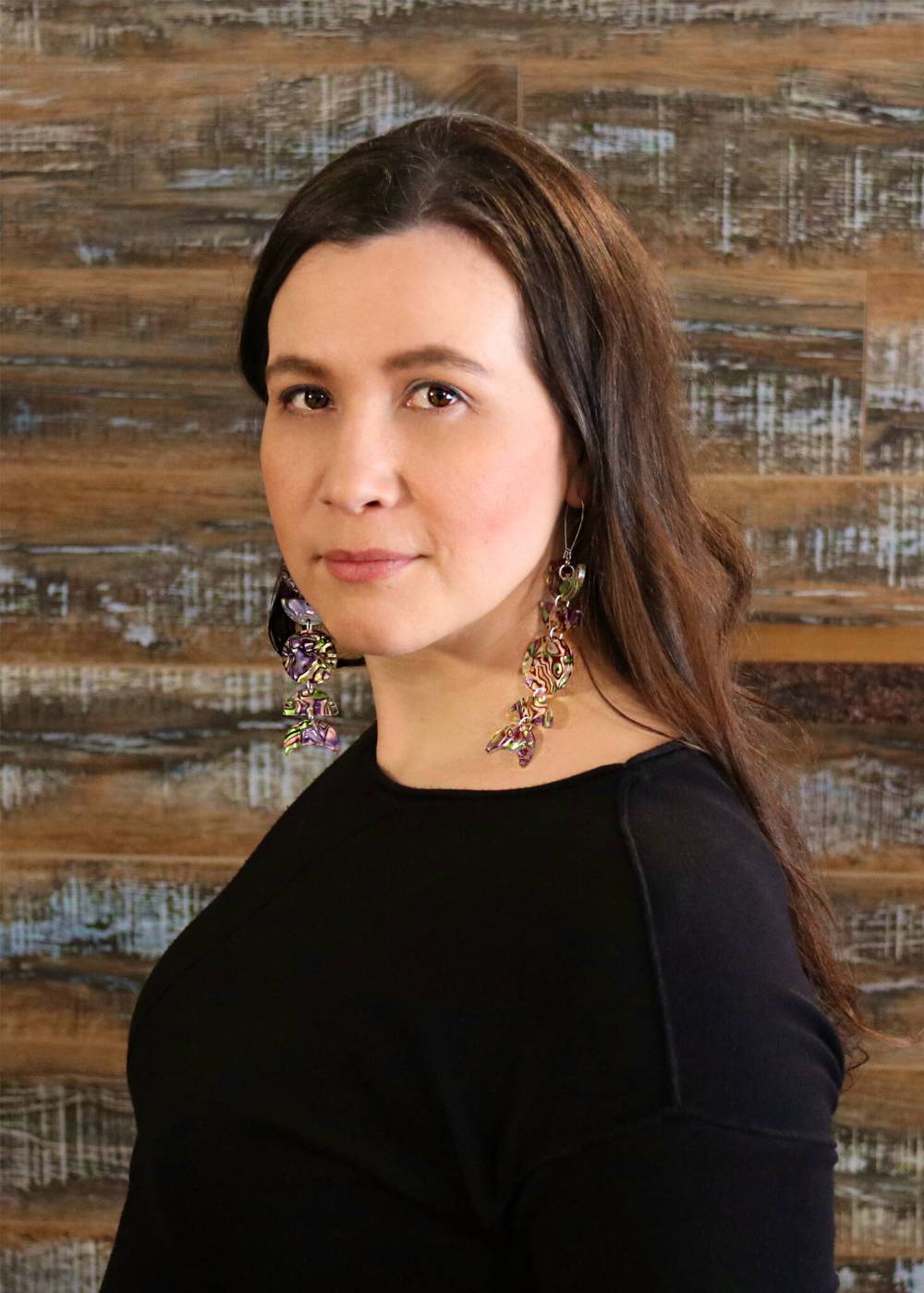
Vanda Fleury photo
Katherena Vermette’s latest novel gives readers a defiant proclamation of earned endurance and hope.
At the novel’s outset, Vermette presents her readers with a graphic representation of the “relational circle” her characters inhabit. The circles are carefully drawn so that some — the larger circles connecting the two Stranger sisters, Cedar Sage and Phoenix, for example — touch each other and those close to them. Other, smaller circles represent differing degrees of affiliation, some connected directly to the larger circles, some in close orbit, as if the gravitational force exerted on everyone by Phoenix, in the largest circle, binds all the characters into this community.
The plot of The Circle radiates outwards from its spectral central evocation: Phoenix Stranger’s imminent return to her family after she is released from prison, having served time for a horrific assault on a young woman. The exact nature of her crime is everywhere invoked, never fully revealed. But its lasting effects on the Stranger clan and the novel’s wider community ripple through everyone’s lives, and might seem to stand as a sign of the longer, more enduring rift between contemporary Métis and white communities.
The wide range of Vermette’s voice — her finest and most distinctive instrument — invites her readers to become ever more sharply attuned to the tones of her characters’ inner voices and to the rhythms of their street-level lives. As always in Vermette’s fiction, Winnipeg’s neighbourhoods are themselves living characters, hard-edged presences inseparable from Vermette’s figures. Witness Elsie, Phoenix’s mother, early in the narrative: she’s waiting downtown for Phoenix who, as always, doesn’t show up:
“A warm breeze blows over her face and picks up a few strays of garbage. Elsie watches an old paper cup roll over the curb. Thinks about how nice it is in the shade. The huge boarded-up Bay building shadowing over everything. The sun on the other side of the street. She’s almost chilled, even though it’s a pretty hot day. She holds her double-double in both hands and sips it slow. Phoenix is late already. Elsie should have known.”
The narrative develops through the novel’s three parts, each comprised of sections named after one of the characters in the relational circle, each contemplating Phoenix’s return with a degree of apprehension or dread, culminating in the concluding epilogue, which is set one year after the events surrounding Phoenix’s return and sudden disappearance. Puncturing these stories, in the novel’s darkest, most dire sequence, is a blank verse section depicting a knife murder in prison.
As in earlier Vermette fictions, in The Circle an alternating rhythm between the bush and the city inflects the narrative: older figures like Ben, Phoenix’s former counsellor — his section early in the novel is narrated in attractive vignettes — inhabit rural spaces that promise more peaceful and contemplative retreat and repose, better connection to the land. But Vermette’s Métis community everywhere endures the perennial ache of its bleak intersections with the largely white and tone-deaf world of cops, social workers and reporters.
As Phoenix’s sister, Cedar Sage Stranger occupies a conflicted space, caught between the haunted pull of her family and traditions and her dimly sensed promise of a larger world in which her ancestry — and her gender — might become more permeable as she emerges from the constrictive old binaries that almost everyone in the novel inhabits. The setting of the epilogue, fittingly, is a Sundance, Cedar’s first. And in the epilogue, readers will learn what has happened to Phoenix.
What The Circle also gives its readers is a defiant proclamation of earned endurance and hope. The novel closes on the reflections of Cedar’s friend, Ziggy, on the meanings of Ceremonies, which she knows “aren’t perfect,” although they “have so much Power:”
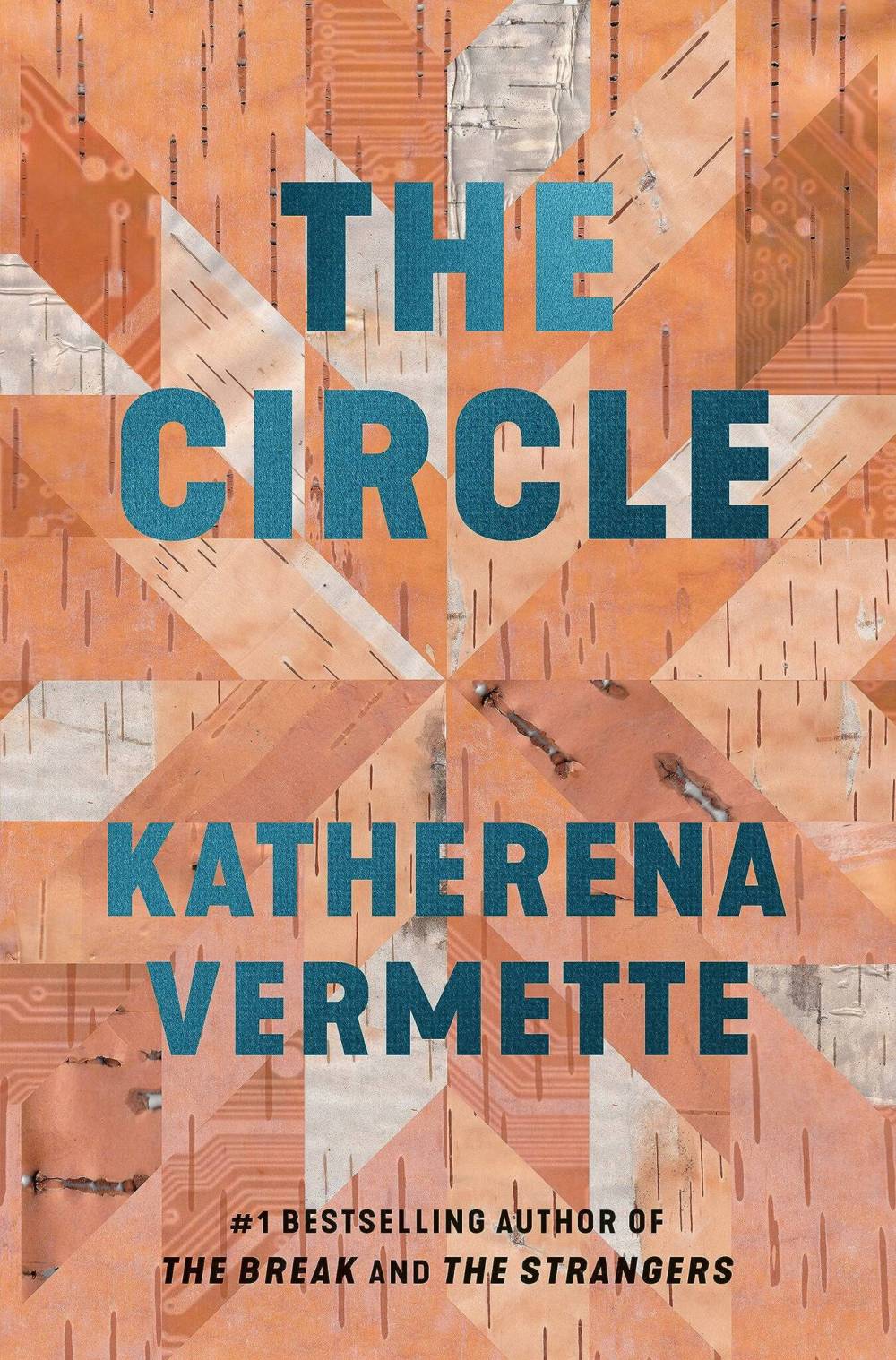
The Circle
“To her, Ceremonies are a manifestation of what’s inside of them all of the time. Even after all this bulls—t, it is still inside of them and coming out. Always coming out. Never stopping. Moving forward.
“Some call it strength or resilience or whatever. She calls it Power. Beautiful. F—ing. Power.”
The last inclusive word must be Vermette’s in her acknowledgments, fittingly, in Michif: “And you, reader-friend. It is my honour. Maarsii mille fois.”
Writer Neil Besner taught in the English department at the University of Winnipeg for 30 years.




