In the trenches
Bergen’s potent new historical fiction bristles against the horrors of war

Advertisement
Read this article for free:
or
Already have an account? Log in here »
To continue reading, please subscribe:

Digital Subscription
One year of digital access for only $205*
- Enjoy unlimited reading on winnipegfreepress.com
- Read the E-Edition, our digital replica newspaper
- Access News Break, our award-winning app
- Play interactive puzzles
*First annual payment billed as $205.00 + GST for one year. This annual subscription will automatically renew at $233.00 + GST every 52 weeks (10% off the regular annual price of $259.35). Offer available to new and qualified returning subscribers only. Cancel any time.
To continue reading, please subscribe:
Add Free Press access to your Brandon Sun subscription for only an additional
$1 for the first 4 weeks*
- Enjoy unlimited reading on winnipegfreepress.com
- Read the E-Edition, our digital replica newspaper
- Access News Break, our award-winning app
- Play interactive puzzles
*Your next Brandon Sun subscription payment will increase by $1.00 and you will be charged $17.95 plus GST for four weeks. After four weeks, your payment will increase to $24.95 plus GST every four weeks.
Read unlimited articles for free today:
or
Already have an account? Log in here »
Hey there, time traveller!
This article was published 09/09/2023 (1061 days ago), so information in it may no longer be current.
Histories of war sometimes talk about a clash of “great powers.” In this quietly potent and devastatingly beautiful novel, Winnipeg’s David Bergen brings the war home, into the lives and hearts of ordinary men and women who just want to raise their children, harvest their crops, sell their books and love each other.
The author of 13 works of fiction, including the Giller Prize-winning novel The Time in Between, in Away From the Dead Bergen writes of death and loss with prose that is spare, careful and understated without ever feeling flat.
Set in Ukraine at the beginning of the 20th century and then through civil war, First World War and the Russian Revolution, the novel sketches in the complexity and chaos of its time and place. There are Russians, Ukrainians, Germans, Mennonites, Jews, a welter of languages and beliefs. And then there are the political alliances — the nationalists, the social democrats, the Red Guard, the White Army, the Cossacks, the Denikinists, the Makhnovists.
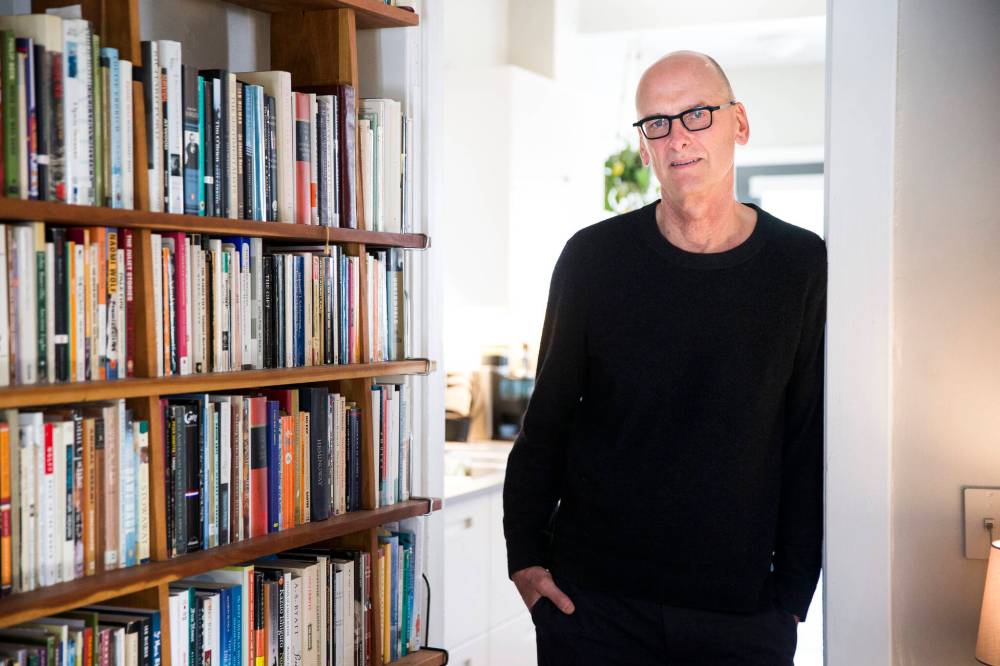
Mikaela MacKenzie / Winnipeg Free Press files
On Sept. 6, David Bergen’s latest novel was announced as one of the 12 books in contention for the 2023 Scotiabank Giller Prize.
Power can shift suddenly and often savagely, so that even those who “have no politics,” who just hope to keep their heads down, often end up on the wrong side of those temporarily in control.
Julius Lehn is a Jew, an atheist and an intellectual who ends up running a bookshop in Ekaterinaoslav (now Dnipro), though he finds it hard to let his favourite books go. He loves a woman and loses her, but then begins a tentative, tender relationship with Inna, who as a young girl was taken in by a wealthy Mennonite estate owner and his wife, and later sent away when she became pregnant.
Inna must learn to live a different kind of life, but she adapts, as most of the people in this story must.
Inna’s brother Sablin, meanwhile, more comfortable with animals than people, is a poor man who just wants “a horse. A stable. A small piece of land to plant tomatoes and vegetables.” He ends up caught between landowners and anarchists.
Away From the Dead is inspired by some of Bergen’s own family history and clearly by deep research and extensive reading. But all this knowledge is lightly worn. Bergen wants to convey this time not with the retrospective clarity of history but through the necessarily limited viewpoints of those living through it. When Lehn is conscripted into the Russian army, for example, he writes to Inna: “I do believe we are trying to kill the Germans, though sometimes it is other Russians, or perhaps Turks, and once I heard there were Romanians about, though I believe we are with the Romanians.”
Later, Lehn has a conversation with an officer named Viktor Shklovsky (based on the real-life Soviet writer and critic), who speaks of how hard it is to write meaningfully and truthfully of war: “Of all that I’ve read, the only thing I can remember as a plausible description of it are Stendahl’s Waterloo and Tolstoy’s battle scenes. To describe the mood of a front without resorting to false and artificial passages is hard.”
These are words Bergen himself heeds. This is a shattering anti-war novel, but Bergen tends to focus on small concrete details rather than grand tableaux. He obliquely suggests the horrors of trench warfare, for instance, by describing a soldier so inured to death that he uses a dead man’s back as a table for his soup pot.

Bergen is also more concerned with the so-called home front, though this becomes just another battleground in the terror and waste of war. Here he conveys the experience of civilians, especially women, as armies and marauding gangs range over the countryside, killing, raping, burning houses, slaughtering livestock and taking what they want. “Life is mere chance,” as Sablin concludes.
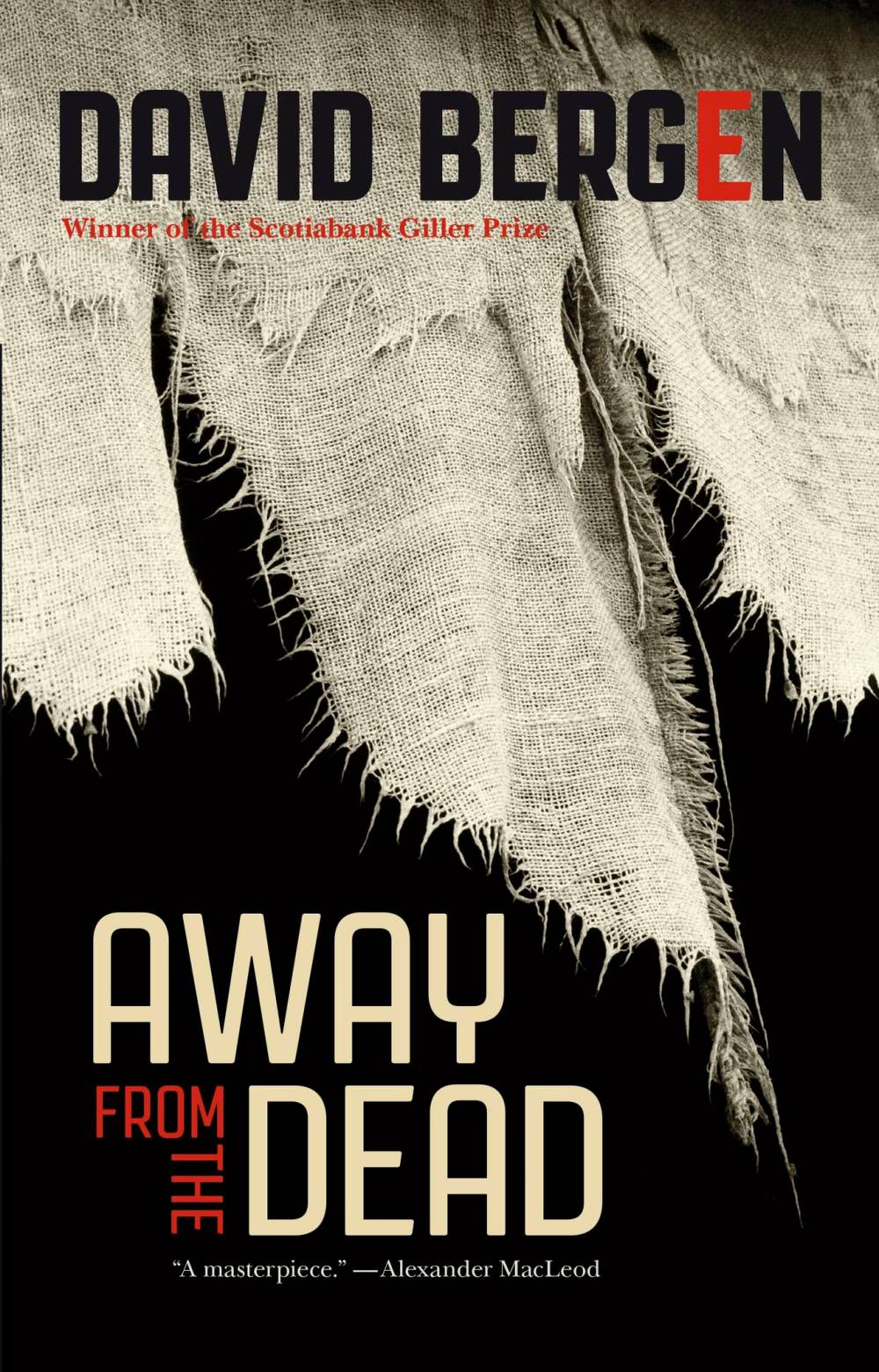
Away From the Dead
Bergen conveys this sense of random chance through its opposite — though control and caution and craft. There is a kind of tact, when he writes about these characters, as he conveys the courage needed to turn back towards life, even after all this suffering. It says a great deal about the power of this dense, economical novel that its final page, which is simply a stark list of names, dates and places, resonates with meaning and feeling.
Sometimes what Bergen leaves out is as important as what he puts in, which is why this carefully restrained work can express so much.
Alison Gillmor writes on pop culture for the Free Press.
David Bergen will launch Away from the Dead on Thursday, Sept. 21 at 7 p.m. at McNally Robinson Booksellers’ Grant Park location in conversation with Maurice Mierau as part of Thin Air 2023: Winnipeg International Writers Festival.
Studying at the University of Winnipeg and later Toronto’s York University, Alison Gillmor planned to become an art historian. She ended up catching the journalism bug when she started as visual arts reviewer at the Winnipeg Free Press in 1992.
Our newsroom depends on a growing audience of readers to power our journalism. If you are not a paid reader, please consider becoming a subscriber.
Our newsroom depends on its audience of readers to power our journalism. Thank you for your support.
Studying at the University of Winnipeg and later Toronto’s York University, Alison Gillmor planned to become an art historian. She ended up catching the journalism bug when she started as visual arts reviewer at the Winnipeg Free Press in 1992.
Our newsroom depends on a growing audience of readers to power our journalism. If you are not a paid reader, please consider becoming a subscriber.
Our newsroom depends on its audience of readers to power our journalism. Thank you for your support.
Advertisement Advertise With Us
Advertisement Advertise With Us