A new hope
Joan Thomas takes on mystery genre while tackling environmental issues

Advertisement
Read this article for free:
or
Already have an account? Log in here »
To continue reading, please subscribe:

Digital Subscription
One year of digital access for only $205*
- Enjoy unlimited reading on winnipegfreepress.com
- Read the E-Edition, our digital replica newspaper
- Access News Break, our award-winning app
- Play interactive puzzles
*First annual payment billed as $205.00 + GST for one year. This annual subscription will automatically renew at $233.00 + GST every 52 weeks (10% off the regular annual price of $259.35). Offer available to new and qualified returning subscribers only. Cancel any time.
To continue reading, please subscribe:
Add Free Press access to your Brandon Sun subscription for only an additional
$1 for the first 4 weeks*
- Enjoy unlimited reading on winnipegfreepress.com
- Read the E-Edition, our digital replica newspaper
- Access News Break, our award-winning app
- Play interactive puzzles
*Your next Brandon Sun subscription payment will increase by $1.00 and you will be charged $17.95 plus GST for four weeks. After four weeks, your payment will increase to $24.95 plus GST every four weeks.
Read unlimited articles for free today:
or
Already have an account? Log in here »
Hey there, time traveller!
This article was published 21/09/2023 (1094 days ago), so information in it may no longer be current.
Many of us emerged from the throes of the COVID-19 pandemic changed in ways we could not have expected.
For Winnipeg novelist Joan Thomas, it was an urgent need to write her way through one of our most urgent existential crises — climate change.
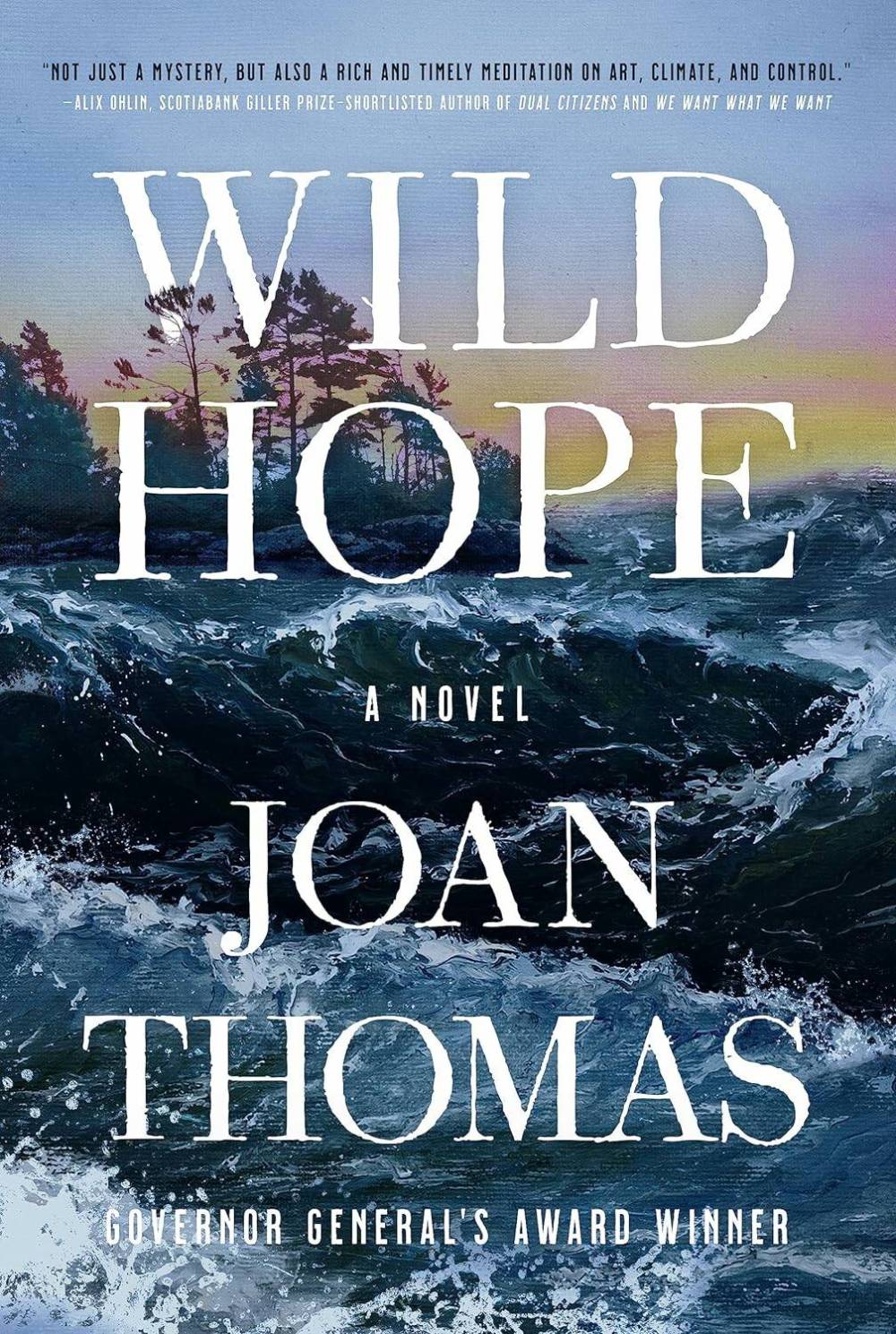
Thomas began writing Wild Hope, her fifth novel, during the pandemic.
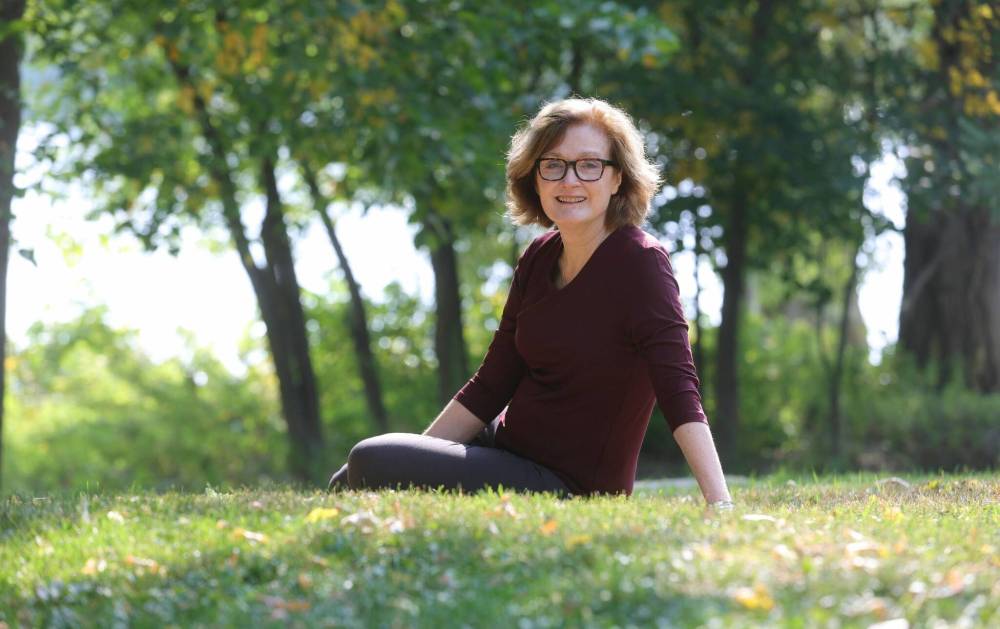
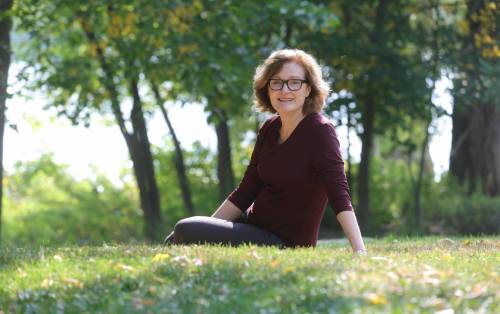
RUTH BONNEVILLE / WINNIPEG FREE PRESS
Joan Thomas wrote her fifth novel, Wild Hope, during the COVID-19 pandemic.
“It’s funny how many things we took for granted about life that we began to question — or I certainly did,” she says. “I felt like there was some kind of a profound change, and we’d never go back.”
Thomas launches Wild Hope Friday at 7 p.m. at McNally Robinson Booksellers’ Grant Park location as part of Thin Air 2023: Winnipeg International Writers Festival, where she will be joined in conversation with McNally Robinson co-owner Chris Hall.
At the core of Wild Hope is Isla, chef and co-owner of The Grange, a farm-to-table restaurant in rural Ontario. Her relationship with her partner Jake, a struggling artist, is on the rocks; when he goes missing one day, Isla begins to question whether one of her wealthiest patrons (and Jake’s childhood friend), bottled-water baron Reg Bevaqua, might have something to do with his disappearance.
The novel then shifts to the property where Jake’s childhood cottage once stood, replaced by a sprawling new cabin built by Bevaqua.
It is here where the circumstances surrounding Jake’s disappearance begin to take shape.
Jake’s disappearance also makes Wild Hope a literary mystery — a genre Thomas hadn’t explored in her previous work and which took her slightly by surprise during the writing process.
“I didn’t foresee that when I set out to write the book — it was interesting to me how it gradually moved in that direction,” she says, careful to talk her way around potential spoilers.
“We’re all perplexed as to why we aren’t able to change more to meet the current moment, and it just felt fitting to me that Jake, who wants so desperately to change, gets caught up in a snare, in an old competitive mode. And in a sense, that was embodied in my using the form of a mystery.“
A challenge in writing the novel was for Thomas to explore issues of climate without sounding preachy or didactic.
“I think if you want to investigate serious issues (in fiction), it’s really important to have a huge element of story that keeps you going. You don’t want to be writing some kind of a treatise. I guess, in a sense, my characters are avatars for questioning how we need to change, how we need to evolve,” she says.
Many of the characters in Wild Hope struggle with notions of accomplishment (or lack thereof) and the emptiness they still feel.
“One of the things I was questioning in the book is how we define excellence. Isla, for example, has this high-end restaurant in the country, and yet she says ‘I’ve never fed people who are really hungry. So much of what we consider our self-realization, or our accomplishments in life, is premised on the fact that we are over-consuming with respect to resources. Like travelling to every corner of the earth — it’s been fantastic for our generation to travel the way we have. Or the way our diet is enlarged, flying in lovely, exotic ingredients from around the world. So many of the things that I’m questioning are things we genuinely agree are good expressions of human ambition, but they’re not consistent with our survival,” Thomas says.
Three of Thomas’s previous novels, including 2019’s Five Wives, which won the Governor General’s Literary award for fiction, have been historical in nature, which she finds easier than engaging in her own world building as she did in Wild Hope.
“For me it’s easier to do a project that’s based on research because it’s furnishing your imagination from archival materials, whereas this is coming straight from your imagination,” she says.
But the urgency of our present state made it necessary to for Thomas to try.
“I wanted to take on this moment, which I think is so astonishing for writers, where so many of the things that we have taken for granted are in question, because of climate change, right-wing political movements and so on.”
Wild Hope isn’t explicitly a climate thriller, and Thomas feels pigeonholing or labelling novels that grapple with climate change is problematic.
“I don’t like the term ‘cli-fi’ (climate fiction) or ‘eco thriller’ very much because it implies this is a little niche genre for geeks who are interested,” she says. “I really think as writers, this is the issue of our era. This is what we need to be taking on. It’s a struggle to find a way to do it; literary fiction has been so focused on the individual and the individual psyche. And this is such a colossal global issue.”

It’s difficult for Thomas to envision future novels without again tackling issues of climate.
“I can’t imagine writing fiction that is not conscious of this moment. It would feel deliberately evasive and blind,” she says. “The silence in our everyday rhetoric is astonishing, and I think writers contribute to it when they write books as if the world is not changing.”
She pauses, adding “It’s hard to question things like that. It’s hard to write a book that’s moral without being moralistic.”
ben.sigurdson@winnipegfreepress.com
@bensigurdson
Ben Sigurdson
Literary editor, drinks writer
Ben Sigurdson is the Free Press‘s literary editor and drinks writer. He graduated with a master of arts degree in English from the University of Manitoba in 2005, the same year he began writing Uncorked, the weekly Free Press drinks column. He joined the Free Press full time in 2013 as a copy editor before being appointed literary editor in 2014. Read more about Ben.
In addition to providing opinions and analysis on wine and drinks, Ben oversees a team of freelance book reviewers and produces content for the arts and life section, all of which is reviewed by the Free Press’s editing team before being posted online or published in print. It’s part of the Free Press‘s tradition, since 1872, of producing reliable independent journalism. Read more about Free Press’s history and mandate, and learn how our newsroom operates.
Our newsroom depends on a growing audience of readers to power our journalism. If you are not a paid reader, please consider becoming a subscriber.
Our newsroom depends on its audience of readers to power our journalism. Thank you for your support.
Book launch preview
An evening with Joan Thomas
Launching Wild Hope, in conversation with Chris Hall
● McNally Robinson Booksellers, Grant Park location
● Friday, 7 p.m., free
Ben Sigurdson
Literary editor, drinks writer
Ben Sigurdson is the Free Press‘s literary editor and drinks writer. He graduated with a master of arts degree in English from the University of Manitoba in 2005, the same year he began writing Uncorked, the weekly Free Press drinks column. He joined the Free Press full time in 2013 as a copy editor before being appointed literary editor in 2014. Read more about Ben.
In addition to providing opinions and analysis on wine and drinks, Ben oversees a team of freelance book reviewers and produces content for the arts and life section, all of which is reviewed by the Free Press’s editing team before being posted online or published in print. It’s part of the Free Press‘s tradition, since 1872, of producing reliable independent journalism. Read more about Free Press’s history and mandate, and learn how our newsroom operates.
Our newsroom depends on a growing audience of readers to power our journalism. If you are not a paid reader, please consider becoming a subscriber.
Our newsroom depends on its audience of readers to power our journalism. Thank you for your support.
Advertisement Advertise With Us
Advertisement Advertise With Us