A Prairie beacon
Journalist Siddiqui looks back on his days at the Brandon Sun as a new Canadian in the 1960s and ’70s
Advertisement
Read this article for free:
or
Already have an account? Log in here »
To continue reading, please subscribe:

Digital Subscription
One year of digital access for only $205*
- Enjoy unlimited reading on winnipegfreepress.com
- Read the E-Edition, our digital replica newspaper
- Access News Break, our award-winning app
- Play interactive puzzles
*First annual payment billed as $205.00 + GST for one year. This annual subscription will automatically renew at $233.00 + GST every 52 weeks (10% off the regular annual price of $259.35). Offer available to new and qualified returning subscribers only. Cancel any time.
To continue reading, please subscribe:
Add Free Press access to your Brandon Sun subscription for only an additional
$1 for the first 4 weeks*
- Enjoy unlimited reading on winnipegfreepress.com
- Read the E-Edition, our digital replica newspaper
- Access News Break, our award-winning app
- Play interactive puzzles
*Your next Brandon Sun subscription payment will increase by $1.00 and you will be charged $17.95 plus GST for four weeks. After four weeks, your payment will increase to $24.95 plus GST every four weeks.
Read unlimited articles for free today:
or
Already have an account? Log in here »
Hey there, time traveller!
This article was published 30/09/2023 (1089 days ago), so information in it may no longer be current.
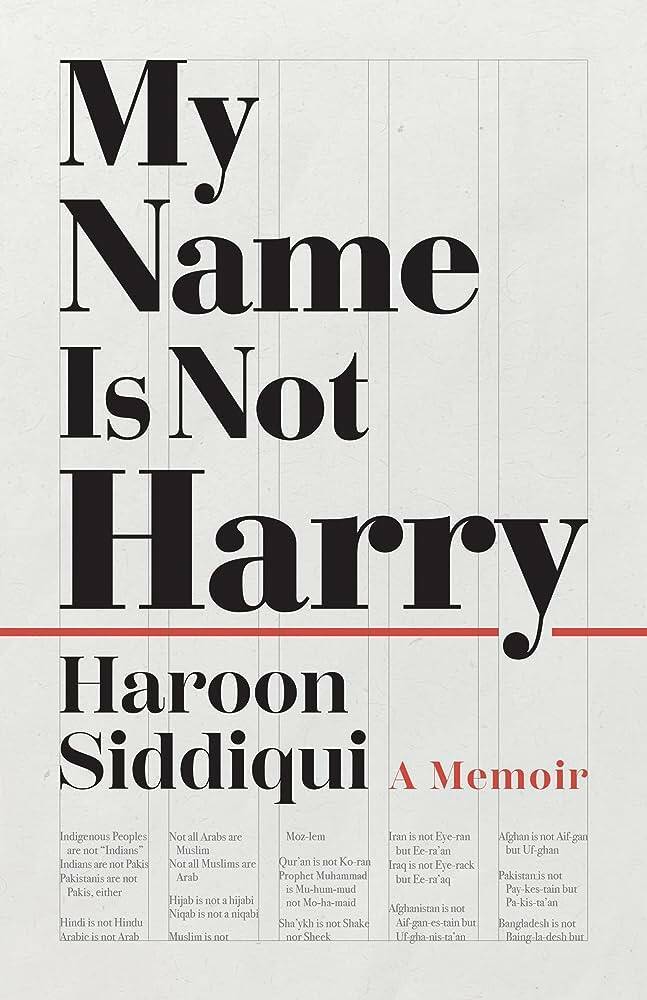
Excerpt from My Name is Not Harry: A Memoir, by Haroon Siddiqui. Siddiqui, a member of the Order of Canada, worked at the Brandon Sun (1968-78) and at the Toronto Star (1978-2015), and is a Senior Fellow at Massey College, University of Toronto.
After my arrival in Canada in 1967 and spending time briefly in Montreal and Toronto, I headed to Manitoba to take a job at the Brandon Sun that Clark Davey, the Globe and Mail’s managing editor, recommended me for.
The decade I spent at the Sun, from 1968 to 1978, was the best thing that could have happened to me personally and professionally. It made me a Canadian journalist and let me experience the vast expanse of the Prairies and their rolling hills, and beyond, to the Rockies, the West Coast, and parts of the North that I’d have known only fleetingly had I remained in Southern Ontario.
Supplied
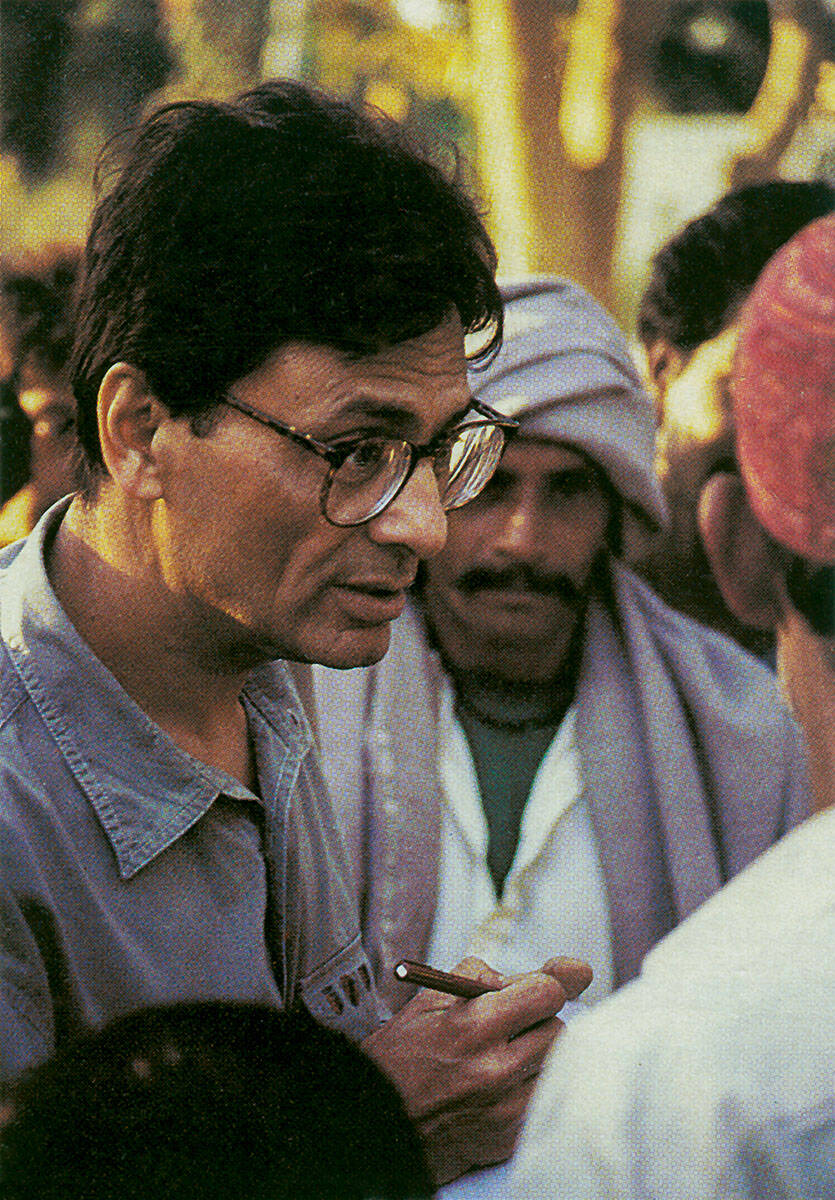
Journalist Haroon Siddiqui on assignment in India.
The people of the Prairies were more multicultural and multilingual than Toronto ever was in the 1960s. Friendlier, too, once they got to know you.
They had an ethos of interdependence forged by the extreme weather — if your car was ever stuck anywhere in winter, the next traveller would stop and bail you out. And upbraid you if you were ill-prepared for the killer cold.
I’m not one to see racism under every rock but am not blind to bigotry. I faced no racism, only curiosity and ignorance at being an “Indian” or “East Indian,” to differentiate us from West Indians and Canadian “Indians.” At a remote northern community, a little girl kept staring at me, for which her mother apologized — “She’s never seen an Indian.” Being an Indian was, in fact, an advantage: there were so many Indian doctors dotted throughout Western Canada that people often addressed me as “Doc.”
The “Indians” who faced real racism were Indigenous people. But that wasn’t recognized; indeed, it was assiduously ignored. There was a residential school in plain sight five kilometres from Brandon on the north bank of the Assiniboine River where friends fished for perch and pike.
The bigotry toward Hutterites was couched in the complaints that they gobbled up too much farmland and that working in collectives constituted unfair competition. Anti-French prejudice was palpable, an acceptable part of political discourse, and antisemitism was just below the surface.
There was a liberal side to Brandon — a well-entrenched co-operative movement and strong labour unions, a spillover from the government in neighbouring Saskatchewan, the old Co-operative Commonwealth Federation, predecessor of the New Democratic Party.
Brandon University was a liberal arts college with lefty academics and international students, principally from India and the Caribbean, including my younger brother, Yousuf, who came in 1969. The United Church had a dedicated following, some of whom I got to know well after covering Bruce McLeod, the first lay moderator of the church. He was a new kind of God guy, a medical doctor who had served in China and India, and quoted Gandhi often. The United Church could always be counted on to be on the same side of an issue as the Brandon Sun.
The Brandon Sun was called the Cadillac of small newspapers in Canada. The best thing about it was Lewis D. Whitehead, its owner/publisher.
Tall and lithe, Lew was a suave bachelor who dressed impeccably, his clothes perfectly ironed, shoes always polished. He knew his cutlery, how to use it and not to — tines down and no waving around of knife, fork, and spoon, their movements limited to the space between the crockery and the mouth. Lew never chewed and talked at the same time.
His wood-panelled office with carved, cushioned chairs and a polished desk exuded understated elegance. Lew’s cars were the latest luxury models, which he let some of us drive to Winnipeg’s airport and back when he flew off to New York City where he had an apartment and a friend.
He trusted us with his beloved Lincolns and Eldorados. Lew had confidence in our driving or thought it impolite to issue a list of dos and don’ts to anyone doing him a favour.
Lew had inherited the Brandon Sun but transformed it with his money and idealism. For a paper with a circulation of 15,000 and an average of 22 pages per day, it maintained more editorial staff (22), more local columnists (12), more regional freelancers (nearly 60 sprinkled throughout southwestern Manitoba), and subscribed to more news sources and syndicates than any paper of comparable circulation in North America. It was well designed, too, winning awards, including the prestigious Inland Daily Press Association and Northwestern University Medill School of Journalism Award, the only Canadian newspaper so honoured.
Once himself a reporter and editorial writer, Lew had journalistic vision. While the Sun was heavily local, he ensured that it wasn’t parochial. He let reporters roam the province and beyond. He had ethics. He believed in fairness and balance, especially in a one-newspaper town. He stood by his staff.
All those attributes came in handy when a socialist revolution swept the province in the summer of 1969 and the NDP won power for the first time.
SUPPLIED
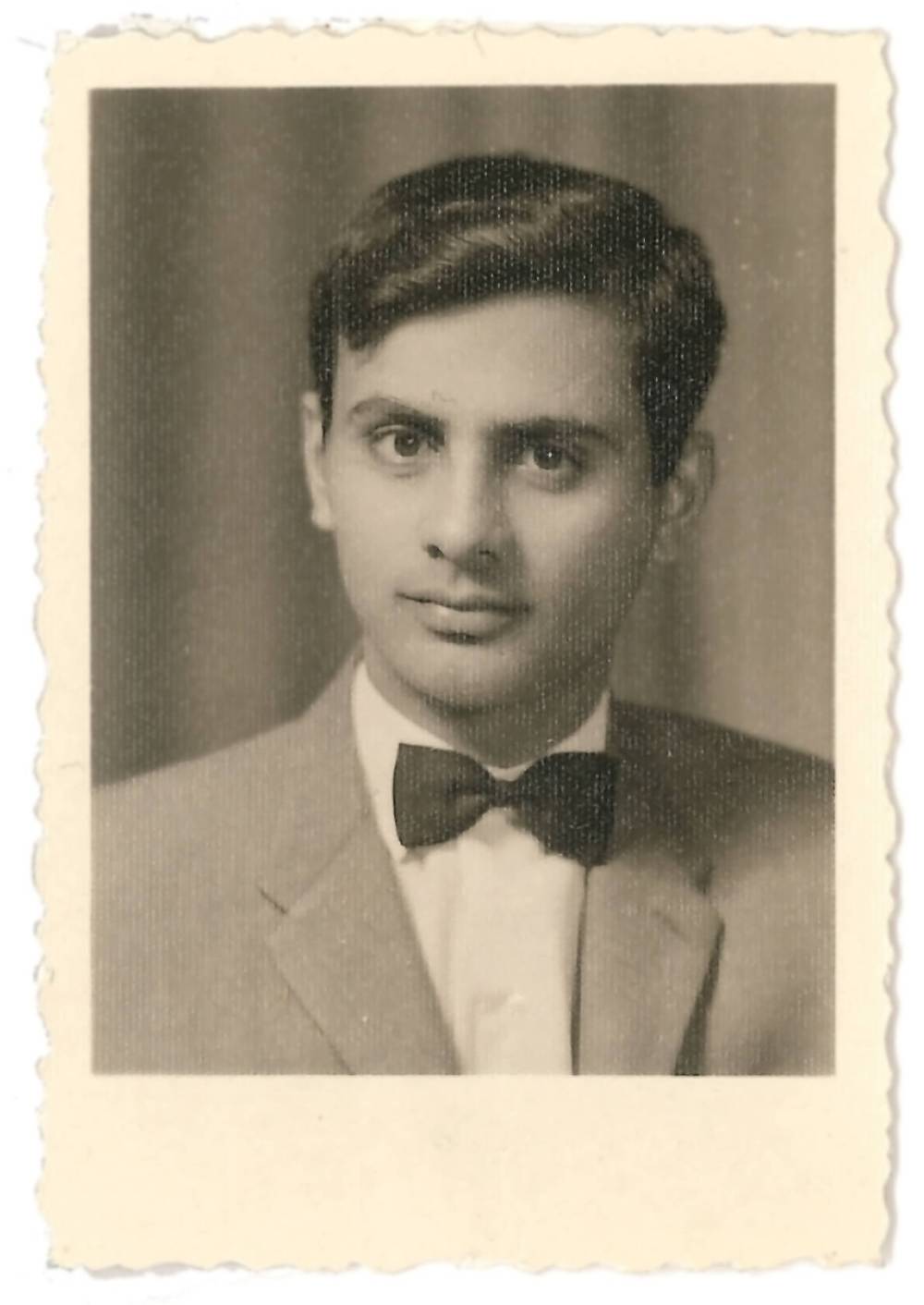
Haroon Siddiqui as a young man in 1970.
Most Canadians remember Ed Schreyer as a lacklustre governor general (1979-84). But in Manitoba he was a charismatic trailblazer. Blowing in like a whirlwind, he won the NDP leadership and a general election within a span of 18 days and became the province’s youngest-ever premier. At 33, he had already been in elected office for 11 years, seven as an MLA and four as an MP. He had four degrees and spoke four languages: English, French, Ukrainian and German. His was a coalition of minorities long denied office — francophones, Indigenous people, Ukrainians, Poles, people of Austrian-German stock like himself, and others.
Schreyer was a pioneer in conceptualizing a multicultural society in which “cultural groups can feel secure in their ability to thrive.”
“Ed the Red” unleashed a tidal wave of reforms. He nationalized auto insurance, banned extra billing by doctors, subsidized seniors to repair their homes, and legislated the equal division of shared marital assets in divorce, a first in Canada. He displayed nerves of steel in the face of unprecedented opposition from doctors, insurance agents, and their comrades at the upscale Manitoba Club.
There was the added melodrama of whether his minority government would survive, being one seat short of a majority. The teeter-totter wasn’t stopped until the NDP won two by-elections in 1971, including one in St. Rose, north of Brandon. The riding was won almost single-handedly by Howard Pawley, the minister who had ushered in public auto insurance.
An unusual politician, he rarely raised his voice, had zero charisma, but possessed an abundance of innate decency that showed through and eventually carried him to the job of premier in 1981. His wife, Adelele Schreyer, a cousin of the premier — was equally unpretentious and even more at ease on the campaign trail than he was.
In those days, ministers didn’t need security, weren’t chauffeured around, not even the premier, and had an easy, informal relationship with reporters with whom they hitched a ride or to whom they gave one. On the eve of the byelection, after a long day of campaigning from farm to farm, Pawley politely ushered me out of his battered Chevy, saying he had to go off on “a sensitive mission.” It turned out that he’d gone to persuade the local priests, especially the Catholic one, to refrain from endorsing either the Conservative or Liberal candidate. None would have endorsed the NDP, Pawley said, but as “long as they just stay neutral, we can win.”
In 1978, I told Lew I was thinking of moving to Toronto. He was most understanding: “You’re 36, and if you don’t move now, you probably never will.” He wrote his friend, Bill Callaghan, publisher of the Edmonton Journal, to see if the Southam chain of newspapers had a suitable job for me. Before anything came of it, I had job offers from the Globe and Mail and the Toronto Star.
SUPPLIED
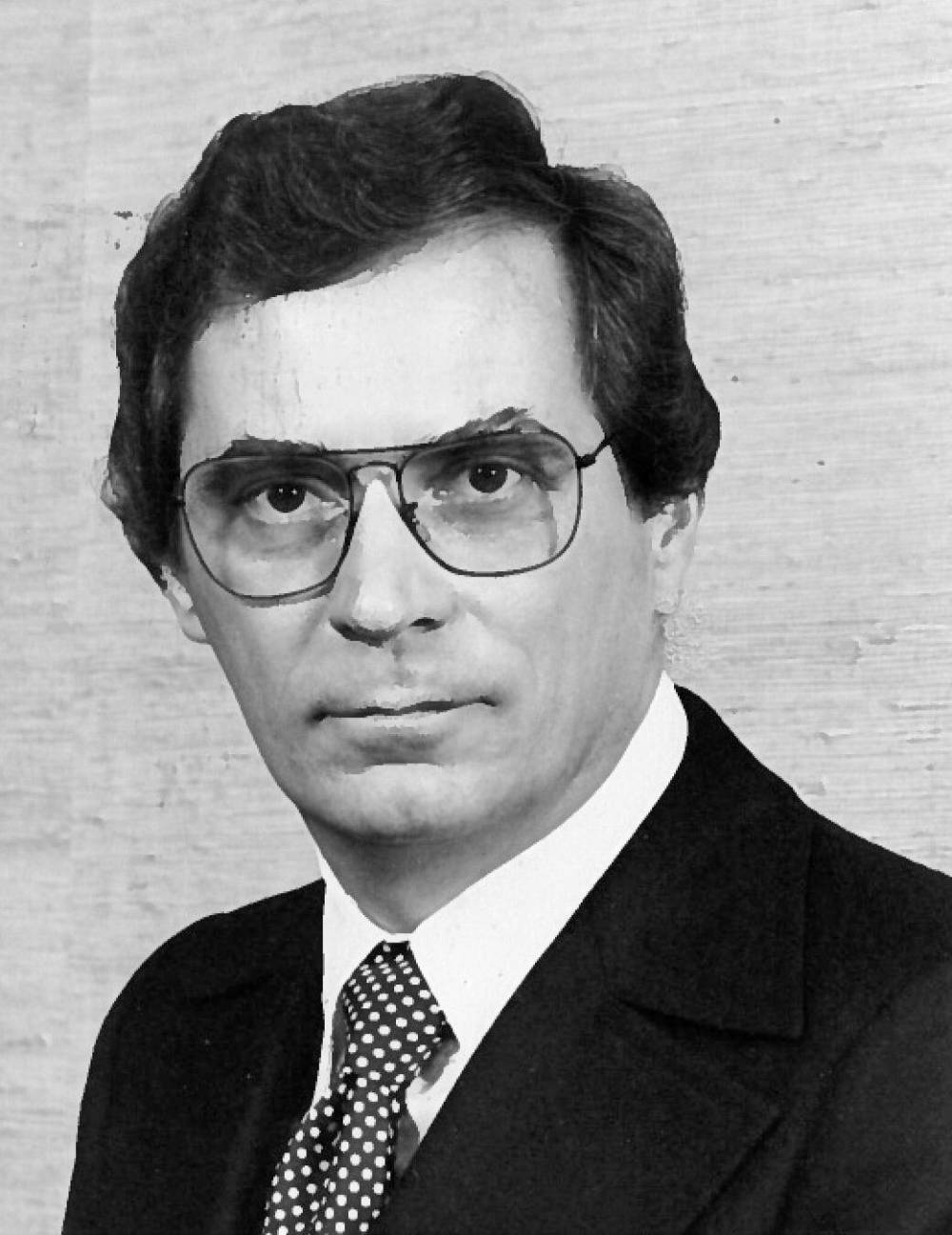
Brandon Sun owner/publisher Lewis D. Whitehead
We kept in touch. Lew sold his sprawling bungalow on the outskirts and moved downtown into an office-cum-condo building with his mother. In April 1985, when he went out with his dog for the evening walk, he was attacked by two drunks who stabbed him repeatedly. Extensive surgery that night saved Lew’s life. A year later, he was awarded the Order of Canada. A year after that, facing more surgery — and “knowing what I know of my health” — he reluctantly sold the newspaper to Thomson Newspapers, retired to Arizona, and died in 1996, age 69.
Charlie Gordon, the Brandon Sun’s former managing editor, wrote a moving tribute in Maclean’s:
If Whitehead had died 20 years earlier, the funeral would have been at the Anglican cathedral and the Anglican cathedral would have been packed. The mayor of Brandon would have been there, the member of Parliament, the premier of Manitoba and the entire staff of the Whitehead family newspaper, the Brandon Sun.… Speakers, including prominent representatives of the newspaper industry, would have lauded his courage, his generosity. But the Brandon Sun hadn’t been Whitehead’s paper for the past 10 years, and he had largely dropped out of sight. The service, on Aug. 20, was at the funeral home. About 100 people were there, none of them famous, and the paper was largely represented by retirees, bolstered by a good contingent of long-time workers from the composing room. There were no eulogies, aside from a brief attempt by the minister, who said that Lew had known triumph and tragedy, joy and sorrow, etc., etc. It was a sad and unfair ending.