Takin’ it to the beach
Classic rock band’s new single to help people displaced by Lahaina fire

Advertisement
Read this article for free:
or
Already have an account? Log in here »
To continue reading, please subscribe:
Digital Subscription
One year of digital access for only $1.44 a week*
- Enjoy unlimited reading on winnipegfreepress.com
- Read the E-Edition, our digital replica newspaper
- Access News Break, our award-winning app
- Play interactive puzzles
*Billed as $5.77 plus GST every four weeks. After 52 weeks, price increases to the regular rate of $19.95 plus GST every four weeks. Offer available to new and qualified returning subscribers only. Cancel any time.
To continue reading, please subscribe:
Add Free Press access to your Brandon Sun subscription for only an additional
$1 for the first 4 weeks*
- Enjoy unlimited reading on winnipegfreepress.com
- Read the E-Edition, our digital replica newspaper
- Access News Break, our award-winning app
- Play interactive puzzles
*Your next Brandon Sun subscription payment will increase by $1.00 and you will be charged $17.95 plus GST for four weeks. After four weeks, your payment will increase to $24.95 plus GST every four weeks.
Read unlimited articles for free today:
or
Already have an account? Log in here »
Hey there, time traveller!
This article was published 21/10/2023 (1092 days ago), so information in it may no longer be current.
The man who wrote Black Water, the Doobie Brothers’ first No. 1 hit, has the black, charred remains of this summer’s deadly Maui wildfires on his mind.
An ocean separated Pat Simmons — who will play the Canada Life Centre Sunday with the Doobies — from his home on the Hawaiian island on Aug. 8.
Brush fires whipped up by winds from a nearby hurricane led to the destruction of Lahaina, a town on Maui’s west coast. Ninety-seven people died from the fire, which destroyed more than 2,200 homes and buildings and displaced more than 6,000 people. Some people have yet to be accounted for.
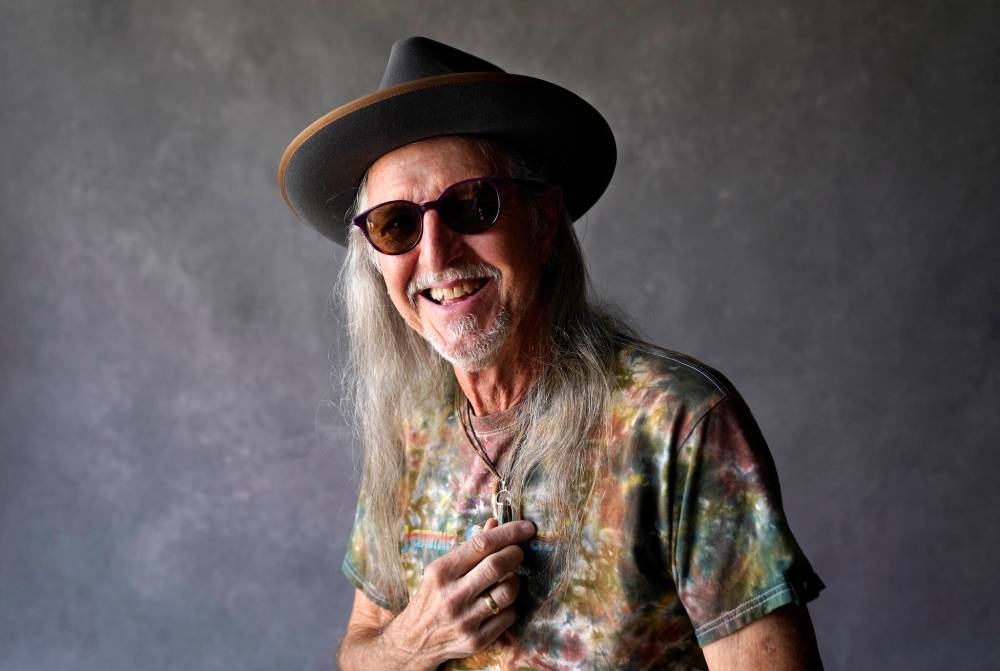
Chris Pizzello / The Associated Press Files
Guitarist-vocalist
Pat Simmons is an original member of rock band the Doobie Brothers.
“It was really a horrendous event,” says Simmons, whose home on Maui’s north shore, about 65 kilometres from Lahaina, was spared from the blaze. “It’s affected all the residents there. It’s taken a toll on all of us, one way or another.
“As a resident, I’ve been working really hard trying to create some awareness of what’s happening there because it’s going to take years for the town to be rebuilt and the victims to be re-established there.”
Simmons and the Doobies went into the studio later in August and recorded It Calls to Me; the proceeds from the song will go to the People’s Fund of Maui, which Oprah Winfrey and Dwayne (the Rock) Johnson established in August with a US$10-million donation to help those whose homes were destroyed by the fires. Both celebrities own homes on Maui.
“It’s basically a song about Lahaina,” says Simmons, who called on a Maui neighbour, Mick Fleetwood of Fleetwood Mac, to play drums on the track. Ukulele master Jake Shimabukuro, another Hawaiian, joined in as well.
“I think it’s a great song and a great performance of the band and I hope people get a chance to hear it,” says the guitarist/vocalist, who has lived in Hawaii for 28 years.
The Maui wildfire has sapped some of the jubilation from the Doobie Brothers’ 50th-anniversary tour, which began in 2021, a year later than scheduled owing to COVID-19 pandemic delays.
Three years later, Simmons, vocalist Michael McDonald and guitarist John McFee are continuing on across Canada without guitarist and songwriter Tom Johnston, who is recovering from back surgery he had earlier this year.
Simmons was there in 1970 when the Doobies began, and his 1974 song Black Water, originally a B-side, became an accidental hit.
“It started out as a kind of a riff. I was just fooling around between takes,” he remembers about a studio session. “Soon after that, we were in New Orleans doing some shows … I was kind of living the life in New Orleans, in the French Quarter, and the real spark was when I was on the streetcar. I was going uptown to do my laundry.
“The sun was out and it was raining. I wrote, ‘If it rains, I don’t care, it makes no difference to me. I’ll take the streetcar uptown,’ and that was the first verse I put together. That ends up being the second verse. That started the process of writing a song, celebrating my experience in New Orleans.”
The band’s early years spawned China Grove and Listen to the Music, two staples of classic-rock radio 50 years after their release, but it was adding McDonald to the group in 1975, and the albums Takin’ it to the Streets and Minute by Minute, that drove the Doobies to a new level of stardom.
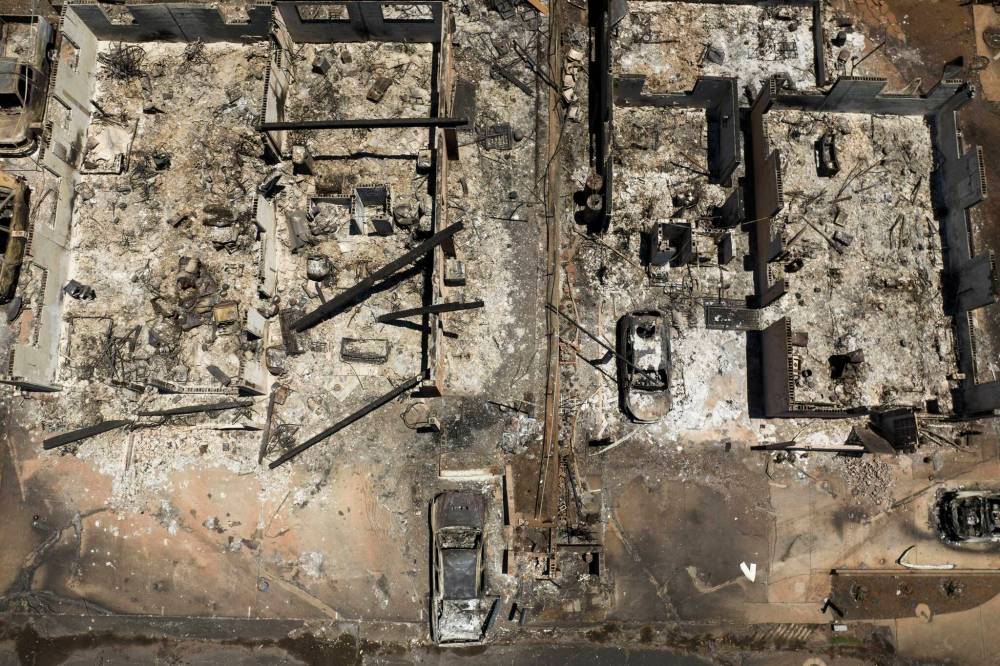
Jae C. Hong / The Associated Press files
The August fire in Lahaina, Hawaii, destroyed more than 2,200 homes.
McDonald — who has been part of the group off and on since the 1980s and also has a solo career — had to be part of the 50th anniversary tour, Simmons says.
“We all stay in touch with him and he would come and sit in with us from time to time, help us out with different projects, work in the studio,” Simmons says. “When we rolled around to this 50th anniversary, we went to him and said, ‘How about joining us on this tour,’ and he said yes. That was a couple of years ago and he’s been with us ever since.
“He adds that extra incentive for people to come and see us.”

While Doobies’ classics, including Black Water, will be part of a 21/2-hour celebration of the band, which was inducted into the Rock and Roll Hall of Fame in 2020, Simmons says they’ve reached back into the group’s history for songs longtime fans only hear when they dig out their old vinyl.
“We’re doing some deeper cuts from our catalogue — it’s always fun for us to dig in a little deeper and I think the audience appreciates that. They’re getting to hear some things they’ve probably never heard us play before, songs we haven’t played for a long time,” he says.
“We’ve made quite an investment in the production for the tour.”
alan.small@winnipegfreepress.com
X: @AlanDSmall
Alan Small
Reporter
Alan Small was a journalist at the Free Press for more than 22 years in a variety of roles, the last being a reporter in the Arts and Life section.
Our newsroom depends on a growing audience of readers to power our journalism. If you are not a paid reader, please consider becoming a subscriber.
Our newsroom depends on its audience of readers to power our journalism. Thank you for your support.
Concert preview
Doobie Brothers
● Sunday, Oct. 22, 7:30 p.m.
● Canada Life Centre
● $63.25-$286.58 at ticketmaster.ca
Alan Small
Reporter
Alan Small was a journalist at the Free Press for more than 22 years in a variety of roles, the last being a reporter in the Arts and Life section.
Our newsroom depends on a growing audience of readers to power our journalism. If you are not a paid reader, please consider becoming a subscriber.
Our newsroom depends on its audience of readers to power our journalism. Thank you for your support.
Advertisement Advertise With Us
Advertisement Advertise With Us