The art of reconciliation Exhibit tells story of artist’s own journey of understanding the relationship between Canada and Indigenous Peoples
Read this article for free:
or
Already have an account? Log in here »
To continue reading, please subscribe:

Digital Subscription
One year of digital access for only $205*
- Enjoy unlimited reading on winnipegfreepress.com
- Read the E-Edition, our digital replica newspaper
- Access News Break, our award-winning app
- Play interactive puzzles
*First annual payment billed as $205.00 + GST for one year. This annual subscription will automatically renew at $233.00 + GST every 52 weeks (10% off the regular annual price of $259.35). Offer available to new and qualified returning subscribers only. Cancel any time.
To continue reading, please subscribe:
Add Free Press access to your Brandon Sun subscription for only an additional
$1 for the first 4 weeks*
- Enjoy unlimited reading on winnipegfreepress.com
- Read the E-Edition, our digital replica newspaper
- Access News Break, our award-winning app
- Play interactive puzzles
*Your next Brandon Sun subscription payment will increase by $1.00 and you will be charged $17.95 plus GST for four weeks. After four weeks, your payment will increase to $24.95 plus GST every four weeks.
Read unlimited articles for free today:
or
Already have an account? Log in here »
Hey there, time traveller!
This article was published 30/10/2023 (1067 days ago), so information in it may no longer be current.
Growing up, Lani Zastre was proud to call herself Canadian.
In school, she learned about a multicultural country with a society founded on equality and acceptance. Canada Day was a time for earnest celebration.
Zastre’s perspective changed when she started pursuing a degree in social work.
“Learning that, at the time, 86 per cent of kids in care were Indigenous and… recognizing that there’s a disproportionate amount of Indigenous people that experience poverty,” she says. “You really start to realize that the odds are against people, the systems were designed not to take care of Indigenous people.”
Those revelations — along with the release of the Truth and Reconciliation Commission of Canada’s final report around the same time — forced Zastre to reckon with her understanding of what it meant to be Canadian.
“As my awareness grew, all of the memories and all of the feelings that I had related to my citizenship were challenged,” she says.
MIKAELA MACKENZIE / WINNIPEG FREE PRESS ‘It’s not just learning about other people, it’s about learning about myself, too.’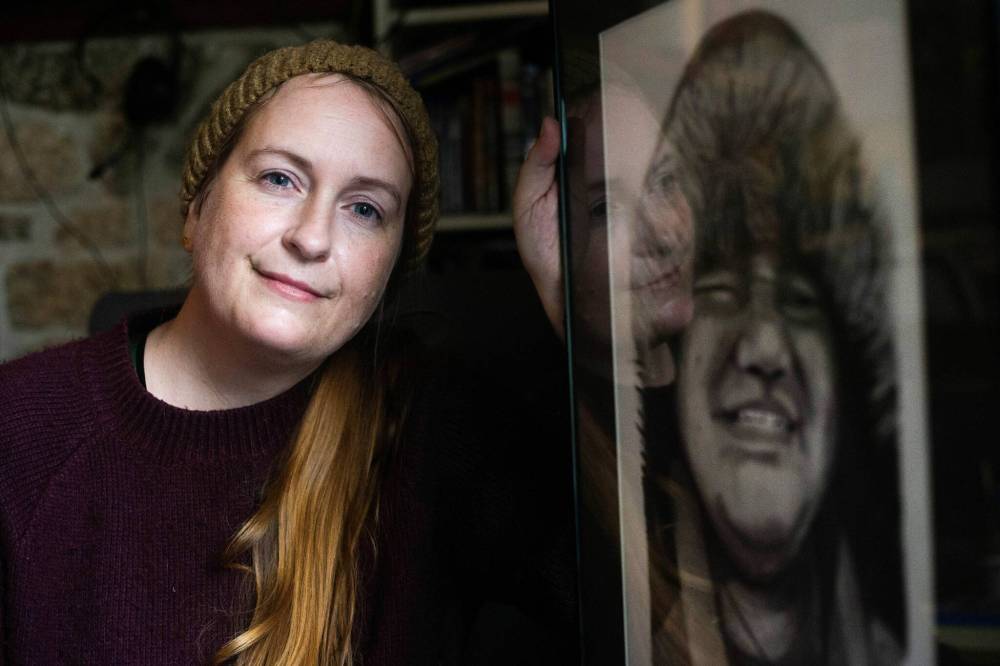
Zastre is of Mennonite and Swedish descent. For much of her life she was also told by family members that she was part Cherokee, but with no evidence to support those claims she has stopped referring to herself as such.
Last year, Zastre embarked on an art project to figure out what it means to be a settler and a respectful Indigenous ally in Canada. The result is Be a Better Settler, a gallery exhibit and self-published book featuring 16 portraits created following interviews with First Nations, Métis and Inuit individuals from across the country.
The ink and graphite drawings are accompanied by written reflections — called settler’s logs — on the conversations, which took place over a meal and included a recorded interview and reference photo.
“I didn’t start off thinking that this writing was going to be a significant portion of what I wanted to put out there,” Zastre says. “(But) it’s not just learning about other people, it’s learning about myself, too.”
“I know how I struggled with my citizenship and I think I’m going to continue struggling with it until the day that I die, and that’s OK because we have a hard history.”–Lani Zastre
The settler’s logs outline her relationship with each participant and detail their unvarnished discussions about colonialism, Canadian history, systemic racism, accountability, privilege and personal experience. Zastre also includes her own missteps along the way — such as the occasional flubbing of gifting of tobacco during meetings.
“I’m not an expert by any, any, any means,” she says of diverse Indigenous cultural practices. “There was a real big learning curve.”
Zastre is a self-taught artist who started developing a professional practice five years ago while receiving treatment for several mental health issues. Drawing has become an important tool for coping and connection.
“I used art to get me through some of the darkest pieces,” she says. “This journey has brought me to this project. As I’ve gotten stronger my desire to be a better ally, a better friend and a better settler have grown.”
MIKAELA MACKENZIE / WINNIPEG FREE PRESS ‘It’s not just learning about other people, it’s about learning about myself, too.’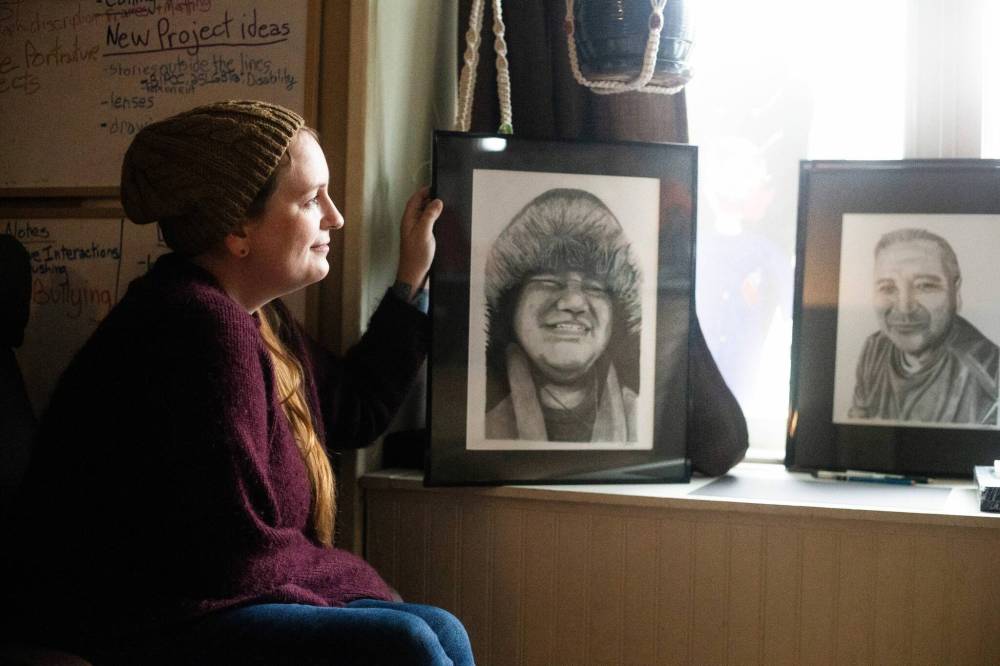
For Zastre, the Be a Better Settler project represents a step forward in that process as well as an evolution in her art practice. While creating the portraits at her living room table, she listened back to the interviews with each participant.
“It definitely made me more focused on the details,” she says of listening to the recordings. “I started taking a little bit more time to do the work and I was doing things with a little bit more care.”
Be a Better Settler was funded by a grant from the Canada Council for the Arts. The exhibit opens this Friday with a pop-up reception at the Stuart Clark Garden of Contemplation in the Canadian Museum for Human Rights, where the portraits will be displayed with QR codes linking to the accompanying settler’s logs. Zastre has also published a limited series of books based on the exhibit.
By sharing her personal journey — which she describes as a “super vulnerable” experience — Zastre hopes to facilitate difficult conversations and inspire other settlers to start grappling with their own commitments to truth and reconciliation.
“For Indigenous folks who come to my show, I hope that I can connect with them in some way and they feel open to talking to me, because I’m open to talking to anybody,” she says. “(For settlers) this is a call to action, let’s not be complacent with our history.
“I know how I struggled with my citizenship and I think I’m going to continue struggling with it until the day that I die, and that’s OK because we have a hard history.
“We need people that are more willing to line their boats up alongside other people instead of pushing them out of the way.”
Be a Better Settler will be on display at Artbeat Studio, a local non-profit of which Zastre is an artist-in-residence alum, from Nov. 7 to 17.
eva.wasney@winnipegfreepress.com
X: @evawasney
Exhibit Preview
Be a Better Settler by Lani Zastre
● Pop-up opening Friday, Nov. 3 from 4:45
to 8:45 p.m. at the Canadian Museum
of Human Rights, 85 Israel Asper Way
● Show on display Nov. 7 to 17 at Artbeat Studio, 62 Albert St.

Eva Wasney covers environmental issues in Manitoba for The Narwhal in partnership with the Winnipeg Free Press. Read more about Eva.
Every piece of reporting Eva produces is reviewed by an editing team before it is posted online or published in print — part of the Free Press‘s tradition, since 1872, of producing reliable independent journalism. Read more about Free Press’s history and mandate, and learn how our newsroom operates.
Our newsroom depends on a growing audience of readers to power our journalism. If you are not a paid reader, please consider becoming a subscriber.
Our newsroom depends on its audience of readers to power our journalism. Thank you for your support.