Comfort foods Cookbook features recipes, stories from people raised in the foster system
Read this article for free:
or
Already have an account? Log in here »
To continue reading, please subscribe:

Digital Subscription
One year of digital access for only $205*
- Enjoy unlimited reading on winnipegfreepress.com
- Read the E-Edition, our digital replica newspaper
- Access News Break, our award-winning app
- Play interactive puzzles
*First annual payment billed as $205.00 + GST for one year. This annual subscription will automatically renew at $233.00 + GST every 52 weeks (10% off the regular annual price of $259.35). Offer available to new and qualified returning subscribers only. Cancel any time.
To continue reading, please subscribe:
Add Free Press access to your Brandon Sun subscription for only an additional
$1 for the first 4 weeks*
- Enjoy unlimited reading on winnipegfreepress.com
- Read the E-Edition, our digital replica newspaper
- Access News Break, our award-winning app
- Play interactive puzzles
*Your next Brandon Sun subscription payment will increase by $1.00 and you will be charged $17.95 plus GST for four weeks. After four weeks, your payment will increase to $24.95 plus GST every four weeks.
Read unlimited articles for free today:
or
Already have an account? Log in here »
Hey there, time traveller!
This article was published 21/11/2023 (1020 days ago), so information in it may no longer be current.
Chili got Christina McKay through university. The hearty, affordable stew, made in big batches, was one of the first recipes she mastered as a young person on a tight student budget.
Homemade
Homemade is a Free Press series celebrating home cooking in Manitoba. Visit this page to submit a recipe and search “Free Press Homemade” to join our Facebook group. We are currently seeking holiday baking recipes.
“I lived off of it for the better part of a year,” she says with a laugh.
McKay, 34, was born in Brandon and apprehended into the foster care system at just three days old. She was made a permanent ward of the Crown at 12 years old and aged out of care in her early 20s.
Her chili recipe is one of nine dishes included in A Safe Plate: Recipes and Stories of Young People from Child Welfare, a digital cookbook published recently by the Children’s Aid Foundation of Canada.
The book is a way for the foundation to share first-person stories about the foster system over the common language of food.
“Food is a connector to our histories, our personal lives,” says foundation president and chief executive officer Valerie McMurtry. “We loved the idea of sharing food as a conduit for storytelling.”
SUPPLIED Christina McKay’s On a Budget chili recipe is included in a cookbook from the Children’s Aid Foundation of Canada.
It’s also an opportunity to highlight some of the nutritional challenges faced by youth in foster care across the country.
“Any of the young people involved (in the cookbook) will tell you how hard it is when you age out of government care. Most of our young people who have come from care are living below the poverty line, so having access to fresh and healthy food that’s affordable is really hard,” McMurtry says.
“We (also know) how hard it is for youth in care to learn how to cook, to know their own histories and their preferences with food.”
For McKay, food and cooking have always been a source of comfort.
“I spent a lot of my life feeling like I didn’t belong. Food was a calming and stabilizing force. No matter where I was, I could always bake or cook and give myself that sense of home, and as I got older it became this connective force for me,” she says.
Some of her earliest memories involve baking cookies and making perogies with her mom and brothers.
“Those are some of the more special memories I have with my mom because I didn’t get to spend a lot of time with her,” McKay says.
As a teenager living in a foster home, baking was a way to feed her sweet tooth and her interest. She also took on the task of making lunches for the other kids living in the home, an effort that was supported by her foster dad.
Christina’s “On a Budget” Chili
15 ml (1 tbsp) of olive oil to coat pan
1 onion
2-4 cloves of minced garlic
450 to 680 g (1 to 1 1⁄2 lbs) ground beef
15 ml (1 tbsp) of olive oil to coat pan
1 onion
2-4 cloves of minced garlic
450 to 680 g (1 to 1 1⁄2 lbs) ground beef
30 ml (2 tbsp) chili powder
15 ml (1 tbsp) paprika
5-8 ml (1 to 1 1⁄2 tsp) cumin
A couple pinches of salt and pepper
2 cans (796 ml cans) of diced tomatoes
1 can (156 ml) of tomato paste
1 can (540 ml) black beans
1 can (540 ml) kidney beans
In a large pot, cover the bottom evenly with olive oil about 7 1/2 ml (1/2 a tbsp)
Heat the oil on low to medium heat and once it’s hot, add the onion and garlic. Stir occasionally until onions are translucent, about one to two minutes.
Add an additional 7 1/2 ml (1/2 tbsp) of olive oil to the pot and add ground beef, breaking it up and stirring to incorporate with onion and garlic.
Add chili powder, paprika and cumin and incorporate with the beef by mixing together.
When the beef is starting to cook through, add the canned tomatoes, kidney beans and black beans (and any optional ingredients) to the pot, juices and all.
Add the tomato paste and stir frequently to avoid it burning.
Add the salt and pepper and let boil on medium heat until the sauce starts to thicken, about 30 minutes.
Turn the heat down to a low simmer for another 30 minutes.
Turn off the heat and let sit for a little while to let the spices soak in as it cools.
Christina Mckay’s chili recipe appears in A Safe Plate, a free cookbook available for download through the Children’s Aid Foundation of Canada.
Chili became a speciality during her first year as a fine arts student at the University of Manitoba. She was getting sick of eating eggs and oatmeal almost exclusively, so she called her foster mom for advice.
“She actually walked me through the steps of making it over the phone and then explained how you can use the base, change the spices and make a couple of things out of it, like spaghetti sauce. It was a really versatile thing to learn,” ” McKay says.
“It was one of the more positive memories I have between me and her.”
These days, chili is something she makes when winter hits. She can make the dish with her eyes closed and often substitutes ingredients based on what’s in the fridge — sweet potatoes and cauliflower are a recommended addition.
McKay still bakes and is busy preparing batches of gingerbread cookies for upcoming holiday work parties. She’s now a student support case worker with Futures Forward, a local organization working to reduce financial and educational barriers for young people aging out of Child and Family Services. It’s been a rewarding way to give back.
Reena Newman photo Christina McKay survived on chili during her days as a university student.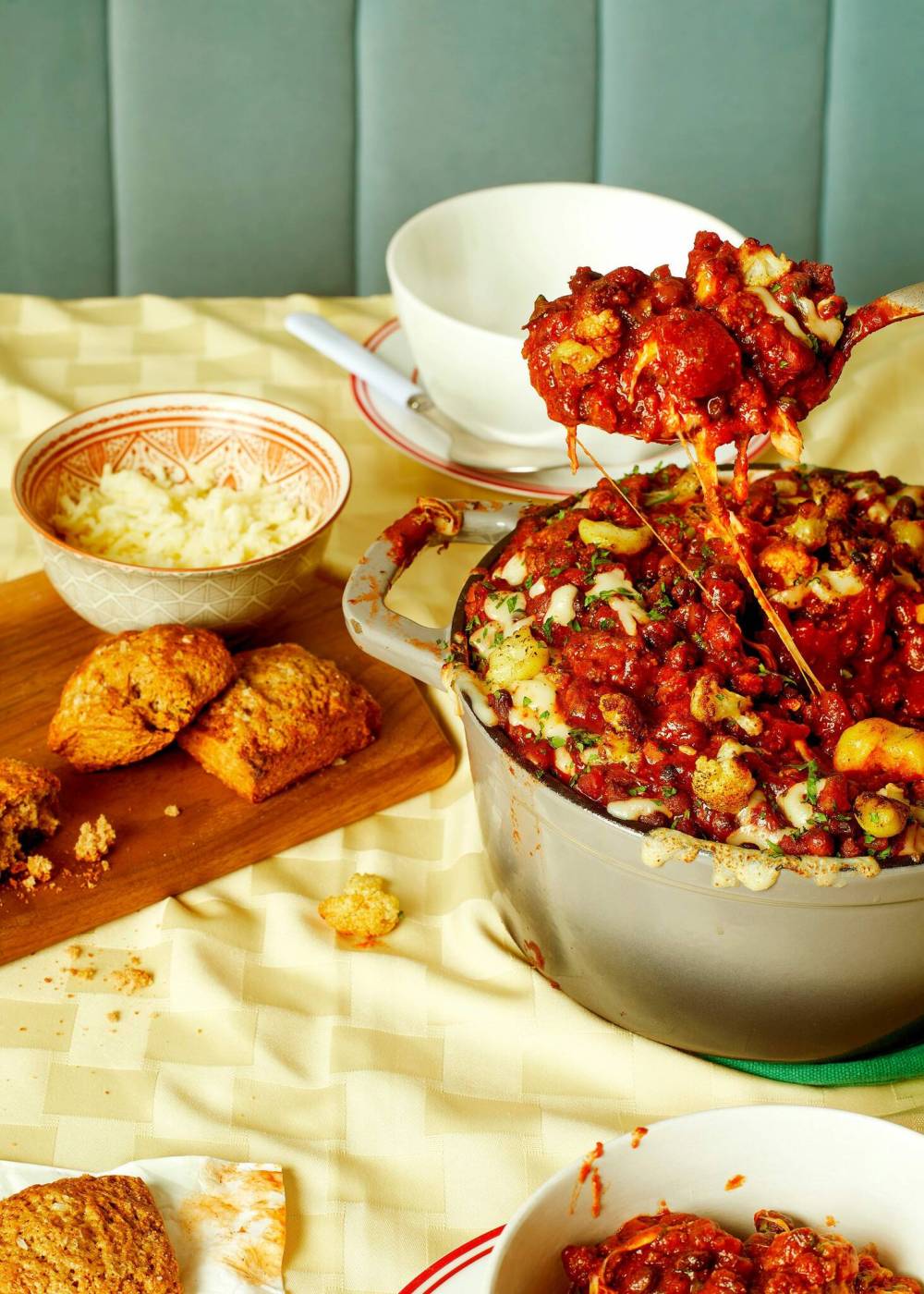
“Doing what I’m doing is incredibly meaningful to me. I’m really happy to be an advocate for youth in care because I feel like our voices aren’t valued in the same way that they would be if you were in a normal family structure,” she says.
That reality is one of the reasons the Safe Plate cookbook project appealed to her.
“It invites people to see youth in care not as a label, but as the people they are,” McKay says. “I hope (my chili recipe) gives people a full belly and it offers up an opportunity to connect with someone at your table.”
A Safe Plate is available to download free from the Children’s Aid Foundation website. For every download, the KARE Foundation will donate $5 to support the organization’s national youth and family programming, to a maximum of $50,000.
eva.wasney@winnipegfreepress.com
Twitter: @evawasney
What’s up in Winnipeg
Parlour Coffee changes hands
Change is brewing at Parlour Coffee, as founder Nils Vik has announced he’s passing the baton — or stir-stick, if you will — to a new owner. Vik opened Parlour Coffee in September 2011; the Main Street mainstay was at the forefront of a coffee boom in the city that ushered in the likes of Café Postal, Thom Bargen, Fools and Horses and more. Vik announced Connor Vogt would be taking over at Parlour.
Parlour Coffee changes hands
Change is brewing at Parlour Coffee, as founder Nils Vik has announced he’s passing the baton — or stir-stick, if you will — to a new owner. Vik opened Parlour Coffee in September 2011; the Main Street mainstay was at the forefront of a coffee boom in the city that ushered in the likes of Café Postal, Thom Bargen, Fools and Horses and more. Vik announced Connor Vogt would be taking over at Parlour.
Primo’s moves on
The revolving door of eateries adjacent to the Good Will Social Club (625 Portage Ave.) continues, as Primo’s Deli announced it would be leaving the space as of Dec. 1. They’ll continue to do catering, pop-up events and more as they look for their own space, according to an Instagram post. Previous occupants of the space have included A Little Pizza Heaven, Khao House and Have a Nice Day.
Sweet, sweet mead
There’s a bit of a buzz around a new meadery opening downtown. Brat Cat Mead Co. launches its line of craft meads on Saturday, Nov. 25, starting at noon in its new home at 155 A Fort St. (the space is shared with Devil May Care Brewing Co.), with food by, fittingly, Loaf and Honey. Brat Cat describes its meads, made with locally sourced honey, as “light, crisp, carbonated and dry on the finish.”
The place to be
A quirky late-night lounge has opened in the former home of Segovia. Must Be The Place (484 Stradbrook St.) is open 7 p.m. to 2 a.m. Wednesday through Sunday with themed music nights — such as Ska Sundaze and Metal Thursdays — and a menu of nachos, fried chicken and build-your-own sandwiches courtesy of chef Keith Csabak, previously of Sous Sol and the Beer Cantina. More details on Instagram (@mustbetheplacewpg).
For more local culinary news, sign up for Dish, our twice-monthly food and drink newsletter.

Eva Wasney has been a reporter with the Free Press Arts & Life department since 2019. Read more about Eva.
Every piece of reporting Eva produces is reviewed by an editing team before it is posted online or published in print — part of the Free Press‘s tradition, since 1872, of producing reliable independent journalism. Read more about Free Press’s history and mandate, and learn how our newsroom operates.
Our newsroom depends on a growing audience of readers to power our journalism. If you are not a paid reader, please consider becoming a subscriber.
Our newsroom depends on its audience of readers to power our journalism. Thank you for your support.



History
Updated on Wednesday, November 22, 2023 10:05 AM CST: Adds link