SAD times for some Newcomers to Canada feel unexpected effects of winter
Read this article for free:
or
Already have an account? Log in here »
To continue reading, please subscribe:

Digital Subscription
One year of digital access for only $205*
- Enjoy unlimited reading on winnipegfreepress.com
- Read the E-Edition, our digital replica newspaper
- Access News Break, our award-winning app
- Play interactive puzzles
*First annual payment billed as $205.00 + GST for one year. This annual subscription will automatically renew at $233.00 + GST every 52 weeks (10% off the regular annual price of $259.35). Offer available to new and qualified returning subscribers only. Cancel any time.
To continue reading, please subscribe:
Add Free Press access to your Brandon Sun subscription for only an additional
$1 for the first 4 weeks*
- Enjoy unlimited reading on winnipegfreepress.com
- Read the E-Edition, our digital replica newspaper
- Access News Break, our award-winning app
- Play interactive puzzles
*Your next Brandon Sun subscription payment will increase by $1.00 and you will be charged $17.95 plus GST for four weeks. After four weeks, your payment will increase to $24.95 plus GST every four weeks.
Read unlimited articles for free today:
or
Already have an account? Log in here »
Hey there, time traveller!
This article was published 04/12/2023 (983 days ago), so information in it may no longer be current.
Maliha Tauqeer immigrated to Winnipeg from Patna, India, in 2022. Excited to experience snowfall for the first time in her life, Tauqeer had no clue that winter could be a long, depressing season.
In Patna, summers were ruthless, with temperatures soaring to 44 C; the short winter season was a break from the merciless heat, with the average lowest temperature in the coldest month of January being 9 C.
“In India I always loved the winter season, so I was very excited to experience the Canadian winter’s as well,” says Tauqeer, 27, who works as an HR administrator.
“And when I saw snow for the first time in Canada, I was so happy. The city looked so beautiful covered in a white blanket of snow. I couldn’t resist taking pictures, making videos.”
However, the feeling soon disappeared and she started experiencing severe winter blues.
MIKAELA MACKENZIE / WINNIPEG FREE PRESS Maliha Tauqeer, who immigrated to Winnipeg from Patna, India, in 2022, was excited for winter, but soon realized that she experiences seasonal blues.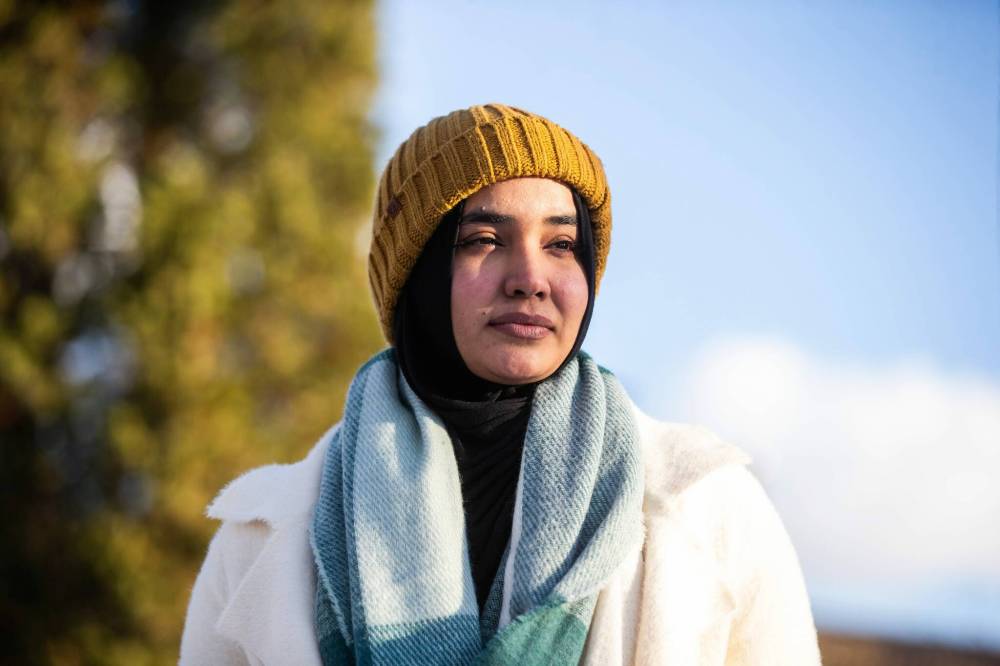
“I soon realized that surviving a Canadian winter is not easy; the temperature drops very low, sometimes to even – 40 C. This was a lot colder than anything that I had ever experienced in India, so I had to learn how to deal with the harsh cold,” she says.
During the winter months, Tauqeer found it challenging to adjust to the new country she now calls home.
“As the days grew shorter and the cold weather persisted, I really found myself being sad and feeling homesick a lot more than I did before. I was actually kind of missing the outdoor gatherings that we used to enjoy during the summer season, she says.
“The winter season in Canada felt isolating and I missed the warmth of my home country.”
“The winter season in Canada felt isolating and I missed the warmth of my home country.”–Maliha Tauqeer
Tauqeer is not alone. About one in three Canadians describe at least some form of “seasonal blues” — mild feelings of loss of enjoyment and low energy — says Dr. Michael Mak, a sleep-medicine specialist and staff psychiatrist at the Centre for Addiction and Mental Health.
For some, however, the winter season can actually be crippling, leading to seasonal affective disorder (SAD), a type of depression related to limited light exposure in the winter months, Mak says.
Symptoms of SAD often start in the fall and continue throughout the later part of the year, only waning in the spring.
“Three to five per cent of Canadians suffer from diagnosed seasonal affective disorder,” Mak says. “Another 10 to 15 per cent get what we would call subsyndromal seasonal affective disorder, which presents with the same symptoms of SAD, just milder and not enough to cause disability.”
SAD is debilitating, significantly draining energy and causing moodiness, Mak explains.
Immigrants more susceptible to developing SAD
Srishti Jaiswal, 31, who works as a scrum master in software development, emigrated to Canada in 2015 from India. She says without hesitation that Canadian winters can be harder on newcomers.
“I realized that I love the day much more than I ever said out loud,” she says, adding the lack of light can really get to her.
“Winters get depressing, especially because of the darkness. When I would wake up and get ready for work, it would be dark and again, even before I am back home, it’s dark again.”
SUPPLIED Srishti Jaiswal makes it a point to go outdoors even during severe weather to not feel depressed.
In 2019, a study conducted by the Mental Health Commission of Canada revealed that the social determinants — the conditions in which individuals reside, work and mature — “can either elevate or diminish an individual’s susceptibility to mental-health issues or illnesses and may impede their ability to obtain timely and suitable mental-health services.”
Factors such as language, income, education and discrimination are among the social elements that impact the mental well-being of migrants and can make them more susceptible to developing SAD.
“The stresses of immigration will likely increase the incidence of all forms of depression amongst new immigrants,” explains Mak, adding data about immigrants being more likely to develop SAD is still limited.
“The data about this is not the most robust, but a Finnish study demonstrated a slightly higher rate of SAD in immigrants as compared to natives of the country — 14.4 per cent compared with 10.3 per cent,” he says.
Coping with winter woes
While Tauqeer and Jaiswal made lifestyle tweaks to manage their winter woes, there is no harm in visiting a doctor if your winter blues become unmanageable.
SAD is characterized by a depressed mood or an inability to enjoy things, accompanied by impaired concentration, poor sleep (and usually an increased need to sleep), lower energy levels, a change in appetite (usually an increase), feelings of guilt or worthlessness, and in the more severe cases, thoughts that life is not worth living, Mak says.
“If symptoms persist, you may wish to seek help from your family doctor, who may refer you to a mental-health professional and/or prescribe antidepressant medications,” he says.
Emerging from darkness
Jaiswal, who calls winter “difficult times,” says she makes it a point to enjoy the cold season as much as possible by visiting frozen lakes and trying out winter activities.
Similarly, Tauqeer has tried to make the most of the melancholy winters by enrolling in ice-skating lessons and decorating her home with vibrant accents.
“I tried to brighten up my home by adding bright and colourful decor. I also took care of my indoor plants,” she says. “And I was also working, so that also played a significant role in keeping me distracted and occupied. It helped me feel productive and less focused on negative emotions.”
Mak suggests staying connected with family and friends, engaging in physical activity, increasing exposure to sunlight and seeking help if necessary to keep SAD at bay.
tahira.khan@winnipegfreepress.com

Related Articles
COVID-forced outdoor phys-ed classes beneficial: study