Fulfilment at the keyboard She lost a daughter in 1984 and her husband last year, now Wilma Derksen is taking on a new persona: romance novelist
Read this article for free:
or
Already have an account? Log in here »
To continue reading, please subscribe:

Digital Subscription
One year of digital access for only $205*
- Enjoy unlimited reading on winnipegfreepress.com
- Read the E-Edition, our digital replica newspaper
- Access News Break, our award-winning app
- Play interactive puzzles
*First annual payment billed as $205.00 + GST for one year. This annual subscription will automatically renew at $233.00 + GST every 52 weeks (10% off the regular annual price of $259.35). Offer available to new and qualified returning subscribers only. Cancel any time.
To continue reading, please subscribe:
Add Free Press access to your Brandon Sun subscription for only an additional
$1 for the first 4 weeks*
- Enjoy unlimited reading on winnipegfreepress.com
- Read the E-Edition, our digital replica newspaper
- Access News Break, our award-winning app
- Play interactive puzzles
*Your next Brandon Sun subscription payment will increase by $1.00 and you will be charged $17.95 plus GST for four weeks. After four weeks, your payment will increase to $24.95 plus GST every four weeks.
Read unlimited articles for free today:
or
Already have an account? Log in here »
Hey there, time traveller!
This article was published 06/12/2023 (1023 days ago), so information in it may no longer be current.
Wilma Derksen is finally writing her own story on her own terms.
Despite having published multiple books about the most painful moments of her life, Derksen’s latest release feels the most vulnerable.
“It’s like seeing myself in the mirror for the first time,” she says of penning her first romance novel, entitled Lavish Mercy. “This is the real me.”
MIKE DEAL / WINNIPEG FREE PRESS
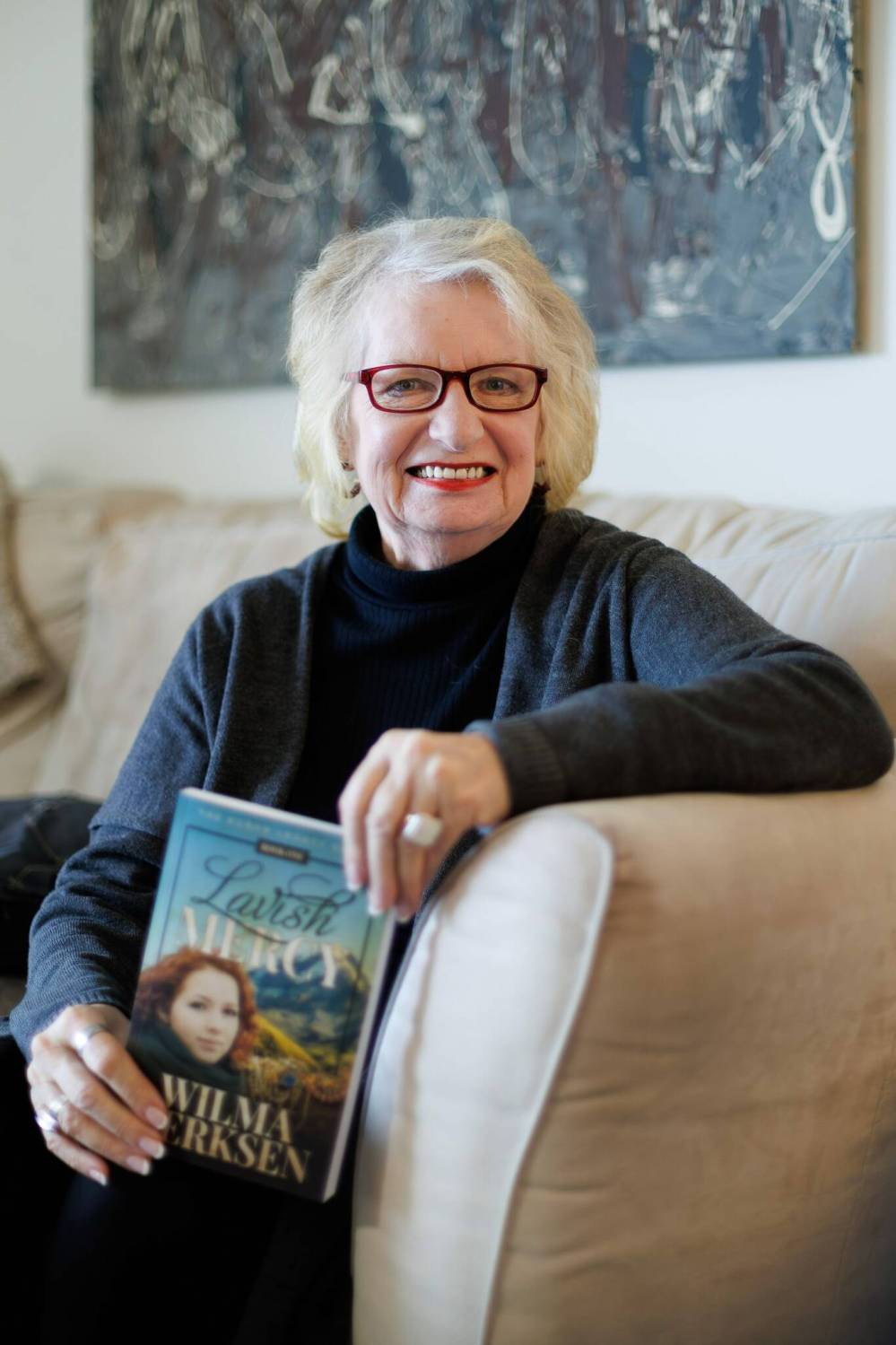
Wilma Derksen, whose daughter Candace was murdered in 1984, and who became the face of forgiveness despite unbearable pain, has now written a romance novel, Lavish Mercy.
For nearly 40 years, Derksen has been known publicly as the mother of a murdered child. Her 13-year-old daughter Candace was abducted in 1984 while walking home from school. The tragedy and decades-long search to find Candace’s killer pushed Derksen and her husband Cliff into the spotlight, where they became victim advocates and unlikely proponents of forgiveness.
Writing has always been a therapeutic pursuit for Derksen and she authored several true crime memoirs and self-help books in the aftermath of her daughter’s death. Long before that horrific life-defining event, however, she had a much different bibliography in mind.
“All I wanted was to be a romance writer,” she says with a warm laugh.
Derksen fell head over heels for the genre as a girl growing up in a small Mennonite community in British Columbia’s Fraser Valley. She discovered the work of Grace Livingston Hill — an early 20th-century Christian romance writer — in her church library and read the dramatic, idealistic books voraciously at night by flashlight.
‘I couldn’t deny the fascination and the power of a good love story, how it can just rip us out of the reality of life and bring us to a new place,” she says, adding, firmly, that she has no interest in erotica. “I thought, ‘How easy would it be to be a romance writer?’”
Her first teenage attempts offered nothing but frustration. She set up a makeshift office in the barn of her family’s hobby farm and started plunking out drafts on an old typewriter to no avail. Writing a gripping love story without real-life inspiration was harder than expected.
“First of all, I didn’t have any experience in romance,” she says. “And (with) Mennonite living, I had no drama around me, everybody was so peaceful; I just couldn’t get them done.”
Life went on and Derksen shelved her passion, resigned to pick it back up in the future. She met Cliff, had three children, moved to Manitoba and found work as a journalist — a compromise between her love of writing and need for an income.
As regional editor for the Mennonite Reporter, a national faith-based publication, her opinion on cultural drama changed. She went back to university to study Mennonite history and became fascinated by family lore of long lost relatives who lived in Kuban — a settlement near the Caucasus Mountains — during the Russian Revolution.
After visiting the region with her sister, Derksen was inspired to write a historic Mennonite love story set in the locale. She published the novel, titled Mercy, under a pen name in 2003, but was disheartened by reader feedback.
“I’m becoming even more true to myself. That’s the ultimate joy.”–Wilma Derksen
“They all fell in love with the wrong guy,” she says of the book, which follows a young woman named Anna whose search for hidden Imperial jewels leads to complicated relationships with a Russian government agent and a Mennonite church council member.
It felt like another failed attempt. The novel was pulled from the bookstore and left to languish in the bottom of a filing cabinet for 20 years.
Cliff died last year and Dersken again turned to writing as a way to cope. After struggling to craft another memoir about forgiveness, her son suggested she revisit Mercy. Writing a love story while grieving the end of her own was an unexpected balm.
“It helped me escape,” she says. “I had a great time with it and it fulfilled so many things for me.”
Derksen spent four months fixing plotlines and fiddling with characters. She released the revamped version of her novel, renaming it Lavish Mercy, last month.
At 75-years-old, she’s finally achieved her lifelong dream. Still, coming out as a romance novelist has brought up complicated feelings about her public persona, faith and entering a genre of writing often viewed as a frivolous indulgence.
For Derksen, love is far from frivolous.
“Love itself is almost impossible … it’s a miracle every time it happens — and especially if it endures,” she says. “So I’m finding a new purpose in it, to explore love and to discuss it … and just celebrate it.
“It is noble.”
MIKE DEAL / WINNIPEG FREE PRESS
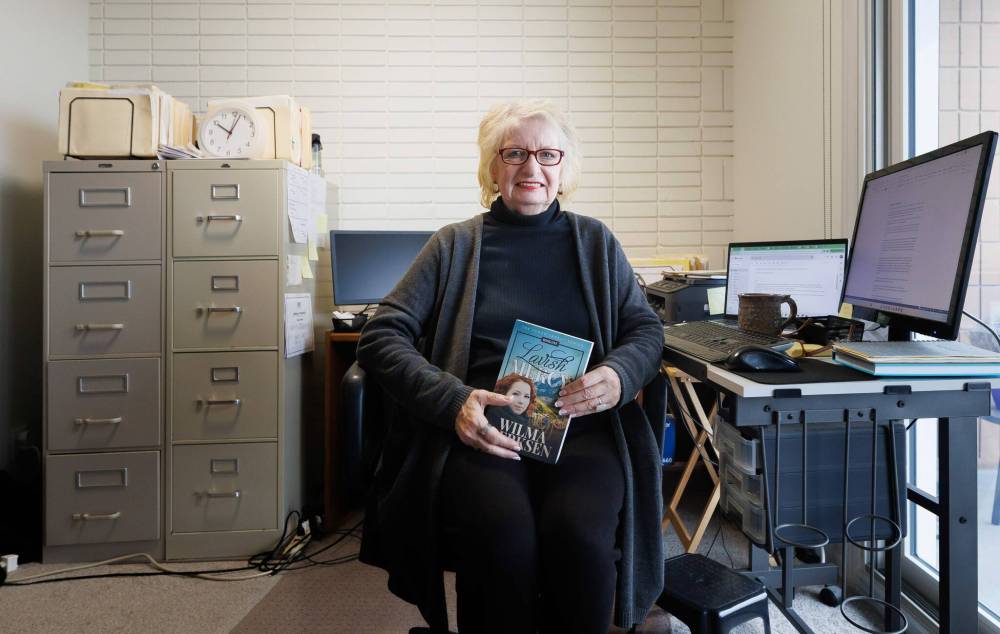
Derksen spent four months fixing plotlines and fiddling with characters releasing the revamped version of her novel last month.
Derksen is already deep into writing the second book in her Kuban Legacy Series and has ideas for at least three more. She wakes up at 6 a.m. every morning to work at a computer desk situated in front of a large ninth-floor window with an expansive view of the city. Anything is possible. All she has to do is write.
“I’m becoming even more true to myself,” she says, smiling. “That’s the ultimate joy.”
Lavish Mercy is available for purchase from Amazon.
eva.wasney@winnipegfreepress.com
X: @evawasney


Eva Wasney covers environmental issues in Manitoba for The Narwhal in partnership with the Winnipeg Free Press. Read more about Eva.
Every piece of reporting Eva produces is reviewed by an editing team before it is posted online or published in print — part of the Free Press‘s tradition, since 1872, of producing reliable independent journalism. Read more about Free Press’s history and mandate, and learn how our newsroom operates.
Our newsroom depends on a growing audience of readers to power our journalism. If you are not a paid reader, please consider becoming a subscriber.
Our newsroom depends on its audience of readers to power our journalism. Thank you for your support.