Good grief
Adaptation of Joan Didion memoir about mourning to come alive onstage

Advertisement
Read this article for free:
or
Already have an account? Log in here »
To continue reading, please subscribe:

Digital Subscription
One year of digital access for only $205*
- Enjoy unlimited reading on winnipegfreepress.com
- Read the E-Edition, our digital replica newspaper
- Access News Break, our award-winning app
- Play interactive puzzles
*First annual payment billed as $205.00 + GST for one year. This annual subscription will automatically renew at $233.00 + GST every 52 weeks (10% off the regular annual price of $259.35). Offer available to new and qualified returning subscribers only. Cancel any time.
To continue reading, please subscribe:
Add Free Press access to your Brandon Sun subscription for only an additional
$1 for the first 4 weeks*
- Enjoy unlimited reading on winnipegfreepress.com
- Read the E-Edition, our digital replica newspaper
- Access News Break, our award-winning app
- Play interactive puzzles
*Your next Brandon Sun subscription payment will increase by $1.00 and you will be charged $17.95 plus GST for four weeks. After four weeks, your payment will increase to $24.95 plus GST every four weeks.
Read unlimited articles for free today:
or
Already have an account? Log in here »
Hey there, time traveller!
This article was published 10/04/2024 (899 days ago), so information in it may no longer be current.
Even before it’s opened, The Year of Magical Thinking is already the most talked-about production of Prairie Theatre Exchange’s season.
Counterintuitively, the solo performance is all about a topic most people would rather avoid discussing: grief.
Most people, but not Monique Marcker and Rodrigo Beilfuss, the respective star and director of the production, adapted by Joan Didion from her soul-mending memoir of the same name.
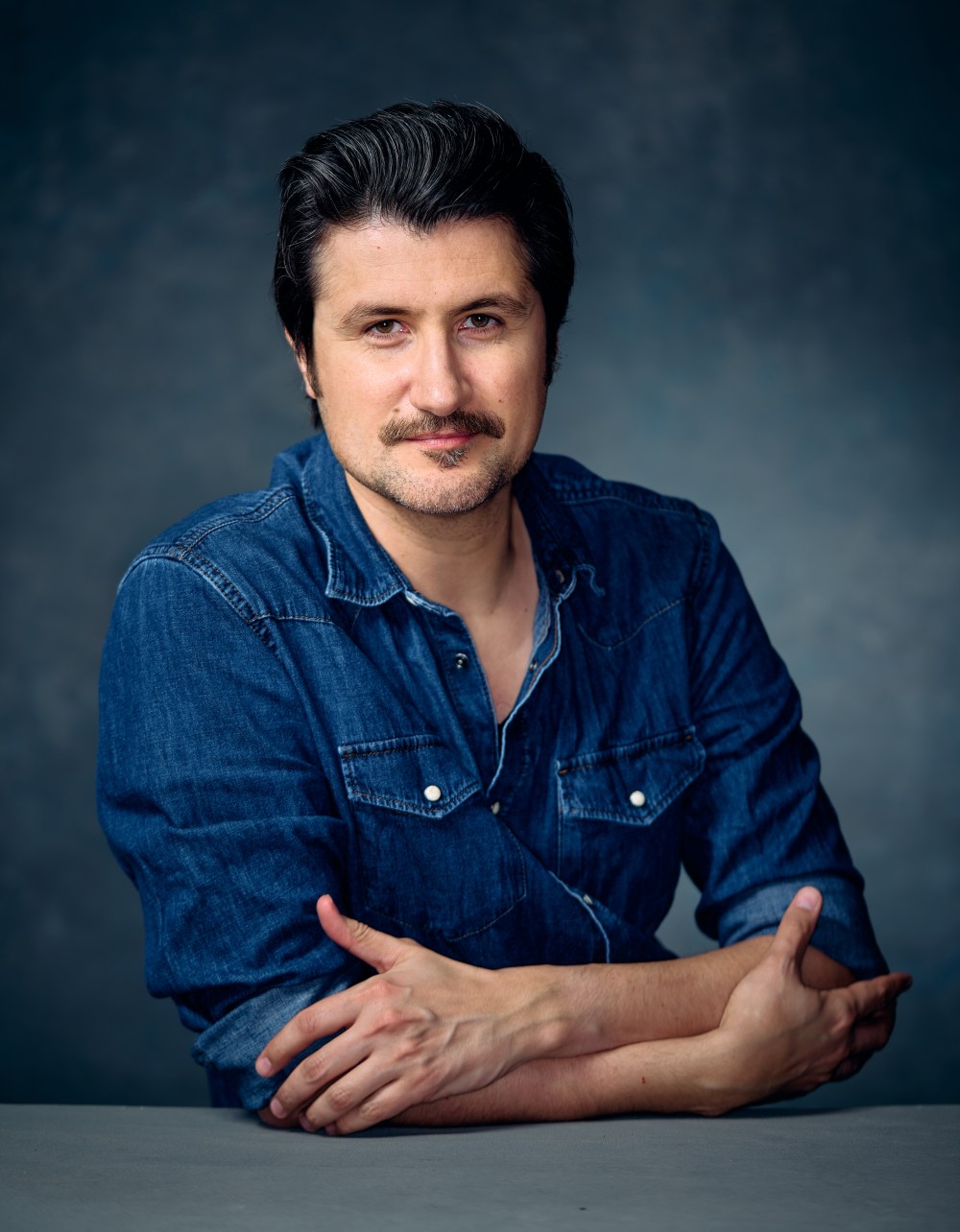
MIKE DEAL / FREE PRESS
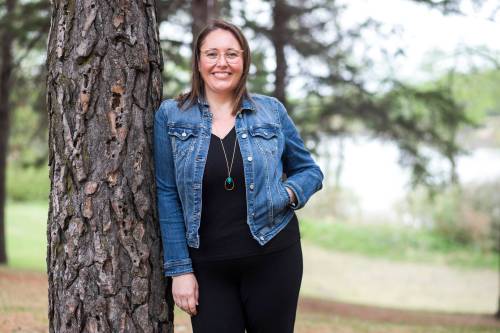
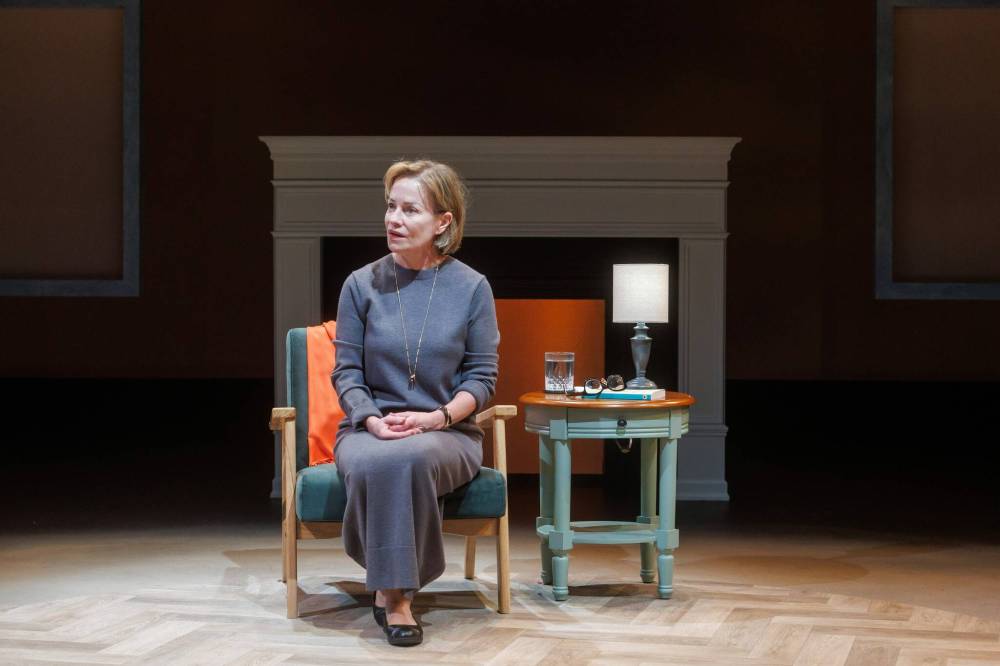
Monique Marcker believes she not only has to share the story, but serve the audience so they feel a connection.
Written after the death of Didion’s husband and collaborator John Gregory Dunne, TYOMT earned Didion legions of new readers for its diaristic investigation of longing, missing and, ultimately, accepting.
That slim volume has been slid across coffee tables past half-empty boxes of tissues for about 20 years. Didionites usually have a copy at the ready, knowing that between its covers lives an epitaph of universal experience refracted through a personal prism, written by a stranger from Sacramento who wrote with the authority of a lifelong friend.
Beilfuss and Marcker joined the Free Press for a Zoom interview, which has been edited for clarity and length.
Free Press: Before this play, did you have a relationship with Joan Didion’s work?
Monique Marcker: I’d heard about her, but was not aware of her work prior to auditioning. When I found out PTE was doing TYOMT, my sister, whose husband died about five years ago, said her grief counsellor had recommended it.
Rodrigo Beilfuss: I knew as a writer she had covered a lot of American cultural and political movements, but I was not familiar with this book, which has this legacy of being so important to so many people. To dive into this piece really made me fall in love with her … She’s so profoundly simple in the way she puts thoughts down, but she’s able to do that with incredible complexity. It’s a paradox. I’ve never worked with a writer quite like this. It was the most I’ve accessed Shakespearean training with a contemporary piece because it is really quite dense in a wonderful way. It feels like very complex music.
MM: Didion has this great ability to dissect ideas, like Rod was saying, but she’s also so honest about what she’s feeling. For instance, she can’t come to terms with her husband being dead, so she thinks that if she keeps his shoes, he’ll come back. The book just gave light to some of the things my sister was experiencing, and certainly in my own grief too.
FP: Didion’s non-fiction writing stands out for its vitality and novelistic approach, which was a crucial part of the “New Journalism.” I’m interested to learn how that writing transitioned to the stage.
RB: She was part of this new movement for journalism, which, broke the journalistic rule, which was to never put yourself in it. You tell the story, you’re the channel. But she was part of this new wave that covered events through a human filter to process what’s happening around us. Every time she was writing these pieces — about the ’04 (U.S.) election, or about Vietnam — you got the sense she was a human being trying to understand how such things could happen … This book is very much a memoir, but it has that search for meaning in it that she was always applying to her journalistic work and screenplays. It has this relentless need to understand how and why certain things unfold. So when she was faced with the finality of life — she applied all of that mentality into understanding how this happens, and what is left afterwards.
MM: How she approached her politics, she did exactly the same thing while dealing with grief. Dissecting it, deciphering it, and trying to figure it out. This play is about the struggle of trying to understand (grief) and piece it all together. By the end, she realizes she can’t understand it and that a part of her has to accept the inevitable, walk through the wall of pain and simply acknowledge it. Maybe that’s spoiling the play, but I think it’s very powerful.
FP: I don’t know if you can spoil a play about grief.
RB: Yes, it’s the process of going through it, which is the ultimate thing about it.
MM: In the process of writing it, Joan Didion came one morning and said, ‘Maybe it should be less about me, and more about them.’ That did a real paradigm shift in the writing. At the beginning, Joan is saying, these are important things that I’m telling you, the audience, need to know. And that was an important shift into the writing.
RB: And even though we are doing a play about grief and talking about grief, it doesn’t feel like that in the doing of it. This idea of a heavy cloud hanging upon us isn’t really there. That’s something we realize in retrospect. It’s like Hamlet. He’s very much active in the play, searching for answers and trying to understand his predicament. It doesn’t feel like he’s sitting around moping about it. That’s the same thing with Joan in this play. She’s not just in grief, she has gone through it and lived to tell us how. She’s there to help us get through it with her. So it feels very much alive.
MM: And there are such relatable moments. I remember when my dad passed away, he looked so good. He looked better when he was dead than he had the year prior to his dying. And there’s this moment when Joan says, “He doesn’t even look dead. He’s doing his part.” So many people have had those moments, and I think that’s where the humour comes to the absurd nature of all of this.
RB: When my grandpa passed, I was at the funeral service and I was obsessing as I looked at him in the coffin about how tiny his shoes were. I couldn’t understand how somebody with tiny feet like that was ever able to walk around. As something objectively, profoundly sad was unfolding in front of me, all I could think about was how tiny his feet were.
FP: Monique, are you open to sharing more about your dad or your mom?
MM: I told this story in my audition, actually. My father did pass away, but I was there when my mom took her last breath about four years ago. She was in the hospital for only 12 hours. My sister and I looked after her for 12 years at home. So when I came to see her, she said, “I want you to bathe me, I want you to brush my teeth, I want you to get me all ready.” And I was like, “OK, I thought we were going home.” She expressed how tired she was. She had refused any medical treatment, and I realized something big was happening.
I was alone with my mom in this room, and I started getting really emotional. So I grabbed her hand and I said “I love you so much,” and she goes, “Don’t cry. Not now. And don’t touch me. And don’t talk.” And I was like, those are my defence mechanisms. I talk a lot. I cry a lot. I touch a lot. And I had this moment of going, “Ah, this is not about about me. It’s about my mom.” And I remember holding on to the railing and watching her prepare to exit the world. And the last thing she said was, “Fix my hair.” But when she died, guess what I did? I crawled into bed with her, and I held her, and I cried, and I talked.
It’s not a Hollywood moment, though. Half my legs were hanging out of the bed. If we were doing a movie, I would have been able to fit into the bed nicely.
RB: There’s no swelling music in real life.
FP: To come into a piece like this, you have to as an actor connect, but also show that you can be strong through the suffering. How did you approach this role when you were first encountering it, and has that changed since your first day?
MM: When I first read the script, I felt every moment, and Rod, bless his heart, taught me that’s not what this particular piece is about. There are moments for it. But there is sharing, and there is serving the audience to tell this story. That’s been a challenge for me … (but) if it’s always about me, or Joan’s character, feeling everything, there is no way for the audience to connect. And the audience connection with the actor in this story is so important. They are my scene mates … theatre cannot survive without an audience, but in a solo piece in particular, they’re part of the play.
FP: In rehearsal, how did you substitute for that presence? When you’re just in a room with the two of you, a few others, how do you possibly account for the potential reactions you haven’t yet become aware of?
MM: When Vanessa Redgrave played Joan in the first production, (director) David Hare got pictures of people and put them on the chairs in the theatre so Redgrave was always making eye contact. I told that to our stage manager Katie Hoppa, and the next day, Katie had put pictures of people throughout the whole rehearsal space, which was very helpful. Still, I’m looking forward to having more people in the audience so that I can really talk to them, feel their reactions, and get that energy from them. Those faces are great, and I love making eye contact with them, but a real face would be really important.

FP: Vanessa Redgrave is great, but with respect to her, she was performing for a bunch of people she probably didn’t know and will never see again. You’re going to look out on opening night and see people you recognize, and say those lines — “This will happen to you.”
MM: I know there are certain close friends of mine who are coming. I know their stories. And there are going to be certain lines that are going to be very difficult, because I know how they could hit them. My sister will be there too. So you know. It’s going to affect me.
FP: Magical thinking. What does it mean to you?
MM: It was a term Joan learned while she reading up on anthropology. That “primitive” cultures operated on magical thinking. “If I sacrifice the virgin, the rain will come back.” “If I keep his shoes…” Just in this interview, we’ve talked about the hope, the thought that the person may still come back, because they still live very much within ourselves. To me, that’s where the magic is. I think it’s almost a needed thing. Sometimes, we need that magical thinking.
ben.waldman@winnipegfreepress.com
Ben Waldman is a National Newspaper Award-nominated reporter on the Arts & Life desk at the Free Press. Born and raised in Winnipeg, Ben completed three internships with the Free Press while earning his degree at Ryerson University’s (now Toronto Metropolitan University’s) School of Journalism before joining the newsroom full-time in 2019. Read more about Ben.
Every piece of reporting Ben produces is reviewed by an editing team before it is posted online or published in print — part of the Free Press‘s tradition, since 1872, of producing reliable independent journalism. Read more about Free Press’s history and mandate, and learn how our newsroom operates.
Our newsroom depends on a growing audience of readers to power our journalism. If you are not a paid reader, please consider becoming a subscriber.
Our newsroom depends on its audience of readers to power our journalism. Thank you for your support.
Theatre preview
The Year of Magical Thinking
By Joan Didion
● Prairie Theatre Exchange
● Opens tonight, runs to April 21
● Tickets $15-$55 at pte.mb.ca
Ben Waldman is a National Newspaper Award-nominated reporter on the Arts & Life desk at the Free Press. Born and raised in Winnipeg, Ben completed three internships with the Free Press while earning his degree at Ryerson University’s (now Toronto Metropolitan University’s) School of Journalism before joining the newsroom full-time in 2019. Read more about Ben.
Every piece of reporting Ben produces is reviewed by an editing team before it is posted online or published in print — part of the Free Press‘s tradition, since 1872, of producing reliable independent journalism. Read more about Free Press’s history and mandate, and learn how our newsroom operates.
Our newsroom depends on a growing audience of readers to power our journalism. If you are not a paid reader, please consider becoming a subscriber.
Our newsroom depends on its audience of readers to power our journalism. Thank you for your support.
Related Articles
Profound personal rumination on grief resonates during PTE's The Year of Magical Thinking
Advertisement Advertise With Us
Advertisement Advertise With Us
History
Updated on Wednesday, April 10, 2024 11:10 AM CDT: Photo credit fixed.
Updated on Wednesday, April 10, 2024 11:32 AM CDT: Photo changed.