Preserving the past Community museums keep history alive
Read this article for free:
or
Already have an account? Log in here »
To continue reading, please subscribe:

Digital Subscription
One year of digital access for only $205*
- Enjoy unlimited reading on winnipegfreepress.com
- Read the E-Edition, our digital replica newspaper
- Access News Break, our award-winning app
- Play interactive puzzles
*First annual payment billed as $205.00 + GST for one year. This annual subscription will automatically renew at $233.00 + GST every 52 weeks (10% off the regular annual price of $259.35). Offer available to new and qualified returning subscribers only. Cancel any time.
To continue reading, please subscribe:
Add Free Press access to your Brandon Sun subscription for only an additional
$1 for the first 4 weeks*
- Enjoy unlimited reading on winnipegfreepress.com
- Read the E-Edition, our digital replica newspaper
- Access News Break, our award-winning app
- Play interactive puzzles
*Your next Brandon Sun subscription payment will increase by $1.00 and you will be charged $17.95 plus GST for four weeks. After four weeks, your payment will increase to $24.95 plus GST every four weeks.
Read unlimited articles for free today:
or
Already have an account? Log in here »
Hey there, time traveller!
This article was published 19/06/2024 (837 days ago), so information in it may no longer be current.
Manitoba has about 200 museums and Winnipeg itself is home to around 40 of them, from the grand Canadian Museum for Human Rights, dominating the city’s skyline with its impressive architecture, to the lovingly restored Dalnavert Museum, with its graceful veranda, ornate railings and Victorian brickwork.
There’s the Police Museum on Smith Street, with artifacts dating back to the late 1800s, and the Manitoba Museum, with its planetarium, immersive galleries and interactive exhibits. Children have their very own space, too, in the Children’s Museum at the Forks, where little ones can splash, tumble and run to their hearts’ content.
And then there are the lesser-known museums, tucked between rows of shops or in the corners of suburbs honouring the very human urge to collect, commemorate and share our stories, our heritage and the minutia from our past.
Here, donated items, often from members of the community, are carefully documented and sympathetically curated by volunteers who weave stories about who we are and where we’ve come from.
Helmed by dedicated volunteers who donate time and expertise to ensure the legacy of their memories is preserved, these museums are a collective labour of love.

The Charleswood Museum, housed in a former council chambers hidden behind Fire Station 18 at 5006 Roblin Blvd., is one such place.
Run by members of the Charleswood Historical Society, the tiny space is packed to the rafters with artifacts donated by neighbourhood denizens past and present.
The museum was established by longtime residents and founding members of Charleswood Historical Society Len Van Roon Sr. and his late wife, Verna.
The Second World War veteran was an avid collector of local artifacts and used to store them in a renovated chicken house on the grounds of his home.
In search of a formal space to display their collection, the couple worked with then-city councillor Bill Clement and the City of Winnipeg to repurpose the council chambers, agreeing to an annual payment of $1 as rental for the premises.
Staffed by a handful of volunteers, including the now 102-year-old Van Roon, the museum is open every Saturday from 2 p.m. to 4 p.m. It also receives visitors by appointment.
It’s very much a hands-on museum and visitors are encouraged to touch the exhibits.
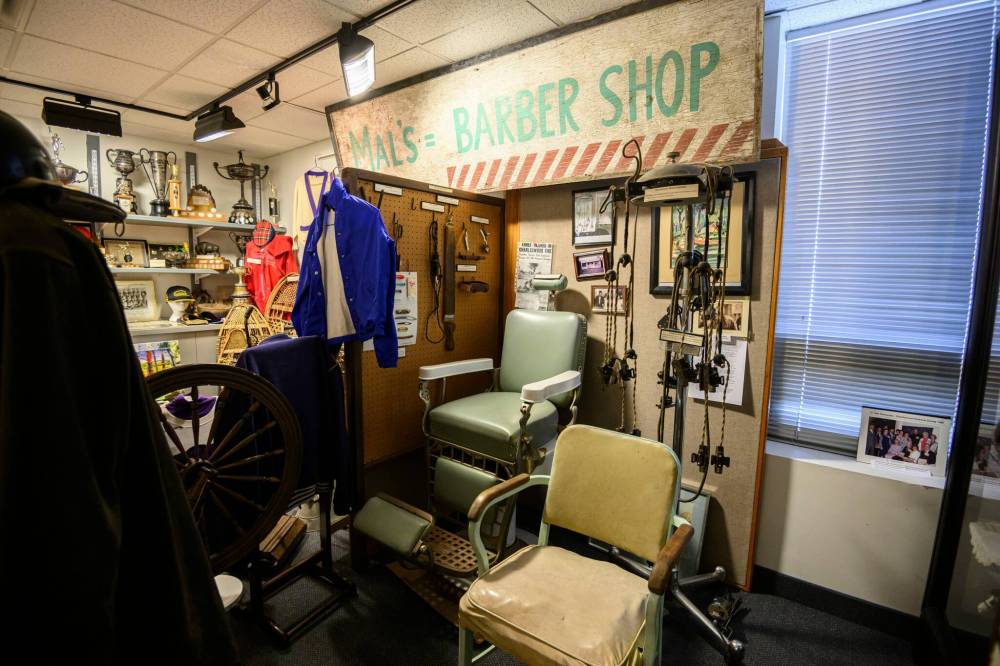
Precious items, such as the boots Van Roon was wearing when he stormed the beaches of Normandy on D-Day, are kept under glass, and there is a cabinet dedicated to Charleswood resident Lillian James (1895-1990), who at 14 was the youngest person at that time to receive a home nursing certificate from the St. John Ambulance Society in 1911.
James would go on to play a major role in caring for influenza victims during the 1919 pandemic — which took the lives of 60,000 Canadians — and is credited for saving the lives of many by taking food, water and wood to them at the risk of her own life.
A section is set aside for the D-Day exhibit and visitors can meet Van Roon, who recounts his experiences as he lists the names of his Charleswood classmates and fellow war compatriots, almost all of whom were killed in battle.
Other exhibits include the 1860s Assiniboine River ferry pulley, Charlie the bison, 3,500-year-old projectile points, the first post office wicket in Charleswood, vintage wedding dresses, local sports memorabilia, regional art and photographs, agricultural equipment, vintage school supplies and hundreds of treasures from days gone by.
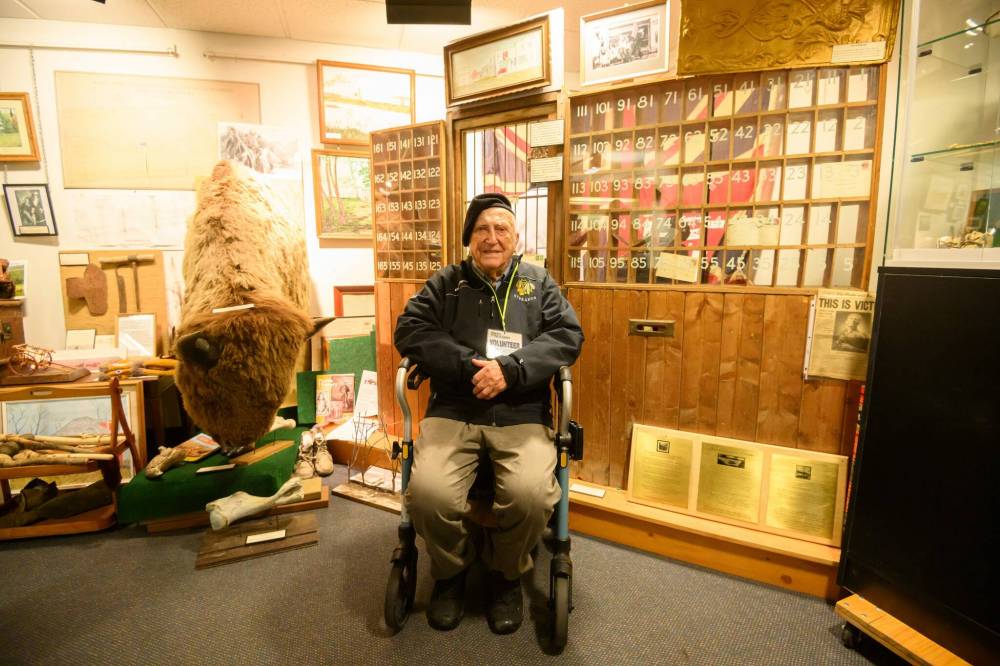
Along with the museum tours, volunteers also run community and school programs, and historical walking tours of the neighbourhood.
“There is so much information to share about Charleswood,” says Gwen Jamieson, the current museum chairperson and tour guide.
“We celebrate Indigenous and Métis peoples, buffalo hunters, early settlers, military veterans and the heritage of Charleswood. It is so important for people to know their roots, to know the area they are living in, and to learn about the history under their feet.
“The museum won’t exist without volunteers. What we do here is done out of love; this is an act of love.”
A love of history and the desire to share knowledge of their heritage is also what motivates the volunteers who work at Ogniwo Polish Museum.
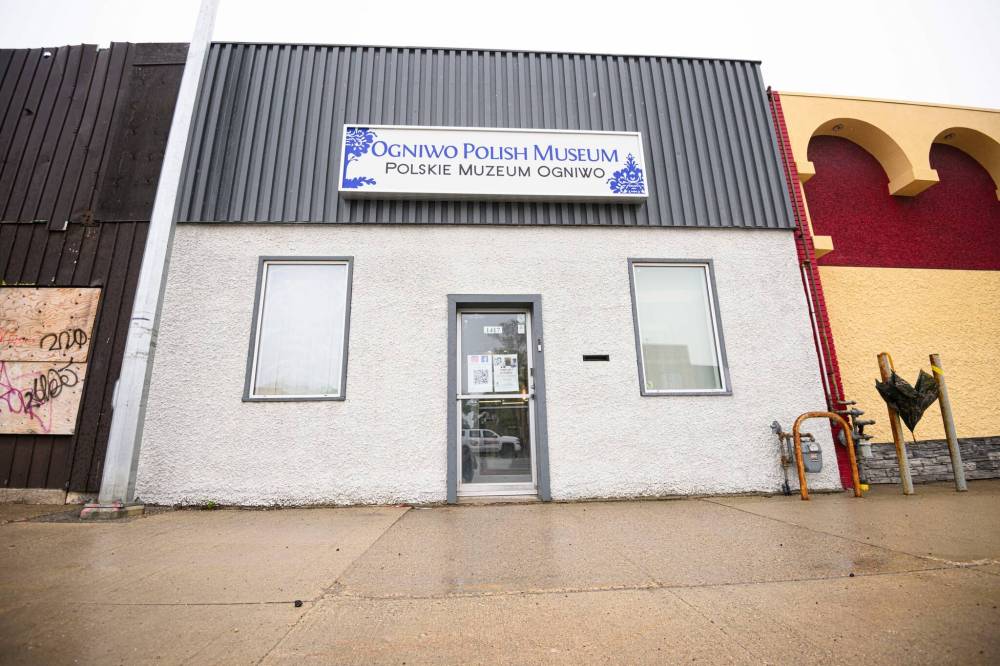
Formed through the Polish Canadian Women’s Federation in the early 1980s, the museum at 1417 Main St. quickly became a cultural centre for Polish immigrant history and heritage, as well as stories from the “old country.”
“There has been a influx of Polish immigrants over the years,” says Christine Tabbernor, secretary of the board and former president of the museum.
“There were some Poles in the security detachment that was attached to the Lord Selkirk settlers (in the early 1800s), then there was a whole wave of immigration for the purposes of homesteading in the early 1900s, then a smaller wave that came between the two wars, and a large wave after World World II when many Poles were displaced.”
Tabbernor’s mother, Jean Kuzia, a founding member of the museum, was a keen proponent of building on and expounding upon Polish culture and heritage to keep its music, literature and folk craft alive for ensuing generations.
For most of the volunteers involved — Tabbernor says there are currently up to 35 people — the museum is more than just about preserving culture and heritage; it’s about sharing knowledge through workshops, lectures and exhibitions.
Ogniwo President, Marta Dabros in the library section containing various Polish texts at the Ogniwo Polish
Museum. (Mike Sudoma / Free Press)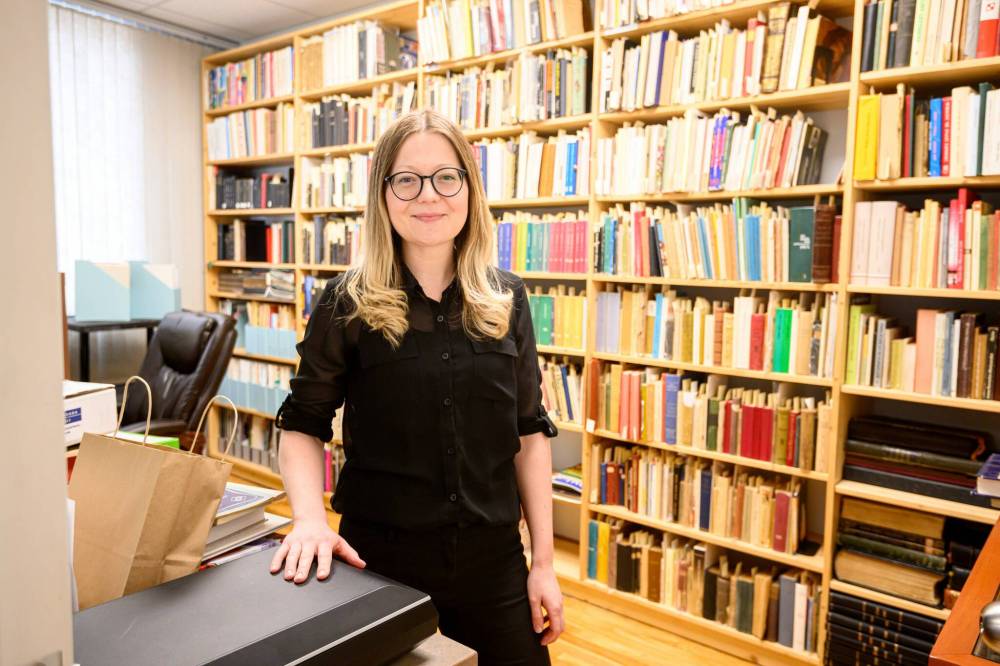
“Dragged” into the organization by her mother, Tabbernor enrolled in courses on collections management, education programming and public engagement offered by the Association of Manitoba Museums to hone her skills.
“I also learned how to write government grants because when you are volunteer-led, you are fundraising to the best of your ability but you cannot survive without some sort of input of cash from the province,” she says.
Recently, the museum received a significant donation of funds, facilitated by the Winnipeg Foundation, from long-standing Polish community supporters Will and Mavis Tishinski, which will enable the museum to expand its community gathering space, exhibits and collection storage.
“We are immensely grateful for the Tishinskis’ generosity,” says Marta Dabros, museum president.
“We have been very resourceful and creative in making the most of our space, but our artifact and archives holdings are growing, and we are limited in the number of visitors we can host for lectures, workshops and community events. This donation will elevate our facility and programming, give us the space we need to foster deeper connections with community, and help us to further enrich Winnipeg’s cultural landscape.”
The museum is currently open on Mondays from 7 to 9 p.m., but viewings can be arranged by appointment.
In Transcona, volunteers have been credited with the restoration of a 98-year-old steam engine left exposed to the elements since 1960 on the grounds of Rotary Heritage Park.
Built in 1926 at the CN Shops in Transcona, CN2747 was the first steam locomotive to be made in Western Canada. Used mainly as a freight hauler, the locomotive was retired from the ranks after 34 years of service and brought home.
Uniquely qualified volunteers began preservation work on the engine, placed on outdoor display for the last 64 years, in 2018. In 2021, on the 95th anniversary of its construction, a campaign to build a permanent structure over the locomotive was launched.

Restoration works are now complete and the train, housed in its new sheltered space, is ready to welcome visitors.
“A study was done on how to restore the train, as it was rusting away. We had a volunteer crew, comprising a dedicated group of retired CN employees, repairing some of the internal workings of the train,” says Rick Walker, president of the Transcona Historical Museum.
“The museum will conduct some programs for adults and children to see this wonderful engine from generations past, when steam engines were the main locomotive engineering.”
Housed in an old bank, the Transcona Museum, a small building at 141 Regent Ave. West, was founded by volunteers in 1967 with a goal to preserve and promote the history of the community.
Open from 9 a.m. to 4 p.m. every day except Sundays and holiday long weekends, the museum features exhibitions on the first floor, with the second floor of the building acting as storage for material that cannot be displayed.

“We can’t show everything that we have; there is so much,” Walker says.
“We are trying to make more of the collection accessible online by scanning and uploading various parts of our collection so members of the public will be able to see more of what we have.”
The museum also currently has three ongoing satellite exhibitions at the Transcona library, the Transcona legion and the East End Arena to extend its reach into the community.
Walker is passionate about the work of volunteers, saying the museum would cease to exist without them
“While we receive an annual operating grant from the city of Winnipeg, and we fundraise on an annual basis, it would be tough to do the things we do without volunteers. They assist in the museum, they help support the programs we run, they digitize and upload the online database … volunteers play a vital role in virtually everything that we do.”
av.kitching@freepress.mb.ca


AV Kitching is an arts and life writer at the Free Press. She has been a journalist for more than two decades and has worked across three continents writing about people, travel, food, and fashion. Read more about AV.
Every piece of reporting AV produces is reviewed by an editing team before it is posted online or published in print — part of the Free Press‘s tradition, since 1872, of producing reliable independent journalism. Read more about Free Press’s history and mandate, and learn how our newsroom operates.
Our newsroom depends on a growing audience of readers to power our journalism. If you are not a paid reader, please consider becoming a subscriber.
Our newsroom depends on its audience of readers to power our journalism. Thank you for your support.