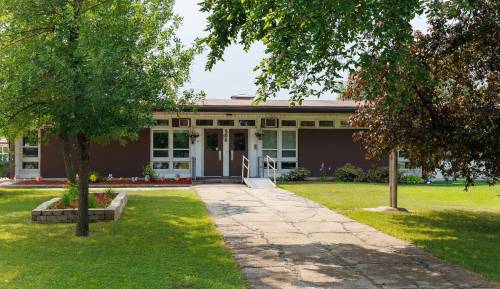
Rock solid Concert hall restoration brings lustre back to local gem
Read this article for free:
or
Already have an account? Log in here »
To continue reading, please subscribe:

Digital Subscription
One year of digital access for only $205*
- Enjoy unlimited reading on winnipegfreepress.com
- Read the E-Edition, our digital replica newspaper
- Access News Break, our award-winning app
- Play interactive puzzles
*First annual payment billed as $205.00 + GST for one year. This annual subscription will automatically renew at $233.00 + GST every 52 weeks (10% off the regular annual price of $259.35). Offer available to new and qualified returning subscribers only. Cancel any time.
To continue reading, please subscribe:
Add Free Press access to your Brandon Sun subscription for only an additional
$1 for the first 4 weeks*
- Enjoy unlimited reading on winnipegfreepress.com
- Read the E-Edition, our digital replica newspaper
- Access News Break, our award-winning app
- Play interactive puzzles
*Your next Brandon Sun subscription payment will increase by $1.00 and you will be charged $17.95 plus GST for four weeks. After four weeks, your payment will increase to $24.95 plus GST every four weeks.
Read unlimited articles for free today:
or
Already have an account? Log in here »
Hey there, time traveller!
This article was published 02/07/2024 (755 days ago), so information in it may no longer be current.
The Centennial Concert Hall, Winnipeg’s premier performing arts venue, was designed and built during a period of remarkable civic confidence, optimism and energy.
The centennial years of both Canada and Manitoba (in 1967 and 1970, respectively) were being marked by a wave of public funding for big building projects, and in the construction of the concert hall, that largesse was matched by substantial private and corporate donations.
Opening in 1968, the Centennial Concert Hall embodied our centennial moment.

RUTH BONNEVILLE / FREE PRESS
Two dramatic open staircases lead from the Centennial Concert Hall entrance to a piano nobile, ideal for people-watching.
Reflecting the project’s scope and scale, the building was designed by a consortium of architects — the Associated Architects for the Manitoba Centennial Centre — which was made up of three of the city’s most prestigious firms: Green Blankstein Russell, Moody Moore and Partners and Smith Carter Searle and Associates.
As well, the concert hall was part of an ambitious overall urban renewal plan that saw the construction of city hall, the Manitoba Museum and planetarium and the Manitoba Theatre Centre.
Landmarks
A regular series that looks at the structure and spaces that shape Winnipeg.
Taken together, these structures reflected a city that saw itself as modern, vital and forward-looking.
Sheldon Johnson, director of production for Manitoba Opera, can still feel that centennial mood in the building.
“There was Expo 67. We were going to the moon. There was a can-do feeling in society. There was just so much government money, and so much money for the arts,” he says.
As Johnson points out, modernist performing art centres such as this were going up across the country during the 1950s and ’60s.
“There’s the O’Keefe Centre in Toronto, the National Arts Centre in Ottawa. There are halls in Saskatoon and Regina, and the Jubilees in Edmonton and Calgary, the Queen Elizabeth in Vancouver, the Place des Arts in Montreal. They were all built around the same time. I’ve had a chance to be in a lot of those buildings, and this is my favourite,” he says.
“Beauty may be in the eye of the beholder. In these beholding eyes, this is a really beautiful space.”
Michael Acht and Desmond Burke of Cibinel Architecture, who have been working on a comprehensive envelope restoration of the Centennial Concert Hall, also acknowledge the building’s ambitious and optimistic origins.
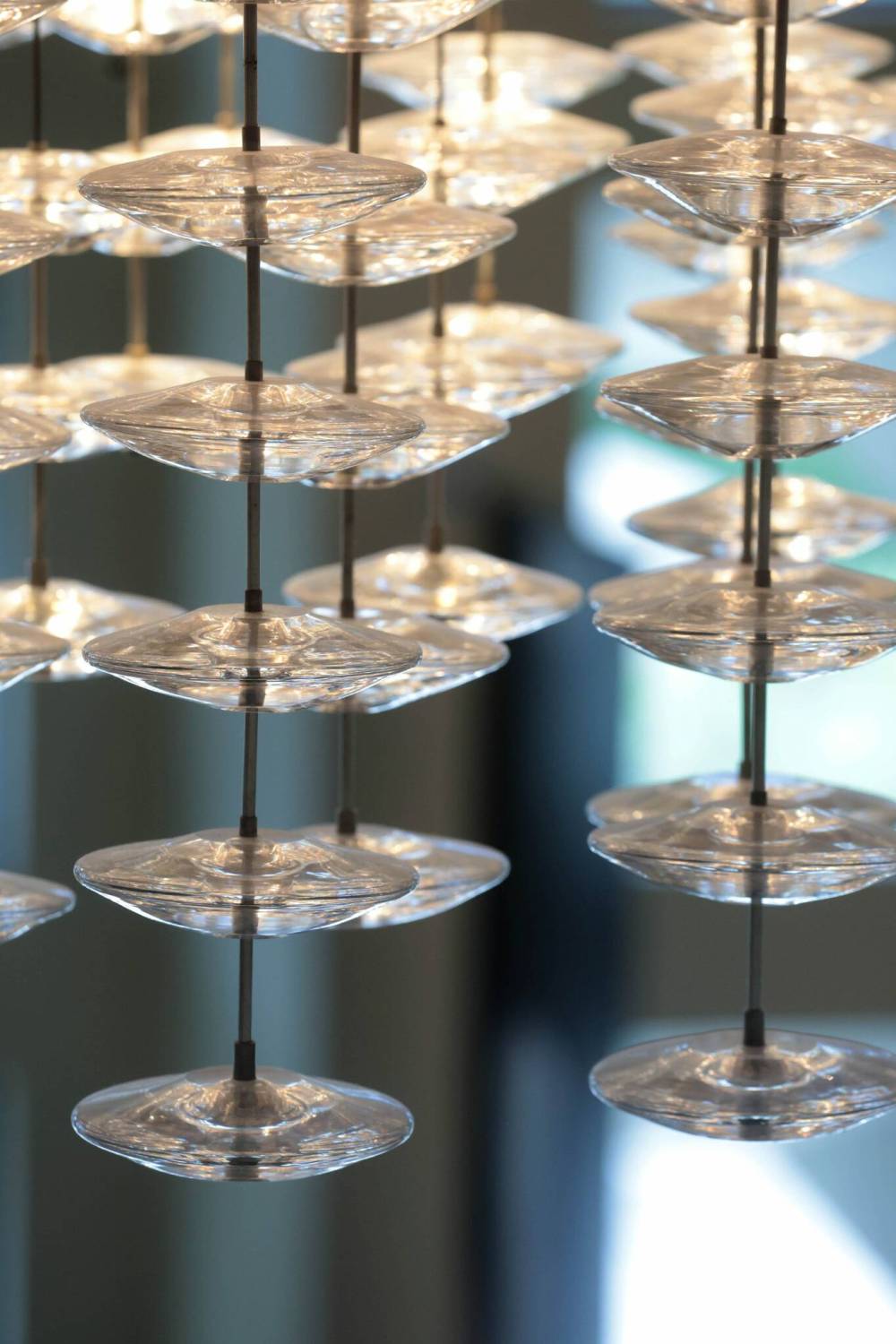
RUTH BONNEVILLE / FREE PRESS
A close-up of the concert hall’s iconic chandeliers, made of Norwegian crystal.
As Burke suggests, “It was designed to be a legacy building. It was designed to last a long time.
“Our client said, ‘We want it to last another 75 years.’”
According to Acht, once they dove into the concert hall’s detailed original drawings, “we started to realize how technically complex the building is and how thoughtful the design was. Once you start to pay attention, it speaks volumes.”
The Centennial Concert Hall, which seats over 2,300 people, is the performance home of the Winnipeg Symphony Orchestra, the Royal Winnipeg Ballet and the Manitoba Opera.
Since opening in March of 1968 with a “Hootenanny for a New Hall,” it has hosted touring shows by thousands of acts, including Ray Charles, Johnny Cash, the Kinks, Pink Floyd, Nana Mouskouri, Oscar Peterson and Ella Fitzgerald, Monty Python, Mr. Dressup, Reveen “the Impossibilist” and Paw Patrol. It has showcased travelling productions of Cats, Mamma Mia! and Jesus Christ Superstar.
It’s understandable that many of the people who enter the concert hall are thinking about the performance they’re about to see, but the building itself is a beautiful show.
Stone-cold beauty
Much of the building’s striking exterior is clad with over 5,000 Tyndall-stone panels (something Acht and Burke have come to know a lot about during the restoration project).
Tyndall stone, the distinctive, fossil-filled Manitoba limestone that features in so many of our province’s iconic buildings, dates back 450 million years and in 2023 was designated as a “global heritage stone resource” by a sub-commission of the International Union of Geological Sciences.
With this designation, Tyndall stone joins the Carrara marble that helped build Rome and the Portland stone seen throughout London’s historic buildings.
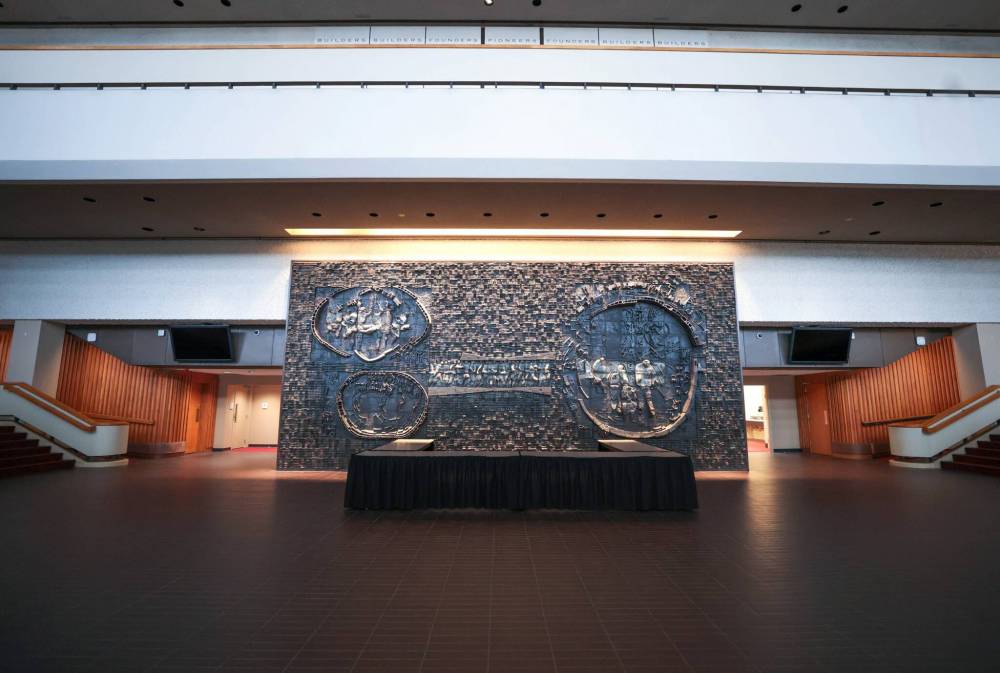
RUTH BONNEVILLE / FREE PRESS
The ceramic mural by Greta Dale welcomes visitors into the Centennial Concert Hall lobby.
Four towers visually anchor the building but, as Burke points out, also serve as air intake and exhaust systems. Between the two front towers are 45 “brise soleil” elements, which look a bit like concrete eyelids. In visual terms, these window coverings offer 3D patterning, but they’re also used functionally as sun shields, blocking strong, high-summer light but allowing for lower winter light to filter in.
The brise soleil feature is flanked by two monumental three-story windows.
The building initially welcomes visitors into a sheltering, low-ceilinged vestibule, but once they pass the ticket-taker, they enter into a grand high-ceilinged hall. This soaring space seems designed to amp up viewers’ anticipation, acting as the architectural equivalent to the excitement and beauty they hope to see onstage.
Two dramatic open staircases on either side lead to the piano nobile. This level caters to the see-and-be-seen aspects of the performance-going experience, allowing attendees to overlook the lobby below.
In the 19th and early 20th centuries, theatres, symphony halls and opera houses often used opulent and elaborate fittings — swags of velvet, marble statuary and painted ceilings — to help audiences feel they were entering the elevated realm of art.
The Centennial Concert Hall retains some of that sense of grandeur but relies on a more streamlined, modernist version of luxury. The three immense chandeliers are made from Norwegian crystal, for instance, but there’s a refined simplicity to their shape.
There are lovely details in material and craft: the window coverings of the three-level windows are like elegant chain mail. The portals to the auditorium are placed within undulating walls of slatted wood.
There are also important, large-scale commissioned artworks, starting on the main floor with an incredible ceramic mural by the Toronto-based sculptor Greta Dale. It features references to dance, music and theatre, and text that speaks “to our capacity for delight and wonder.”
Johnson is impressed by “the fact that you come in the front door of this place and the first thing you see is a work of art. This mural is my favourite thing, from the front-of-the-house standpoint.”
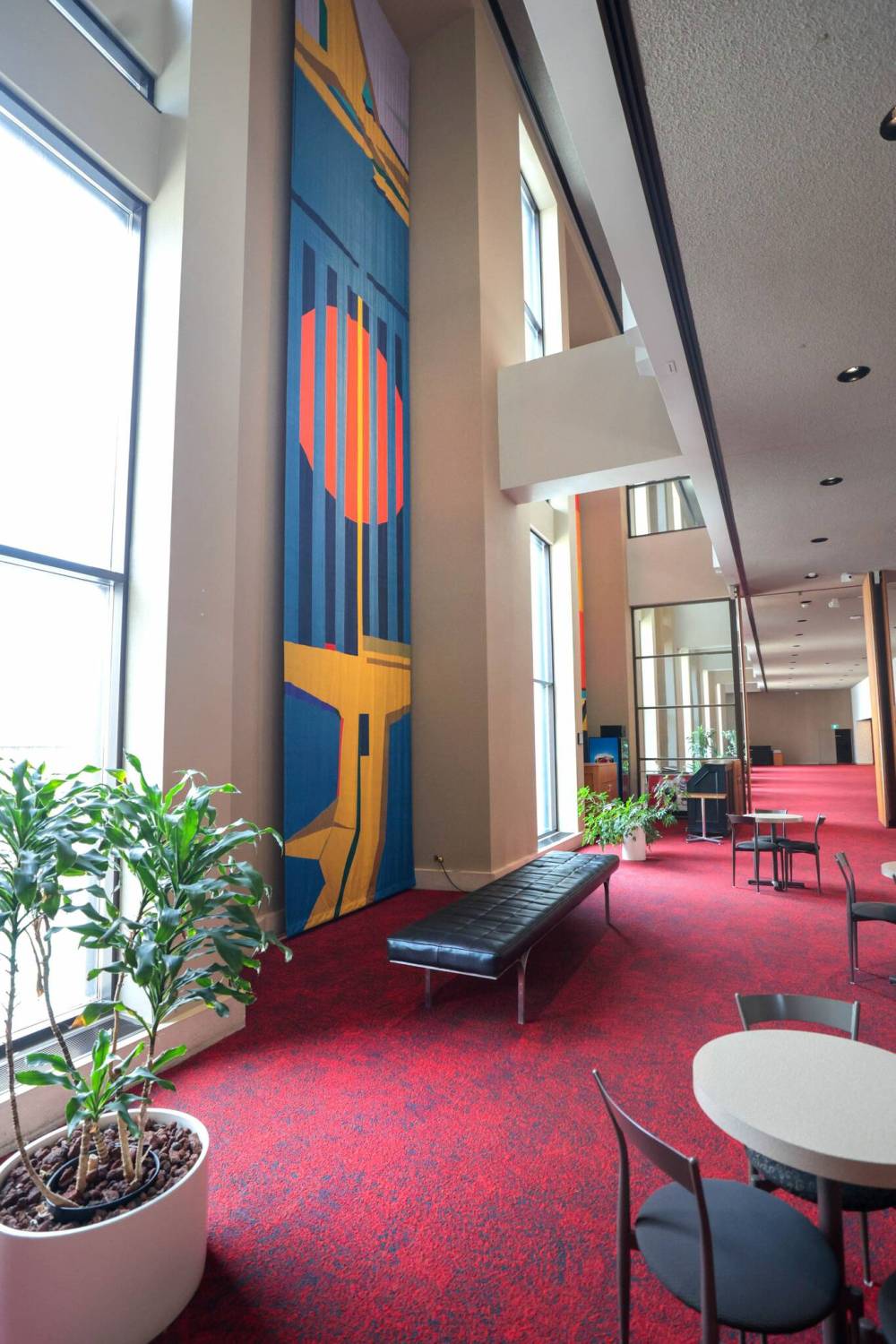
RUTH BONNEVILLE / FREE PRESS
Long textile pieces by Takao Tanabe hang on north side of the concert hall lobby.
On the higher floors are two aluminum construction pieces by well-known Winnipeg artist Tony Tascona and some cool textile works, on one side by Kenneth Lochhead and on the other by Takao Tanabe.
While the predominant note in these public areas is modernist glamour, there’s a lot of hard work going on backstage in long hallways and small rooms, in sub-basements and on dizzyingly high catwalks.
These spaces aren’t glamorous, but they were also designed with thought and care.
“The original architects and designers of the building made sure this place was state-of-the-art back in the ‘60s,” Johnson says.
“They took the time to figure out the logistics of what it takes to put on a show and how the flow of traffic works. The loading dock is in a good place. There’s lots and lots of wing space, especially compared to other venues I’ve been. We have a luxury of space.”
Complex restoration
Still, some things that were state-of-the-art in the 1960s may not be state-of-the-art now. When we think of heritage buildings in need of restoration, we don’t always think about modernist structures, but many of these landmarks are now over 70 years old.
Acht, as principal architect, and Burke, as construction administrator, received a 2024 Heritage Winnipeg Preservation Award for their work on the Centennial Concert Hall, along with Bockstael Construction, Alpha Masonry and the Crozier Kilgour engineering firm.
A complex and careful years-long restoration has been underway to make the building function better, including replacing the roof, improving drainage and meticulously upgrading the building envelope, which meant working with those Tyndall stone panels.
“There were hundreds and hundreds of people involved on the project, including specialized consultants and all the trades,” Acht explains. “They all contributed to making this a great project.”
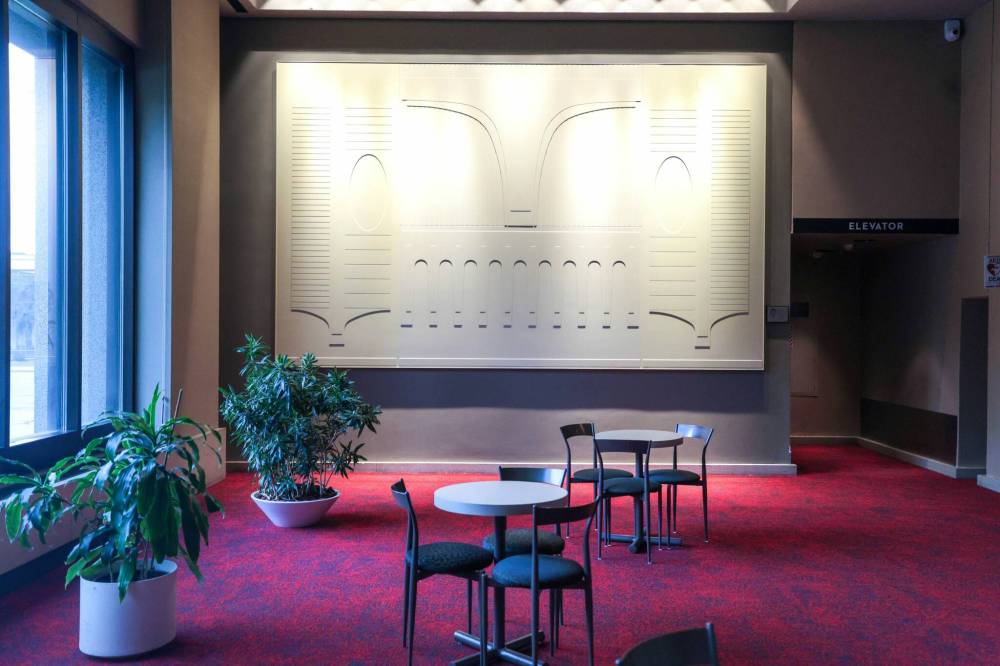
RUTH BONNEVILLE / FREE PRESS
One of two works by Winnipeg artist Tony Tascona which reside in the concert hall.
It was also a good way to get to know a building, and as Acht and Burke discovered more, their respect for the beauty and ingenuity of the original design and the quality of its construction only increased.
“You can feel the pride that everyone took in working on the building. You could sense that onsite,” says Acht.
It’s a particularly self-effacing form of pride, however, because it involves making invisible improvements to the building while keeping the original conception and design intact.
The architects, engineers and crews were in the paradoxical position that the better they did their job, the less anyone could see it.
Burke recalls taking a photo from across the street to document the process when a man came up and asked what they were doing.
“I said, ‘Can you tell what we’re doing?’ And he couldn’t, and that means we were doing it right,” Burke relates.
The work on the Tyndall stone cladding was especially painstaking.
“There are maybe two masons in the province who could do this kind of work,” Burke says.
Each panel had to be carefully removed and then evaluated. Most of the panels, fortunately, were in shape to go back on after some delicate hand-sanding. If a stone panel was too badly damaged and had to be replaced, there was an almost miraculous solution. The Gillis Quarries near Garson found the original beds from which the concert hall Tyndall stone was taken, allowing for a near-perfect match.
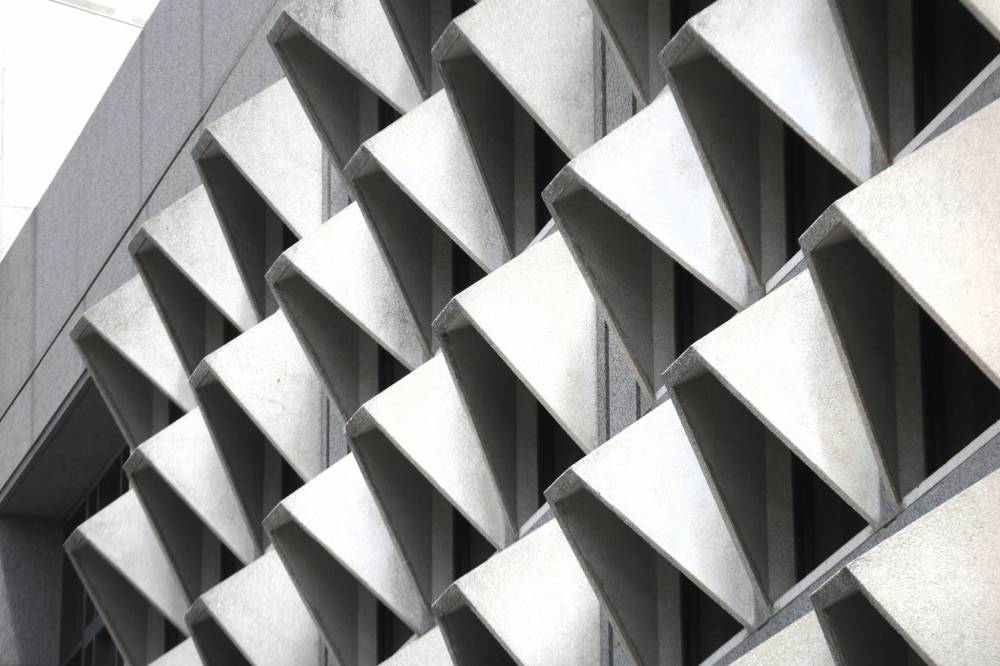
RUTH BONNEVILLE / FREE PRESS
The building’s facade is shrouded in eyelid-like window frames.
Johnson is heartened to see the restoration work and hopes it will continue.
“It’s the only building we’ve got. Nobody’s going to build another one of these places in this town in my working lifetime. This is a gem that needs to be polished,” he says.
In 2024, we can see that the optimistic and expansive urban renewal imagined by the original planners and architects has suffered some setbacks. Downtown Winnipeg faces some challenging social issues, and the Manitoba Centennial Centre recently made the difficult decision to lock most of exterior doors of the concert hall and the museum and planetarium complex around the clock as a security measure.
But the hopeful belief that shared cultural experiences matter, especially when people can come together in a beautiful, meaningful space — that still persists today.
More than 55 years after it first opened to Manitoba’s citizens, the Centennial Concert Hall celebrates that ideal.
alison.gillmor@winnipegfreepress.com

Studying at the University of Winnipeg and later Toronto’s York University, Alison Gillmor planned to become an art historian. She ended up catching the journalism bug when she started as visual arts reviewer at the Winnipeg Free Press in 1992.
Our newsroom depends on a growing audience of readers to power our journalism. If you are not a paid reader, please consider becoming a subscriber.
Our newsroom depends on its audience of readers to power our journalism. Thank you for your support.


History
Updated on Tuesday, July 2, 2024 8:40 AM CDT: Amends photo cutline