

Inspired by the land
Exhibition a colourful showcase of Filipino textiles, basketry, wood carvings and more
Advertisement
Read this article for free:
or
Already have an account? Log in here »
To continue reading, please subscribe:
Monthly Digital Subscription
$1 per week for 24 weeks*
- Enjoy unlimited reading on winnipegfreepress.com
- Read the E-Edition, our digital replica newspaper
- Access News Break, our award-winning app
- Play interactive puzzles
*Billed as $4.00 plus GST every four weeks. After 24 weeks, price increases to the regular rate of $19.95 plus GST every four weeks. Offer available to new and qualified returning subscribers only. Cancel any time.
Monthly Digital Subscription
$4.99/week*
- Enjoy unlimited reading on winnipegfreepress.com
- Read the E-Edition, our digital replica newspaper
- Access News Break, our award-winning app
- Play interactive puzzles
*Billed as $19.95 plus GST every four weeks. Cancel any time.
To continue reading, please subscribe:
Add Free Press access to your Brandon Sun subscription for only an additional
$1 for the first 4 weeks*
*Your next subscription payment will increase by $1.00 and you will be charged $16.99 plus GST for four weeks. After four weeks, your payment will increase to $23.99 plus GST every four weeks.
Read unlimited articles for free today:
or
Already have an account? Log in here »
Hey there, time traveller!
This article was published 25/07/2024 (608 days ago), so information in it may no longer be current.
A sea of vibrant colours and intricate designs greeted the more than 120 guests who attended the opening of Lupa ay Buhay | Land Is Life on July 5.
Curated by 25-year-old Ana Ilagan with the assistance of Andrea Reichert from the Manitoba Crafts Museum and Library, the exhibition offers a mesmerizing journey through the rich craft traditions of the Philippines.
“The opening was a huge success,” says Ilagan.“This is my very first exhibition that I’ve curated, and I’m really excited. It’s a celebration of Filipino culture and ingenuity of our people.”
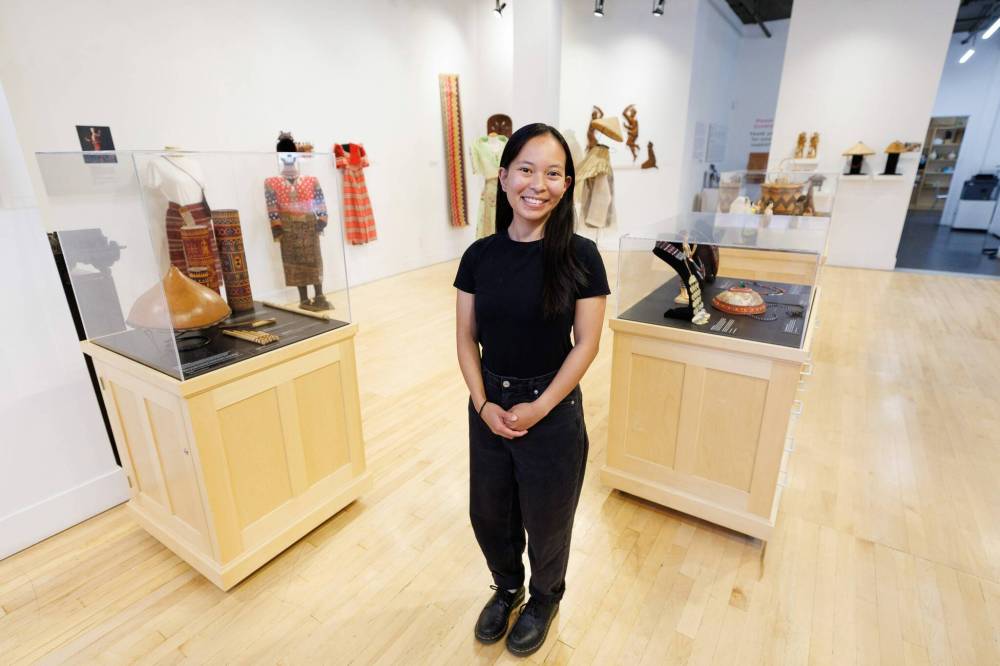
Ana Ilagan, communications and engagement assistant at the Manitoba Crafts Museum and Library, curated Lupa ay Buhay | Land is Life, an exhibition showcasing Filipino culture.
Lupa ay Buhay is on display at the Shirley Richardson Craft Gallery, 329 Cumberland Ave., until Aug. 28. The exhibit showcases Filipino culture through diverse craft traditions, featuring everything from textile weaving to intricately embroidered garments.
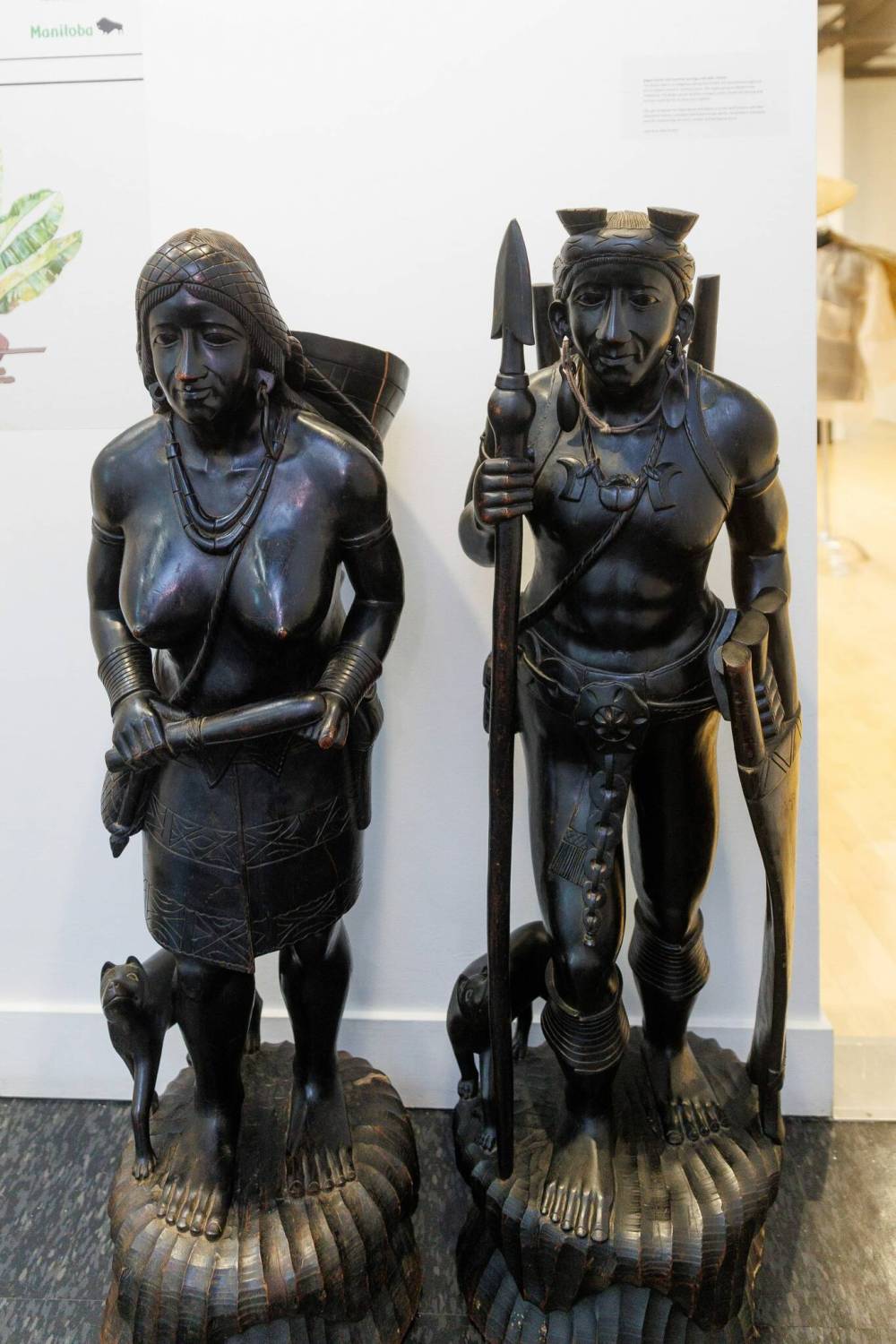
As visitors enter, they are greeted by a pair of Ifugao hunter and huntress carvings from the mid-20th century, made from hardwood native to the Philippines and depicting an indigenous group from the Cordillera region of northern Luzon.
“Transporting these carvings was hard because of their weight,” Ilagan says.
Moving through the exhibition, visitors encounter a wide range of traditional Filipino crafts. The basketry section features pieces like the Salakot, a traditional headgear made from bamboo, palm and rattan leaves, worn by the Tagalog and Kapampangan peoples. These items, loaned by community members Allan Pineda and Ruby Maestro Manalang, feature vivid hues and natural materials.
“The central theme of this exhibition is how our material culture in the Philippines comes from the land,” Ilagan says. “Farmers and indigenous people have tended and cultivated the land for centuries, making them the creators of our modern culture.”
MIKE DEAL / FREE PRESS
Ifugao hunter and huntress carvings
One of her favourite sections is the textile display, which includes traditional garments of the T’boli people from South Cotabato, Mindanao. The T’boli are known for their brightly coloured clothing, geometric patterns and brass adornments, all of which are passed down through generations.
“I think the garments are sort of like a standout piece to Filipinos who are visiting the exhibition as well,” says Ilagan, “because it’s a part of our culture and history that we don’t really learn about in our textbook in the Philippines.”
The Kulintang, a gong chime set from the Maranao tribe in southern Philippines, is another noteworthy piece. This mid-20th-century instrument, with its eight iron plates on a wooden frame carved with okkir motifs, showcases detailed woodwork and musical traditions.
“I love the wood carving details on the Kulintang. It’s a unique and cool piece,” she says.
An interactive element of the exhibit is the Sungka game, a traditional Filipino game similar to Mancala. Visitors can sit and play, immersing themselves in the cultural experience.
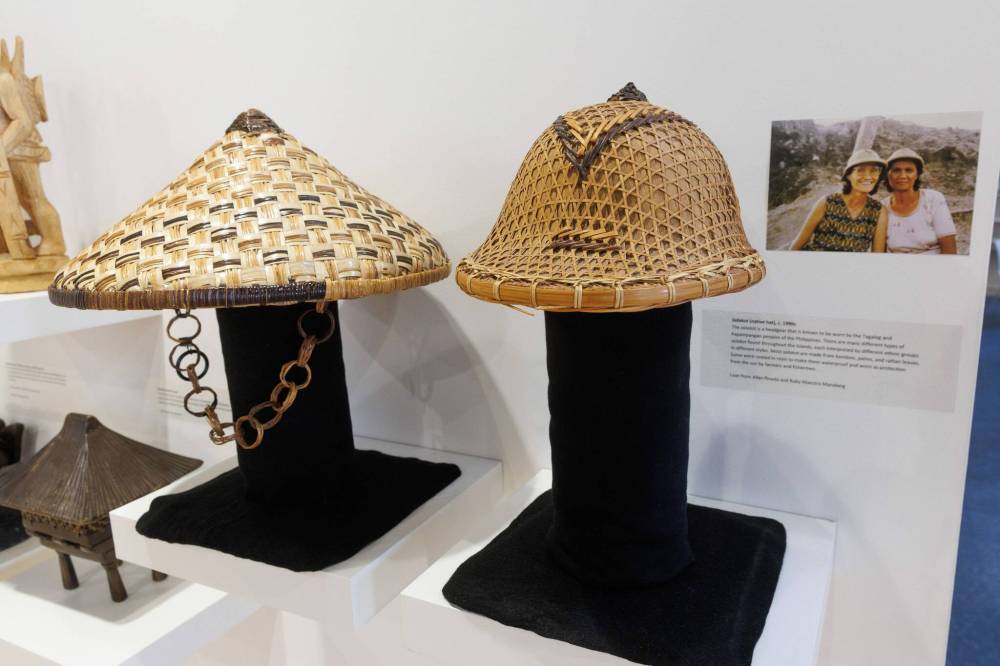
Salakots (native hats)
Curating the exhibit has been a deeply personal and educational journey for Ilagan.
“It’s been a learning process for me. There’s so much diversity and culture in the Philippines that I wasn’t aware of,” she says. “There are a lot of Filipinos in Winnipeg and it’s important for us to see a representation of our culture in spaces like this.”
“I’m proud to be Filipino,” she adds.
The exhibit not only aims to connect Filipino Canadians with their heritage, but also to educate non-Filipinos about the rich cultural traditions of the Philippines.
“It’s important for all of Winnipeg to see this exhibit. It helps us understand each other better and preserves our culture and heritage, even in the diaspora,” Ilagan says.
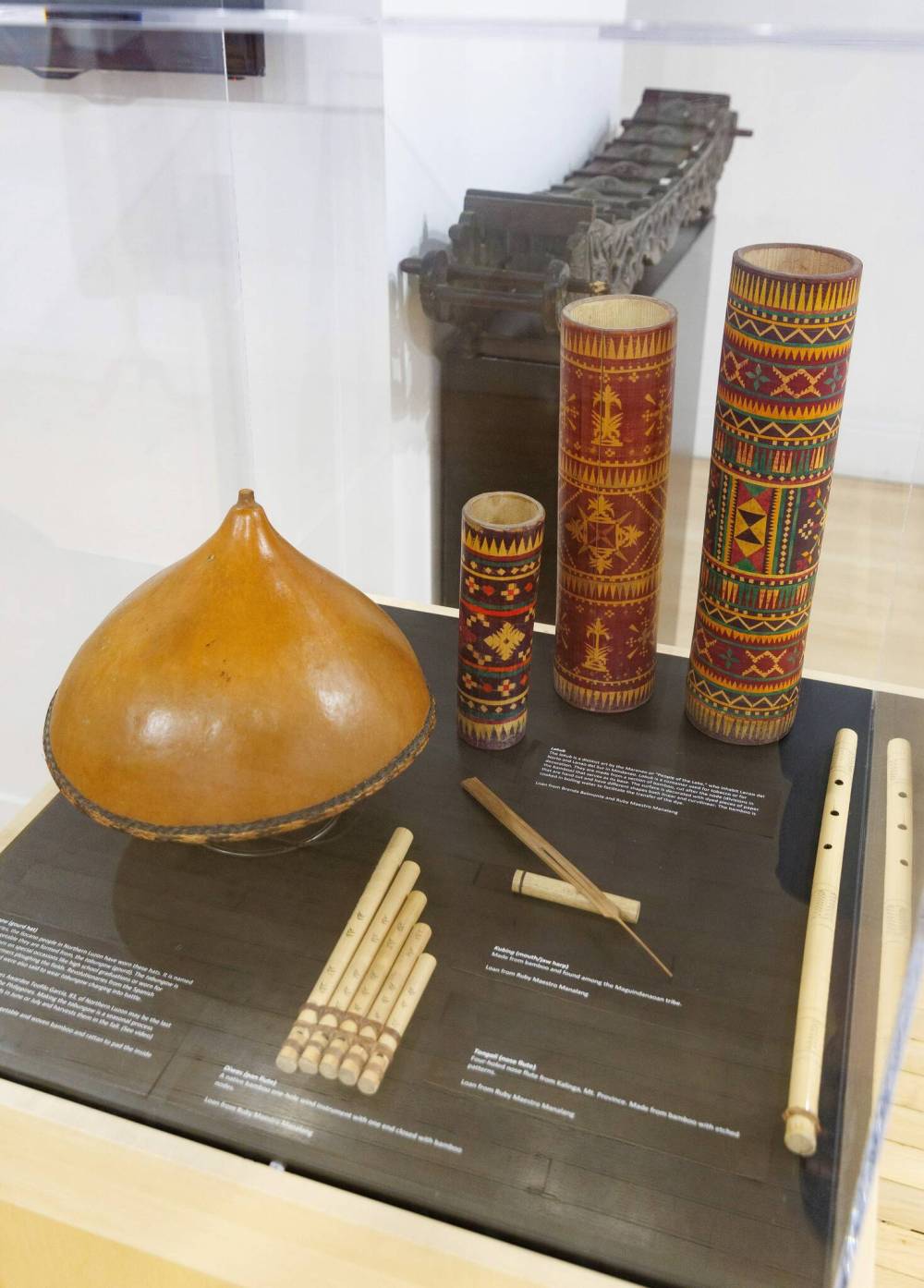
a Tabungaw (gourd hat), aLakub, Tongali, a Kubing and a Diwas
Ilagan is proud of her first curatorial project, and grateful for the support of the Filipino community and organizations like the Philippine-Canadian Centre of Manitoba and the Kultivation Festival.
“A lot of the pieces you see were actually loaned to us by people in the community,” she says. “I wouldn’t have been able to create this exhibit without everyone’s support.”
thandi.vera@winnipegfreepress
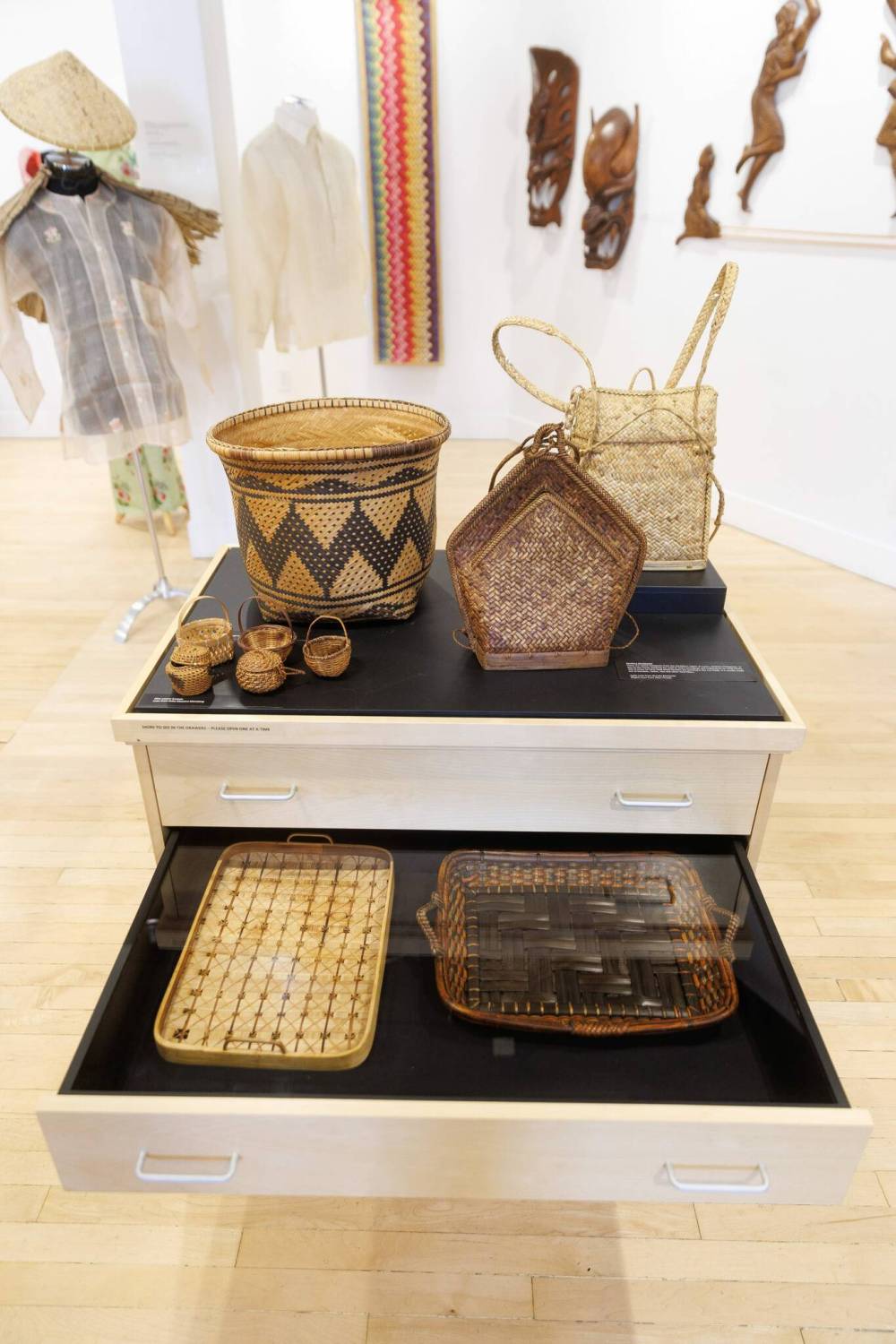
Various woven items