Sticker shock Grocery prices soar, and province’s lack of regional price-tracking not helping
Read this article for free:
or
Already have an account? Log in here »
To continue reading, please subscribe:

Digital Subscription
One year of digital access for only $205*
- Enjoy unlimited reading on winnipegfreepress.com
- Read the E-Edition, our digital replica newspaper
- Access News Break, our award-winning app
- Play interactive puzzles
*First annual payment billed as $205.00 + GST for one year. This annual subscription will automatically renew at $233.00 + GST every 52 weeks (10% off the regular annual price of $259.35). Offer available to new and qualified returning subscribers only. Cancel any time.
To continue reading, please subscribe:
Add Free Press access to your Brandon Sun subscription for only an additional
$1 for the first 4 weeks*
- Enjoy unlimited reading on winnipegfreepress.com
- Read the E-Edition, our digital replica newspaper
- Access News Break, our award-winning app
- Play interactive puzzles
*Your next Brandon Sun subscription payment will increase by $1.00 and you will be charged $17.95 plus GST for four weeks. After four weeks, your payment will increase to $24.95 plus GST every four weeks.
Read unlimited articles for free today:
or
Already have an account? Log in here »
Hey there, time traveller!
This article was published 10/09/2024 (737 days ago), so information in it may no longer be current.
Bread, apples, milk and sticker shock.
If financial distress has become a regular part of your grocery shopping routine, you’re not alone. Not by a long shot.
Opinion polls and inflation tracking confirm food prices are higher than they were prior to the pandemic, adding to consumer anxiety and leading to changes in shopping habits. According to an Ipsos survey conducted earlier this year, 83 per cent of Canadians say their weekly grocery bills have increased over the last six months.
MIKAELA MACKENZIE / FREE PRESS Manitoba does not keep track of the rising cost of groceries by region; the data would help other social programs in the province.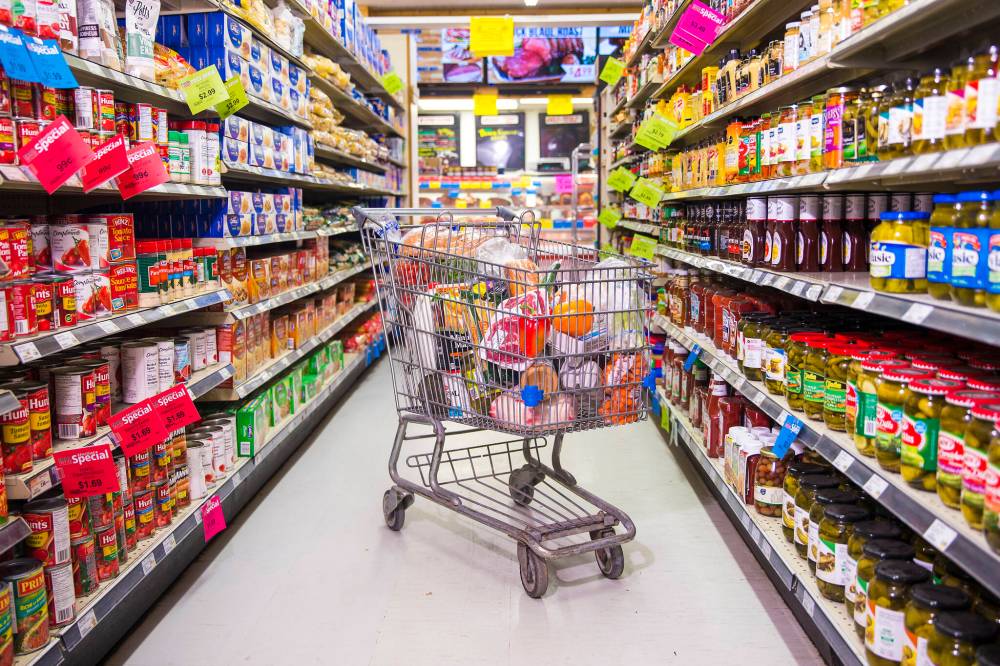
Unsurprisingly, the internet has also been abuzz with gripes about the cost of food, with several users going viral for comparing past grocery purchases with the current rate for those same items.
My fellow Free Press arts and life staffers and I jumped on the trend for an unscientific but illuminating look at just how much our pandemic-era grocery bills have grown.
If you would like to conduct your own grocery audit, find a past invoice and add all the items, exactly as they appear, to an online shopping cart. (Most major supermarkets have loyalty programs with detailed order histories available through customer account portals. Online purchases also generate line-by-line email invoices.)
If you do take part, please send me a note with your findings!
Related Articles
Poll suggests Manitobans worried about costs, less confident in institutions





MIKAELA MACKENZIE / FREE PRESS Cutting back on “splurge” items has become a trend as the price of groceries continues to rise.
Two-adult household
February 2020: $153
September 2024: $202
Largest single-item price increase: Melitta coffee, $12.98 to $21.99
Pretty much everything in my order was more expensive now than four years ago. All of the produce had increased by several cents or a few dollars — the most egregious of which was a bag of sweet potatoes, now available for $9.99 versus $6.44.
I was surprised to see meat hadn’t increased as much as I expected and that some staple items, such as bread from the store’s in-house bakery, had remained the same price. At the same time, President’s Choice crackers, cat litter and toilet paper have nearly in doubled in price.
When comparing my past self with my current shopping mindset, I’m now much less likely to splurge on “luxury” items. I used to buy halloumi cheese willy-nilly and haven’t been able to justify the purchase of a small $8 block of (delicious) cheese for years.
I also find myself gravitating toward cheaper products that require more preparation — dried legumes versus canned, for example.
— Eva Wasney
MIKAELA MACKENZIE / FREE PRESS Nearly all grocery items have increased in price over the last four years.
One-adult household
November 2019: $92
September 2024: $112
Largest single-item price increase: Venus razor blades, $19.98 to $32.99
Local data not available
How much do groceries cost in Manitoba? It’s hard to say.
Unlike many other provinces, Manitoba doesn’t regularly collect data about the price of food across regions. That’s a missed opportunity, says Joyce Slater, a professor of community and public health nutrition at the University of Manitoba.
How much do groceries cost in Manitoba? It’s hard to say.
Unlike many other provinces, Manitoba doesn’t regularly collect data about the price of food across regions. That’s a missed opportunity, says Joyce Slater, a professor of community and public health nutrition at the University of Manitoba.
“It’s just considered part of good governance to have this kind of information available at the provincial and regional level,” Slater says.
“Food is a big part of most people’s budgets.”
Elsewhere, average food costs are tracked through the nutritious food basket framework, a survey tool developed by Health Canada, and used nationally and regionally to monitor the cost and affordability of healthy eating over time.
The basket — think of it as an actual shopping cart or basket — includes 63 commonly purchased grocery items based on nutrition recommendations from Canada’s Food Guide. The list contains minimally processed fruits, vegetables, meats, plant-based proteins, whole grains and fats, with suggested serving sizes based on age and gender.
By plugging in the actual retail prices of items from various grocery stores, surveyors are able to deduce how much it costs to buy a week’s worth of nutritious food for an individual or family in different areas of a province. The result is a snapshot of the consumer food system and an indicator of food insecurity.
In 2023, the average cost of groceries for a family of four living in Newfoundland and Labrador was $333 per week, representing 35 per cent of household spending based on the province’s market basket threshold (the cost of goods and services required to meet the basic needs of residents). In Ottawa, a single person could expect to pay $96 per week.
Manitoba’s most recent nutritious food basket report is from 2011, when a family of four could meet their nutrition needs for between $192 and $273 a week. A lot has happened since then.
“We’ve seen unprecedented food cost inflation in Canada in recent years. There was a real increase in food insecurity during COVID, there was also incredible pressure on (charitable) food organizations during that time,” Slater says.
While this data can be an informative benchmark for the average shopper, it’s a valuable metric for food banks, social service agencies and health-care facilities that purchase food or deal with poverty reduction.
Knowing what proportion of income residents need to spend in order to access healthy food can help determine whether minimum wage or social assistance rates are adequate.
In 2022, 26.8 per cent of Manitoba households were facing some form of food insecurity, according to Statistics Canada.
Manitoba’s new $30-million school nutrition program could also benefit from more detailed data, Slater says.
“Schools are going to have to plan menus. It would be really good for them to know what a nutritious food basket costs in their region,” she says.
Manitoba Health previously spearheaded another nutritious food basket report in 2017, but never released the resulting data.
In an emailed statement a provincial spokesman didn’t explain why the data was withheld, but confirmed, “a final report was never produced and staff were redirected at the time.”
The province currently uses national data from Statistics Canada’s consumer price index to track affordability in Manitoba. There appear to be no plans to continue conducting localized food basket tracking.
“What’s really important about doing it provincially is that you get this regional data that you can’t get anywhere else,” says Slater. “Because we do have regional differences … in northern Manitoba food costs are very, very high.”
— Eva Wasney
I am weirdly oblivious about certain foods and obsessed with the prices of other things. I could not tell you how much meat costs, now or pre-pandemic, but I am appalled when I have to pay more than 99 cents for a can of No Name chickpeas.
Every time I buy eggs I am gobsmacked (although I still buy them). I usually get free-run eggs, and they are about $7.50 for a dozen now, which is a 50 per cent increase since 2019.
Cheese is another big one that I do pay attention to, and I reluctantly have to put back the $24 block of Parmesan, even though good cheese has always been my splurge item.
I am ashamed to admit that I signed up for regular deliveries of Venus razor blades from Amazon — betraying both my pro-environment and anti-Bezos sentiments — because I just can’t fathom paying $32 for a six-pack.
I also have started using delivered meal kits some weeks; Chefs Plate works out much cheaper than making those same meals with store-bought groceries. However, I hate the packaging waste and I like actually cooking from scratch, so it’s not a permanent solution.
— Jill Wilson
MIKAELA MACKENZIE / FREE PRESS Manitoba’s most recent nutritious food basket report is from 2011, when a family of four could meet their nutrition needs for between $192 and $273 a week.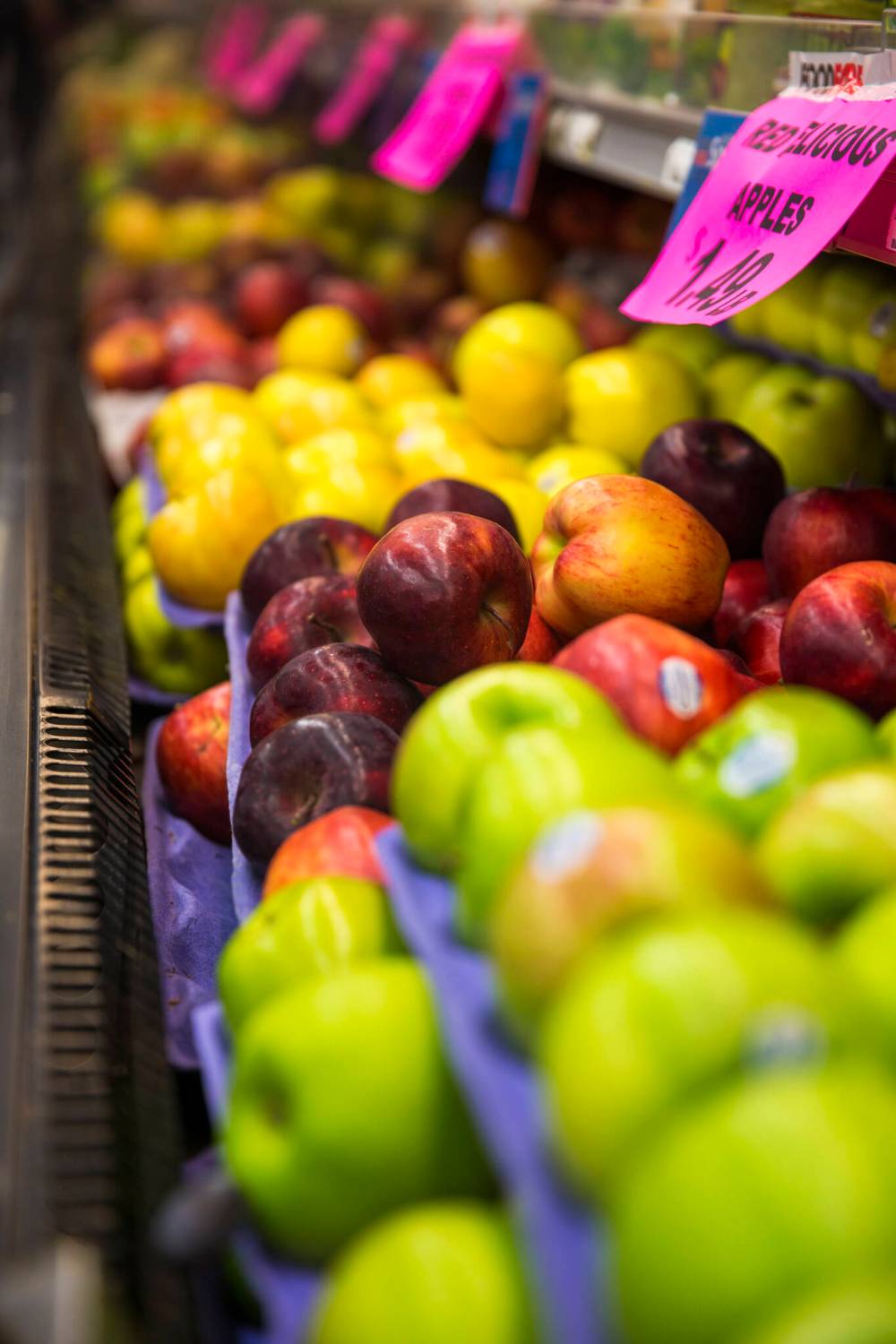
Two-adult, two-teen household
April 2021: $117
September 2024: $140
Largest single item price increase: Yves ground round, $10.99 to $15.99
One area where our shopping habits have changed owing to price is coffee. We normally get the Salt Spring Metta organic espresso, but only when it’s on sale, as it’s gone up a few bucks per bag in the last few years. Because it’s a relatively big-ticket item as far as groceries go, I’ll look at all the grocery store websites to see where it might be on sale before deciding where to shop — if it’s on sale for $3 to $4 off I’ll stock up on four to five bags.
In fact, on a couple of occasions (both during and since the pandemic) I’ve bought multiple bags directly from the company rather than through the grocery store … if I can remember to do so before the situation is dire.
A number of the items in my original cart were on sale, including Schmidt’s natural deodorant. In 2021, I was able to snag it for $7.99, down from the already-painful $8.99 regular price, which probably felt like a win. As of this writing it’s regular $10.99, on sale for $9.99. I’ll generally wait until I see it on sale until grabbing some.
While the $3.99 price on the Silk original soy milk from my 2021 bill is most certainly a sale price, nowadays it’s around $4.49 at best on the rare occasion it does go on sale.
— Ben Sigurdson
eva.wasney@winnipegfreepress.com
X: @evawasney

Eva Wasney covers environmental issues in Manitoba for The Narwhal in partnership with the Winnipeg Free Press. Read more about Eva.
Every piece of reporting Eva produces is reviewed by an editing team before it is posted online or published in print — part of the Free Press‘s tradition, since 1872, of producing reliable independent journalism. Read more about Free Press’s history and mandate, and learn how our newsroom operates.
Our newsroom depends on a growing audience of readers to power our journalism. If you are not a paid reader, please consider becoming a subscriber.
Our newsroom depends on its audience of readers to power our journalism. Thank you for your support.