Bird is the word Birding a low-stakes pastime to get out in nature
Read this article for free:
or
Already have an account? Log in here »
To continue reading, please subscribe:
Digital Subscription
One year of digital access for only $1.44 a week*
- Enjoy unlimited reading on winnipegfreepress.com
- Read the E-Edition, our digital replica newspaper
- Access News Break, our award-winning app
- Play interactive puzzles
*Billed as $5.77 plus GST every four weeks. After 52 weeks, price increases to the regular rate of $19.95 plus GST every four weeks. Offer available to new and qualified returning subscribers only. Cancel any time.
To continue reading, please subscribe:
Add Free Press access to your Brandon Sun subscription for only an additional
$1 for the first 4 weeks*
- Enjoy unlimited reading on winnipegfreepress.com
- Read the E-Edition, our digital replica newspaper
- Access News Break, our award-winning app
- Play interactive puzzles
*Your next Brandon Sun subscription payment will increase by $1.00 and you will be charged $17.95 plus GST for four weeks. After four weeks, your payment will increase to $24.95 plus GST every four weeks.
Read unlimited articles for free today:
or
Already have an account? Log in here »
Hey there, time traveller!
This article was published 13/09/2024 (767 days ago), so information in it may no longer be current.
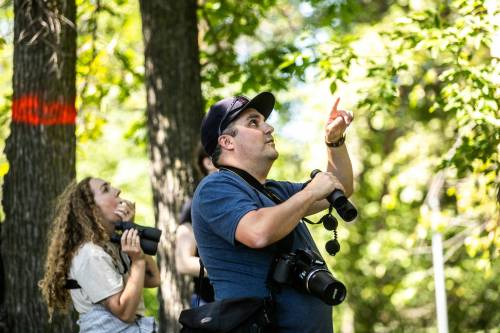
The group chats away warmly — catching up on the happenings of the last week — while strolling through the park. Suddenly, someone stops and throws an index finger toward the canopy.
“Bird over there.”
A hush falls over the crowd and eight sets of binoculars rise to search for fluttering wings amid the dappled sunshine.
The University of Manitoba Indigenous Birding Club goes on weekly walks to King’s Park to bird. 
The University of Manitoba Indigenous Birding Club has been meeting weekly since the spring of 2023. It’s a casual network focused on fostering an appreciation for birds, yes, but also on building a welcoming outdoor community.
“We started the group because we had seen other movements creating space for (Black and Indigenous people, and people of colour) out in nature, so we decided to try it here,” says Justin Rasmussen, club co-founder and director of the university’s Indigenous leadership programming department.
Birding had a major moment at the height of the pandemic when people were desperately seeking safe, socially distanced activities beyond the confines of their homes.
Interest has continued to soar locally thanks to the influence of technology, social media and groups, such as the Indigenous Birding Club, that are dedicated to making the hobby more accessible for bird lovers of all backgrounds.
Rasmussen, 43, is Métis and grew up in Ile des Chênes. His interest in birding started at five years old when he happened upon a nest of blue robin eggs. He began watching for birds at the family cottage on the Rat River and became fascinated by how avians raised their young.
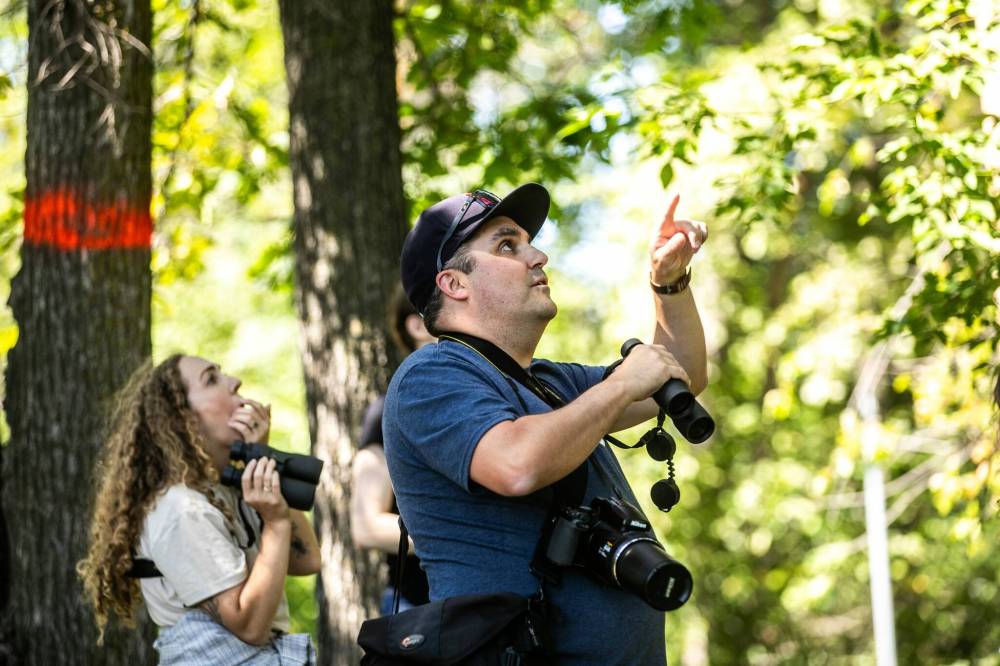
Indigenous Birding Club co-founder Justin Rasmussen (right) leads group’s weekly walk.
“I was just totally blown away by it all,” he says.
Prior to joining the U of M, Rasmussen spent years working as a biologist and zoologist studying avian brood parasites — species that offload their eggs and parental duties onto other nesting birds.
Although he’s an expert by training, Rasmussen doesn’t position himself as such during the club’s weekly outings.
“We don’t want it to be a guided tour. We don’t want one expert saying, ‘Hey, this is all the information about birds.’ What we try to do is have more communal learning about birds,” he says.
It’s one way Indigenous worldviews permeate the ethos of the club.
The U of M’s Indigenous Birding Club co-founder Justin Rasmussen (centre) points out bald eagles. 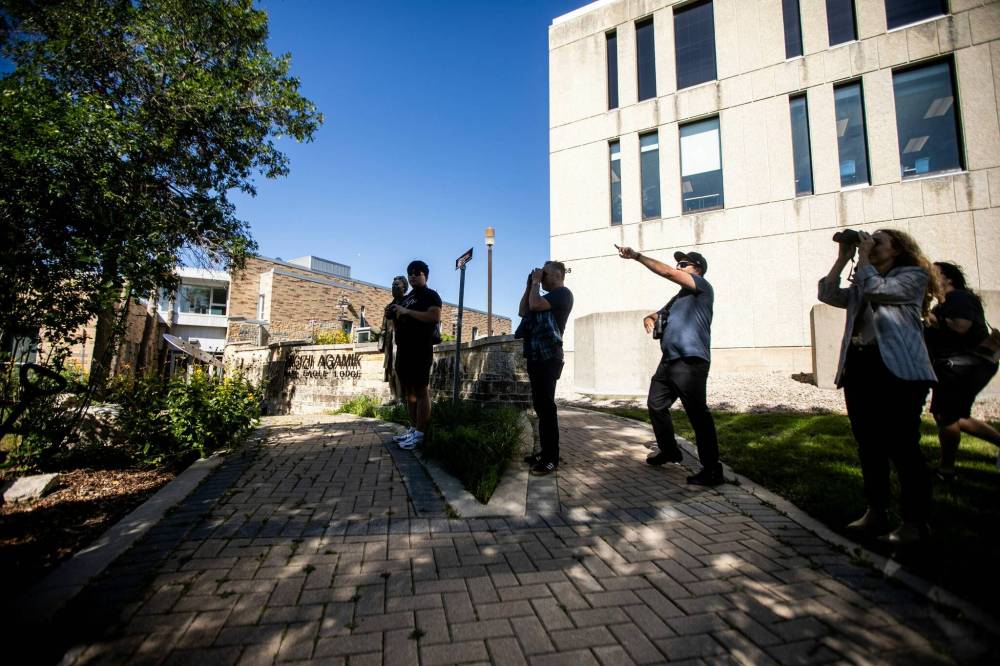
The group’s active birding season typically runs from March to October with winters dedicated to traditional knowledge — last year, an elder was invited to share eagle teachings and lead a workshop on preparing feathers for regalia.
On a sunny lunch hour a week before the beginning of the fall semester, the club gathers on campus outside Migizii Agamik, the Bald Eagle Lodge, for a primer on how to use the borrowable binoculars and a brief round of introductions. Rasmussen estimates nearly 500 people joined on walks over the last two seasons.
Today’s crew is a mix of Indigenous and non-Indigenous students, librarians and faculty members — some of whom are sporting branded club T-shirts, a gift for frequent fliers.
A bald eagle spotted during a University of Manitoba Indigenous Birding Club outing.
“It’s a great way to get rid of our titles and just be humans out in nature,” Rasmussen says, adding the walks have a myriad of benefits.
“(Another) reason we’re doing this is that we saw a lot of students suffering from social anxiety or stress coming out of the pandemic, so we thought, ‘Hey, this might be a good way for them to care for their mental health.’”
The first bird sighting of the day comes before even leaving the meeting spot. Four bald eagles are circling high above. On the way to and through nearby King’s Park, the list grows to include Canadian geese, crows, hairy and downy woodpeckers, nuthatches, cedar waxwings, an American redstart, hermit thrushes, robins, a Swainson’s thrush and one wood duck.
Each bird drums up a similar level of hushed excitement. Passersby regularly stop to see what the fuss is all about.
Spring is the best time for bird watching, when the trees haven’t yet flushed with leaves and the birds are putting on a colourful show for mating season. Late summer and fall, however, is a chance to spot migrating species before they take off for warmer climes.
Muriel Houle is a sixth-year Indigenous Studies student. She’s been a club regular since the beginning.
“I come on birding walks for fresh air and because it’s fun, and I try to honour my mom because she’s got all these bird feeders and she grew up knowing all these birds,” she says.
A blackpoll warbler spotted during a University of Manitoba Indigenous Birding Club outing.
“Coming on these walks has helped me learn more.”
Houle’s favourite bird is the charismatic white-breasted nuthatch.
“It can climb up the tree sideways and upside down, which is just so cool,” she says.
The group lingers past the 90-minute allotment, soaking up the sun and company. Nobody’s in a rush to return to campus.
“There’s always another bird to see,” Rasmussen quips cheerily.
Rudolf Koes recalls a time when news of a rare bird sighting would spread via local phone tree.
Now, alerts come through Facebook groups or the eBird platform.
“That has led to a lot of growth and also to more people getting to know each other,” he says.
Rudolf Koes has been keeping detailed journals of bird observations since he was 11 years old. 
Koes, 79, started birding as a child in the Netherlands. He grew up in an outdoorsy family and was taken under wing by a friend’s father who was an avid birder.
Koes can’t pinpoint exactly what drew him to the hobby.
“Perhaps it is our innate instinct to hunt and instead of hunting and shooting things, you hunt with your eyes and your ears — but that’s a topic for some psychologist,” he says with a laugh.
Or maybe it was the thrill of a different kind of hunt.
“A lot of people collect things, it could be stamp collecting or coin collecting; for me, I guess it was bird collecting,” he says.
And Koes has done a lot of collecting. He’s been keeping detailed journals of bird observations since he was 11 years old. These days, he still brings a diary into the field to take notes, but will upload his findings to the computer and eBird when he returns home. A common yellowthroat spotted during a University of Manitoba Indigenous Birding Club outing.
The eBird program was developed by Cornell University’s Lab of Ornithology as a way for professionals and hobbyists to share bird sightings with a global community.
The lab also uses the data about bird distribution, abundance, habitats and trends to inform avian research, education and conservation efforts.
The eBirders submit their location, date, route and details about the species encountered, including photos. There are nearly 6,000 active users of the free smartphone app and online platform in Manitoba, with 403 different species documented throughout the province.
Koes, who regularly leads guided birding trips with Nature Manitoba and other outdoors groups, is listed among the top 10 eBirders in the region. He’s observed 369 species and has submitted nearly 15,000 logs since joining in 2018.
Cornell has also created the Merlin Bird ID app — named after a species of “rather small falcon,” as described by the National Audubon Society — that helps identity birds based on their songs.
According to the university, there are 32,000 Merlin users in Manitoba, representing a 45 per cent increase in signups for the app (also free) over the last year.
Lyle Ford listens for bird calls through an app during the U of M’s Indigenous Birding Club weekly birding walk. 
Koes sees Merlin as an accessible way for novices to get involved — with one caveat.
“I remember seeing a list of 10 bird species that had been recorded at a property outside of Winnipeg and seven of them were legit and three of them were European birds,” he says.
“You have to take it with a grain of salt, but it’s a good start for sure.”
Koes moved to Winnipeg in 1968, drawn to Canada by a rumour that he could make a lot of money as a lumberjack. He landed in education instead and taught at Gordon Bell High School until retirement.
He’s been involved in the local birding community from the start through various organizations and by contributing to local bird counts and other citizen science efforts.
Koes has watched the relatively small number of enthusiasts grow over time and the recent spike in interest has him hopeful for the future.
“The core old-timers, so to speak, we’re all getting older. We’re always looking for younger people because eventually they’re going to have to take over all the tasks that we’re doing now,” he says.
Alison Conrad has also been seeking a younger cohort of birders.
When the 32-year-old from Halifax first tried birding a decade ago there was a noticeable demographic difference in their local meetup group
Alison Conrad has been using social media to encourage new birders to try out the hobby. 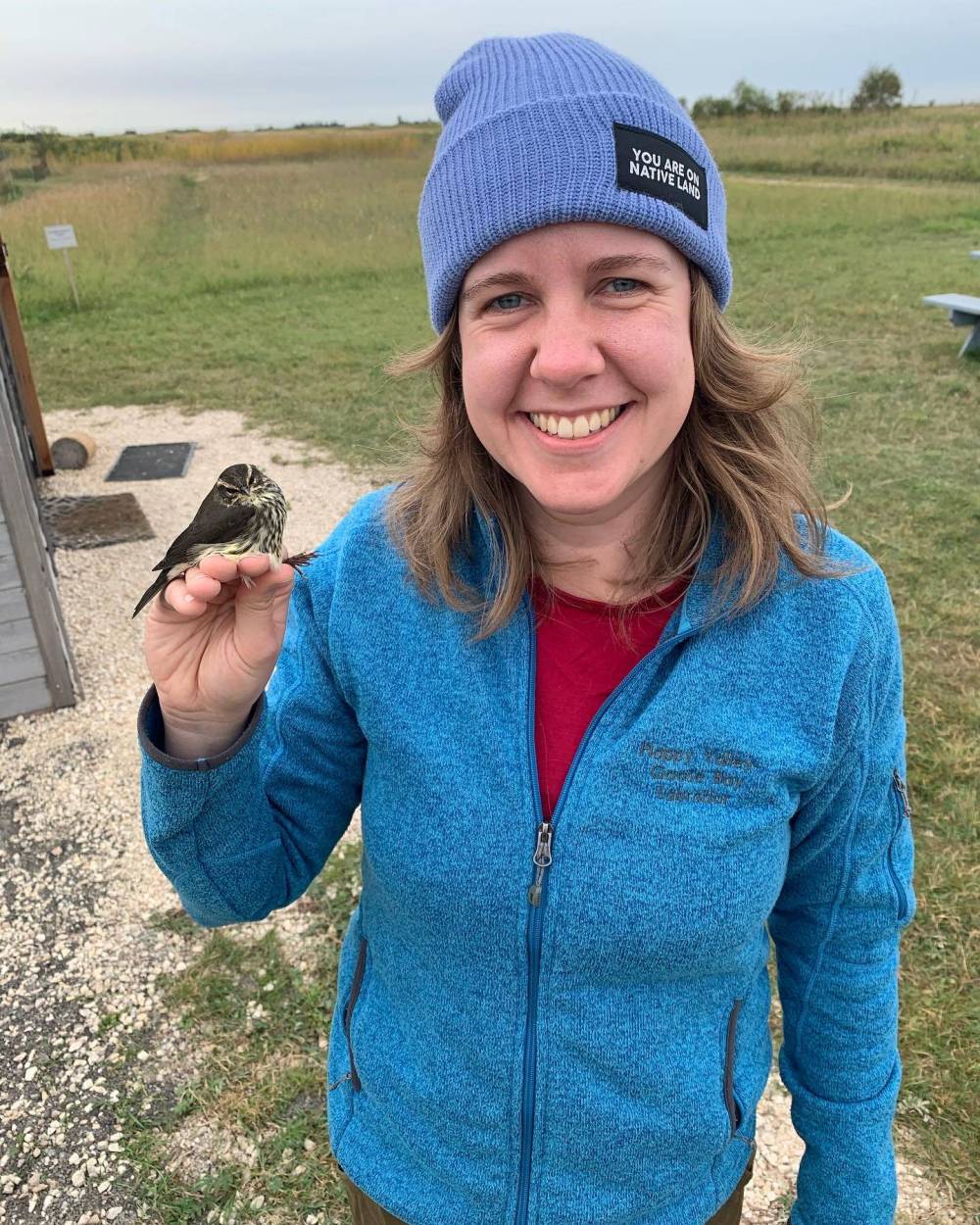
“It was a really wonderful group of people, but I was probably the youngest by, like, 40 or 50 years,” says Conrad, whose pronouns are she/they.
When they started, Conrad was familiar with a few common species: robins, pigeons and chickadees. They learned a lot from fellow birders and from independent research, but wanted to help make the pastime more accessible, specifically for young and queer people.
“As a beginner, birding felt very serious and kind of exclusive. I wanted to try and make it a little less serious and a little more fun,” Conrad says.
Conrad launched an Instagram account, with the fitting handle @birdnerd, and began posting about birding adventures in Canada and elsewhere. Since moving to Winnipeg in 2019 and throughout the pandemic, she has expanded the account to include tips, conservation info, outdoor activism and fun bird facts, such as: “You ready for this? Blue jay’s feathers aren’t actually blue, they’re brown. They look blue because their feather structure refracts light and it looks blue to our eyes.”
A pileated woodpecker spotted during a University of Manitoba Indigenous Birding Club outing.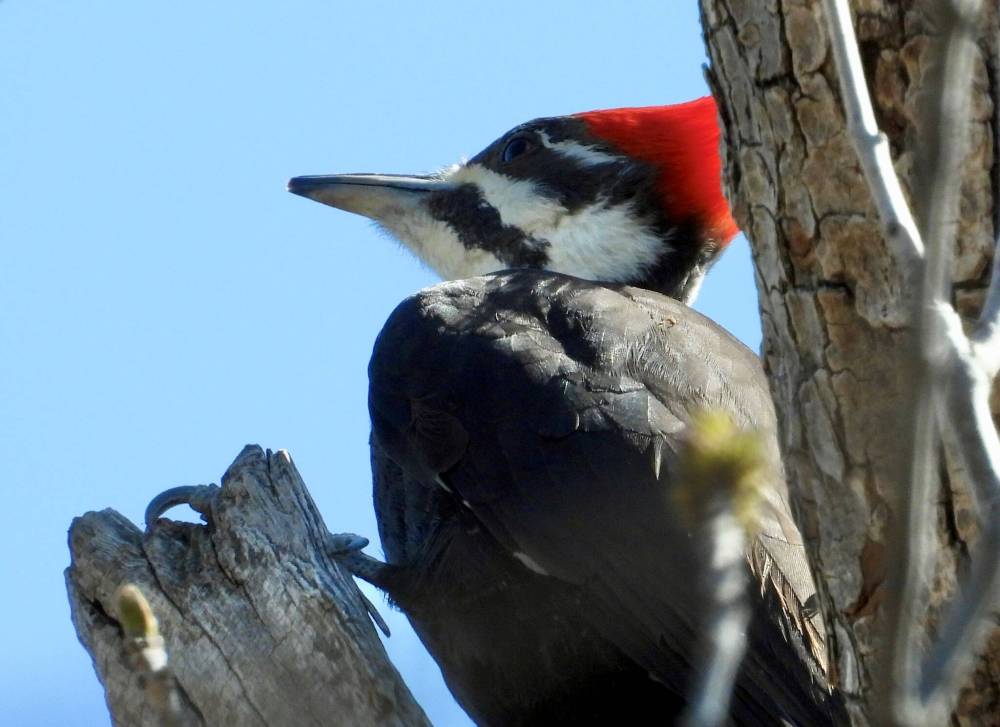
The tone is intentionally lighthearted and Conrad encourages followers to simply pay attention to the birds around them without having to buy any fancy gear or reference guides — although the Merlin app can be a good companion for low-stakes bird watching.
“If you’re able to have a bird feeder, start by putting that up where you can see it because there are a lot of backyard birds here. If you want to go to the park, that’s also a good spot,” Conrad says.
A downy woodpecker

Personally, birding has been a gateway to other outdoor interests, such as backcountry camping, foraging and plant identification.
Conrad also sees avian appreciation as an important inroad to discussing conservation and the climate crisis.
“If people start noticing birds, then they’re going to start having a relationship with them and then they’ll start caring about them — there’s a snowball effect,” Conrad says.
“My account is not going to solve all the world’s issues, I’m just trying to find ways to make people think a little more deeply about what they’re seeing and how it fits into the world that (we live) in.”
eva.wasney@winnipegfreepress.com
X: @evawasney

Eva Wasney covers environmental issues in Manitoba for The Narwhal in partnership with the Winnipeg Free Press. Read more about Eva.
Every piece of reporting Eva produces is reviewed by an editing team before it is posted online or published in print — part of the Free Press‘s tradition, since 1872, of producing reliable independent journalism. Read more about Free Press’s history and mandate, and learn how our newsroom operates.
Our newsroom depends on a growing audience of readers to power our journalism. If you are not a paid reader, please consider becoming a subscriber.
Our newsroom depends on its audience of readers to power our journalism. Thank you for your support.

History
Updated on Monday, September 16, 2024 11:33 AM CDT: Corrects instgram account to @ birdnerdwpg