

Wise Guy: an affectionate tribute to TV’s most original mob boss

Advertisement
Read this article for free:
or
Already have an account? Log in here »
To continue reading, please subscribe:
Monthly Digital Subscription
$1 per week for 24 weeks*
- Enjoy unlimited reading on winnipegfreepress.com
- Read the E-Edition, our digital replica newspaper
- Access News Break, our award-winning app
- Play interactive puzzles
*Billed as $4.00 plus GST every four weeks. After 24 weeks, price increases to the regular rate of $19.95 plus GST every four weeks. Offer available to new and qualified returning subscribers only. Cancel any time.
Monthly Digital Subscription
$4.99/week*
- Enjoy unlimited reading on winnipegfreepress.com
- Read the E-Edition, our digital replica newspaper
- Access News Break, our award-winning app
- Play interactive puzzles
*Billed as $19.95 plus GST every four weeks. Cancel any time.
To continue reading, please subscribe:
Add Free Press access to your Brandon Sun subscription for only an additional
$1 for the first 4 weeks*
*Your next subscription payment will increase by $1.00 and you will be charged $16.99 plus GST for four weeks. After four weeks, your payment will increase to $23.99 plus GST every four weeks.
Read unlimited articles for free today:
or
Already have an account? Log in here »
Hey there, time traveller!
This article was published 14/09/2024 (577 days ago), so information in it may no longer be current.
My initial reaction to Wise Guy: David Chase and The Sopranos (a two-part documentary now streaming on Crave) felt unexpected and un-gangsterish and personal. I was overcome with gentle melancholy, struck by the time that has passed between the norm-busting show’s debut in 1999 — you know, in the last century — and now.
In the gap between Sopranos clips and present-day interviews with cast members, it becomes poignantly clear that everyone is just so much older. Even Adriana (Drea de Matteo) and Christopher (Michael Imperioli) are older. The idea of prestige TV is older. I’m older, too.
Only James Gandolfini — who died at age 51, six years after the series wrapped, and is seen here in archival footage — remains the same.
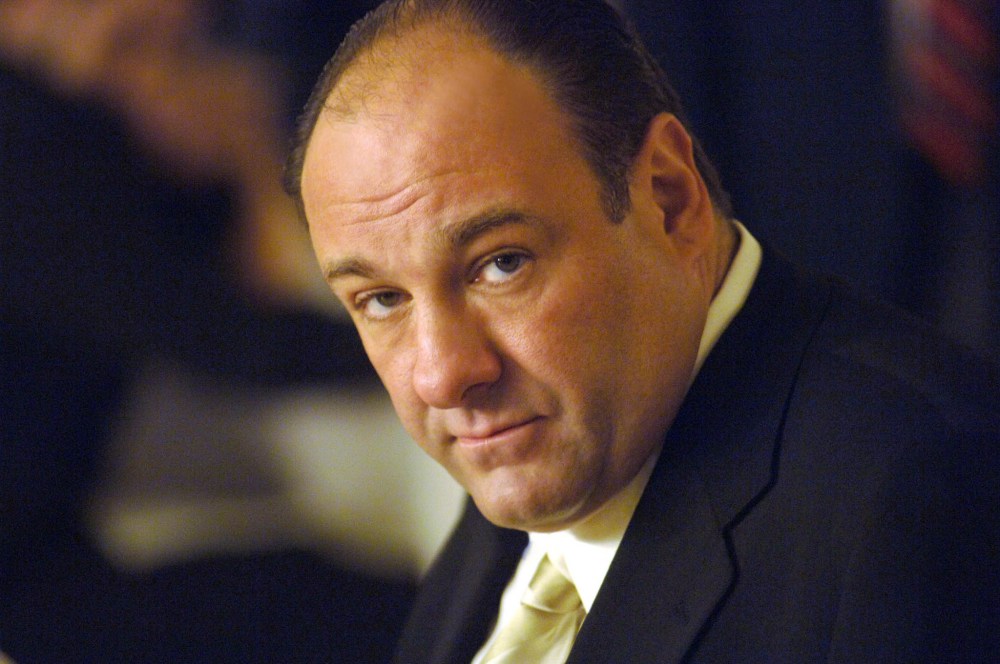
In this long look back, director Alex Gibney pre-emptively quotes mob boss Tony Soprano’s maxim that “‘remember when’ is the lowest form of conversation.” This particular “remember when” may be nostalgic, but it’s also sharp, funny and sprinkled with fascinating factoids (When de Matteo went in for her audition, she thought the show was about opera singers. Tony Sirico, who played Paulie Walnuts, wouldn’t let the hair and makeup people touch his head.)
Wise Guy isn’t as comprehensive as some of Gibney’s projects (The Smartest Guys in the Room, Going Clear), and there are a few points that probably would have been pressed harder if this doc weren’t so affectionate. But this angled, idiosyncratic and intimate approach to the material works.
Gibney is aware of The Sopranos as a huge cultural phenomenon. He shows how it transformed HBO from the home of boxing and second-run movies — TV’s “bargain basement,” as Imperioli calls it — to the premier destination for conversation-starting original programming. He demonstrates the ways this cinematic, novelistic series exploded the limits of network television, forever changing TV and the way we engage with it.
Gibney is mostly concerned, though, with the personal dimensions of the show, and this interest plays out in a lengthy, cagey conversation between him and Sopranos showrunner David Chase. The interview, significantly, takes place on a set that closely replicates the office of Dr. Jennifer Melfi (Lorraine Bracco), Tony’s therapist. Gibney is the doctor here, and Chase his somewhat recalcitrant patient.
By Chase’s telling, he’s agreed to talk to Gibney about The Sopranos and is now annoyed to find that Gibney wants to talk about him. It turns out this is not an either/or proposition. The Sopranos is about David Chase. As Gibney tells Chase, “Part of what interests me about The Sopranos was how it was personal to you.”
As Chase talks about his anxious childhood in New Jersey and his own years of therapy, Gibney weaves in footage from the show.
The clearest parallel involves Chase’s fraught relationship with his difficult, unhappy mother, whom he describes as perpetually “terrified and angry.” In the series, this is transmuted into Tony’s wretched dynamic with his mother, the magnificently monstrous Livia (Nancy Marchand). (“I trust this creature I am playing is deceased,” Marchand said to Chase at one point.)
In the first season of the show — 25-year-old spoiler alert! — Livia schemed to murder her own son, and Chase initially planned to finish that storyline with Tony smothering her to death.
Perhaps suddenly aware of the nakedness of these psychological revelations, Chase pauses at one point. “I really regret the amount of (expletive) verbiage from this morning,” he says to Gibney as they sit down for a second session. Cue the footage of Tony talking to Dr. Melfi about not talking: “Gary Cooper. Now there was an American! The strong, silent type. He wasn’t in touch with his feelings. He just did what he had to do.”
But of course, The Sopranos was great because Tony wasn’t Gary Cooper. Chase’s genius was to combine the tropes of the gangster genre with the story of a man struggling with his emotional health and the everyday demands of family life out in the New Jersey suburbs. (Marty Scorsese, Chase says, didn’t like the show: he couldn’t get past all the trees.)
Tony’s dealings with his capos and criminal rivals were always counterpointed by high-school soccer games and hot-water tank issues, in a genre-fluid combo of crime story, domestic drama and human comedy. This frequently frustrated what the writers’ room called the “less yacking, more whacking” viewing contingent.
But then Chase was always wary about giving audiences what they wanted. This contrarian position is best illustrated by the series’ notoriously contentious ending (though to hear Chase tell it, the real sticking point was his choice of Journey’s Don’t Stop Believin’ for the soundtrack).
Before The Sopranos, network TV series would usually just run until the numbers didn’t work and then be abruptly cancelled. Chase wanted some sense of an ending, but he also wanted to keep upending viewer expectations right up to the final shot. The result was polarizing: For Sopranos fans, it’s either absolutely brilliant or a complete cop-out.
And Gibney’s conclusion? Well, let’s just say it’s an homage.
alison.gillmor@freepress.mb.ca
Studying at the University of Winnipeg and later Toronto’s York University, Alison Gillmor planned to become an art historian. She ended up catching the journalism bug when she started as visual arts reviewer at the Winnipeg Free Press in 1992.
Our newsroom depends on a growing audience of readers to power our journalism. If you are not a paid reader, please consider becoming a subscriber.
Our newsroom depends on its audience of readers to power our journalism. Thank you for your support.
Studying at the University of Winnipeg and later Toronto’s York University, Alison Gillmor planned to become an art historian. She ended up catching the journalism bug when she started as visual arts reviewer at the Winnipeg Free Press in 1992.
Our newsroom depends on a growing audience of readers to power our journalism. If you are not a paid reader, please consider becoming a subscriber.
Our newsroom depends on its audience of readers to power our journalism. Thank you for your support.
Advertisement Advertise With Us
Advertisement Advertise With Us