Métis author Andrea Currie launches debut book in Winnipeg, an act of love and resistance
Advertisement
Read this article for free:
or
Already have an account? Log in here »
To continue reading, please subscribe:

Digital Subscription
One year of digital access for only $205*
- Enjoy unlimited reading on winnipegfreepress.com
- Read the E-Edition, our digital replica newspaper
- Access News Break, our award-winning app
- Play interactive puzzles
*First annual payment billed as $205.00 + GST for one year. This annual subscription will automatically renew at $233.00 + GST every 52 weeks (10% off the regular annual price of $259.35). Offer available to new and qualified returning subscribers only. Cancel any time.
To continue reading, please subscribe:
Add Free Press access to your Brandon Sun subscription for only an additional
$1 for the first 4 weeks*
- Enjoy unlimited reading on winnipegfreepress.com
- Read the E-Edition, our digital replica newspaper
- Access News Break, our award-winning app
- Play interactive puzzles
*Your next Brandon Sun subscription payment will increase by $1.00 and you will be charged $17.95 plus GST for four weeks. After four weeks, your payment will increase to $24.95 plus GST every four weeks.
Read unlimited articles for free today:
or
Already have an account? Log in here »
Hey there, time traveller!
This article was published 28/09/2024 (747 days ago), so information in it may no longer be current.
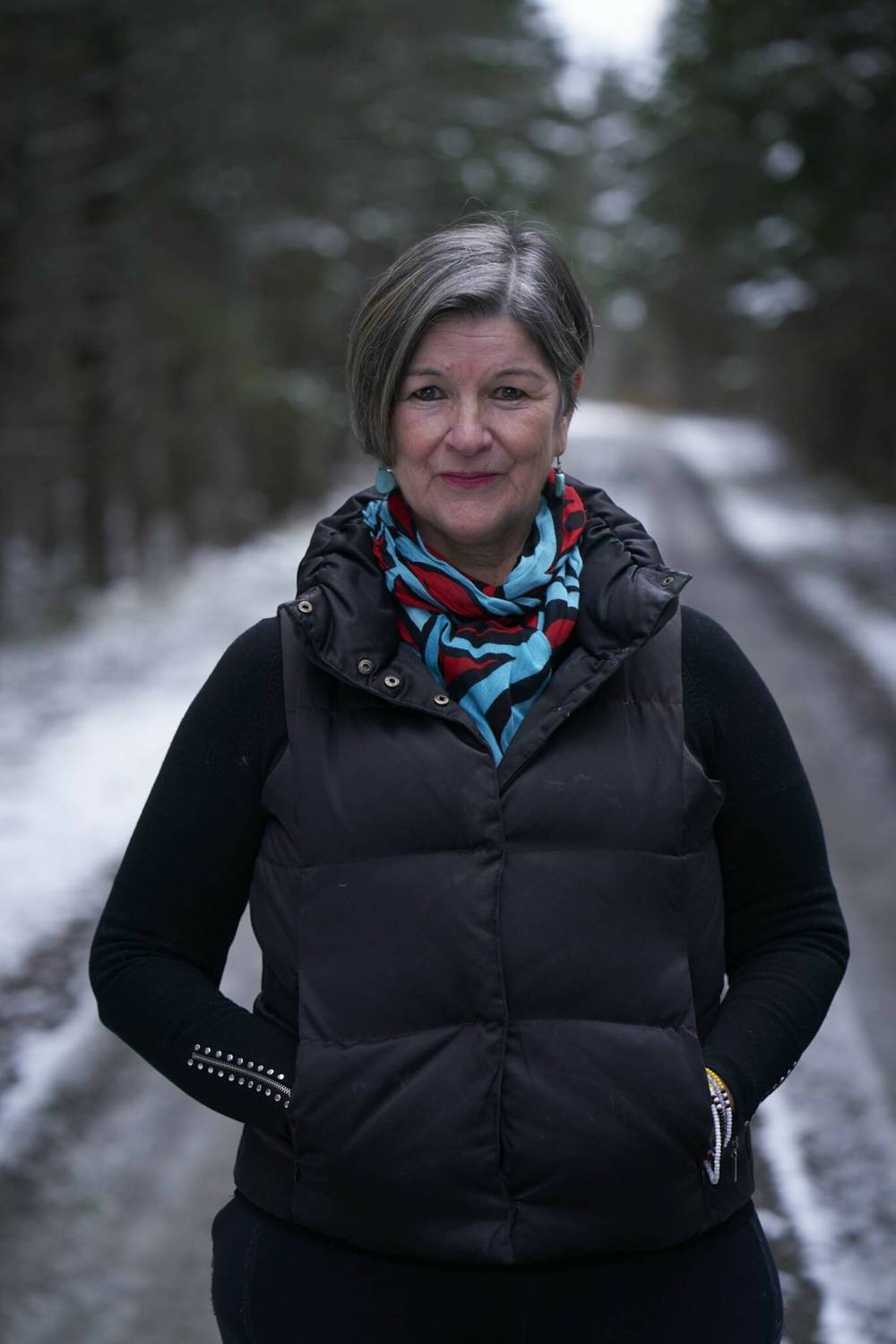
Andrea Currie is a Métis psychotherapist and writer, activist and healer. She was born in Winnipeg but was adopted as infant into a white family with no connections to community, part of what’s now called the ’60s Scoop.
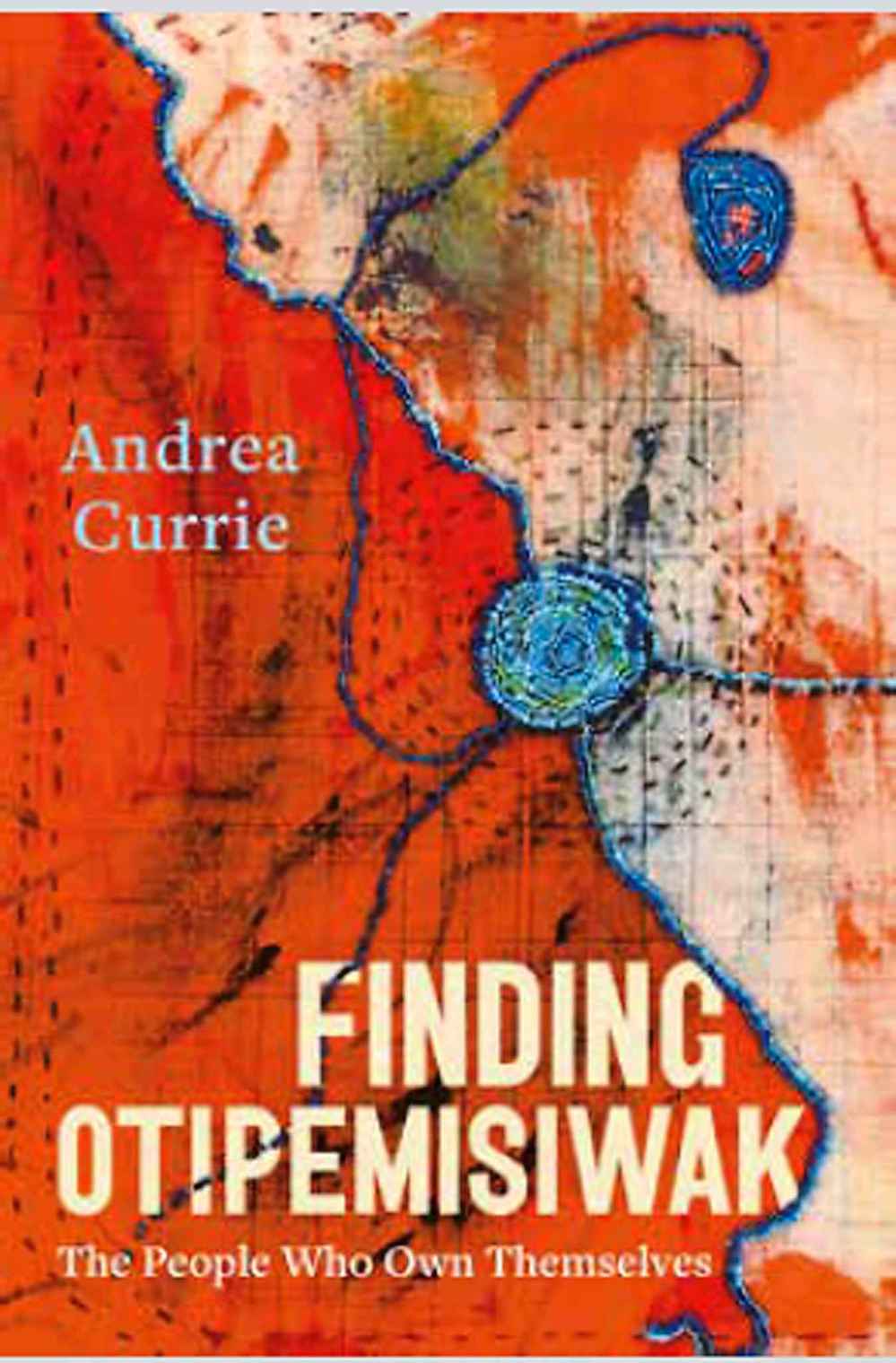
Currie lives in Cape Breton, N.S., where she works with We’koqma’q residential school survivors, but when it came time to launch her debut book, Finding Otipemisiwak: The People Who Own Themselves (Arsenal Pulp Press), she knew it would have to be in Winnipeg.
Sunday’s event is part of Thin Air’s Niizhotay Stories, which honours the late Anishinaabe Elder Theodore Niizhotay Fontaine on the eve of the National Day for Truth and Reconciliation. Taking place at McNally Robinson’s Grant Park location at 1:30 p.m, the event will feature a conversation between Currie and Michif writer katherena vermette.
Supplied
For Métis author Andrea Currie, preserving and revitalizing Indigenous cultural practices are acts of resistance.
Free Press: What are your goals for Finding Otipemisiwak?
Andrea Currie: I would like this book to find its way to other ’60s Scoop survivors so that none of the thousands of us feels alone. That is my main goal. Another goal is for this book to take its place amongst the beautiful and powerful Indigenous voices being heard in all of the arts these days, to be part of this act of sovereignty, strengthening Indigenous ways of creating and knowing and being in the world, by claiming artistic space to express ourselves in our own storytelling traditions. And of course, I would love for as many people as possible to read Finding Otipemisiwak, to hopefully have their hearts touched as they deepen their understanding of the harmful impacts of colonial practices some of us are still trying to heal from.
FP: What books were important to you while you were writing this book? Who/what are your influences?
AC: This is a hard question to answer because there are so many. I have to thank Métis Elder Maria Campbell for being one of the first to claim the space for her story. My grandmother, Marie Therese Goulet Courchaine, who was so proud of our Métis culture and wrote about it back in the ’50s and ’60s; that pride has always been a strong birthright in our family and it is my dream to follow in her footsteps. In terms of contemporary Indigenous writers, I love how Tomson Highway weaves such love and joy into his humour and how replete with wisdom his work is, how Alicia Elliott and Leanne Betasamosake Simpson and Joshua Whitehead, Billy-Ray Belcourt and Matthew James Weigel are all subverting conventional forms and telling stories in our own ways. And how katherena vermette and Amanda Peters and shalan joudry’s stories of our lives now are grounded in our history and life on the land.
FP: What is one thing you wish Canadians knew about the ’60s Scoop?
AC: I want Canadians to know that the assimilationist agenda of the colonial government in this country did not end when the residential schools were closed, that it shifted into the child-welfare system, that the ’60s Scoop was the next iteration of that. The removal of Indigenous children from our families and communities continues today with the disproportionately high number of Indigenous kids in care and the disproportionately low amount of funding for services to support Indigenous families to stay together and for our kids to be cared for in our own communities. I know that’s more than one thing, but that’s not all I want people to know. I want everyone in this country to know that residential schools, the ’60s Scoop and the number of Indigenous children in care are all part of a continuum of colonial interventions that have been hurting Indigenous peoples in this country since contact and that it has never stopped and is still going on. That’s why so many Indigenous people have a hard time with the whole notion of reconciliation. How can we begin to reconcile when harm is still being done?

FP: In your author’s note, you write about finding “love and resistance” in difficult stories. What do you mean by that?
AC: The love and resistance that I have experienced in my Métis community and in the Mi’kmaw communities I have been a part of is the same love and resistance that I hope readers find in my book. It’s the capacity to care for each other, for the land, even when our lives are riddled with grief and trauma. It’s the kindness and generosity we can still show to our settler neighbours, even when we continue to experience racism, violence and other forms of profound disrespect. That ability to love is itself a form of resistance. Not only can the colonizers not eradicate us as nations, they cannot take from us our core values and teachings and the ways we have been taught by our ancestors and Elders how to live in this world. And all the ways we are preserving and revitalizing our cultural practices are also acts of resistance. To tell our stories in our own way, as I have tried to do in my book, is an act of resistance, a refusal to be silenced, a refusal to conform to the colonial definitions and rules regarding what a story is and how it should be told.
FP: What does it mean to launch this book in your birthplace, in Winnipeg, in Red River, in the homeland of the Métis Nation?
AC: It’s a full-circle moment for me to launch the book in Winnipeg, where I began, where my nation was born, where my ancestors whose lives are beacons and signposts for me on my path lived and died. This is the land, these are the rivers that shaped me, even before I was aware of how deep my roots go on this territory. The search for myself that took me away from this land also led me back here, to my family and my culture. There is no other place where I could have launched this book and I am so grateful to my publisher, Arsenal Pulp Press, for understanding that and making the launch this weekend possible, and to McNally Robinson and Thin Air for hosting it.
ariel.gordon@freepress.mb.ca