Behind the music
Historian John Einarson donates trove of archives to university, looks back at life in new book

Advertisement
Read this article for free:
or
Already have an account? Log in here »
To continue reading, please subscribe:

Digital Subscription
One year of digital access for only $205*
- Enjoy unlimited reading on winnipegfreepress.com
- Read the E-Edition, our digital replica newspaper
- Access News Break, our award-winning app
- Play interactive puzzles
*First annual payment billed as $205.00 + GST for one year. This annual subscription will automatically renew at $233.00 + GST every 52 weeks (10% off the regular annual price of $259.35). Offer available to new and qualified returning subscribers only. Cancel any time.
To continue reading, please subscribe:
Add Free Press access to your Brandon Sun subscription for only an additional
$1 for the first 4 weeks*
- Enjoy unlimited reading on winnipegfreepress.com
- Read the E-Edition, our digital replica newspaper
- Access News Break, our award-winning app
- Play interactive puzzles
*Your next Brandon Sun subscription payment will increase by $1.00 and you will be charged $17.95 plus GST for four weeks. After four weeks, your payment will increase to $24.95 plus GST every four weeks.
Read unlimited articles for free today:
or
Already have an account? Log in here »
Hey there, time traveller!
This article was published 10/10/2024 (699 days ago), so information in it may no longer be current.
If you ask John Einarson a question about the history of classic rock, he doesn’t have an answer — he has five, six, seven or eight. He can tell you who sang the song and who wrote it, who mixed it first and who mastered it later. He can tell you about the time he made David Crosby cry in Sioux Falls, S.D. He can tell you which kitchen appliance shared an acoustic signature with Neil Young’s mother Rassy.
“She had this coffee grinder voice,” recalls Einarson, the encyclopedic author of a bookshelf’s worth of music history. “Swore like a longshoreman. She was a real character. And at the end of the interview, she says, ‘You should talk to Neil. Here’s his home number.’ How do you phone Neil Young, cold call? After a couple of weeks I did. And he picked up the phone, I’m stammering a little, ‘I’m John Einarson dah-dah-dah dah-dah,’ and he says, ‘Oh, hi John. I’ve got your articles here. What’s up?’”
Those conversations happened in 1985, about the time Einarson decided to parlay his life’s obsession into a secondary career as a rock historian. In the ensuing four decades, Einarson has become a walking filing cabinet, a rolling stone eternally finding sustenance in the moss of musical minutia. He knows that the details are the colour that gives the information a life of its own.

JOHN WOODS / WINNIPEG FREE PRESS
John Einarson’s latest book, Words and Music: The Stories Behind the Books, is about his life and career as a music historian.
“I was always an avid record collector, but I was also an information collector, and that’s how I view myself,” he says.
Now, the 72-year-old is donating that accumulated data — 14 boxes of textual materials, hundreds of photographs, hours of sound recordings and thousands of digital files — to the University of Manitoba.
“It’s a tremendous collection for anybody interested in music history, the history of Winnipeg or even the writing and publishing process,” says Heather Bidzinski, the university’s head of archives and special collections, who calls the Einarson Collection one of the most significant acquisitions of contemporary music history in the post-secondary institution’s own 56-year history.
Einarson’s donation coincides with the publication of his 21st book, Words and Music: The Stories Behind the Books, which across 318 pages puts the author at the heart of the narrative, subtly making the case that the quiet, buttoned-down high school history teacher is just as fascinating as the artists who have seized his fastidious attention since he was a Grant Park student with hair down to his shoulders and a guitar strap slung around his neck.
● ● ●
“In 1968 I was playing in a band called the Offtimes as Such, playing community clubs, high school dances, sock-hops, noon-hour dances — that sort of thing. Did a little bit of road work. They were doing Top-40 before I joined, but I came in playing Hendrix, Cream, the Jeff Beck Group — a harder-edge style,” remembers Einarson, who was 16.
“I had a big Garnet amp and a Fuzz-Tone and a Fender Telecaster when I auditioned for the band.”
The members were acquaintances from the River Heights-Crescentwood area, and when Einarson tried out, they were impressed.
“Ralph James, who went on to be in Harlequin, said to me, ‘You’re the loudest guitar player I’ve ever heard,’” Einarson says with subdued pride.
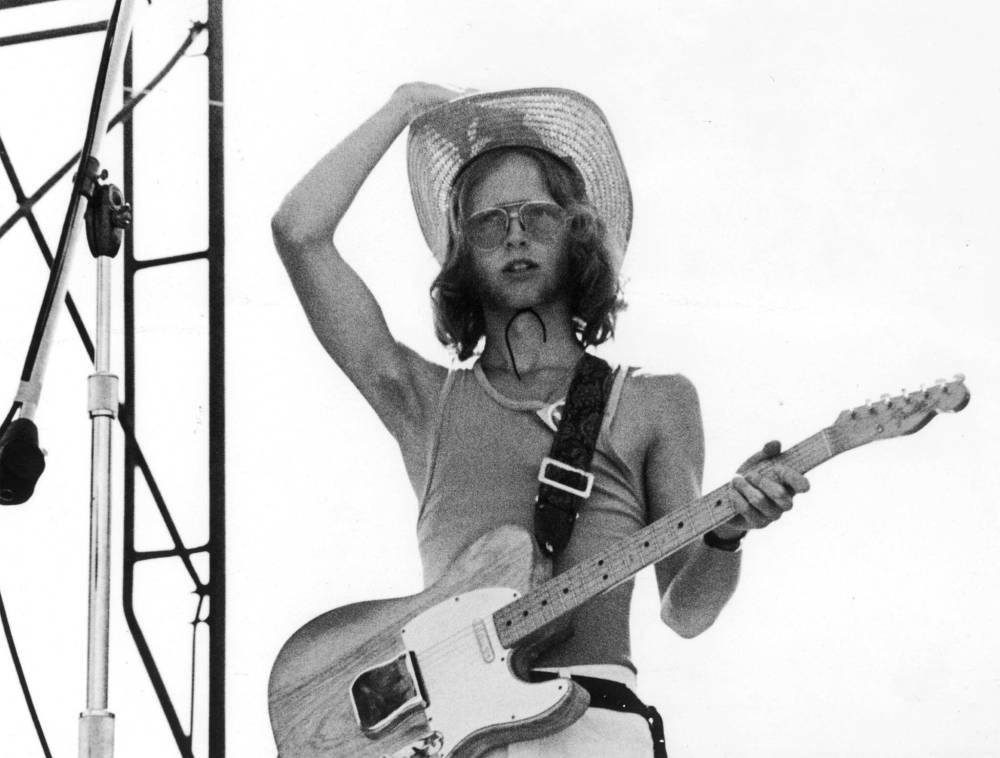
Throughout the decade, Einarson continued to play guitar, playing the ManPop 70 festival — headlined by Led Zeppelin — with his band, Euphoria, a wiry 17-year-old, straw-hatted in the late August sun. By the mid-70s, Einarson was playing with a Toronto band called Pendulum when he felt his own swing.
“I remember playing the club for a week in North Bay, Ontario – we were popular in North Bay for whatever reason – and I looked up one morning and said, ‘This is going nowhere. I think I need to do something else.’ I was only about 21 or 22 and I was looking at these guys a few years older than me and thought, ‘Geez, do I want to be like them at 30, doing this kind of thing?’ So I guess that was kind of my epiphany to go back and become a teacher.”
Einarson started the next phase of his career at Morden Collegiate, standing out especially to students who were musically inclined, including bassist John Penner, blues musician JP LePage and an admittedly disruptive John Scoles.
“What I admired most about John was the fact that he was such a balanced guy and excellent teacher,” says the proprietor of the Times Change(d) High & Lonesome Club, a honkytonk bar at the corner of Main Street and St. Mary Avenue.
Soon, Einarson found joy in writing rock history and freelance journalism. His first significant article for the Free Press, published in 1985, was about a Winnipeg band called the Crescendos, who headed to Liverpool in 1965 in a reverse British invasion.
SUPPLIED
John Einarson as a 17-year-old playing ManPop70 in 1970 with his band Euphoria.
“They would raid the neighbours’ coal bins every night and burned all the furniture in their flat for heat,” Einarson wrote. The Beatles weren’t far: manager Brian Epstein listened to the Crescendos at the Blue Angel, where Paul McCartney once got on stage while the band played.
The article was filled with tidbits that characterize Einarson’s best work, including books about Gene Clark and Gram Parsons.
“I’m never interested in books that are just dates and all of that. I’m drawn to the human element, and I guess part of my success – and I put that word in quotation marks – is that people want to read that stuff too,” he says.
“And that kind of is the impetus for the new book. You know, the stories behind the books. Whatever the subject of the book is, that’s the tip of the iceberg. All the research, the interviews and all the machinations involved in that are under the surface. With this book, I’m going back under the surface and telling those interesting stories that people love to hear.”
Like the one at the Ryman Auditorium in Nashville when Neil Young was debuting his album Prairie Wind in a concert that would be preserved by Jonathan Demme in the film Heart of Gold.
“Demme had read my Gene Clark book and out of the blue – I mean, this is an Academy Award winning, Hollywood director and producer. I mean this is Philadelphia — he phoned me at my office at St. John’s Ravenscourt (where Einarson taught for 25 years and ran the Rock Show program). He said, ‘I saw your book advertised and I went and got it and spent the weekend reading it listening to Gene Clark.’”
Then Demme emailed Einarson to invite him to Nashville as a VIP guest for Young’s two-night stand at the Ryman, an 120-year-old tabernacle that later housed the Grand Ole Opry.
“He told a story about going to Falcon Lake and hearing Four Strong Winds, and he said that song changed his life, because it touched him in a way that no other song ever did,” recalls Einarson. “I’m likely the only person there that’s ever been to Falcon Lake. It’s a teary eyed moment for me. He did that both nights. And on the last night, when they ushered everybody out of the auditorium, it was just the road crew and me with my little VIP badge.”
Demme wanted a final shot of Young, standing alone on stage.
“So he starts playing Old Laughing Lady, which is the song he wrote in 1967 and it was on his first album the following year. And everybody went away, but one of the film crew guys said to me, ‘If you stay, crouch down in the pews.’ So I did.”
ben.waldman@winnipegfreepress.com
If you value coverage of Manitoba’s arts scene, help us do more.
Your contribution of $10, $25 or more will allow the Free Press to deepen our reporting on theatre, dance, music and galleries while also ensuring the broadest possible audience can access our arts journalism.
BECOME AN ARTS JOURNALISM SUPPORTER
Click here to learn more about the project.
Ben Waldman is a National Newspaper Award-nominated reporter on the Arts & Life desk at the Free Press. Born and raised in Winnipeg, Ben completed three internships with the Free Press while earning his degree at Ryerson University’s (now Toronto Metropolitan University’s) School of Journalism before joining the newsroom full-time in 2019. Read more about Ben.
Every piece of reporting Ben produces is reviewed by an editing team before it is posted online or published in print — part of the Free Press‘s tradition, since 1872, of producing reliable independent journalism. Read more about Free Press’s history and mandate, and learn how our newsroom operates.
Our newsroom depends on a growing audience of readers to power our journalism. If you are not a paid reader, please consider becoming a subscriber.
Our newsroom depends on its audience of readers to power our journalism. Thank you for your support.
If you value coverage of Manitoba’s arts scene, help us do more.
Your contribution of $10, $25 or more will allow the Free Press to deepen our reporting on theatre, dance, music and galleries while also ensuring the broadest possible audience can access our arts journalism.
BECOME AN ARTS JOURNALISM SUPPORTER
Click here to learn more about the project.
Ben Waldman is a National Newspaper Award-nominated reporter on the Arts & Life desk at the Free Press. Born and raised in Winnipeg, Ben completed three internships with the Free Press while earning his degree at Ryerson University’s (now Toronto Metropolitan University’s) School of Journalism before joining the newsroom full-time in 2019. Read more about Ben.
Every piece of reporting Ben produces is reviewed by an editing team before it is posted online or published in print — part of the Free Press‘s tradition, since 1872, of producing reliable independent journalism. Read more about Free Press’s history and mandate, and learn how our newsroom operates.
Our newsroom depends on a growing audience of readers to power our journalism. If you are not a paid reader, please consider becoming a subscriber.
Our newsroom depends on its audience of readers to power our journalism. Thank you for your support.
Advertisement Advertise With Us
Advertisement Advertise With Us