Frozen futures Preserving eggs increasing in popularity as more people look to keep biological options open
Read this article for free:
or
Already have an account? Log in here »
To continue reading, please subscribe:
Digital Subscription
One year of digital access for only $1.44 a week*
- Enjoy unlimited reading on winnipegfreepress.com
- Read the E-Edition, our digital replica newspaper
- Access News Break, our award-winning app
- Play interactive puzzles
*Billed as $5.77 plus GST every four weeks. After 52 weeks, price increases to the regular rate of $19.95 plus GST every four weeks. Offer available to new and qualified returning subscribers only. Cancel any time.
To continue reading, please subscribe:
Add Free Press access to your Brandon Sun subscription for only an additional
$1 for the first 4 weeks*
- Enjoy unlimited reading on winnipegfreepress.com
- Read the E-Edition, our digital replica newspaper
- Access News Break, our award-winning app
- Play interactive puzzles
*Your next Brandon Sun subscription payment will increase by $1.00 and you will be charged $17.95 plus GST for four weeks. After four weeks, your payment will increase to $24.95 plus GST every four weeks.
Read unlimited articles for free today:
or
Already have an account? Log in here »
Hey there, time traveller!
This article was published 11/11/2024 (712 days ago), so information in it may no longer be current.
For Katey Miller, opting to undergo a costly, intensive medical procedure for the sake of future family planning that may never come to pass is a decision that gives her peace of mind.
Last year, the 37-year-old Winnipegger went through the process of elective egg freezing at Heartland Fertility clinic.
“It’s a wonderful resource to have access to,” she says.
Miller first heard about oocyte cryopreservation (the technical term for freezing unfertilized egg cells) from people in her life who had gone through in vitro fertilization, or IVF, while trying to get pregnant.
“They urged me to look into egg freezing,” she says.
Ruth Bonneville / Free Press Katey Miller, 37, is unsure if she wants to be a parent in the future, but freezing her eggs has given her some control over the decision.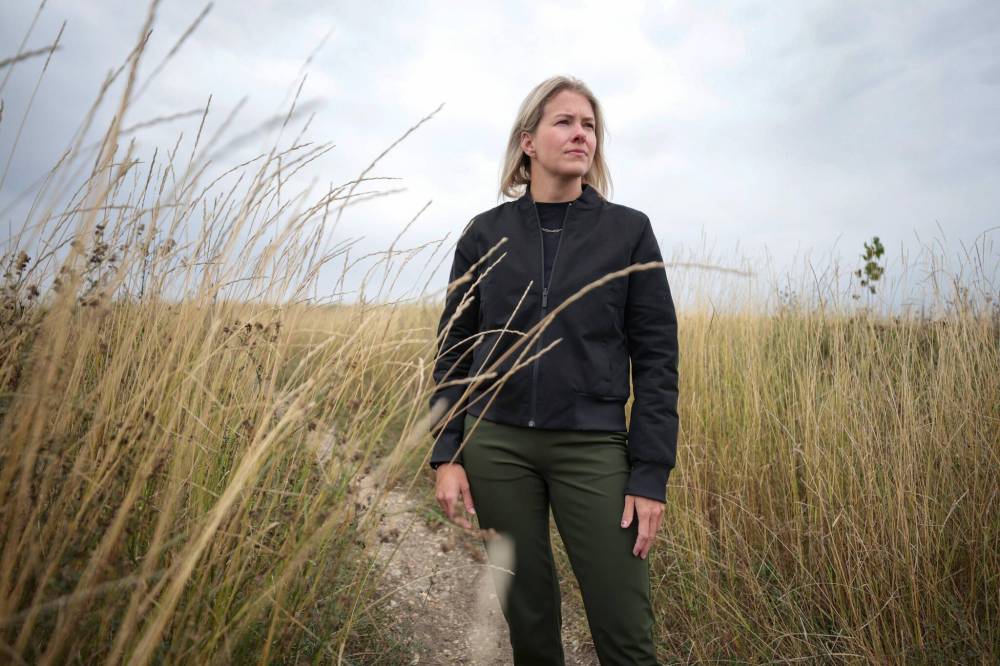
At the time, Miller was focused on her career as a project manager at a local engineering firm and was unsure if she wanted to be a parent in the future. Still, keeping her biological options open had its appeal.
“I had big misconceptions that IVF or egg freezing is something you can just do at any stage. Because these two people had already gone through the process, they understood that a big part of a positive or successful experience is the health of your eggs,” she says.
While fertility can be impacted by myriad factors — from lifestyle to physiology to medical conditions — reproductive aging is a major contributor to infertility.
“Age-related decline is always our biggest challenge,” says Dr. Gordon McTavish, medical director at Heartland.
“(Your) chances of getting pregnant are still pretty good up until your early 30s, but then that slope becomes a bit more slippery.”
Digging deeper on decision-making
Samantha Yee studies the whys and hows of egg freezing.
Yee is a clinical social worker and psychosocial researcher at the CReATe Fertility Centre in Toronto. For more than a decade, she’s been investigating the motivations and decision-making process for patients who undergo medical or elective egg freezing.
Samantha Yee studies the whys and hows of egg freezing.
Yee is a clinical social worker and psychosocial researcher at the CReATe Fertility Centre in Toronto. For more than a decade, she’s been investigating the motivations and decision-making process for patients who undergo medical or elective egg freezing.
Yee says family doctors can play an important role in educating patients about fertility and family planning options, but room for improvement remains.
“A lot of (general practitioners) focus on pregnancy prevention, like contraception,” she says. “There should also be a conversation about family building.”
One post-egg-freezing survey showed a correlation between informed choice and patient satisfaction. Those who felt they received adequate counselling and information from their doctor felt better about their choice to undergo the procedure.
In another small study, Yee found only 19 per cent of egg-freezing patients had a doctor-initiated conversation with their primary-care provider prior to the procedure. Most respondents were motivated by age-related fertility decline in the absence of a partner, yet more than half underwent the procedure at an age when their fertility had already begun to wane.
This tracks among the wider population. According to the Canadian Fertility and Andrology Society, 70 per cent of retrievals over the last decade were for patients between 35 and 40 years old.
Yee says widespread misconceptions about fertility can lead to surprise and disappointment when trying to conceive.
“It’s not that easy to get pregnant,” says Yee.
“I think patients need to be proactive; don’t just wait until you need to think about it.”
Social media has become a major tool for disseminating information about fertility and fertility preservation. However, it can be a double-edged sword, empowering users to learn more about their reproductive health while also spreading misinformation.
In the United States and Australia, influencers and advertisers on Facebook and Instagram have come under fire in recent years for the ethically and legally hazy promotion of egg freezing.
In her research and clinical practice, Yee has noticed many female patients often equate menstruation, an active lifestyle or overall health to good fertility.
These false assumptions, along with social factors contributing to the trend of delayed childbearing, can create an unrealistic timeline for family planning. Well-publicized stories of celebrities giving birth at an advanced age add to the confusion.
As a result, many people only find out about underlying fertility issues when they start trying and struggling to get pregnant — at which point, interventions such as IVF or surrogacy might be necessary.
Since female fertility is largely dictated by a biological deadline, Yee says it’s important for family doctors to discuss the topic with patients early and as part of routine care — provided the advice is delivered without assumptions about a person’s desires based on demographics, marital status or age.
Regardless of family-planning goals or interest in egg freezing, she believes more people should engage in fertility testing.
“You get really good information about how fertile you are. It could save a lot of hassle in the future,” Yee says. “At the end of the day, you are the one who makes the decisions, but you need to know your options.”
In Manitoba, basic fertility testing is covered by the province. Heartland Fertility offers additional assessments for a fee.
Heartland is Manitoba’s only specialized fertility clinic. In January, the clinic, which has been operating since 1997, moved from the Polo Park area to a new medical centre in Tuxedo. The larger space and onsite laboratories have enabled staff to meet increasing demand for services, including elective egg freezing.
“There’s a lot more interest for sure. Locally, this is something we’ve recently been able to offer more people because of our expansion,” fertility specialist Dr. Stephanie Appleby says.
It’s a growing trend seen across the country.
There has been a 90 per cent increase in egg freezing nationally over the last decade. Last year, there were 2,230 retrievals performed in Canada for oocyte banking, compared with 189 in 2013, according to the latest data from the Canadian Fertility and Andrology Society (CFAS).
The majority (75 per cent) of these procedures are elective, as opposed to pre-emptive egg freezing for medical reasons, such as ahead of cancer treatment and gender-affirming surgery, or in response to fertility-affecting diagnoses, such as endometriosis.
This steady upward climb has been spurred by a mix of medical advancements and societal changes.
“In the early 2010s, egg freezing was still considered experimental,” CFAS president Dr. Paul Chang says.
Shortly thereafter, in 2012, the American Society for Reproductive Medicine removed its experimental label from the procedure due to improved technology and growing evidence of its safety and efficacy. Other medical organizations followed suit, leading more fertility doctors to offer and more patients to pursue cryopreservation.
Ruth Bonneville / Free Press Dr. Gordon McTavish (left) and Dr. Stephanie Appleby of Heartland Fertility clinic.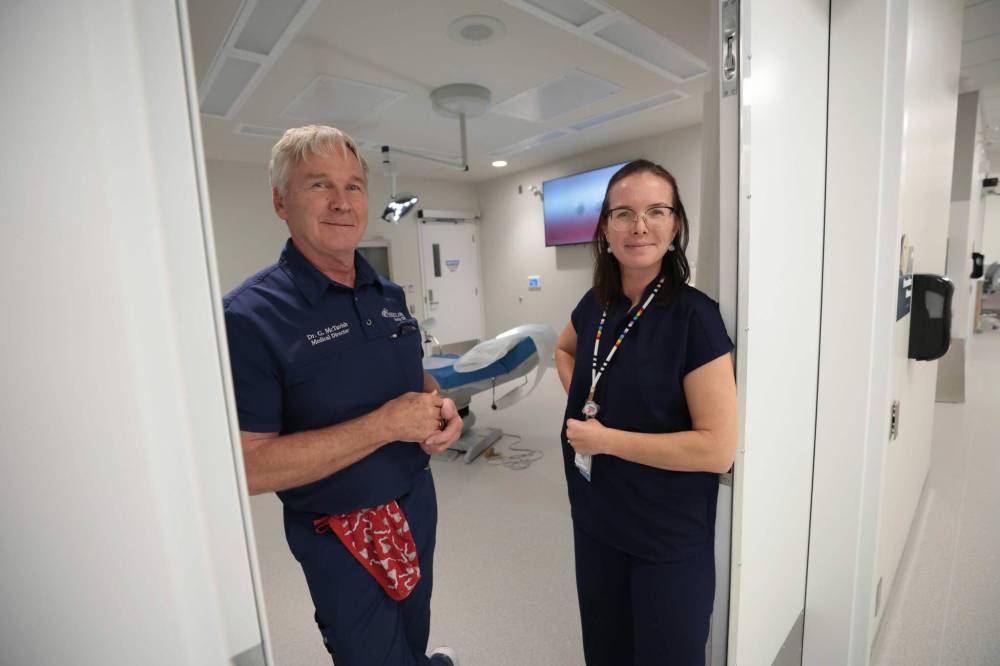
Elective egg freezing has also gained popularity in step with shifting demographics.
People are waiting longer to have children. The average age of parents at childbirth has been rising in Canada since the 1970s and, as of 2022, sat at 31.6 years for mothers and 34.4 years for fathers.
Pursuit of higher education, career advancement, financial stability and finding the right partner are among the many factors contributing to the trend of delayed childbearing.
For people with ovaries, waiting to conceive can come with complications, owing to the aforementioned reality of reproductive aging.
“It’s the No. 1 challenge we face that causes infertility or soft fertility, and the only way you can fight that would be planned egg freezing,” says Chang, a reproductive endocrinologist and fertility specialist practising in Toronto.
However, Chang isn’t one to promote the expensive procedure outright and is careful about how he discusses the topic with patients.
“I had big misconceptions that IVF or egg freezing is something you can just do at any stage. ”–Katey Miller
Informed consent and realistic expectations are important, he says.
Many fertility specialists, including Chang and those at Heartland, balk at describing egg freezing as an insurance policy, since there currently exists no reliable test to determine the quality of a woman’s eggs prior to freezing.
That means there’s no guarantee frozen oocytes — even those retrieved well before fertility begins to decline — will become viable embryos and lead to pregnancy in the future.
“I’m really glad this is an option because it empowers women to be able to make decisions for their reproduction rather than letting either time or other forces make (pregnancy) not possible,” Chang says.
“But they’ve got to understand the financial cost, the physical cost and, lastly, the uncertainty.”
Affordability was a factor in Katey Miller’s decision to freeze her eggs.
Ruth Bonneville / Free Press Typically, cryopreservation is suitable for patients between the ages of 25 and 35,
says Heartland fertility specialist Dr. Stephanie Appleby.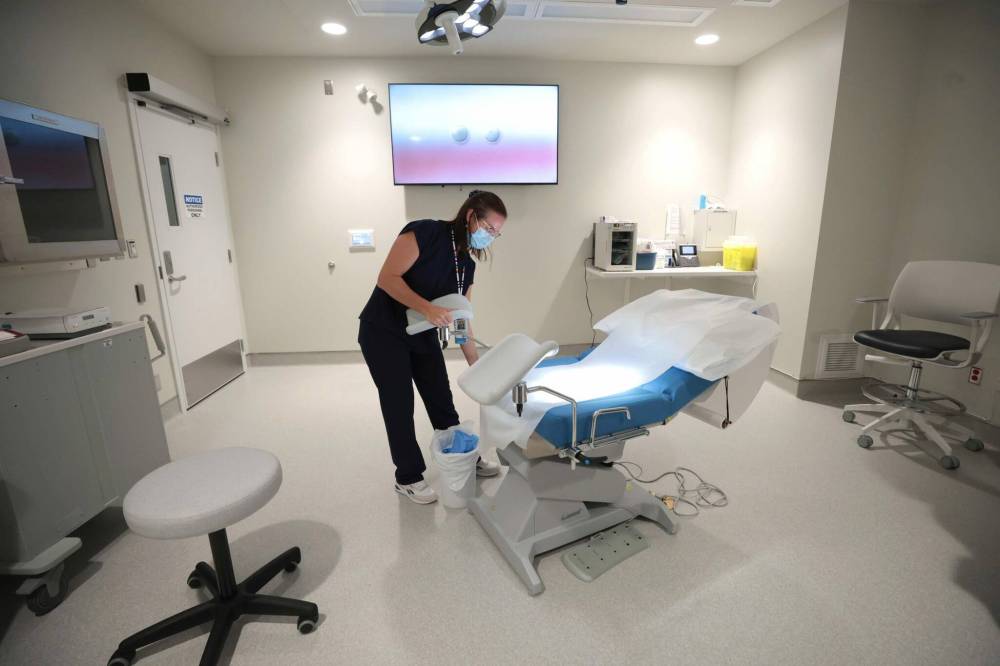
At Heartland, oocyte cryopreservation costs around $10,000 per cycle, not including the price of medication, which can vary by patient.
Miller’s workplace is among a growing number of companies offering expanded fertility treatment coverage to employees.
She was able to cover a portion of the procedure through her company health insurance plan and was eligible for Manitoba’s Fertility Treatment Tax Credit, which provides a tax refund of up to 40 per cent for eligible treatment costs, including for fertility preservation.
The provincial government recently doubled the amount residents can claim per year, raising the maximum available refund to $16,000. Some assisted reproductive treatments are also eligible for the federal government’s Medical Expense Tax Credit.
Even with refunds and coverage, Miller acknowledges the cost can be prohibitive.
“Maybe you can’t afford it now, but you’re gonna start saving for it,” she says.
“They’ve got to understand the financial cost, the physical cost and, lastly, the uncertainty.”–Dr. Paul Chang
Miller is keen to share her experience to empower others to think about their fertility and help demystify the process of egg freezing — which turned out to be more complicated and time-consuming than she initially expected.
“I don’t think I’m alone in that; a lot of people know it’s something that can be done, but I didn’t know the details. (There are) different tests that need to be done, not only beforehand, but then along the way once you start your injections. I was coming in, at one point, every other day,” Miller says.
Clinically, the steps are similar to in vitro fertilization.
Although Heartland now also accepts self-referrals, Miller’s journey started with a referral from her family doctor. After being assigned a clinic physician, she underwent a consultation and fertility assessment — which can include bloodwork, a physical exam and pelvic ultrasounds or X-rays — to confirm she was a good candidate for egg freezing.
While doctors can’t predict the potential of individual egg cells, they can make an educated guess about a patient’s fertility based on things such as age, hormone levels and the status of their egg reserves.
Typically, cryopreservation is suitable for patients between the ages of 25 and 35, says Appleby.
Ruth Bonneville / Free Press Heartland Fertility is Manitoba’s only specialized fertility clinic.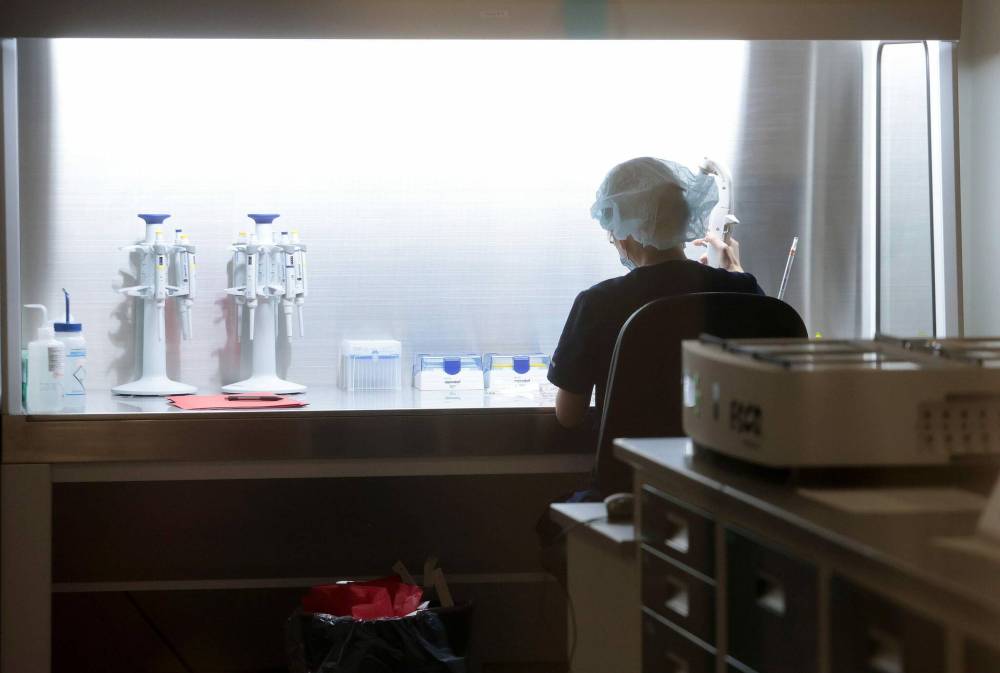
“We always do an individualized assessment. Then we can give an estimation of how their biology is at any given point in time and what kind of outcome they might expect if they choose to do an egg-freezing cycle,” she says.
One cycle includes a course of hormone injections administered at home over 10 to 12 days designed to stimulate egg production and maturation. During the latter phase of injections, patients visit the clinic at 124 Nature Park Way frequently for ultrasounds to track their response to the medication.
Egg retrievals take place at Heartland in a special room connected to the onsite lab.
Miller’s partner accompanied her in the retrieval room and she received pain medication and light sedation for the 30-minute procedure, which involves inserting an ultrasound probe into the vagina and using a thin needle to collect eggs from the ovarian follicles.
The eggs are sent to the lab through a negative pressure chamber and assessed for maturity and signs of chromosomal abnormalities. The microscopic oocytes are then flash-frozen in liquid nitrogen, a technique called vitrification.
“Ninety-eight to 99 per cent of those eggs will survive the first thaw. The (technology) has improved dramatically in the last decade,” McTavish says.
“Ninety-eight to 99 per cent of those eggs will survive the first thaw. The (technology) has improved dramatically in the last decade.”–Dr. Gordon McTavish
At Heartland, physicians aim to collect and freeze between 10 to 12 eggs per cycle to increase the chances of future conception. Clients wanting more than one child may undergo multiple cycles.
Eggs can be frozen indefinitely. Heartland has a backup generator to protect its freezer facility from power outages or natural disasters.
When a patient returns to the clinic ready to use their eggs, they’ll first undergo another fertility assessment to determine if spontaneous pregnancy is an option. If not, several eggs will be thawed and introduced to sperm in the lab — the process is the same process for IVF.
If a viable embryo is created, it undergoes genetic testing and can be implanted immediately or re-frozen for future use. Heartland also offers embryo and sperm freezing as fertility-preservation options.
Other than mood swings and some swelling following the retrieval, Miller experienced few negative side effects from the procedure.
She was able to freeze 17 of her eggs and feels good about doing so, even though she’s still undecided about parenthood and may never end up using them. (Currently, only 3.3 per cent of all retrievals are thawed in Canada, according to CFAS; although that number may rise as the procedure continues to gain popularity.)

The andrology society estimates one in six Canadians experience infertility.
“Not everyone’s thinking about freezing their eggs when they’re in their mid-20s, but I think by spreading this awareness, it’s really going to help the general population start to ask those questions,” Appleby says.
“If somebody can have some more reproductive autonomy and have a little bit more control and make these choices early on, if they do find themselves as one of those one in six, then they’ve given themselves another option.”
eva.wasney@winnipegfreepress.com
X: @evawasney

Eva Wasney covers environmental issues in Manitoba for The Narwhal in partnership with the Winnipeg Free Press. Read more about Eva.
Every piece of reporting Eva produces is reviewed by an editing team before it is posted online or published in print — part of the Free Press‘s tradition, since 1872, of producing reliable independent journalism. Read more about Free Press’s history and mandate, and learn how our newsroom operates.
Our newsroom depends on a growing audience of readers to power our journalism. If you are not a paid reader, please consider becoming a subscriber.
Our newsroom depends on its audience of readers to power our journalism. Thank you for your support.