Praising free speech, handicapped by lack of restraint

Advertisement
Read this article for free:
or
Already have an account? Log in here »
To continue reading, please subscribe:

Digital Subscription
One year of digital access for only $205*
- Enjoy unlimited reading on winnipegfreepress.com
- Read the E-Edition, our digital replica newspaper
- Access News Break, our award-winning app
- Play interactive puzzles
*First annual payment billed as $205.00 + GST for one year. This annual subscription will automatically renew at $233.00 + GST every 52 weeks (10% off the regular annual price of $259.35). Offer available to new and qualified returning subscribers only. Cancel any time.
To continue reading, please subscribe:
Add Free Press access to your Brandon Sun subscription for only an additional
$1 for the first 4 weeks*
- Enjoy unlimited reading on winnipegfreepress.com
- Read the E-Edition, our digital replica newspaper
- Access News Break, our award-winning app
- Play interactive puzzles
*Your next Brandon Sun subscription payment will increase by $1.00 and you will be charged $17.95 plus GST for four weeks. After four weeks, your payment will increase to $24.95 plus GST every four weeks.
Read unlimited articles for free today:
or
Already have an account? Log in here »
Hey there, time traveller!
This article was published 12/02/2025 (569 days ago), so information in it may no longer be current.
If Rotten Tomatoes had a page for Jordan Peterson’s new doorstopper We Who Wrestle with God, the reviews would look something like those for The Passion of the Christ: largely dismissed by professional critics, beloved by readers.
The 500-page book — which Peterson is currently touring, with a stop at the Canada Life Centre on Monday night — currently enjoys a 4.6 out of 5 star rating on Amazon.com with more than 1,000 reviews.
It’s probably the first self-help book written in the form of psychoanalytic interpretation of the Bible (come again?) and, improbably, an international bestseller.
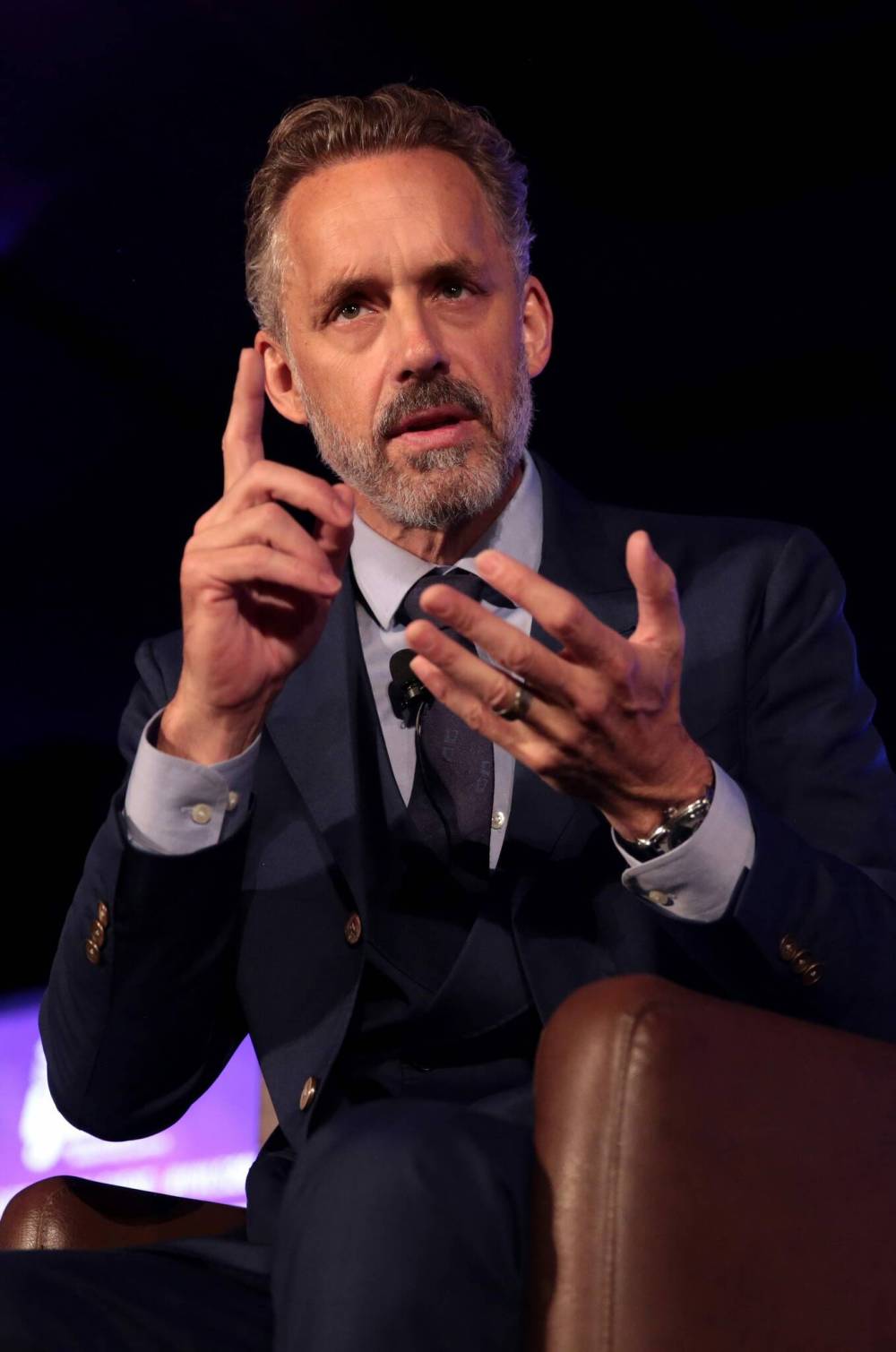
Gage Skidmore / Wikimedia Commons
Jordan Peterson, seen speaking in 2018
Monday night’s nearly two-hour lecture gave us the gist. Through a series of parables from the Old Testament, interpreted through a Jungian lens, Peterson unpacks some of the timeless lessons of Judeo-Christian morality.
The lesson given the most attention in the lecture is the responsibility of confronting and telling the truth, even at the danger of great personal peril. We know where Peterson is going with this, and he returned to the point often enough: there are dangerous forces conspiring to usurp free speech today and we must show great courage in facing them head on.
The crowd, which looked to be about 5,000 people, applauded and cheered this call to heroic action.
Without speaking to their theological merit, Peterson’s readings of the Bible can be vivid and interesting.
There’s some tension in his passionately religious defence of free speech, given that the First Amendment (America’s constitutional “free speech” right) is the foundation for the separation of church and state.
This tension isn’t necessarily fatal to his approach, though it already hints at the problems with treating Peterson, as his defenders often do, as a straightforward “classical” liberal.
Then came the Q&A period, which allowed Peterson to trot out his greatest hits, sometimes with new variations: transgender identity is a troubling phenomenon that shouldn’t be encouraged; Canada is going to hell in a handbasket under Justin Trudeau and would do the same under Liberal party heir apparent Mark Carney; climate-change activism is alarmist and prioritizes nature worship over human welfare; and U.S. President Donald Trump’s administration’s top brass are “geniuses.” More audience cheers.
He also alluded to representing Canada (unofficially, evidently) in meetings in Washington, D.C., but was vague on the details.
The Canadian psychologist, who taught at Harvard and the University of Toronto, is almost certainly the world’s most famous living conservative writer and intellectual, making it hard to ignore when he publishes a book or comes to town.
His massive following (including nearly nine million YouTube subscribers, a little more than the New York Times and CBC News combined) obviously benefits from his erudite aura. It lends a prestige to his forays into “lowbrow” genres such as self-help, podcasting and punditry, which are too often looked down on by academics.
But it seems fair to say that Peterson’s fame rests now more on his populist than scholarly chops: his charisma and grasp of the conservative zeitgeist. He’s sometimes compared to a megachurch preacher. Watching him work the Winnipeg arena, amid lighting and video cues, one can see why.
Yet there’s a stubborn Canadianness and sincerity to Peterson — who’s known to weep when he speaks — that weakens this comparison.
The Alberta-born psychologist perhaps more strongly recalls an all-but forgotten western Canadian figure: the Social Credit politician, rousing fury against Laurentian elites and praising individual rights.
This sensibility echoed in his conversation a few months ago on YouTube with Canadian Conservative Party Leader Pierre Poilievre, as it does in the first things that made him famous: his scathing attacks on Trudeau’s Bill C-16 (which amended the Criminal Code and Canadian Human Rights Act to include gender identity and gender expression as protected from discrimination and hate speech) and the state of humanities in Canada’s universities.
Peterson argued that Bill C-16 would “compel speech” by forcing people to use preferred gender pronouns and that the humanities had succumbed to a dogmatic, coercive ideology of “postmodern Marxism.” Both were supposed to represent a totalitarian threat to free speech and free thought, which Peterson claimed to champion as a classical liberal.
In other ways, the Peterson of the past few years seems like a caricature of his former self.
The guy got kind of weird. He started dressing like Don Cherry and adopted an all-meat diet. He beat an addiction to benzodiazepines, but emerged pettier and more scowling than ever, prone to cringey Tweet storms about “wokeness” in the entertainment industry.
“Sorry. Not beautiful. And no amount of authoritarian tolerance is going to change that,” read one viral Tweet about a plus-size model on the cover of Sports Illustrated.
Not exactly Jonah risking his neck to bring a divine revelation to the hostile people of Nineveh.
In short, the good doctor was in danger of becoming a meme.
The arrival of We Who Wrestle with God seems to announce the return to a more high-minded and scholarly Peterson.
Professional reviews, which have been mixed to dismissive, have taken less issue with Peterson’s apparent religious faith than with the peculiar lens through which he interprets scripture.
This response feels in keeping with progressive media’s reaction, at least after his fame, to his earlier more serious intellectual efforts: including Maps of Meaning (1999) and his popular academic lectures posted online from his former career at the University of Toronto.
Yet whether one dislikes or disagrees with this output, it’s hard to deny its originality.
Peterson’s faith isn’t incidental, it’s increasingly central to his interpretative outlook. In an almost methodologically secular field such as psychology (which he no longer practises in a university), this is unusual.
As is the heavy influence he’s drawn for a long time from the psychoanalyst Carl Jung, a throwback to a much earlier moment in psychology.
While other social scientists strive to detach their subjectivity from objective inquiry, Peterson draws on existentialism to argue that the very way reality shows up to us is always already coloured by human meanings.
Being an outlier is no sign of intellectual credibility. But if Peterson were a progressive making similar moves in an English or philosophy department, where psychoanalysis and existentialism still enjoy currency, no one would have batted an eye. So, it’s a little ironic to see progressive critics give him a hard time for tendencies that are commonplace among their own political tribe.
Yet it’s worth reminding ourselves of exactly which existentialists Peterson most fancies: Dostoevsky and Nietzsche, both ferocious critics of classical liberalism.
While Nietzsche’s ideas were no doubt abused by the fascists and Nazis, the affinity isn’t accidental either: no other thinker has offered the radical right such a prestigious rejection of democracy, women’s equality and human rights.
All this seems fudged in Peterson’s self-helpy reading of Nietzsche as a prophet of individualism who can help modern readers (and YouTube subscribers) towards the same self-realization.
This is especially rich when you consider that Peterson regularly has Twitter meltdowns about Karl Marx’s continued influence on the left.
Such double standards — which one suspects aren’t considered by the thousands of eager Manitobans present at Monday’s event — are stamped all over Peterson’s orientation towards free speech and the rule of law.
Consider the sad, repeated spectacle of Peterson hobnobbing with Hungarian Prime Minister Viktor Orban, while journalists across Hungary are intimidated and threatened by an “illiberal” government (Orban’s approving description) with weakening judicial independence.
Or consider Peterson’s continued support of Trump, a man who’s spent four years spreading lies about a stolen 2020 election — lies blown apart by every judge that has reviewed the relevant lawsuits advanced by his cronies.
All this makes it harder to admit that Peterson often shows the raw stuff of a creative, original thinker, though he does.
This potential is frustrated less by his conservatism than by its temperamental opposite: his lack of restraint, his habit of giving vent to every curmudgeonly whim, regardless of whether he’s bothered to seriously investigate the targets of his attacks.

Our “very online” moment favours those who traffic in such outrage. Nevertheless, Peterson’s popularity also speaks to a deep yearning for intellectual self-improvement among ordinary people — curious about the world of ideas and perhaps tired of having college kids police their manners.
But as a proclaimed ally to classical liberalism — one of the things that supposedly makes him reasonable and “not a radical” — Peterson’s status seems dubious.
This sense was hard to shake in an arena event where Peterson’s tendency to diagnose those who disagree with him as mentally unwell and religiously suspect was further indulged.
Is this the sort of person we should see as a reliable champion of open debate?
conrad.sweatman@freepress.mb.ca
Conrad Sweatman is an arts reporter and feature writer. Before joining the Free Press full-time in 2024, he worked in the U.K. and Canadian cultural sectors, freelanced for outlets including The Walrus, VICE and Prairie Fire. Read more about Conrad.
Our newsroom depends on a growing audience of readers to power our journalism. If you are not a paid reader, please consider becoming a subscriber.
Our newsroom depends on its audience of readers to power our journalism. Thank you for your support.
Conrad Sweatman is an arts reporter and feature writer. Before joining the Free Press full-time in 2024, he worked in the U.K. and Canadian cultural sectors, freelanced for outlets including The Walrus, VICE and Prairie Fire. Read more about Conrad.
Our newsroom depends on a growing audience of readers to power our journalism. If you are not a paid reader, please consider becoming a subscriber.
Our newsroom depends on its audience of readers to power our journalism. Thank you for your support.
Advertisement Advertise With Us
Advertisement Advertise With Us