Write on Calligrapher flips the script from humdrum digital to exquisite analogue
Read this article for free:
or
Already have an account? Log in here »
To continue reading, please subscribe:

Digital Subscription
One year of digital access for only $205*
- Enjoy unlimited reading on winnipegfreepress.com
- Read the E-Edition, our digital replica newspaper
- Access News Break, our award-winning app
- Play interactive puzzles
*First annual payment billed as $205.00 + GST for one year. This annual subscription will automatically renew at $233.00 + GST every 52 weeks (10% off the regular annual price of $259.35). Offer available to new and qualified returning subscribers only. Cancel any time.
To continue reading, please subscribe:
Add Free Press access to your Brandon Sun subscription for only an additional
$1 for the first 4 weeks*
- Enjoy unlimited reading on winnipegfreepress.com
- Read the E-Edition, our digital replica newspaper
- Access News Break, our award-winning app
- Play interactive puzzles
*Your next Brandon Sun subscription payment will increase by $1.00 and you will be charged $17.95 plus GST for four weeks. After four weeks, your payment will increase to $24.95 plus GST every four weeks.
Read unlimited articles for free today:
or
Already have an account? Log in here »
Hey there, time traveller!
This article was published 22/03/2025 (552 days ago), so information in it may no longer be current.
Every time Janet Murata puts pen to paper she is taking part in her own form of resistance.
The calligrapher’s practice is a “gentle act of rebellion against technology and the addictions of smartphones, email and social media.”
Murata weaves her art into her daily routine.
MIKE DEAL / FREE PRESS Calligraphy is a nuanced form of art, says Janet Murata.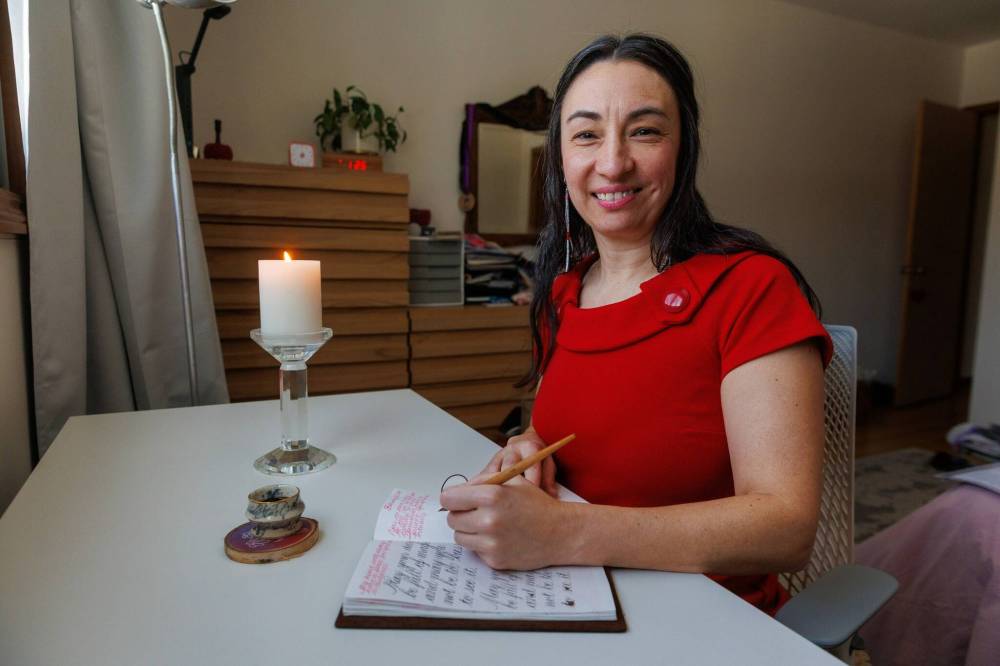
“My calligraphy shows up everywhere, whether I am writing a letter to a friend, a note to a teacher or my grocery list. My pen comes with me everywhere I go, although you can do calligraphy with pretty much everything — you could use a carrot, a feather or a stick — it doesn’t have to be a pen,” she says.
To the untrained eye, the letters, with their intricate loops, swirls and whorls, may look like a more sophisticated versions of cursive handwriting. However, whatever you do, don’t call it that.
MIKE DEAL / FREE PRESS Murata uses a dip pen during her calligraphy practice..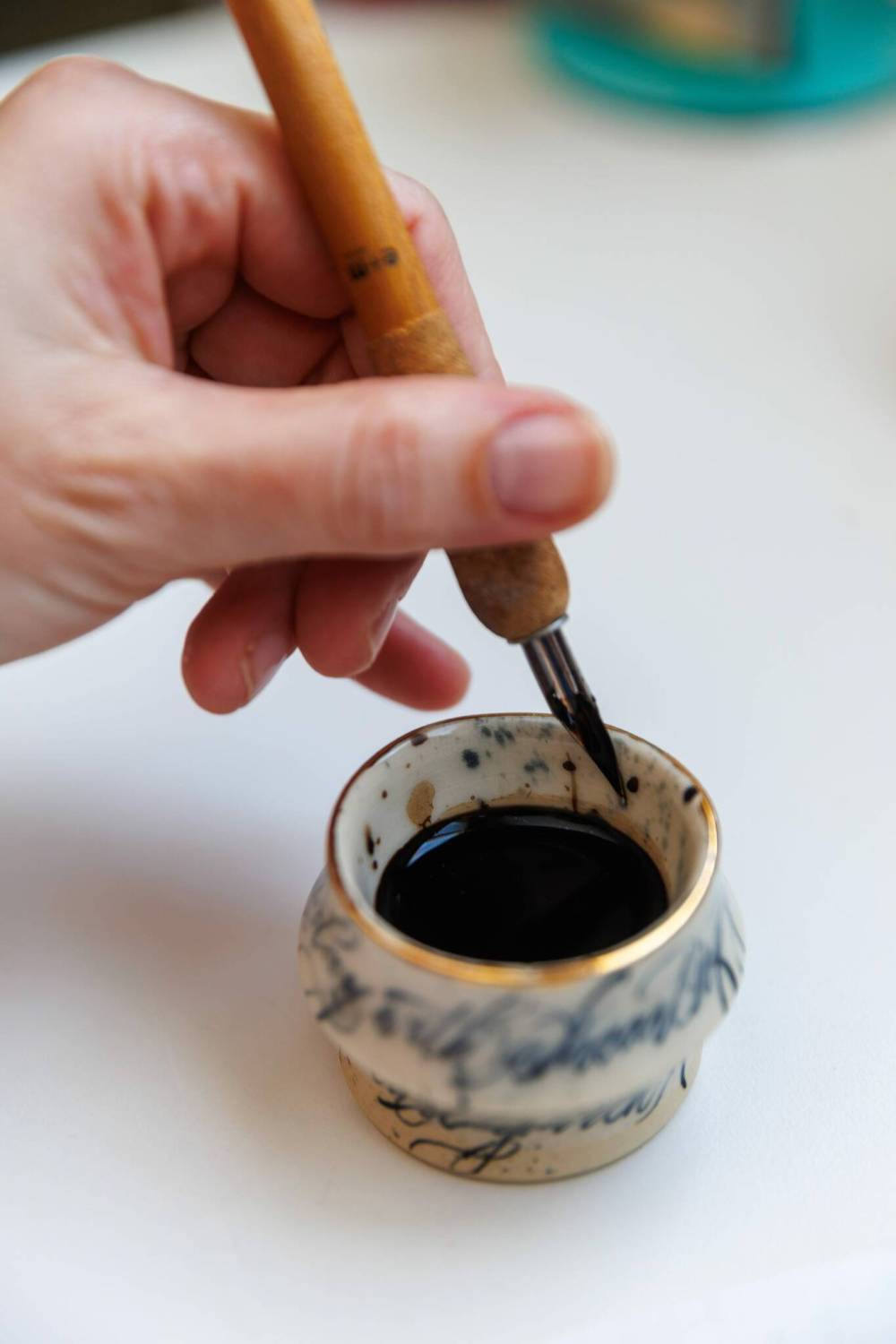
It is believed the ancient art of decorative lettering originated around 600 BCE in Rome. The word calligraphy itself has its roots in the Greek language: kallos, meaning beauty, and graphein, which means to write.
“While cursive and calligraphy can have many similarities, they can also be quite different. Calligraphy is about art — seeing letters as shapes and looking at the negative space,” Murata explains. “It’s quite nuanced.”
Her artistry is rooted in a desire to preserve the written word.
“People’s stories are being erased from history. Now, more than ever, I believe in the importance of documenting our lives and experiences in analogue form so nobody can change it without seeing it has been altered, “ she says.
She began her practice in the early 2000s, learning from library books at first. It proved to be a slow and frustrating process for the left-hander.
MIKE DEAL / FREE PRESS Murata practises calligraphy every day. 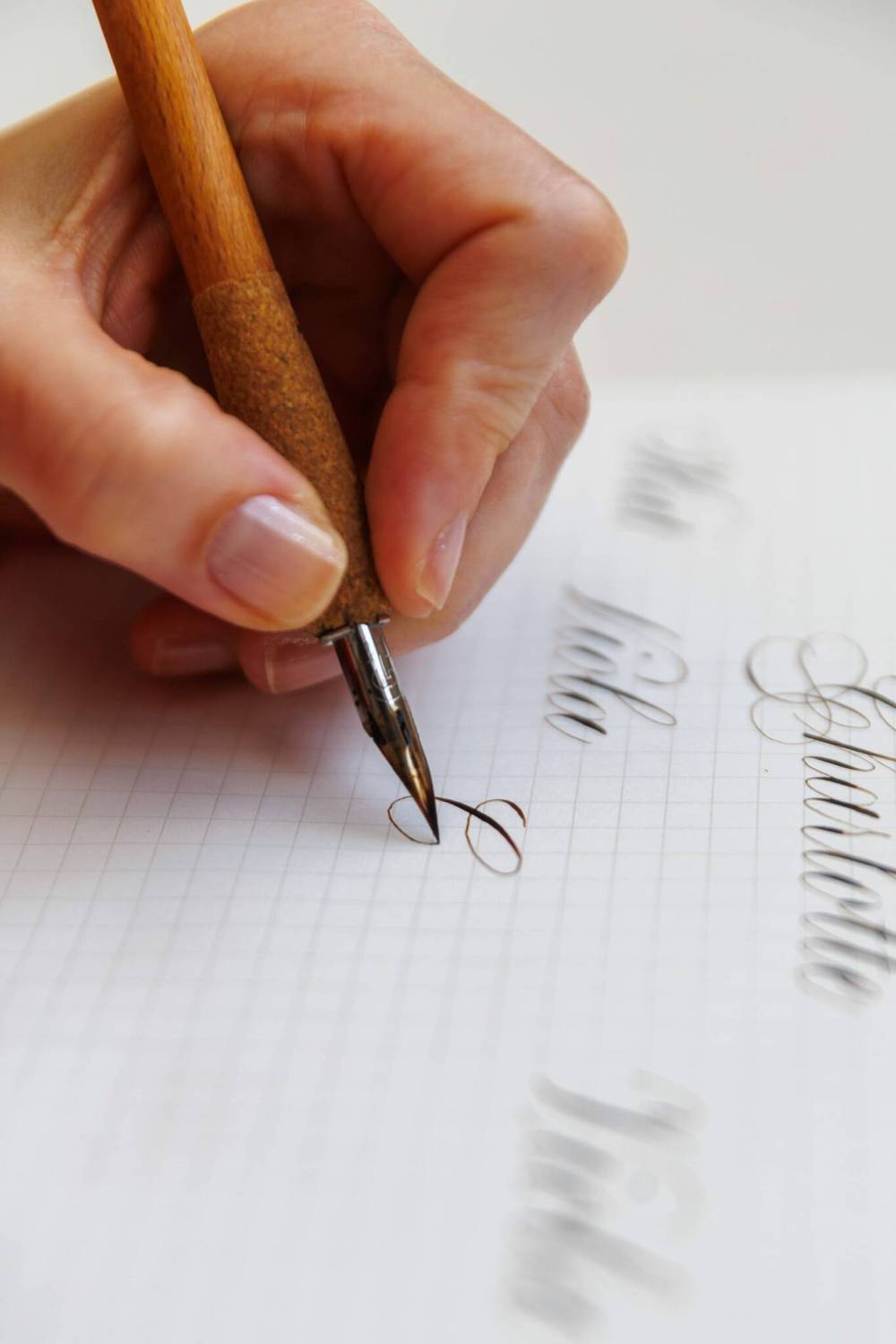
“Calligraphy was not always welcoming of left-handed artists. Information and tools were rare and difficult to find,” she says.
In 2009, she joined the Calligrapher’s Guild of Manitoba where, under the auspices of guild president Kathie Mcilvride, her knowledge, skills and confidence grew.
Working from her studio at home she takes on commissions to script out everything from poems, invitations and certificates to significant historical documents.
“I was commissioned by the Manitoba Métis Federation to create a document which was signed and blessed by Pope Francis when he formally apologized to the Indigenous and Inuit Peoples of Canada,” she says.
She also runs workshops, teaching beginners the art of “beautiful writing,” details of which she posts on her Instagram account @michiko.craft.
For professional commissions, Murata uses two kinds of writing implements: pointed pens for copperplate script and broad-edge pens for Gothic script.
“The pointed-pen version of calligraphy — the most common is copperplate — is flowy and elegant, like the styles you would use on wedding invitations. Broad-edge pen, often called Gothic, has straight and structured letters. The beauty of calligraphy comes from the thicks and thins these pens create. Monoline, a simpler version of calligraphy, can be done with a regular pen or pencil,” she says.
MIKE DEAL / FREE PRESS Murata has taken on commissions for everything from invitations to historical documents.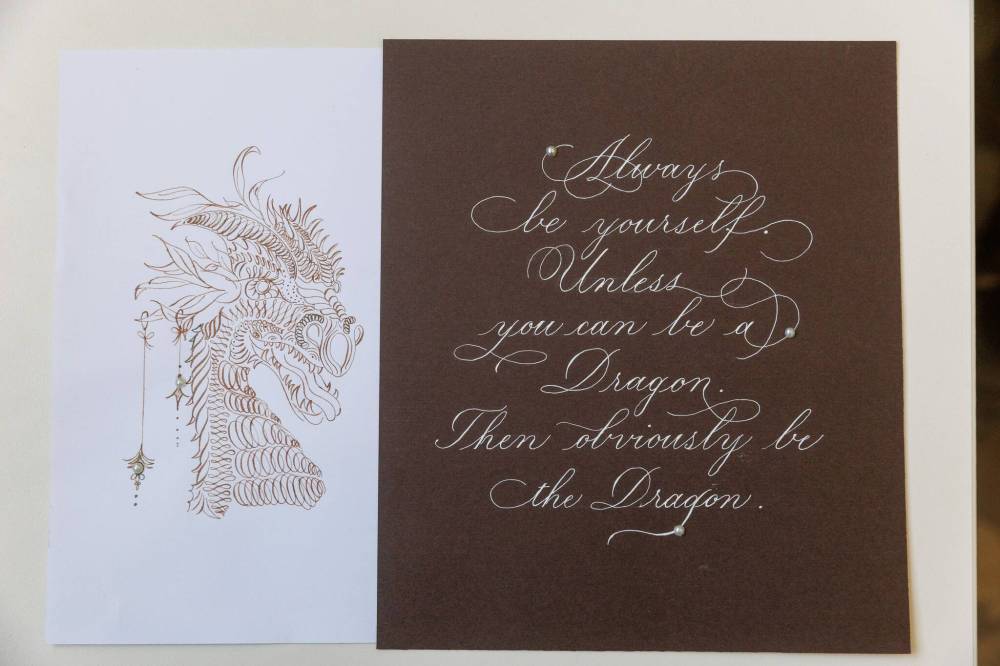
The artist is “picky” when it comes to choosing her papers, pens and inks. She has gone through countless reams of various types of paper, testing out different inks in different pens before finally settling on her favourites.
“I have many different types of paper with my preference depending on the pen and the ink, the relationship between the nib, the paper and the ink… it’s kind of like dating,” she laughs.
“You have to try things out before you find the perfect match and get married. Oftentimes the experimentation is a long process, but it can also be fun if you have the right mindset.”
av.kitching@freepress.mb.ca
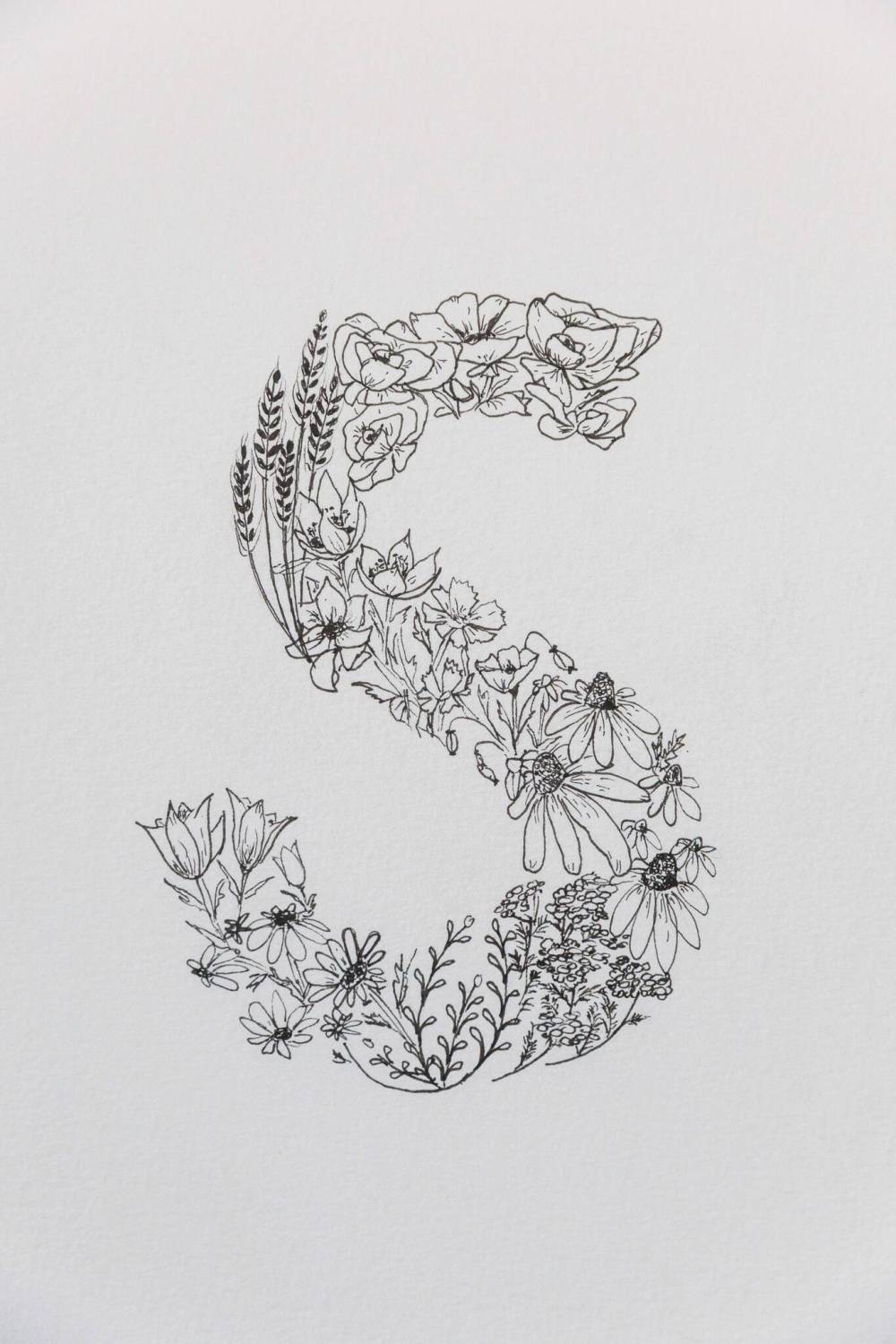
MIKE DEAL / FREE PRESS
An example of Murata’s work.
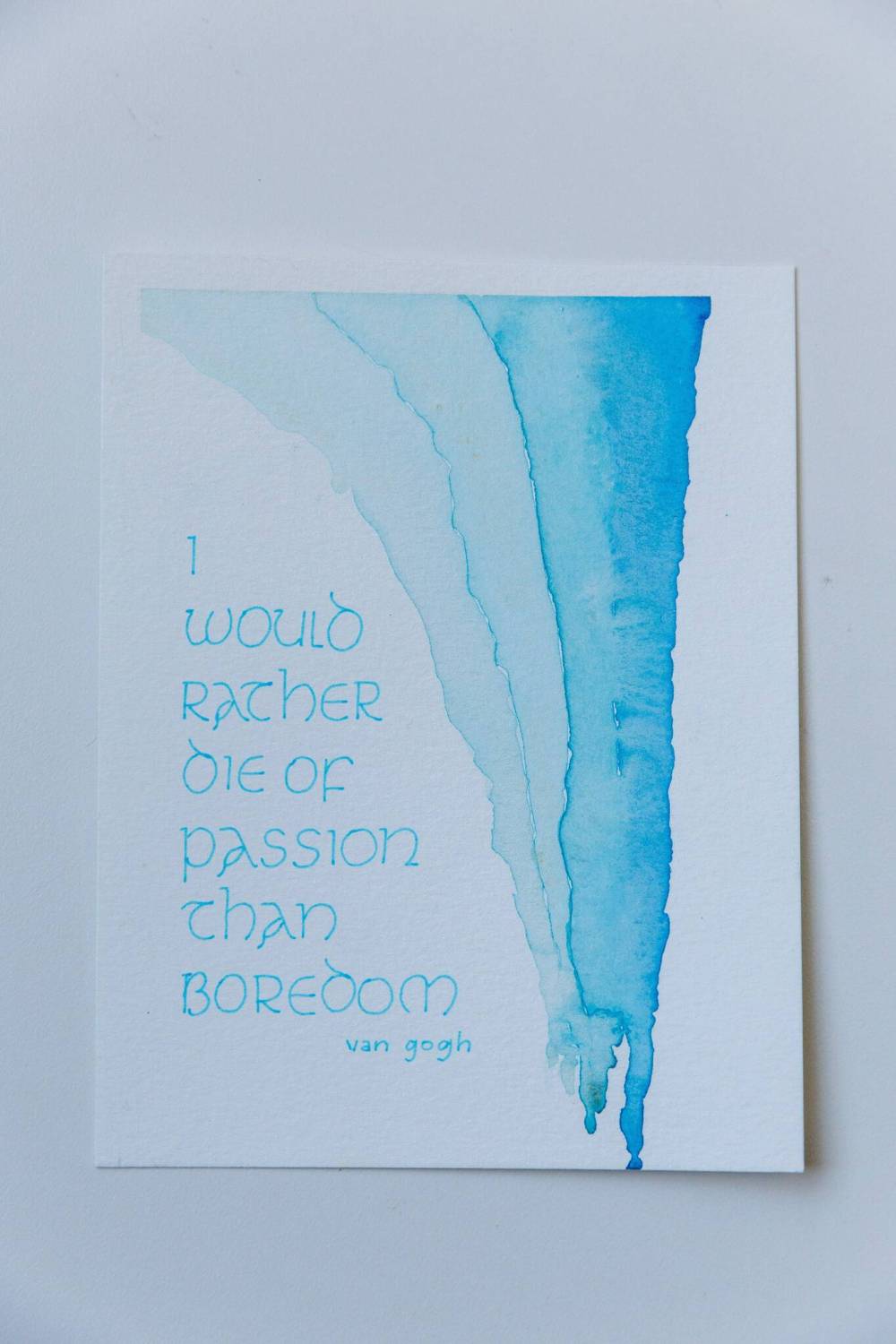
MIKE DEAL / FREE PRESS
An example of Murata’s work.
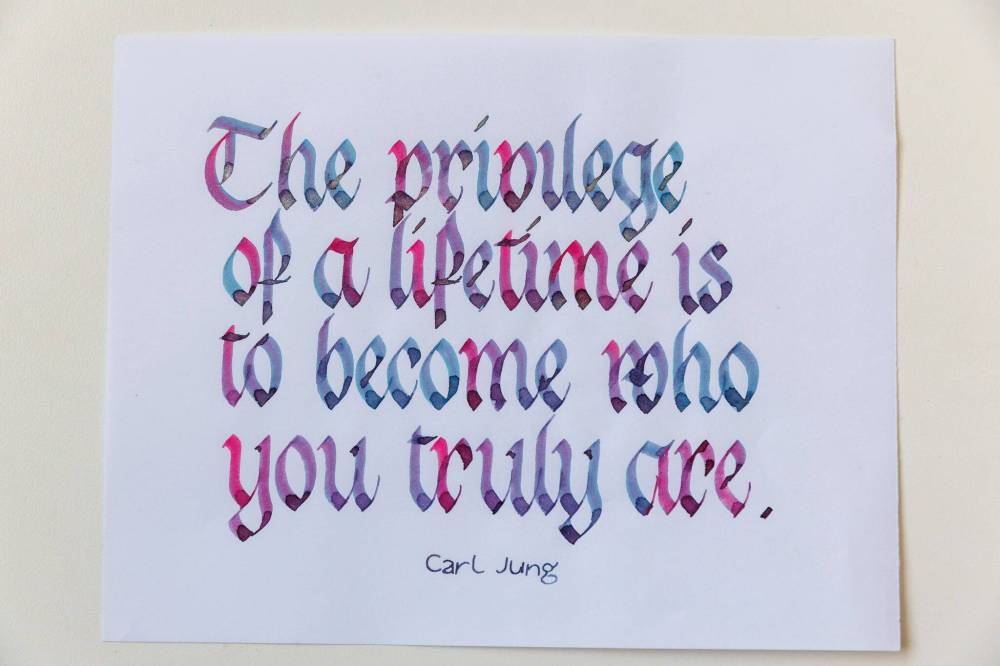
MIKE DEAL / FREE PRESS
An example of Murata’s work.

AV Kitching is an arts and life writer at the Free Press. She has been a journalist for more than two decades and has worked across three continents writing about people, travel, food, and fashion. Read more about AV.
Every piece of reporting AV produces is reviewed by an editing team before it is posted online or published in print — part of the Free Press‘s tradition, since 1872, of producing reliable independent journalism. Read more about Free Press’s history and mandate, and learn how our newsroom operates.
Our newsroom depends on a growing audience of readers to power our journalism. If you are not a paid reader, please consider becoming a subscriber.
Our newsroom depends on its audience of readers to power our journalism. Thank you for your support.