City to consider new public art funding proposal

Advertisement
Read this article for free:
or
Already have an account? Log in here »
To continue reading, please subscribe:

Digital Subscription
One year of digital access for only $205*
- Enjoy unlimited reading on winnipegfreepress.com
- Read the E-Edition, our digital replica newspaper
- Access News Break, our award-winning app
- Play interactive puzzles
*First annual payment billed as $205.00 + GST for one year. This annual subscription will automatically renew at $233.00 + GST every 52 weeks (10% off the regular annual price of $259.35). Offer available to new and qualified returning subscribers only. Cancel any time.
To continue reading, please subscribe:
Add Free Press access to your Brandon Sun subscription for only an additional
$1 for the first 4 weeks*
- Enjoy unlimited reading on winnipegfreepress.com
- Read the E-Edition, our digital replica newspaper
- Access News Break, our award-winning app
- Play interactive puzzles
*Your next Brandon Sun subscription payment will increase by $1.00 and you will be charged $17.95 plus GST for four weeks. After four weeks, your payment will increase to $24.95 plus GST every four weeks.
Read unlimited articles for free today:
or
Already have an account? Log in here »
Hey there, time traveller!
This article was published 15/04/2025 (519 days ago), so information in it may no longer be current.
After receiving $0 for public art in the City of Winnipeg’s 2024-2027 budget, the Winnipeg Arts Council has been working with the City of Winnipeg administration on developing a new funding formula for public art, which will be presented to the Executive Policy Committee and City Council later this month.
Their report proposes Winnipeg implement a per-cent-for-art program instead of an annual grant.
Under a per-cent-for-art program, all eligible investments would include a specified percentage of the construction budget for public art. Instead of being tied to a specific capital project — or dispersed as a one-time or annual grant — those funds are pooled.
RUTH BONNEVILLE / WINNIPEG FREE PRESS FILES
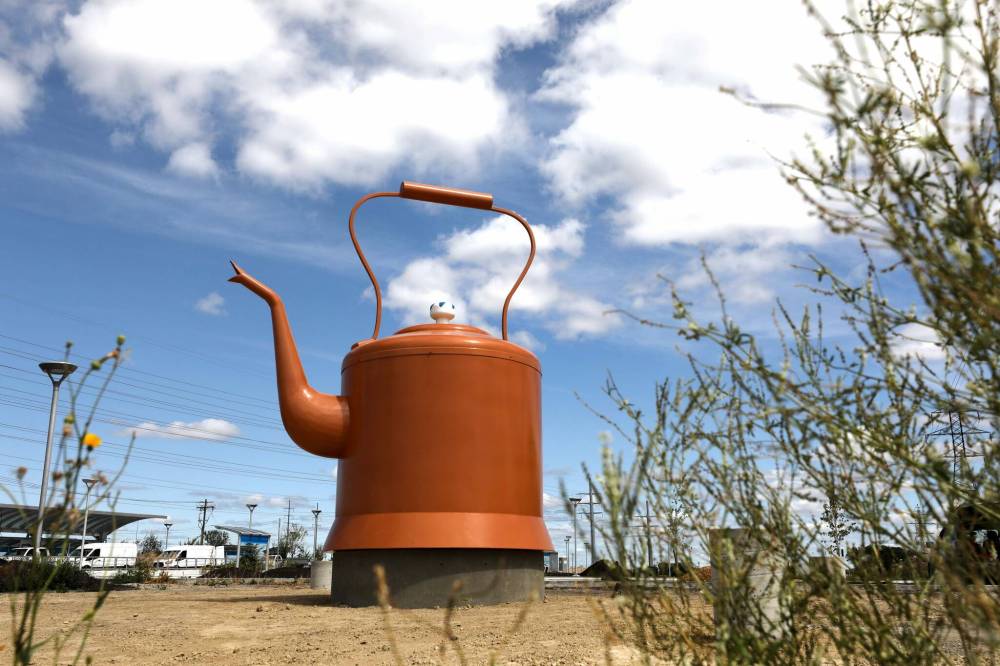
Rooster Town Kettle sculpture created by Ian August at the Beaumont transitway station.
The recommendation outlined in the report is that a 0.25 per cent public art allocation, capped at a maximum contribution of $250,000 per project, be incorporated into eligible capital projects for the next multi-year budget cycle, beginning in 2028.
“This is a model that’s been pretty successful in a lot of other Canadian municipalities in terms of finding a way to leverage the infrastructure and capital budget to make sure there is a consistent flow of dollars into the public art program,” says Andrew McLaren, chairman of the WAC’s Board of Directors.
Edmonton, Calgary, Saskatoon, Toronto, Ottawa and Montreal have all implemented per-cent-for-art programs.
While a pooled approach could mean more flexibility, since funds aren’t tied to a specific project or site, the model has its tradeoffs, McLaren says.
“The funding is tied to the actual capital budget and projects that are in the queue, and so it’s not a dedicated amount — it can vary year over year. So that creates a little bit of uncertainty about what the actual dollars will be in each budget cycle,” he says.
“But overall, we think it’s a positive model that we’ve seen work well in other jurisdictions, and help crystallize that relationship between using the infrastructure and capital budget to provide a source of funding for public art on an ongoing basis.”
Last year’s multi-year budget made headlines for allocating nothing to public art for the first time in 20 years.
“It gives people an opportunity to see themselves in the physical landscape that they see every day.”–Andrew McLaren
From 2004 through 2018, the WAC received an annual grant of $500,000 from the city for public art projects. That amount was halved to $250,000 in 2019 and halved again to $125,000 in 2022, before being eliminated entirely in 2024.
The WAC continues to receive an annual operating grant — $4.6 million over the 2024-2027 multi-year budget cycle — but that money is not used to fund public art.
And public art is important, McLaren says.
“For me, public art is really about building a city that reflects the people who live there. It gives people an opportunity to see themselves in the physical landscape that they see every day.
“It’s also great for accessibility. You don’t need a ticket. There’s no subscription required. You can enjoy it on your own time, and it’s there.”
Mayor Scott Gillingham told the Free Press in January that the city was committed to working on a formula and a plan related to public art and ongoing funding for the WAC, and confirmed the process was underway.

McLaren is encouraged by the progress made so far.
MIKE DEAL / FREE PRESS FILES
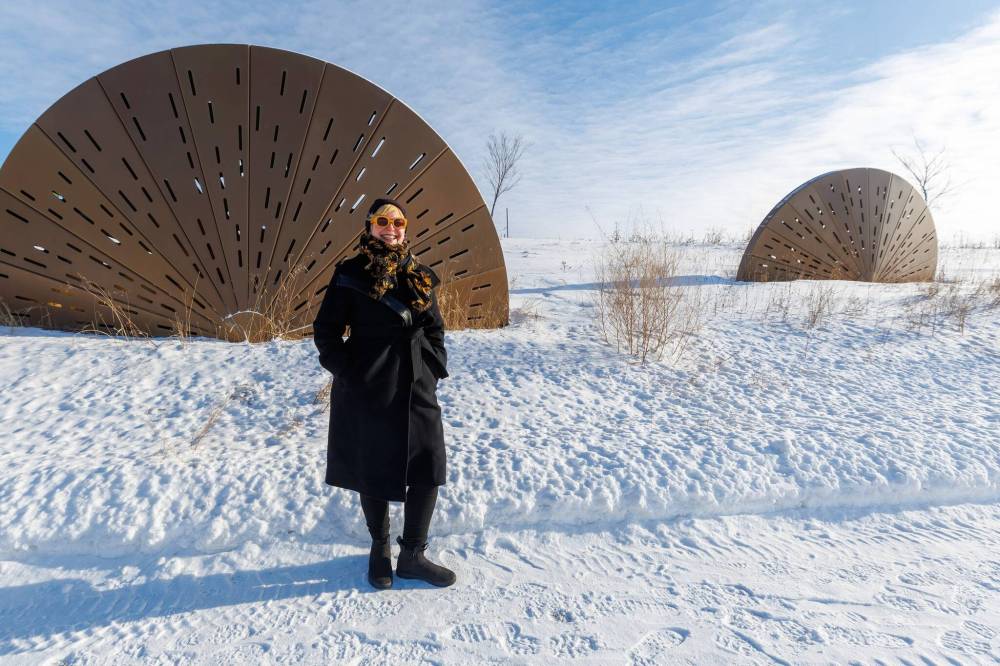
Tamara Rae Biebrich is public art manager for the Winnipeg Arts Council.
“From my perspective, it’s been a good collaboration, both with the mayor’s office and city council, as well as the city administration, in terms of sharing ideas about how to get this moving and supported,” he says.
“I’m excited that it’s as far as it is now and hoping we can take it across the finish line and get it approved in the next couple weeks at city council.”
The Executive Policy Committee next meets on April 22.
jen.zoratti@winnipegfreepress.com
Jen Zoratti is a columnist and feature writer working in the Arts & Life department, as well as the author of the weekly newsletter NEXT. A National Newspaper Award finalist for arts and entertainment writing, Jen is a graduate of the Creative Communications program at RRC Polytech and was a music writer before joining the Free Press in 2013. Read more about Jen.
Every piece of reporting Jen produces is reviewed by an editing team before it is posted online or published in print – part of the Free Press‘s tradition, since 1872, of producing reliable independent journalism. Read more about Free Press’s history and mandate, and learn how our newsroom operates.
Our newsroom depends on a growing audience of readers to power our journalism. If you are not a paid reader, please consider becoming a subscriber.
Our newsroom depends on its audience of readers to power our journalism. Thank you for your support.
Jen Zoratti is a columnist and feature writer working in the Arts & Life department, as well as the author of the weekly newsletter NEXT. A National Newspaper Award finalist for arts and entertainment writing, Jen is a graduate of the Creative Communications program at RRC Polytech and was a music writer before joining the Free Press in 2013. Read more about Jen.
Every piece of reporting Jen produces is reviewed by an editing team before it is posted online or published in print – part of the Free Press‘s tradition, since 1872, of producing reliable independent journalism. Read more about Free Press’s history and mandate, and learn how our newsroom operates.
Our newsroom depends on a growing audience of readers to power our journalism. If you are not a paid reader, please consider becoming a subscriber.
Our newsroom depends on its audience of readers to power our journalism. Thank you for your support.
Related Articles
‘Incredible show of support’: Manitoba Arts Council gets $13M in funding



Advertisement Advertise With Us
Advertisement Advertise With Us