Increasing restrictions could silence culture critics

Advertisement
Read this article for free:
or
Already have an account? Log in here »
To continue reading, please subscribe:

Digital Subscription
One year of digital access for only $205*
- Enjoy unlimited reading on winnipegfreepress.com
- Read the E-Edition, our digital replica newspaper
- Access News Break, our award-winning app
- Play interactive puzzles
*First annual payment billed as $205.00 + GST for one year. This annual subscription will automatically renew at $233.00 + GST every 52 weeks (10% off the regular annual price of $259.35). Offer available to new and qualified returning subscribers only. Cancel any time.
To continue reading, please subscribe:
Add Free Press access to your Brandon Sun subscription for only an additional
$1 for the first 4 weeks*
- Enjoy unlimited reading on winnipegfreepress.com
- Read the E-Edition, our digital replica newspaper
- Access News Break, our award-winning app
- Play interactive puzzles
*Your next Brandon Sun subscription payment will increase by $1.00 and you will be charged $17.95 plus GST for four weeks. After four weeks, your payment will increase to $24.95 plus GST every four weeks.
Read unlimited articles for free today:
or
Already have an account? Log in here »
Hey there, time traveller!
This article was published 29/08/2025 (394 days ago), so information in it may no longer be current.
A bit of inside baseball, if you’ll permit.
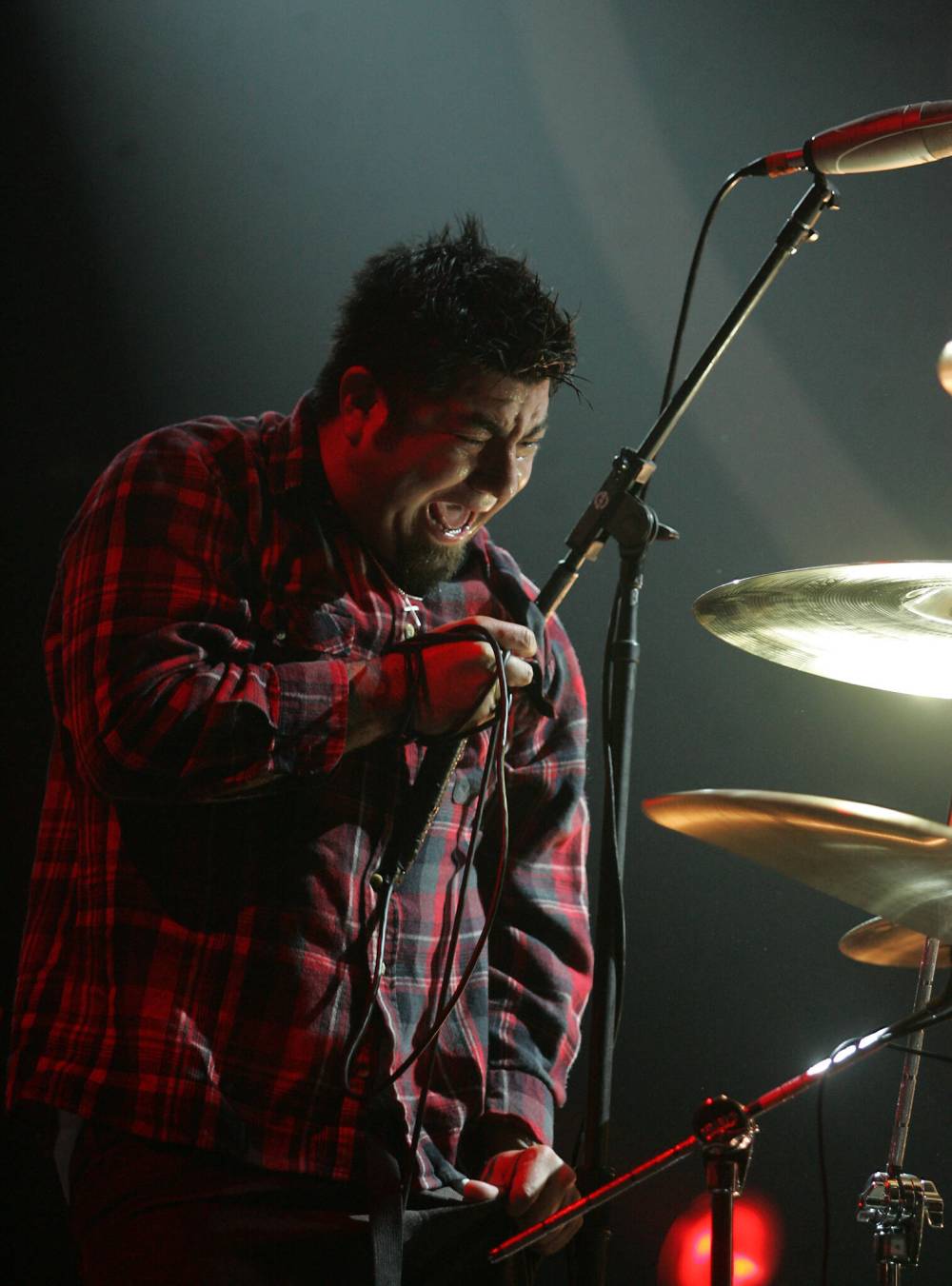
The Free Press was supposed to review Deftones’ concert at the arena on Wednesday, but in a move that’s become more and more frequent, the band’s management demanded that all photographs be pre-approved (on a leisurely 72-hour timeline) before we could print them, and claimed the rights to our photos for their own use in perpetuity.
If they failed to approve our photos, they would provide other options from a concert date earlier in the tour.
BORIS MINKEVICH / FREE PRESS
Deftones frontman Chino Moreno at the MTS Centre in Winnipeg in 2006, before photo approvals were a thing.
So we pulled our request, and there was no review.
Reviews are news. A concert (or a ballet, or a play) is not a gas leak or a fire or a murder or a corporate scandal, but it is something happening in our city that thousands of people care about.
How we handle concert reviews, specifically, is especially newsy. They are written in real time, from the press box, while the show is happening. Our copy will arrive on our website while you are driving home and appear in your newspaper the following day.
We wouldn’t run photos of the Jets from three days ago. We wouldn’t be OK with a politician requesting photo pre-approval. So why would we accept Deftones’ management’s terms, especially when there are already restrictions on concert photography? (“First three songs, no flash” is the boilerplate.)
And if we agree to using photos of a live event provided by an organization with a vested interest in how that event is portrayed, it’s a slippery slope to using illustrative images created by AI.
It’s getting harder to see where reviews and other forms of cultural criticism fit in the current media ecosystem.
It’s getting harder to see where reviews and other forms of cultural criticism, such as meaty essays wrestling with a specific work, fit in the current media ecosystem. Full-time arts writing positions are being axed at outlets all over North America, the victims of newsroom “reshuffling.”
The Associated Press announced it is ending its weekly book reviews as of Sept. 1. The Chicago Tribune recently eliminated the position of film critic, as did the Chicago Sun-Times, which means the city that gave us Siskel, Ebert and their influential thumbs no longer has a full-time daily newspaper film critic.
News deserts include criticism, too. Just as no one is being held to account at the proverbial school board meeting that’s no longer being covered because the local paper was shuttered, a landscape of all influencers and no critics means all promotion and no journalism. It means less access and more out-of-pocket “approvals” dictating coverage, such as the one from Deftones’ team.
I mean, what’s next after photo pre-approval? Copy pre-approval?
A landscape of all influencers and no critics means all promotion and no journalism.
That so few daily papers even do concert reviews anymore has no doubt affected the way the role of cultural critic is understood and valued.
Even the idea of being a full-time arts critic at a newspaper feels like a job from the ’90s, a relic of a time long past.
If art is important, then surely discussing, considering and contextualizing art is important. And that’s not to say that this can’t be done — and done well — on TikTok, YouTube, Instagram or other forms of social media. A lot of the cultural criticism I consume these days comes directly to my inbox via newsletters.
But so long as there are newspapers, there should be criticism in them. Criticism is uniquely important to a newspaper — and, I would argue, to the market that newspaper serves.
Again, reviews are news. Criticism is journalism. What is a newspaper if not a record of a place and time? Reviews tell us what we were watching, reading, listening to and eating, yes, but also what we were thinking, feeling and experiencing. They capture the zeitgeist.
Before, when critics could have decades-long careers covering a beat, they could establish themselves as authoritative, trusted voices on a subject because, when you do something long enough, you become an expert.
And the best critics are sharp writers and thinkers. Their whole job is to consider something at a depth most people won’t or don’t.
The critics I personally seek out are the ones whose brains I like spending time with for 500 to 800 words at a time. They make me a better thinker and writer, or they inspire me to consider something — a painting, a musical, a trend, whatever — in a different way. I don’t need to always agree with them. I don’t need to have the same taste as them. I just need to respect how they think and like how they write.
Reviews tell us what we were watching, reading, listening to and eating, yes, but also what we were thinking, feeling and experiencing. They capture the zeitgeist.
I read criticism because I want to be informed and inspired, not influenced. I also read it because I am curious; I want to know what other people think about this concert, this TV show, this book or this movie. It’s like being a part of a great big conversation.
It can be hard to convince people to care about something, whether it’s art or a review about the art. And maybe in a few decades there will be no one left to tell you how that big show at the arena was, and how it fits into the zeitgeist.
There will always be content about content, of course, but you’ll have to sift through it all and it might not be edited, or factual, or even created by a human being.
But for now, we will continue to capture the zeitgeist and push back when people tell us how to do our job. After all, that’s what you, the readers, trust us to do.
jen.zoratti@freepress.mb.ca

Jen Zoratti is a columnist and feature writer working in the Arts & Life department, as well as the author of the weekly newsletter NEXT. A National Newspaper Award finalist for arts and entertainment writing, Jen is a graduate of the Creative Communications program at RRC Polytech and was a music writer before joining the Free Press in 2013. Read more about Jen.
Every piece of reporting Jen produces is reviewed by an editing team before it is posted online or published in print – part of the Free Press‘s tradition, since 1872, of producing reliable independent journalism. Read more about Free Press’s history and mandate, and learn how our newsroom operates.
Our newsroom depends on a growing audience of readers to power our journalism. If you are not a paid reader, please consider becoming a subscriber.
Our newsroom depends on its audience of readers to power our journalism. Thank you for your support.
Jen Zoratti is a columnist and feature writer working in the Arts & Life department, as well as the author of the weekly newsletter NEXT. A National Newspaper Award finalist for arts and entertainment writing, Jen is a graduate of the Creative Communications program at RRC Polytech and was a music writer before joining the Free Press in 2013. Read more about Jen.
Every piece of reporting Jen produces is reviewed by an editing team before it is posted online or published in print – part of the Free Press‘s tradition, since 1872, of producing reliable independent journalism. Read more about Free Press’s history and mandate, and learn how our newsroom operates.
Our newsroom depends on a growing audience of readers to power our journalism. If you are not a paid reader, please consider becoming a subscriber.
Our newsroom depends on its audience of readers to power our journalism. Thank you for your support.
Advertisement Advertise With Us
Advertisement Advertise With Us