On the subject of… As a new school year starts, post-secondary students answer some questions
Read this article for free:
or
Already have an account? Log in here »
To continue reading, please subscribe:

Digital Subscription
One year of digital access for only $205*
- Enjoy unlimited reading on winnipegfreepress.com
- Read the E-Edition, our digital replica newspaper
- Access News Break, our award-winning app
- Play interactive puzzles
*First annual payment billed as $205.00 + GST for one year. This annual subscription will automatically renew at $233.00 + GST every 52 weeks (10% off the regular annual price of $259.35). Offer available to new and qualified returning subscribers only. Cancel any time.
To continue reading, please subscribe:
Add Free Press access to your Brandon Sun subscription for only an additional
$1 for the first 4 weeks*
- Enjoy unlimited reading on winnipegfreepress.com
- Read the E-Edition, our digital replica newspaper
- Access News Break, our award-winning app
- Play interactive puzzles
*Your next Brandon Sun subscription payment will increase by $1.00 and you will be charged $17.95 plus GST for four weeks. After four weeks, your payment will increase to $24.95 plus GST every four weeks.
Read unlimited articles for free today:
or
Already have an account? Log in here »
Hey there, time traveller!
This article was published 09/09/2025 (352 days ago), so information in it may no longer be current.
The use of ChatGPT. Not finding a job after graduation. The pressures of social media. Phone addiction. Cultivating hobbies (that are not phone addictions).
It’s a fresh new school year, and these are the things gen Z university and college students are thinking about.
The Free Press surveyed students from four major post-secondary institutions in the city about their fears and anxieties, their insights on AI, what they do in their (limited) free time and what they see for their futures. Responses have been lightly edited for length and clarity.
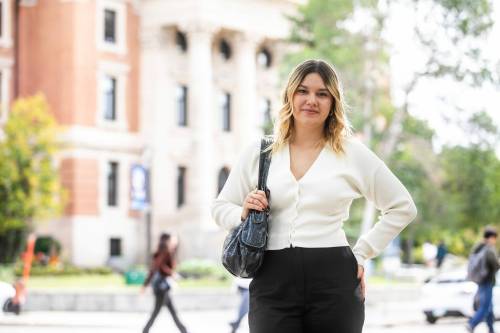
Clara Sydor, 21, bachelor of arts advanced degree, major in psychology/minor in religion, University of Manitoba
MIKAELA MACKENZIE / FREE PRESS Clara Sydor is a psychology major at the U of M.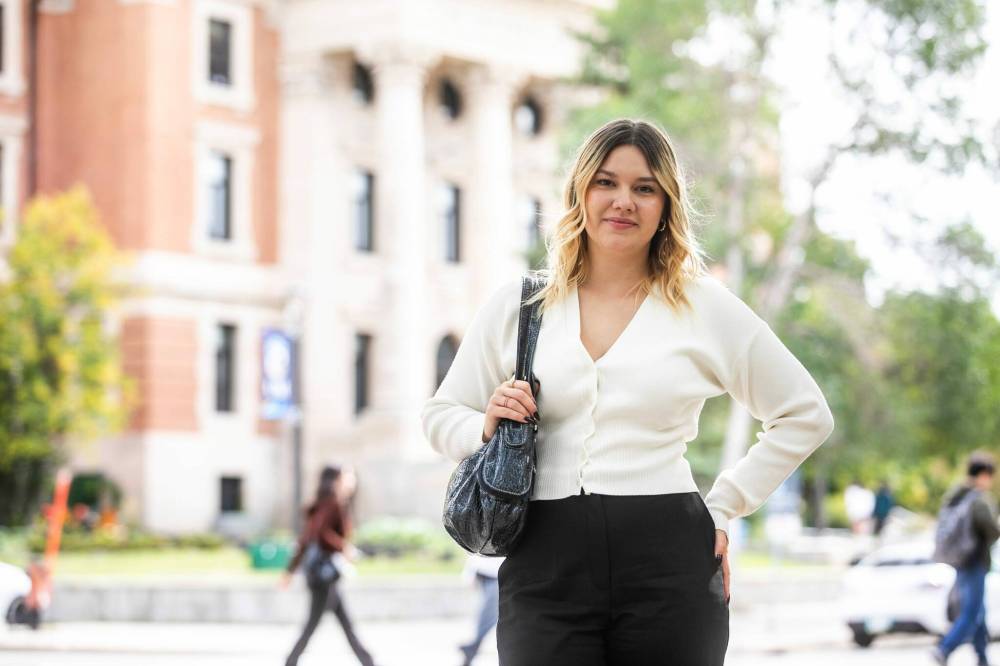
Why have you chosen this path? What are your educational goals?
I thought I was actually going to major in bio and go the science route when I was going into university, but then I took a couple bio courses and it didn’t really resonate with me like psychology did. I took the intro psych course, and then I ended up excelling a lot in all my arts courses. So I ended up pursuing my Bachelor of Arts Advanced Degree, majoring in psych and minoring in religion.
I’ve always thought a lot about what I wanted to do with my psych degree, and ultimately, I just want to make some sort of impact in the mental health field, whether that be teaching as an instructor, or taking on clients of my own as a psychotherapist or something. I’m open to different paths.
What are you looking forward to most this year?
I’m excited about graduating but at the same time, I’m nervous about it — like not getting into a master’s (program) or not getting a recommendation letter from a prof.
I’m also the director of social programming for the Arts Student Body Council at the U of M and we’ve already been planning events and working together to bring fun activities on campus for students. So I’m excited to continue working with them the rest of the year.
What are your main fears/anxieties about the future?
I’m nervous, after graduating, about not getting a job or not making enough money to properly sustain living on my own or the goals I want to achieve.
Where do you see yourself in five years? A decade?
I do see myself meeting my goals, but there’s that part of me that’s like, what if it doesn’t work out? I’m gonna work as hard as I can, and I don’t want to necessarily let those thoughts come into my head that are like, ‘you won’t make it,’ because I kind of believe in manifestation and if I start thinking that, then it could go down that road. So I’m like, no, you gotta keep thinking ahead.
What challenges do you think you face that are different from previous generations?
I think the pressures of social media and to look like you have everything. I also think body image has become a bigger issue with the amount of media young women see and compare themselves to — like online, people who have filters on or Botox or have fillers or plastic surgery, and they see that a lot more than maybe older generations would. And that’s not to say that there weren’t pressures similar back then. I think now it’s just a little bit more extreme and apparent.
Are you on social media? Which platforms? For work or pleasure?
I do have a personal Instagram; however, it’s definitely become a thing to have an account for work. I don’t need an account for work, so I don’t have one, but I know the Art Student Body Council has their own. The university has their own. UMSU has their own. I use TikTok for watching funny videos, or Instagram reels, and sending funny, relatable things to my friends.
Do you use AI regularly and what for? Do you think it’s going to affect your employment?
OK, so I don’t use AI regularly, but when I’m working on a document and I’m struggling to express my ideas clearly, I’ll input my thoughts into an AI tool (she clarified later ChatGPT), and it’ll help refine my writing, and it usually captures what I want to say in a clear and concise way. So, I see it as a tool, but one that should be used very much with caution.
I think people need to be educated on it and how it works and the potential implications it can have. Relating it back to university, I think universities should establish clear guidelines for its use in classes or academic settings. And on the flip side, I think students should respect profs who prefer it not to be used in their courses.
Specifically this year, a lot of my profs, they’re like, we’re doing in-class work, your assignments will be done in class, so there’s no way you can use AI. It’s kind of nice in a weird way because you’re so online all the time.
What do you do with your free time with friends? Do you have a job?
I love just going for appetizers and drinks with my friends at a restaurant. Me and my friends are gonna watch a fall movie tonight together. Going to the spa, going shopping — just chill stuff like that.
And then for work, I work at the U of M as a student office assistant in the Career, Community and Experiential Learning Centre, and I’m specifically in the experiential learning partnerships office. I look after the experience record, which is a document in place where all of the students’ co-curricular and curricular, experiential learning and student involvement activities are recognized by the U of M. So if you wanna apply to grad school or are trying to get employed, you can show these people that, like, hey, I have actual experience doing something, I didn’t just sit in a lecture.
I’ve been working at the U of M now for three years. I’ve done a grader marker position for the agriculture co-op. I worked in a lab in biosystems engineering. I’ve done all these kind of odd jobs not necessarily related to my major or minor, but will definitely help me in the future.
— Jen Zoratti
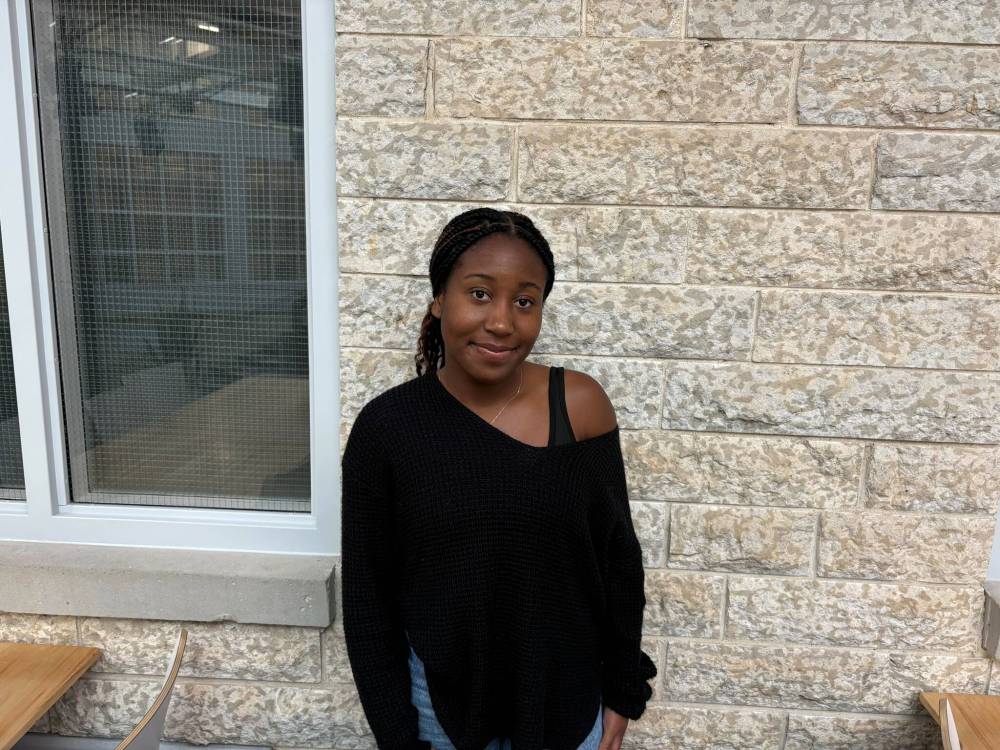
Akeeliah Lord, 18, bachelor of social work or bachelor of arts, Université de Saint-Boniface.
Why have you chosen this path? What are your educational goals?
I think social work would be a good fit for me. Just like in my day-to-day life, I feel like I’m already kind of that person. So, like, it’d be a good fit, and I’d be able to help a lot of people on a more professional level. Maybe law school.
What are you looking forward to most this year?
Getting to know new people, playing on the university (soccer) team and hopefully learning more about myself.
What are your main fears/anxieties about the future?
What I want to do in life not really amounting to anything. I guess I could say, very normal fears.
Where do you see yourself in five years? A decade?
Hopefully with an idea of where I want to go or a stable job. So, if I do end up in social work, hopefully a good job and life. And, finally, law school.
What challenges do you think you face that are different than older generations?
Back then, it was a lot easier to make a living and raise a family from a young age and be able to buy a house. Affording things in this day and age, it’s not really possible — so you’re moving a lot slower than they ever did. I think that’s a struggle for a lot of young people.
Are you on social media? Which platforms? For work or pleasure?
I have TikTok and Instagram (for pleasure), but I try not to use it too often because it’s not really healthy. But I do stray from time to time!
Do you use AI regularly?
No.
Do you think AI is going to affect your employment?
Maybe for social work — people start to relate to AI for social support and stuff like that, it’d be a lot more accessible and easier.
— Conrad Sweatman
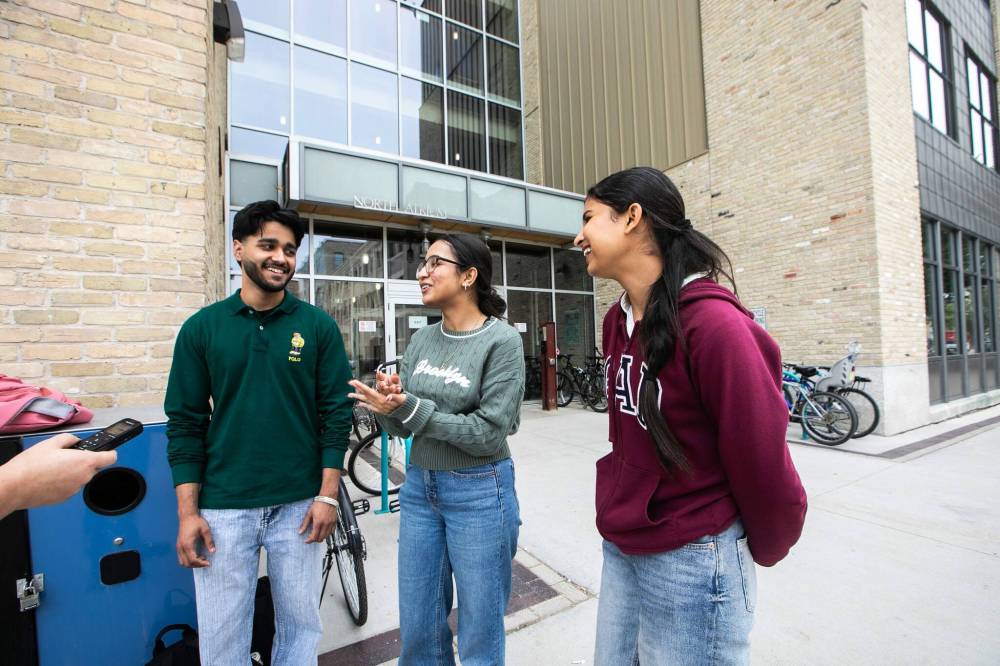
Gunkar Singh, 19, software development, Red River College Polytech
MIKAELA MACKENZIE / FREE PRESS RRC student Gunkar Singh
Sania Parvej, 20, application development and delivery, Red River College Polytech
MIKAELA MACKENZIE / FREE PRESS RRC student Sania Parvej 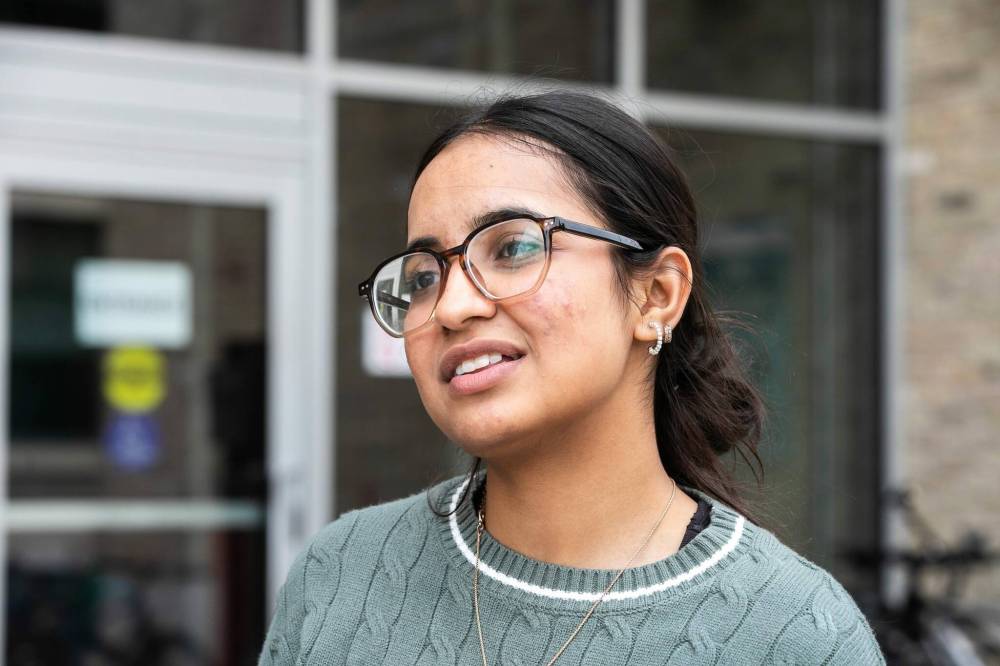
Why have you chosen this path? What are your educational goals?
Gunkar Singh: I’ve chosen software development because I’ve always had a keen interest in web development and coding, so I have some knowledge from high school. I think it’s good for my future.
Sania Parvej: My parents wanted me to choose (app development), but I think it’s a good course.
What are you looking forward to most this year?
GS: Having a higher GPA and studying more. And I hope to get a co-op internship through this program so I can have experience with bigger companies and find a good job.
SP: Completing assignments without plagiarism. It hasn’t happened to us, but we’ve seen many cases where this kind of thing happens.
What are your main fears or anxieties about the future?
GS: With some of the subjects and courses, I haven’t studied them and have no knowledge. And when the course starts we can’t find the answers on ChatGPT. So there’s a risk of failing or getting low marks.
SP: I hope we get placed in a good job with a good company and get good experience.
Where do you see yourself in five years? A decade?
GS: In a good post with a good company, like Amazon, Apple, Intouch or Microsoft. I’ve studied a lot, so I think I should have some software developments. I’d like to have my own startup with good success.
SP: I want to be an entrepreneur and start my own company and give more jobs to the people, especially to international students.
What challenges do you think you face that are different than older generations?
GS: With new technologies there are some new problems. We have more assignments and not enough time. In a previous time there were just exams and if we had the knowledge we can pass. Now, everything’s digital and there are more quizzes.
SP: I think the older generations were more practical than us, we are more technical. But both have their own pros and cons.
Are you on social media? Which platforms? For work or pleasure?
GS: I was using Instagram and Snapchat before, but nowadays I don’t have a lot of time.
SP: In India, TikTok was banned. So when we came here, we downloaded it and could see all our old posts.
Do you use AI regularly and what for? Do you think it’s going to affect your employment in the future?
GS: I don’t use it regularly. When we start an assignment, I’ll get ideas (from ChatGPT) but not for the whole work. AI helps, but in software, it has taken a lot of jobs. When we graduate and have the proper skills, but at that time there will be more AIs, so we will face difficulties.
SP: We’re finding it as a boon, but after some time it will turn into a bane, I think.
What do you do in your free time with friends? Do you have a job?
GS: We don’t have free time. Most of the time we just spend on assignments. I work as a mechanic.
SP: If we have time, we have to do laundry, we have to cook our food, we have to clean our apartment, then we have to sleep. I’m working as a crew member at Wendy’s.
— Eva Wasney
Julia Blais, 21, English, University of Winnipeg
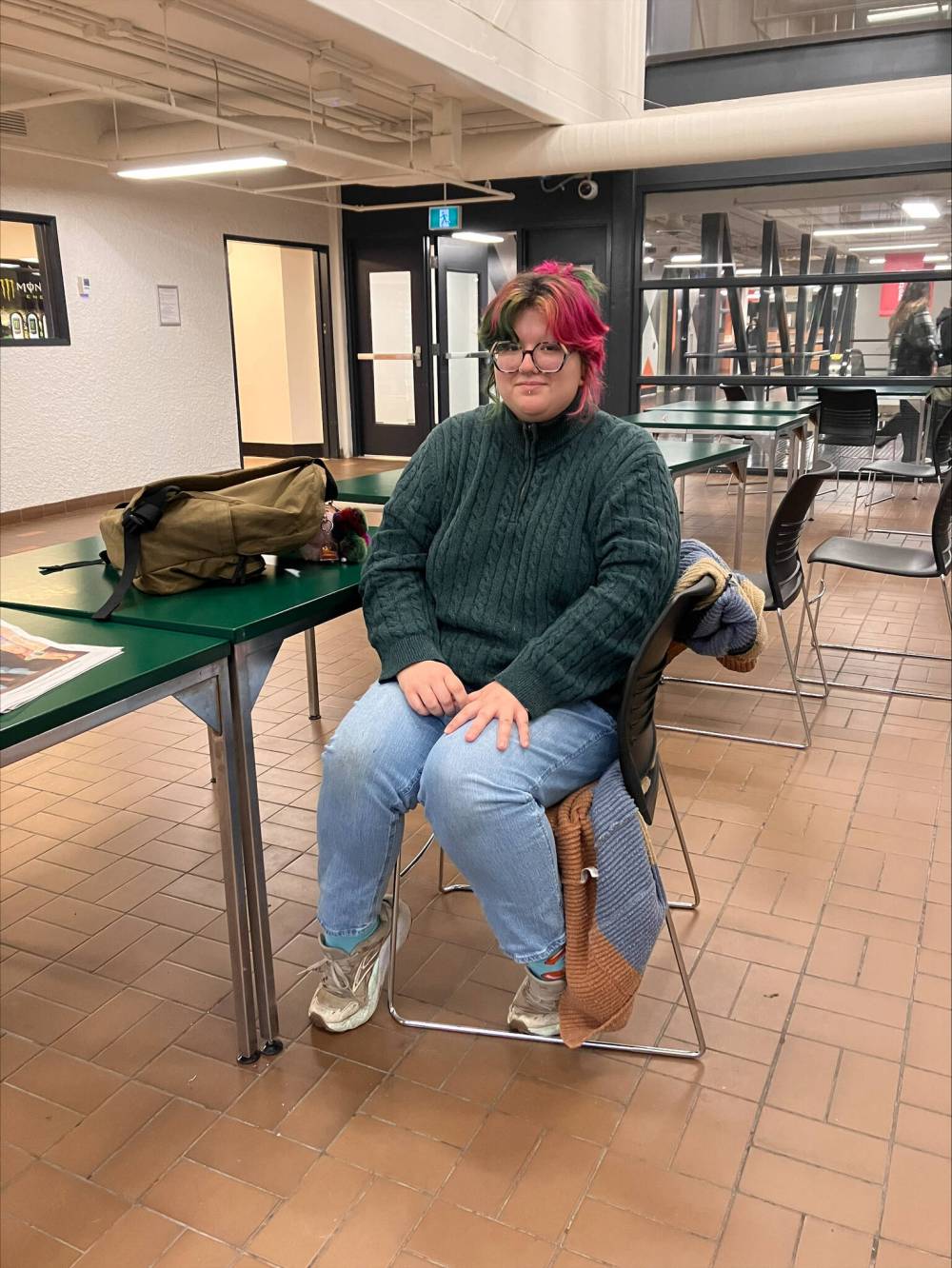
Why have you chosen this path? What are your educational goals?
English was my best class in high school in Calgary, and I really enjoy writing. So I want to enter journalism after I graduate. For now, I’m just trying to do the best that I can in class.
What are you looking forward to most this year?
I’m most looking forward to the benefits, to be honest, like the free transit access and the student health plan.
What are your main fears/anxieties about the future?
Perhaps I’m most anxious that I’ll fail school, but mainly that I won’t be able to find a job. The job market, for pretty much everybody, is awful right now.
Where do you see yourself in five years? A decade?
In five years? I hope to have some sort of editorial assistant job, but I’ll take anything to get started before working my way up. In 10 years, I’ve not thought that far.
What challenges do you think you face that are different than previous generations?
I would probably say phone addiction, and I say that as someone who is definitely addicted to their phone. But also AI: I don’t like it and see that it’s already affecting us negatively. I believe it’s dishonest and it was mainly made by people who want to steal from other people’s hard work, art and research. It’s caused people to lose the ability to actually research things and develop their own opinions about things.
Having said that, do you use AI and if so, what for?
I tried using ChatGPT a few times for fun, just to see. I have used it for a few cover letters before and it was pretty solid; I would say it’s good for things like that. But when I heard about the environmental impacts of it, I was like, OK this is not something I want to use.
It absolutely will affect the field I want to enter. I’ve had professors mention every single time an essay is due they catch at least one or two people using AI.
I feel like AI is advancing so much, it’s going to get to the point where people don’t realize — they already aren’t realizing — that certain papers or news reports aren’t even from real people. I absolutely believe people will take advantage of that, and take advantage of people through it, by spreading false information.
What do you do in your free time with friends? Do you have a job?
I came here without a social group at all. I do have family here and I’m living with my sister. I have made one friend so far: her name is Dakota and she’s very sweet. Other than studying, I like to hang out with my boyfriend or to crochet — I’m really big into crafts. Currently I’m making this big cardigan made of granny squares — willow granny squares is the new stitch that I’m learning.
— Ben Waldman


Ben Waldman is a National Newspaper Award-nominated reporter on the Arts & Life desk at the Free Press.

Eva Wasney is an award-winning journalist who approaches every story with curiosity and care.

Jen Zoratti is a Winnipeg Free Press columnist and feature writer, working in the Arts & Life department.
Our newsroom depends on a growing audience of readers to power our journalism. If you are not a paid reader, please consider becoming a subscriber.
Our newsroom depends on its audience of readers to power our journalism. Thank you for your support.