Before Hollywood, Redwood Now 80, Neil Young was shaped artistically by pivotal years in Winnipeg
Read this article for free:
or
Already have an account? Log in here »
To continue reading, please subscribe:

Digital Subscription
One year of digital access for only $205*
- Enjoy unlimited reading on winnipegfreepress.com
- Read the E-Edition, our digital replica newspaper
- Access News Break, our award-winning app
- Play interactive puzzles
*First annual payment billed as $205.00 + GST for one year. This annual subscription will automatically renew at $233.00 + GST every 52 weeks (10% off the regular annual price of $259.35). Offer available to new and qualified returning subscribers only. Cancel any time.
To continue reading, please subscribe:
Add Free Press access to your Brandon Sun subscription for only an additional
$1 for the first 4 weeks*
- Enjoy unlimited reading on winnipegfreepress.com
- Read the E-Edition, our digital replica newspaper
- Access News Break, our award-winning app
- Play interactive puzzles
*Your next Brandon Sun subscription payment will increase by $1.00 and you will be charged $17.95 plus GST for four weeks. After four weeks, your payment will increase to $24.95 plus GST every four weeks.
Read unlimited articles for free today:
or
Already have an account? Log in here »
Hey there, time traveller!
This article was published 07/11/2025 (281 days ago), so information in it may no longer be current.
When I was a young boy, my momma said to me,
Your daddy’s leavin’ home today, I think he’s gone to stay.
We packed up all our bags and drove out to Winnipeg.
— Neil Young, Don’t Be Denied, 1973
On Nov. 12, rock music iconoclast Neil Percival Kenneth Ragland Young turns 80. Born in Toronto in 1945 and a resident of California since 1966, Young spent five years in Winnipeg.
But if that period seems brief, those years, from 1960 to 1965, were pivotal to his development as one of rock music’s most consistently fascinating mavericks.
In a 60-year recording career, Young changes musical styles and genres more often than his contemporaries change socks.
JOE BRYKSA/ FREE PRESS FILES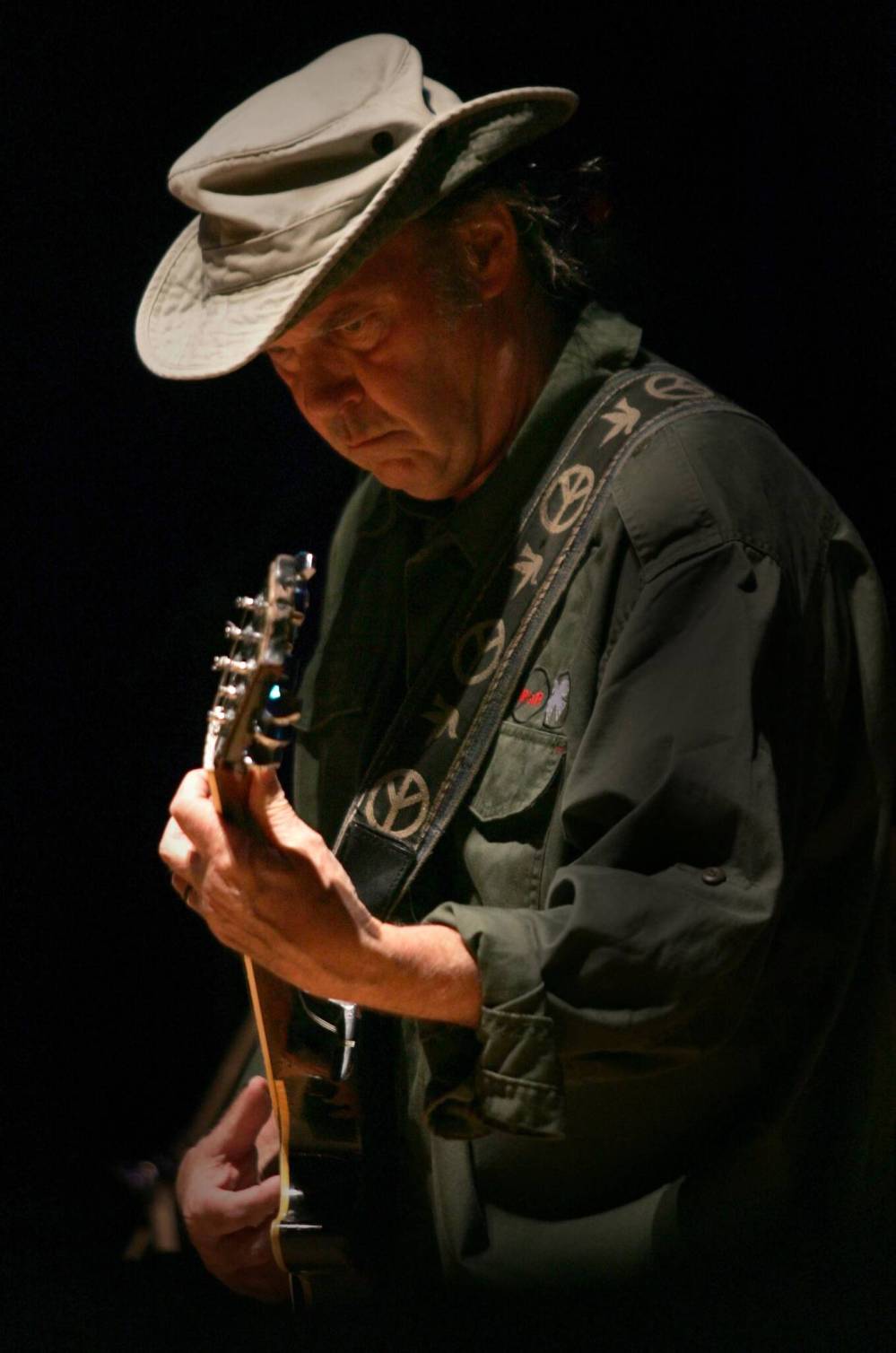
For those who knew him back in the day, it comes as no surprise that he is still out there rockin’ in the free world with no signs of slowing down or retiring. “Retiring?” he responded when I posed that question. “Why? It’s kind of like having a car and not driving it. If you’ve got it, you might as well use it.”
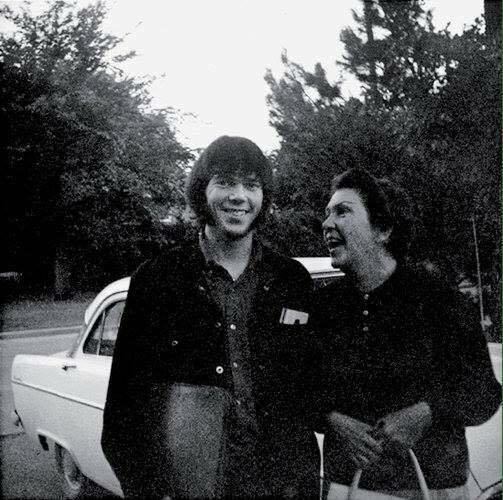
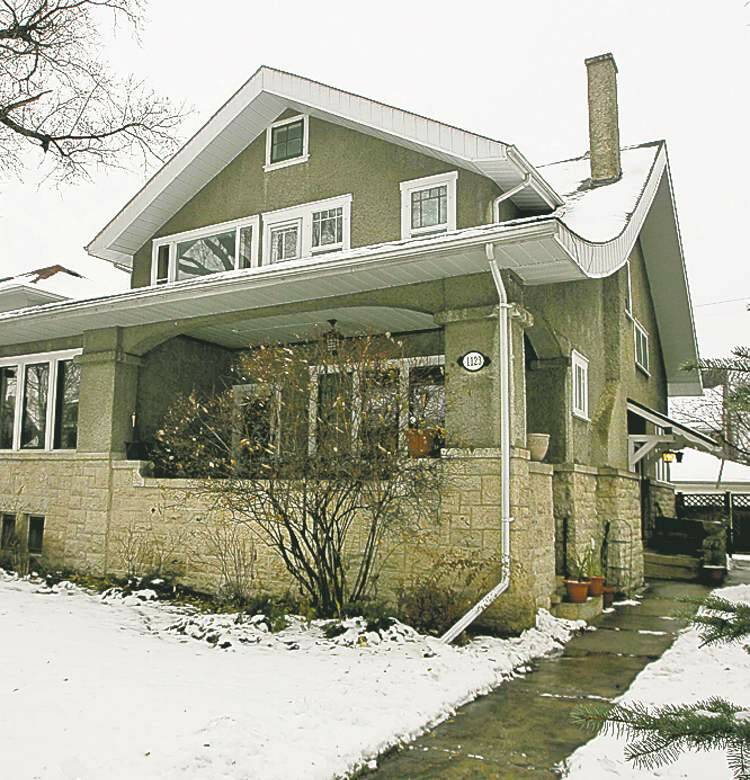
Fourteen-year-old Young and his mother Rassy Ragland Young, who was a panellist on CJAY TV’s Twenty Questions, first resided in the Hugo Apartments on Corydon Avenue before moving to a second-floor suite in a stately old home at 1123 Grosvenor Ave., where he lived until heading east in 1965.
Young enrolled at Earl Grey School in Fort Rouge in September 1960.
When we got to Winnipeg, I checked in to school
I wore white bucks on my feet when I learned the golden rule
The punches came fast and hard, lying on my back in the schoolyard
“Winnipeg is where it all started for me,” he told me. “I have so many fond memories of that time.”
Winnipeg in the 1960s was a hotbed of live music with a couple of hundred bands vying to play for excited teens.
Those opportunities were most often found at neighbourhood community clubs. “Back then, the community clubs were really happening,” noted Neil. “There was nothing like it anywhere else. Kids just wanted to dance.”
Bitten by the rock ’n’ roll bug in Toronto, Young graduated from ukulele to acoustic guitar by the time he arrived in Winnipeg in the summer of 1960.
Acquiring a secondhand Gibson Les Paul Junior electric guitar that fall, Young and fellow Earl Grey School classmate John Daniel formed the Jades. The band lasted one gig at Earl Grey Community Club in January 1961, but it was enough for Young to determine that the guitar was going to be his life.
“I knew when I was 13 or 14 that that was what I wanted to do,” Neil said. “There was nothing else that interested me. There really wasn’t anything more important in my life than playing music.”
Pretty soon I met a friend, he played guitar
We used to sit on the steps at school and dream of being stars
We started a band, we played all night
After a few false starts with south Winnipeg bands the Esquires, Thunderstorms, Classics and Twilighters, Young’s first band where he alone called the shots, the Squires, debuted at Riverview Community Club on Feb. 1, 1963.
The four young musicians, all still in high school (Young attended Kelvin High School, Allan Bates and Ken Smyth were at Grant Park and Ken Koblun from Churchill school), were paid the princely sum of $5 (for the band, not individually) for an evening of rocking instrumental music.
Within weeks, the Squires were playing the thriving community club circuit throughout the city.
Chances are if you were a Winnipeg teenager between 1960 and 1965 you saw the Squires play your community club or high school.
Decades later, sitting with me in his living room, Young recounted many of those gigs in detail. Other appearances remained memorable including tough downtown teen club The Cellar (where a beer bottle was thrown at the band), Patterson’s Ranch House in the North End, on a flatbed truck outside Topps Discount Department Store across from Polo Park and between bouts at a wrestling match in St. Boniface.
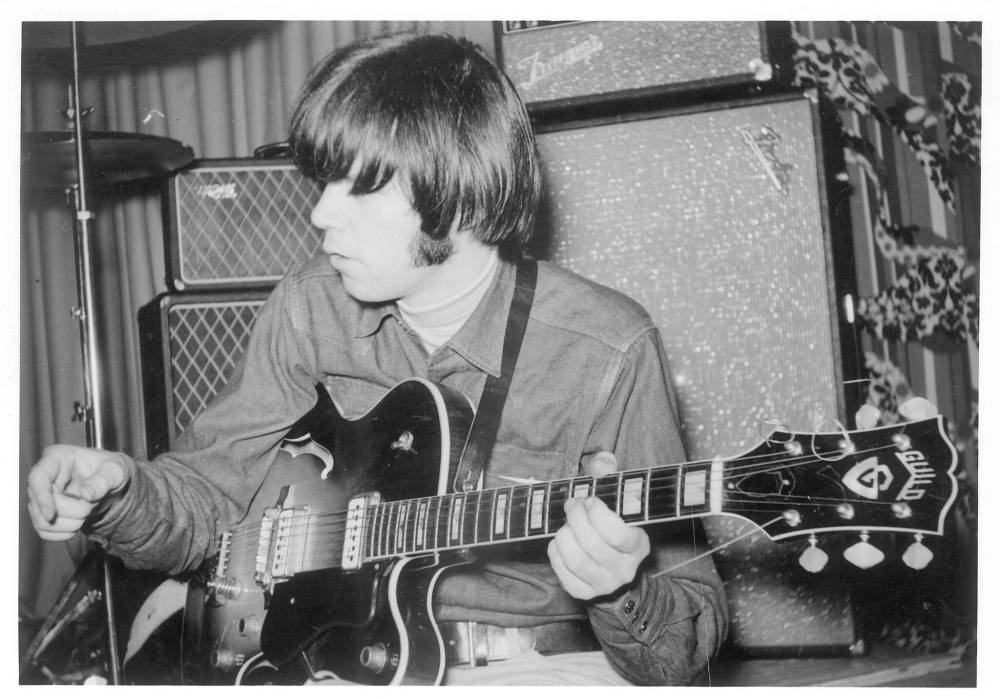
At a time when local bands played the hits of the day, what set Young apart from his contemporaries was his determination from the get-go to write his own songs.
The Squires’ first recording session took place in July 1963 at CKRC’s tiny recording studio on Carlton Street where the group recorded two instrumentals penned by Young, The Sultan and Aurora. Local V Records pressed 300 copies.
The following year, Young and the band returned to CKRC where, on April 2, 1964, Young recorded his first vocals on one of his own songs, I Wonder.
At the end of the session, recording engineer Harry Taylor told Young, “You’re a good guitar player, kid, but you’ll never make it as a singer.”
Says Young, “People told me I couldn’t sing, but I just kept at it.”
Teenage friend Jacolyne Nentwig, who lived with her parents at 1111 Fleet Ave., says she remembers, “Neil would be singing at our house and we’d say, ‘Oh, Neil, that’s awful!’ We were pretty cruel about his singing.”
At a gig at St. Ignatius Church at Stafford and Corydon for the neighbourhood Catholic Youth Organization, Young was heckled to “Stick to instrumentals” after regaling the audience with his singing. It took a few years for Young to feel comfortable and confident about his voice.
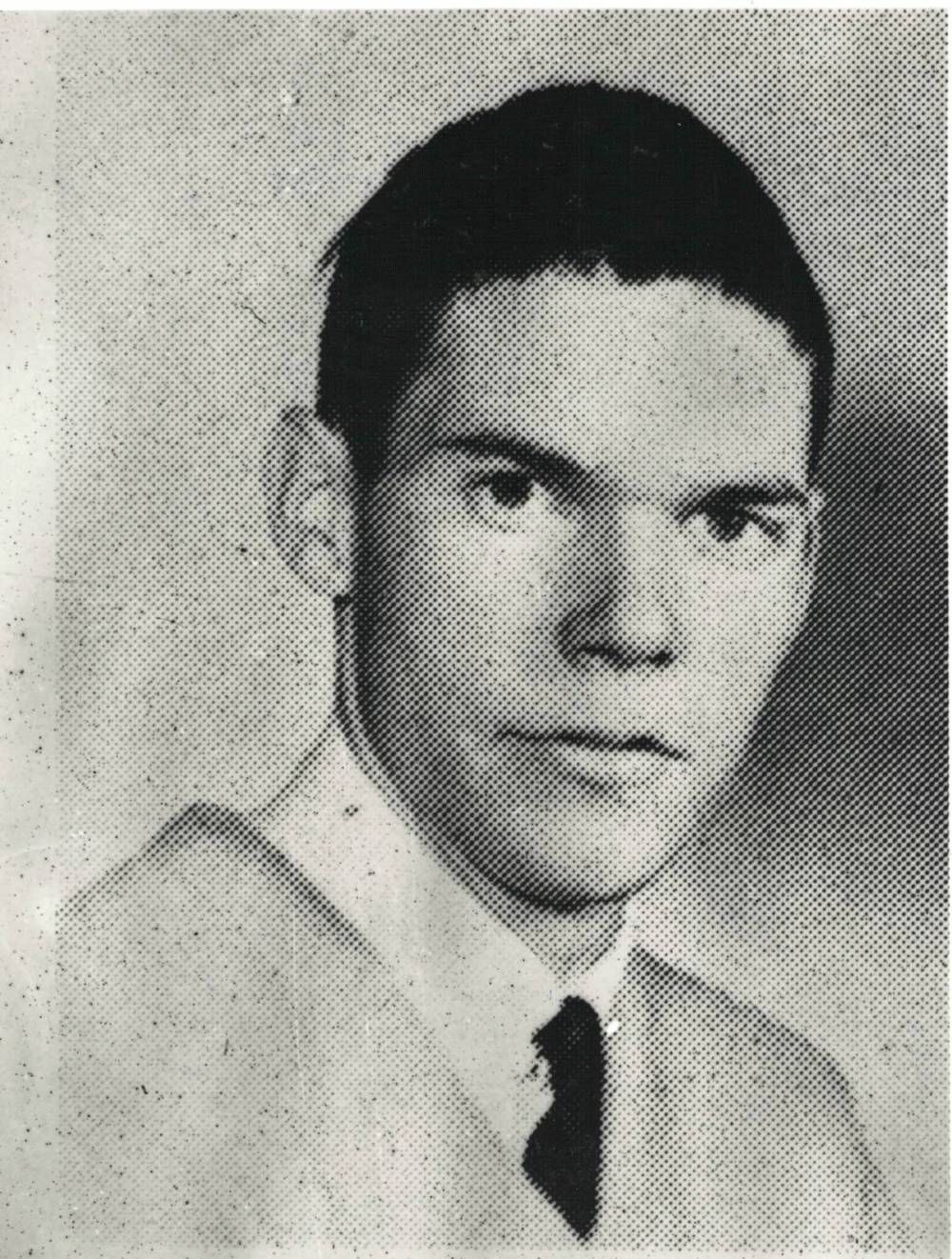
Young would later revisit I Wonder as the basis for his 1977 song Don’t Cry No Tears recorded with his backing band Crazy Horse.
What also set Young apart from the local rock ’n’ roll rabble was a growing interest in folk music.
“I got into a Dylan thing in Grade 9 playing folk,” he recalled, “so I liked going to the 4D.”
The 4D or Fourth Dimension was a popular coffeehouse near the University of Manitoba. Formerly Jack’s Place, a jazz club, Charlie Clement, later of Tubby’s Restaurant, opened the 4D for folkies in 1960.
Young would join in the hootenannies most Sunday evenings. Folk trio Three Blind Mice, comprised of Annis Kozub, his sister Ilena Kozub and Murray MacKay, performed at the 4D and often ran into Neil there.

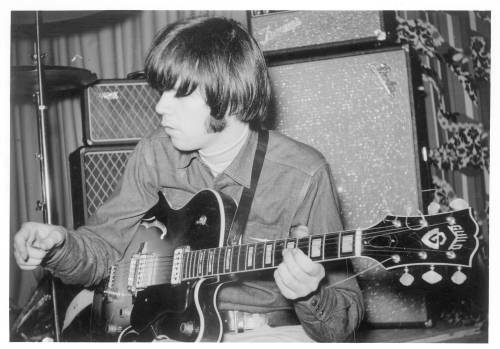
“A rock ’n’ roll guy hanging out in the folk clubs was a definite anomaly back then,” Annis points out. “That made Neil unique. He used to show up just about every Sunday night and play his big Gretsch electric guitar unplugged. People were accepting of Neil. He wasn’t that talkative. He was kind of soft-spoken.”
Young quit high school in September 1964 during his second try at Grade 11 in order to pursue a music career.
His mother bought him a secondhand 1948 Buick Roadmaster hearse to take The Squires on the road. Neil dubbed the hearse Mortimer Hearseburg, or Mort, for short. “I always knew that I could never get to be the biggest band in Winnipeg,” he reflected.

A month later, the Squires headed east to Fort William (Thunder Bay) for an extended engagement at The Flamingo Club (he would later write Sugar Mountain on his 19th birthday in Fort William).
On a further Fort William trip, this time to play Fort William’s 4D, Young would meet American folk musician Stephen Stills.
The two plotted to someday form a band. In June 1965, on a trip to Sudbury, Mort broke down on the highway and had to be abandoned at Bill’s Garage in Blind River, Ont. Young would later pen Long May You Run (“With your chrome heart shining in the sun”) lamenting the loss of Mort.
In running the Squires, Young faced a revolving door of personnel.
The ever-loyal Ken Koblun stuck with Young through thick and thin, quitting Churchill High the same day Young left Kelvin. Others came and went.
“I had to leave a lot of friends behind to get where I am now, especially in the beginning,” he said. “There was no other way. And it’s obvious when you look back at my early years, that’s what I was like. I was so driven to make it.”
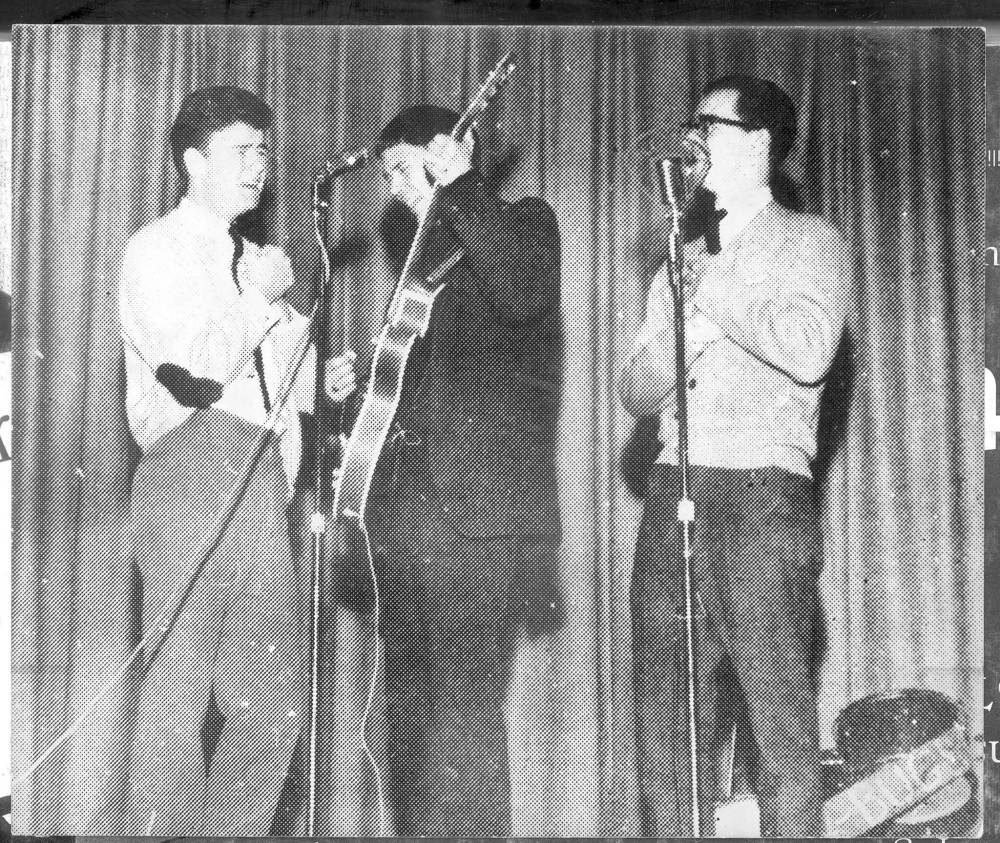
Neil Young (centre) at Kelvin High School with classmates.
Prior to their third trip to Fort William, in April 1965, the Squires boarded a train for Churchill for a memorable weeklong gig at the Hudson Hotel.
“It was pretty hairy up there,” Young chuckles. “We were playing in the bar and the whole place started moving. A polar bear had crawled under the hotel. Everybody went outside and fired off guns and it ran away.”
Following a brief sojourn in Toronto as a solo act and a member of rock band the Mynah Birds with later funk star Rick James, Young bought a 1953 Pontiac hearse and after a manic, almost non-stop drive, arrived in Los Angeles in search of Stills.
Six days later, April 6, 1966, the two met up in a Sunset Boulevard traffic jam and formed Buffalo Springfield. Young had finally found the success he so craved back in Winnipeg.
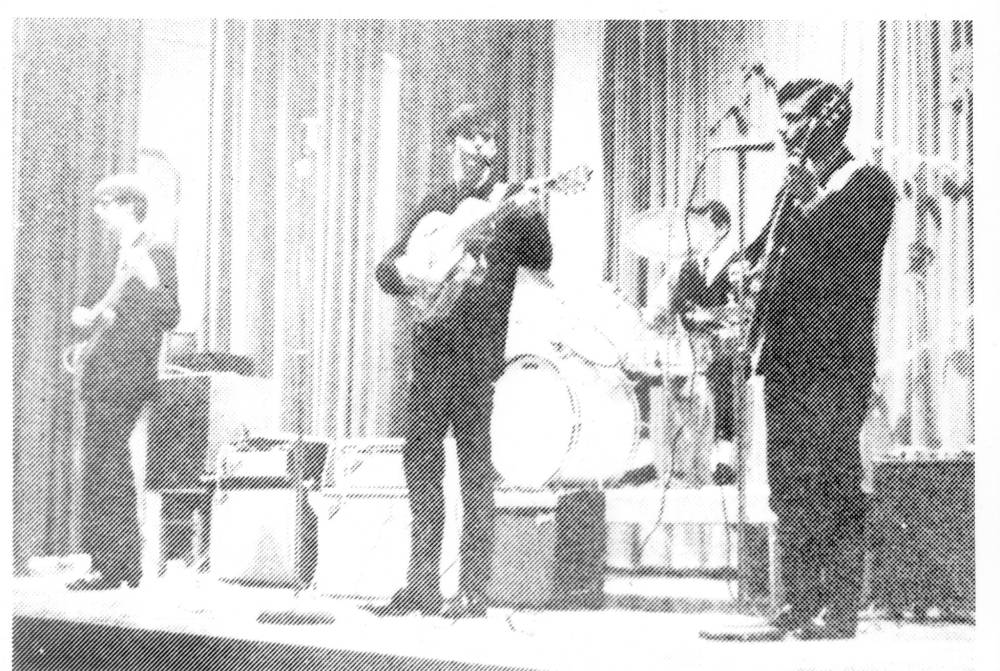
Buffalo Springfield’s debut single, released in July 1966, three months after their star-crossed Sunset Strip forming, was Nowadays Clancy Can’t Even Sing, penned by Young.
He drew inspiration for the song from former Kelvin High classmate Ross ‘Clancy’ Smith. Still not confident of his voice, the song was sung by fellow band member Richie Furay.
On the back of Buffalo Springfield’s December 1966 debut album, each member identified their hometown.
Under Young’s name it read “Winnipeg.” In his first-ever media interview, Young heaped praise on Winnipeg for giving him his start in music. And he still says that about Winnipeg today.
John Einarson is a Winnipeg rock music historian who has written extensively on Neil Young’s formative years.