Queer power play
Newfoundland artist’s fictional hockey league takes on toxic masculinity, homophobia in the sport

Advertisement
Read this article for free:
or
Already have an account? Log in here »
To continue reading, please subscribe:

Digital Subscription
One year of digital access for only $205*
- Enjoy unlimited reading on winnipegfreepress.com
- Read the E-Edition, our digital replica newspaper
- Access News Break, our award-winning app
- Play interactive puzzles
*First annual payment billed as $205.00 + GST for one year. This annual subscription will automatically renew at $233.00 + GST every 52 weeks (10% off the regular annual price of $259.35). Offer available to new and qualified returning subscribers only. Cancel any time.
To continue reading, please subscribe:
Add Free Press access to your Brandon Sun subscription for only an additional
$1 for the first 4 weeks*
- Enjoy unlimited reading on winnipegfreepress.com
- Read the E-Edition, our digital replica newspaper
- Access News Break, our award-winning app
- Play interactive puzzles
*Your next Brandon Sun subscription payment will increase by $1.00 and you will be charged $17.95 plus GST for four weeks. After four weeks, your payment will increase to $24.95 plus GST every four weeks.
Read unlimited articles for free today:
or
Already have an account? Log in here »
Hey there, time traveller!
This article was published 13/11/2025 (266 days ago), so information in it may no longer be current.
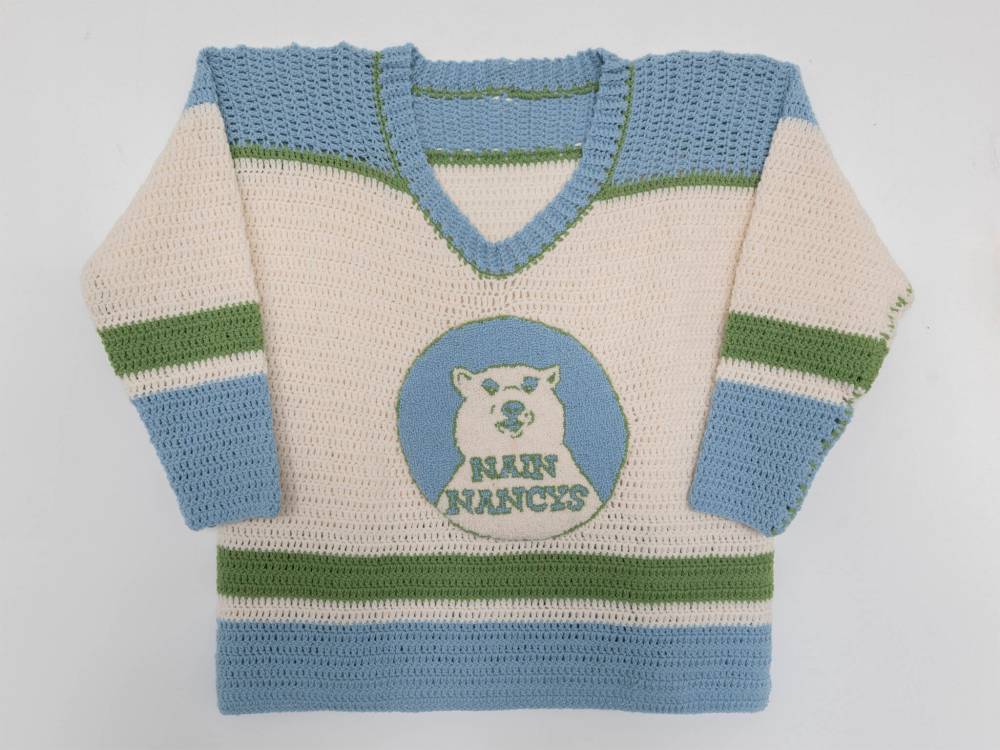
The St. John’s Sissies. The Nain Nancys. The Come By Chance Flamers.
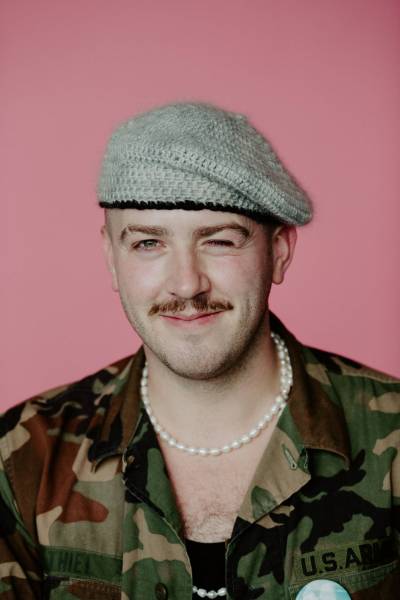
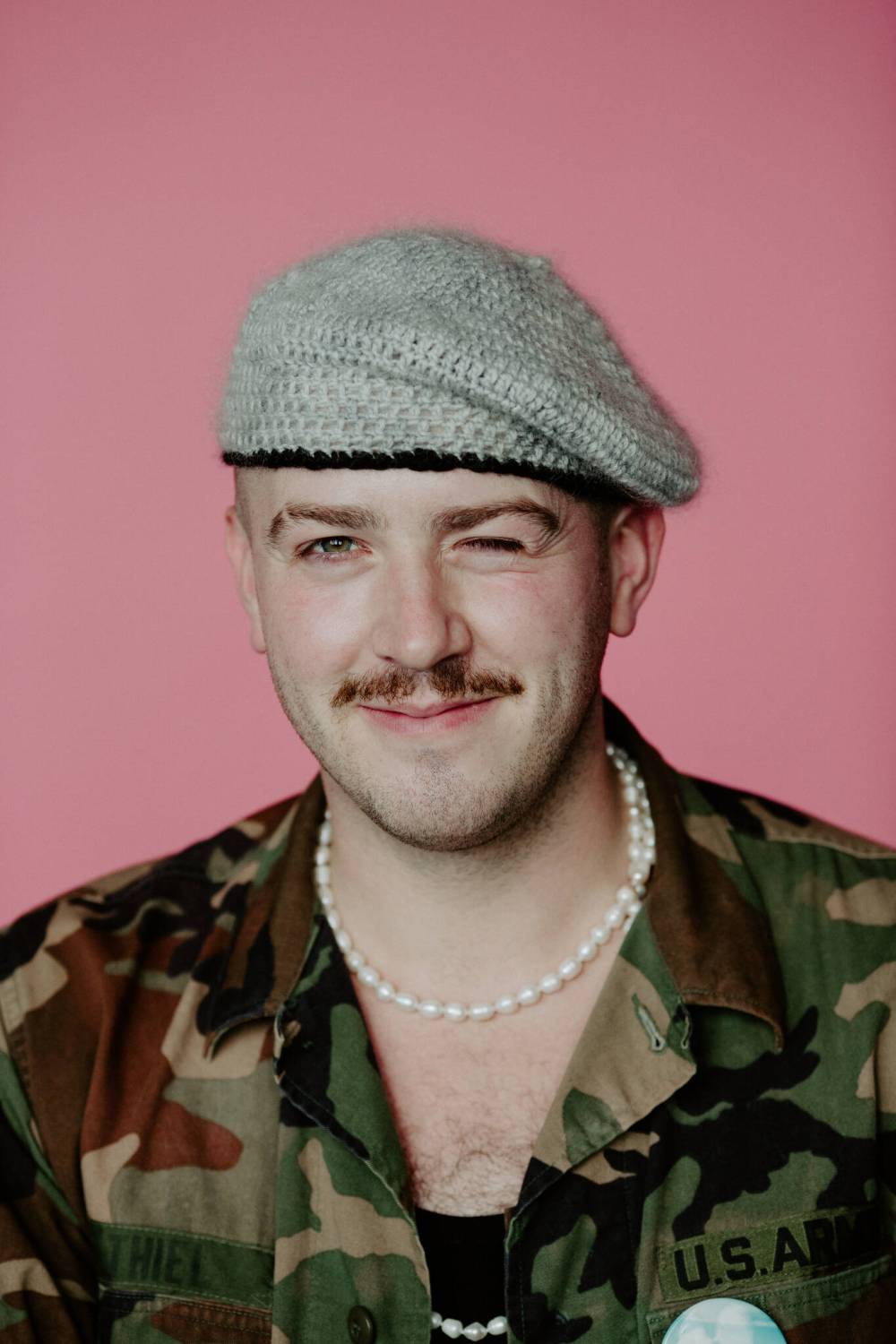
These are just some of the teams in the Queer Newfoundland Hockey League, the fictional conference at the heart of a multimedia solo exhibition of the same name by Canadian artist Lucas Morneau, which comes to Gallery 1C03 at the University of Winnipeg today.
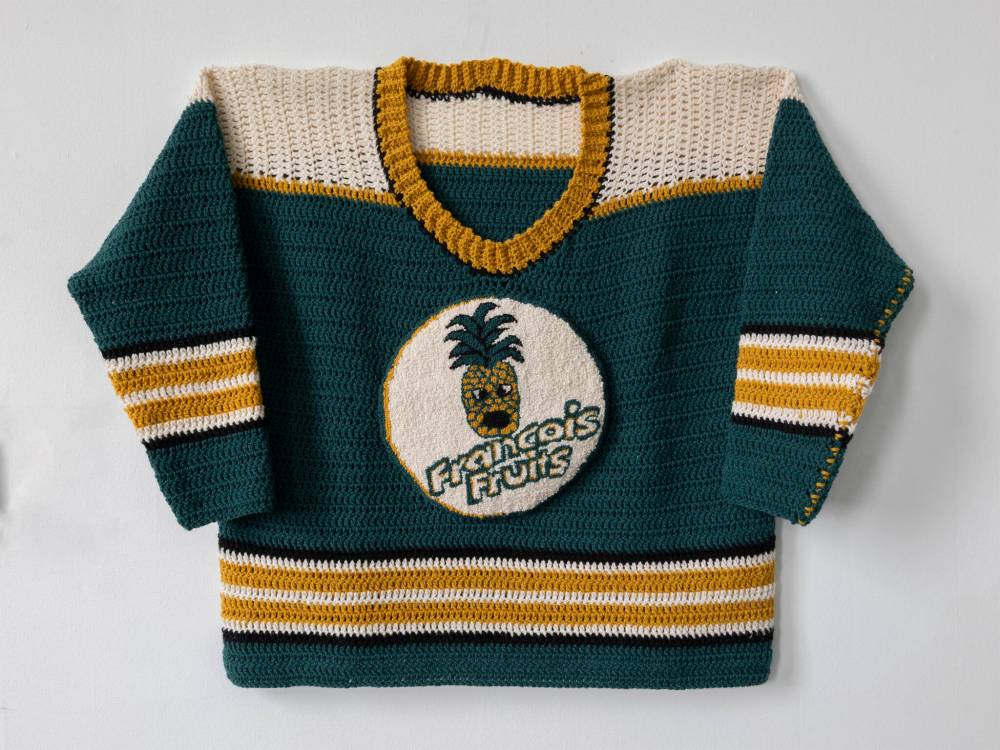
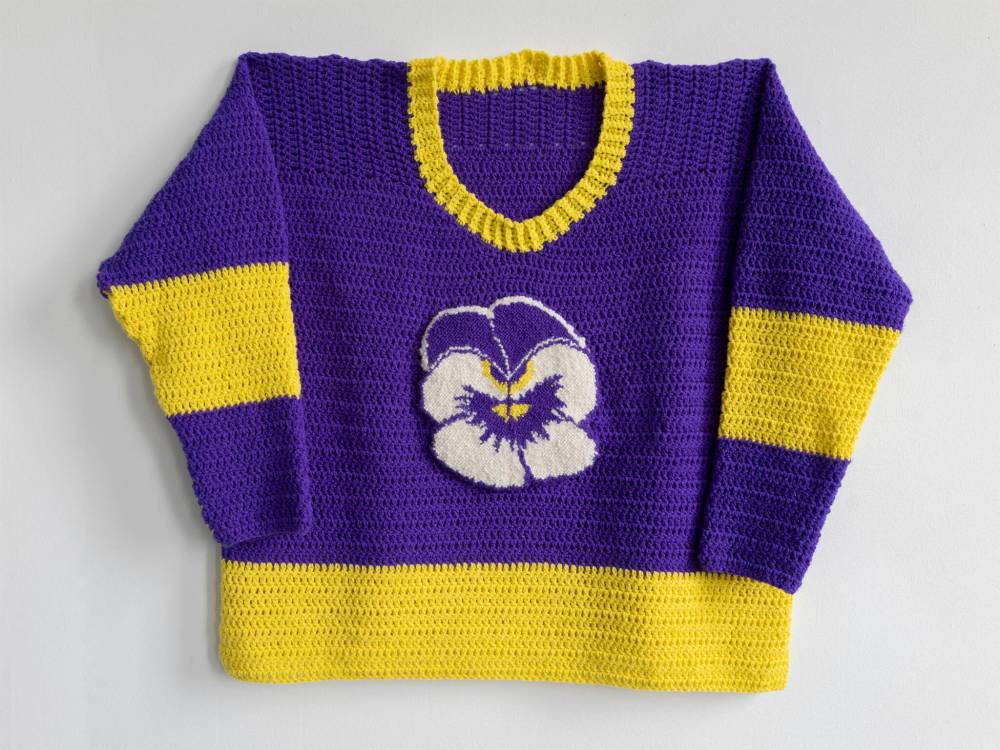
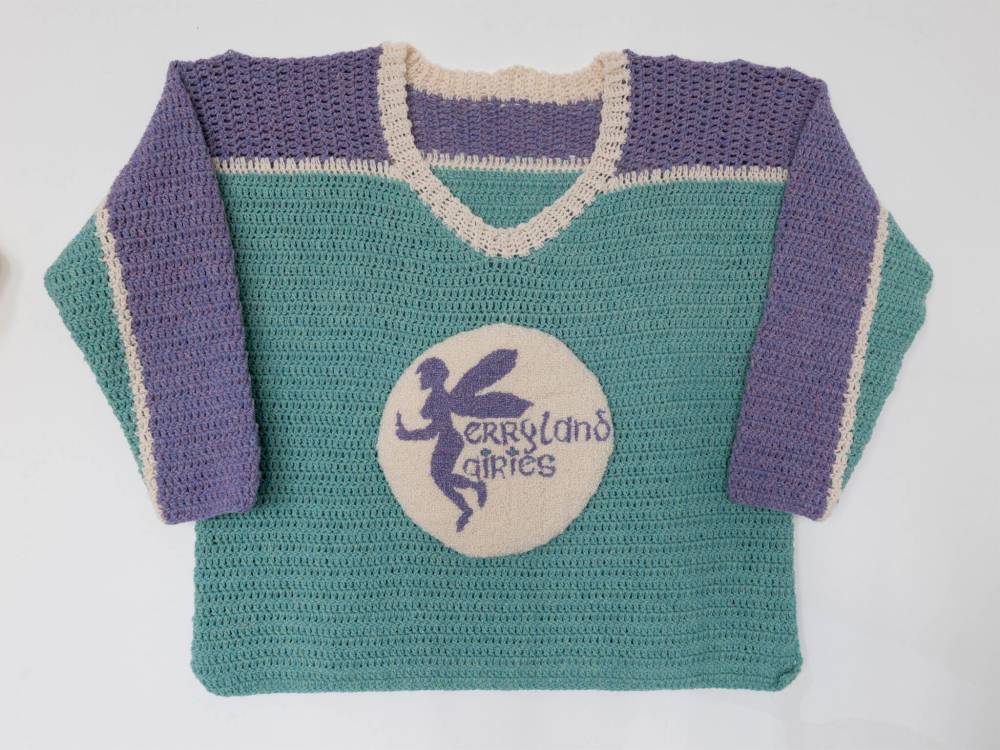
Morneau crocheted and rug-hooked the brightly coloured, vintage-inspired jerseys — complete with logos — for all 14 of the QNHL’s teams, which are all named for pejoratives used against LGBTTQ+ communities in an act of reclamation.
Annie France Noël photo.
Morneau’s Queer Newfoundland Hockey League project reclaims homophobic pejoratives and reimagines them as teams to root for.
It’s a strictly Newfoundland and Labrador league because Morneau, who uses they/them pronouns, grew up in Corner Brook (repped here by the Corner Brook Queens). But also, Newfoundland just has a lot of funny town names (see: Dildo, whose team in the QNHL is the Dykes, or Leading Tickles, whose team is the Lesbos).
“I like to try to have fun with my work” says Morneau, 31, who is now based in Sackville, N.B. “Even if I might have a lot of these serious conversations with my practice, I find that it’s easier to start those conversations through laughter. I usually use a lot of humour within my projects to do that.”
Morneau’s project is a queering of hockey iconography that faces off against homophobia and toxic masculinity within hockey culture. But their work also aims to create a new masculinity in the sport, one that’s joyful, welcoming and accepting.
It does this in a few ways, first and foremost by taking back terms such as “fairies” and “fruits” by not only reclaiming them, but reimagining them as teams to root for.
“When you look at these jerseys, and you look at the words like pansy and nancy — some of them are just names, right? The tone and the context that that person’s trying to take that word and use it kind of shows you that you can take any word and turn it into a pejorative.”
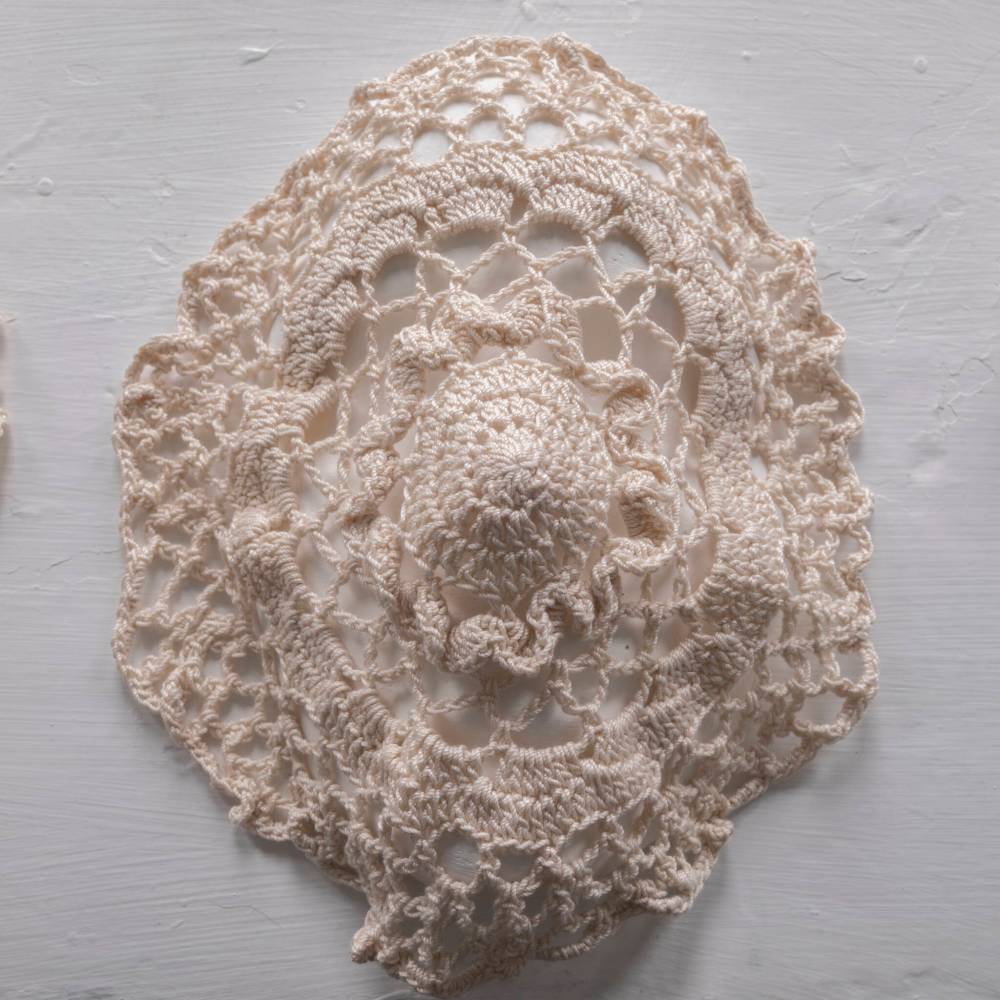
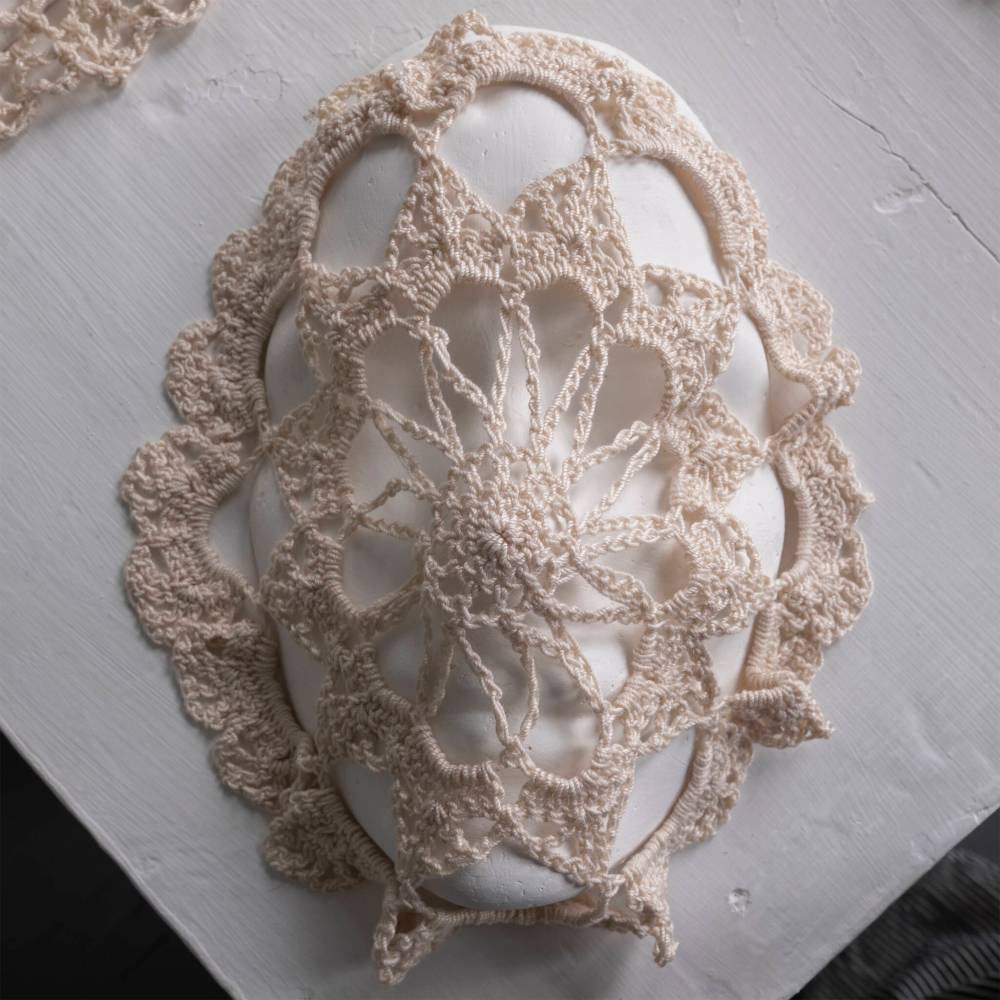
Morneau crocheted goalie masks, fashioned to look like doilies, as a reference to the way face protection was ridiculed when it was first introduced to hockey.
The jerseys’ designs draw inspiration from historic jerseys from the Newfoundland Senior Hockey League, as well as older NHL jerseys, which means the QNHL is kitted out in bright colours you don’t see on the ice very much anymore (or maybe ever) — including vivid pinks, purples, and baby blues.
Morneau points out that a lot of current NHL teams that used to use purple, for example, have switched to black.
“By also using these bright colors and using these words as the mascot or team name, it’s celebratory in that sense — or people view it as that.”
Morneau made the first jersey in 2020. The project was inspired, in part, by the 2019 firing of hockey commentator Don Cherry after comments he made about newcomers to Canada.
“I ended up doing a bit of a deep dive into some of his past comments. He would demean European players for refusing to fight, for example, and often used words that have homophobic contexts, like calling someone effeminate,” Morneau says.
This sent Morneau on another deep dive, this time into hegemonic masculinity.
Hegemonic masculinity is the theory that while there are many types of masculinity, the one that’s often most legible in a lot of our culture is the one that emphasizes stoicism (“manning up”), power and winning (or “dominating”) at all costs.
“It was interesting to look at that and look into how that permeates within hockey culture,” Morneau says.
Those masculine types emerge within team names themselves. Many sports teams at all levels, across all sports use monikers that evoke violence and conquering — kings, pirates, vikings, raiders, warriors, etc. The QNHL is a comment on that, too.
Growing up on the Rock, Morneau was steeped in hockey culture, even if they weren’t on the ice.
“My parents asked me if I wanted to play hockey and for some reason, I said no,” Morneau recalls, “even though later on as a kid, I kind of wished I did, because I was a pretty good goalie. I played a lot of road hockey.”
But Morneau’s brother and father both played ice hockey. One of Morneau’s uncles is George Faulkner, the first Newfoundlander to be drafted to a professional hockey league.
“Hockey culture permeates within my family, so there’s some aspects of that I could recognize. Like, OK, clearly kids are learning these words and they’re learning them from their coaches and from Coach’s Corner.
“And those words get used, jokingly, with their friends, but then they end up being used in the locker rooms in schools, or just in classes in schools, to bully people. That’s sort of how using these words came about within this project.”
The craft of rug-hooking is deeply woven into Newfoundland and Labrador’s heritage and visual identity. Morneau employed traditional techniques using materials such as pantyhose worn by drag performers, a nod to the silk stockings that would have been used by the mat-hooking women of the Grenfell Mission in the late 19th century.
The exhibition also includes crocheted goalie masks, fashioned to look like doilies, a reference to how face protection was ridiculed when it was first introduced in the game — you may recall this particular performance of hegemonic masculinity also played out during the height of the COVID-19 pandemic — as well as hockey cards featuring men, women and gender-nonconforming players.
Morneau’s hockey-loving family has been hugely supportive of the project, as has the Canadian art scene. Queer Newfoundland Hockey League has been exhibited in galleries all over the country.

That the project has had such a warm response is an honour, Morneau says, especially since it hasn’t been without sacrifice. It’s not just hockey players who can get benched by injuries; as a result of making the jerseys, Morneau has developed hand and shoulder issues.
“I’ve put my body into this — I’m still dealing with chronic pain from this project. I had to essentially give up rug-hooking and I had to give up crochet because of the work I did on it.
“I’m so thankful, because if this just went down the drain and only showed once, I think being in so much pain would be much harder on me.”
Queer Newfoundland Hockey League is on view until Jan. 28, 2026.
jen.zoratti@freepress.mb.ca
Jen Zoratti is a columnist and feature writer working in the Arts & Life department, as well as the author of the weekly newsletter NEXT. A National Newspaper Award finalist for arts and entertainment writing, Jen is a graduate of the Creative Communications program at RRC Polytech and was a music writer before joining the Free Press in 2013. Read more about Jen.
Every piece of reporting Jen produces is reviewed by an editing team before it is posted online or published in print – part of the Free Press‘s tradition, since 1872, of producing reliable independent journalism. Read more about Free Press’s history and mandate, and learn how our newsroom operates.
Our newsroom depends on a growing audience of readers to power our journalism. If you are not a paid reader, please consider becoming a subscriber.
Our newsroom depends on its audience of readers to power our journalism. Thank you for your support.
Exhibition preview
Lucas Morneau: Queer Newfoundland Hockey League
Gallery 1C03, University of Winnipeg
Opening reception today, 4-6 p.m.
Jen Zoratti is a columnist and feature writer working in the Arts & Life department, as well as the author of the weekly newsletter NEXT. A National Newspaper Award finalist for arts and entertainment writing, Jen is a graduate of the Creative Communications program at RRC Polytech and was a music writer before joining the Free Press in 2013. Read more about Jen.
Every piece of reporting Jen produces is reviewed by an editing team before it is posted online or published in print – part of the Free Press‘s tradition, since 1872, of producing reliable independent journalism. Read more about Free Press’s history and mandate, and learn how our newsroom operates.
Our newsroom depends on a growing audience of readers to power our journalism. If you are not a paid reader, please consider becoming a subscriber.
Our newsroom depends on its audience of readers to power our journalism. Thank you for your support.
Advertisement Advertise With Us
Advertisement Advertise With Us