The prisoner’s dilemma: Familiar formula makes thrilling cinema
Five films and TV shows centred around a classic prisoner’s dilemma

Advertisement
Read this article for free:
or
Already have an account? Log in here »
To continue reading, please subscribe:

Digital Subscription
One year of digital access for only $205*
- Enjoy unlimited reading on winnipegfreepress.com
- Read the E-Edition, our digital replica newspaper
- Access News Break, our award-winning app
- Play interactive puzzles
*First annual payment billed as $205.00 + GST for one year. This annual subscription will automatically renew at $233.00 + GST every 52 weeks (10% off the regular annual price of $259.35). Offer available to new and qualified returning subscribers only. Cancel any time.
To continue reading, please subscribe:
Add Free Press access to your Brandon Sun subscription for only an additional
$1 for the first 4 weeks*
- Enjoy unlimited reading on winnipegfreepress.com
- Read the E-Edition, our digital replica newspaper
- Access News Break, our award-winning app
- Play interactive puzzles
*Your next Brandon Sun subscription payment will increase by $1.00 and you will be charged $17.95 plus GST for four weeks. After four weeks, your payment will increase to $24.95 plus GST every four weeks.
Read unlimited articles for free today:
or
Already have an account? Log in here »
Hey there, time traveller!
This article was published 18/12/2025 (263 days ago), so information in it may no longer be current.
People talk about prison films, but they don’t talk about prisoner’s dilemma movies.
Yet hundreds, probably thousands, of films are structured around a prisoner’s dilemma.
Loosely, this describes a scenario where the parties would be better off if they co-operated. But they have pressing incentives to betray one another — say, for instance, with two criminals under separate interrogations tempted to rat on one another when they should just stay quiet.
This sort of race-to-the-bottom characterizes a lot of heist flicks, but is a classic formula for ramping up conflict in movies and shows of all genres.
Mathematician John Nash, the troubled protagonist of A Beautiful Mind, won a Nobel Prize partly for wedging open the prisoner’s dilemma, even making up a board game called So Long Sucker to dramatize it. He doubted co-operation could ever rationally survive the dilemma’s pressures.
Today, we invoke the concept to discuss the new arms race underway globally and countries’ reluctance to curb their carbon emissions while the world slips towards climate disaster. Against this gloomy backdrop, there are a number of movies and TV shows with prisoner’s dilemmas driving their plot that offer entertaining food for thought.
Green Room (2015)
Streaming on Prime Video, Hoopla and Pluto TV
Scott Green/ Broad Green Pictures Negotiations threaten to turn deadly when a gang of neo-Nazis trap the punk-rock protagonists of Green Room. 
A touring lefty punk band witnesses a murder at a neo-Nazi club in the middle of nowhere. The perpetrator is clearly a comrade of the venue’s owner (Patrick Stewart) and its scary security, so the band members lock themselves in the green room, petrified, and strike up negotiations.
Politics aside, Stewart’s character comes off reasonably at first. He’d like nothing more than for the band to hop in their van and that be the end of things. He wants to deal with the murderer on his own terms but worries the band will call the cops once they hit the highway. The band would also like to just leave but suspect the thugs will murder them on the way out. You can’t trust Nazis.
Writer-director Jeremy Saulnier (Blue Ruin and Rebel Ridge) unfolds his basic premise with elegant, terrifying economy. Despite the film’s countercultural strut, it’s essentially an old-fashioned play — dialogue-heavy, unfolding in a few locations and with an almost Shakespearean villain in Stewart.
Seven Times Lucky (2004)
Prisoner’s dilemmas are often thought to arise most severely in scenarios where there’s little to no overarching authority, such as a state, to enforce contracts and agreements. Otherwise, the temptation to double cross can seem overwhelming.
Life without this mediating power is “nasty, brutish and short”; it’s also fodder for some of cinema’s most fun (and violent) crime capers.
Supplied 7 Times Lucky was filmed in Winnipeg in 2004.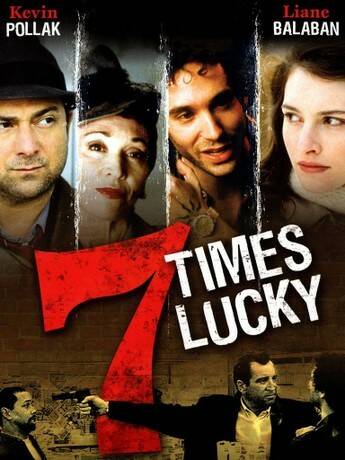
One with an almost dizzying number of double crossings is Seven Times Lucky, filmed in Winnipeg and directed and written by Montrealer Gary Yates.
In it, a grifter played by Kevin Pollak (The Marvelous Mrs. Maisel) blows $10,000 of his boss’s money on the horses. To save his hide, he works with his beautiful protegé (Liane Balaban) on a plot that involves fake Rolexes, an old violin and your usual suspects of mookie marks, corrupt cops and the like. And it goes without saying in a noir like this that a conspirator as sultry as Balaban can’t be fully trusted.
All in all, this is a neat thriller and charming slice of Winnipeg, a lively ride through familiar local sights, sounds and talents.
Fargo: Season 2 (2015)
Streaming on Crave, Prime Video, Apple TV
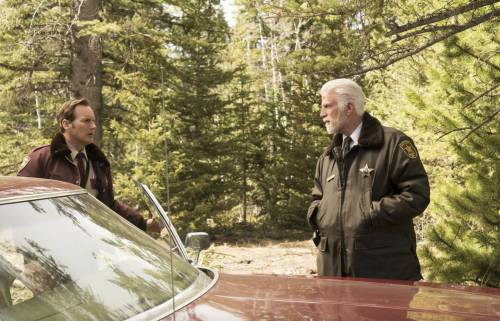
FX Minnesota State Trooper Lou Solverson (Patrick Wilson, left) and Sheriff Hank Larsson (Ted Danson) get caught up in a war between criminal enterprises in Fargo season 2. 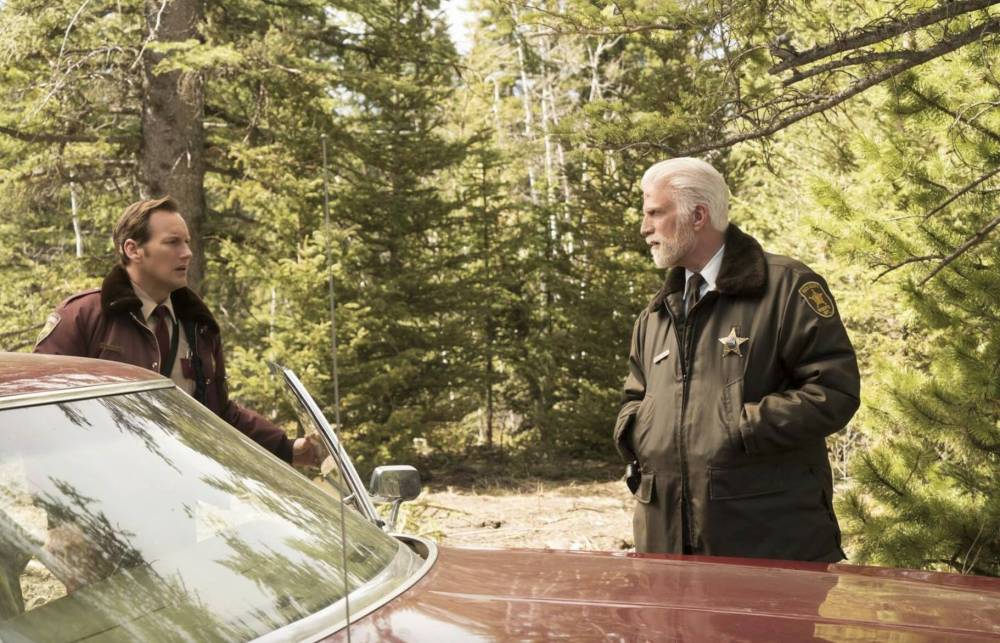
The Coen brothers’ original Fargo film, a noir set implausibly in a frozen rural Minnesota, got their signature combination of crime and whimsy just right.
Its yah-you-betchas and goofy Midwesternisms offer not just comedic relief, but a polite surface through which the many subterfuges and famously macabre violence cuts.
“We’re a friendly people,” says Minnesota state trooper Lou Solverson (Patrick Wilson) in the second season of FX’s TV spinoff of the film.
“No. That’s not it. Pretty unfriendly, actually. But it’s the way you’re unfriendly — how you’re so polite about it,” replies the sinister Mike Milligan (Bokeem Woodbine).
The series’ regular executive producer Kim Todd understands its flyover milieu very well. She’s from Winnipeg, a few hours north of Fargo. And in Season 2, she’s helped helm something close to a TV masterpiece.
A classically Coen misunderstanding kicks off a war between the rural, feudal Gerhardt crime family and the Kansas City Mob, practically a modern corporation. The Mob thinks they can squash the beef and buy out the smaller outfit.
But each is playing a different game: the Mob thinks money and self-interest set the rules, while the Gerhardts think in terms of honour and family. More mutual confusions are misread as escalation and before long the beautifully shot Prairie landscapes are a blood-splattered snowy canvas.
Dr. Strangelove: Or How I Learned to Stop Worrying and Love the Bomb (1964)
Streaming on Hollywood Suite, rent on Apple TV, Amazon and Cosmo Go
While the two films have near-identical starting points, Dr. Strangelove takes a satirical, more nihilistic tone compared to Fail Safe.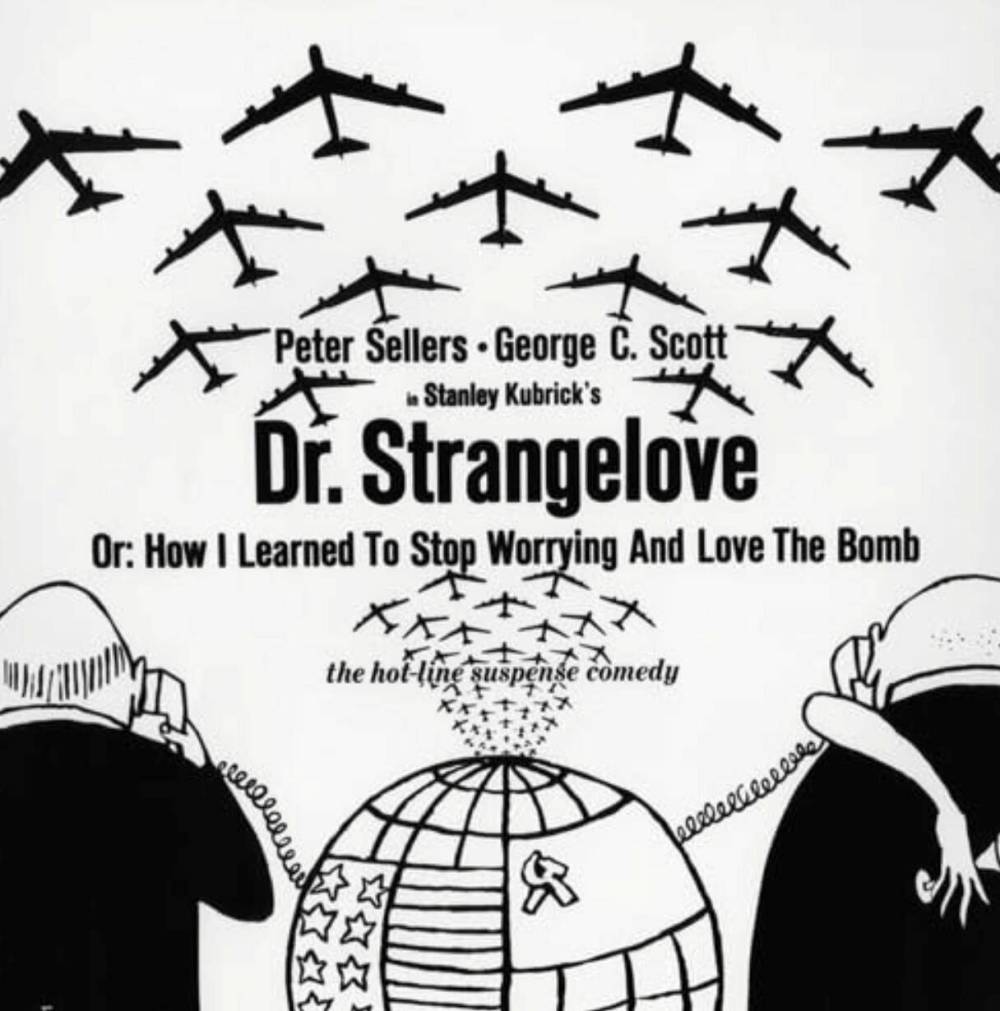
Fail Safe (1964)
Rent on Apple TV
Columbia Pictures A technical glitch leads the U.S. to accidentally attack the U.S.S.R. in Fail Safe, threatening nuclear Armageddon.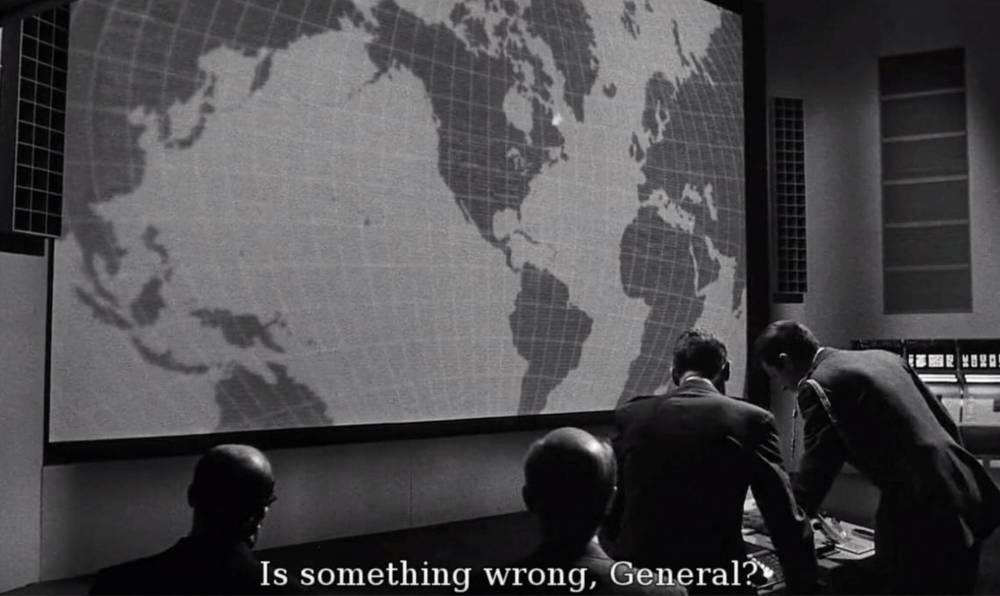
The peaceniks are right: we’d all be better off in a world without nuclear weapons. But because we can’t trust our adversaries not to acquire them, we, or our allies, do the same and justify it as cautionary self-defence. A logic of brinksmanship can set in — and the potential for an arm’s race.
Crudely put, these were the conditions of the early Cold War, giving fertile ground for the brain trust at the U.S. air force-funded RAND Corporation (for which John Nash worked) to map game theory onto military strategy.
In president Dwight Eisenhower’s era, the U.S. had more firepower, and wanted it known that if the U.S.S.R. directly attacked, the U.S. would respond with “massive retaliation.” By John F. Kennedy’s era, there was greater parity in the two countries’ nuclear arsenals. This created what was satirically called “mutually assured destruction,” a cold war, that if it went hot, could bring the whole world down.
This inspired two great 1964 films: Sidney Lumet’s Fail Safe and Stanley Kubrick’s Dr Strangelove. In the first, a technical glitch leads the U.S. to accidentally attack the U.S.S.R., in the second, a rogue commander is to blame. The film’s starting points were similar enough for Kubrick to file a lawsuit.
But really, they couldn’t be more different: Fail Safe is sober and tragic, though ultimately hopeful about the possibility of co-operative reasoning; Dr Strangelove is wild, satirical and nihilistic.
It’s also probably Peter Sellers’ most famous role, after The Pink Panther’s Insp. Clouseau.
As well as playing a couple of other characters, Sellers stars as the titular Strangelove. An ex-Nazi scientist turned U.S. advisor connected to the BLAND Corporation, he explains the unassailable “logic,” between compulsive sieg heils, of various strategies — including a post-apocalyptic scenario where those elites lucky enough to earn a spot in the bunkers enjoy 10 women per man.
winnipegfreepress.com/conradsweatman
Conrad Sweatman is an arts reporter and feature writer. Before joining the Free Press full-time in 2024, he worked in the U.K. and Canadian cultural sectors, freelanced for outlets including The Walrus, VICE and Prairie Fire. Read more about Conrad.
Our newsroom depends on a growing audience of readers to power our journalism. If you are not a paid reader, please consider becoming a subscriber.
Our newsroom depends on its audience of readers to power our journalism. Thank you for your support.
Conrad Sweatman is an arts reporter and feature writer. Before joining the Free Press full-time in 2024, he worked in the U.K. and Canadian cultural sectors, freelanced for outlets including The Walrus, VICE and Prairie Fire. Read more about Conrad.
Our newsroom depends on a growing audience of readers to power our journalism. If you are not a paid reader, please consider becoming a subscriber.
Our newsroom depends on its audience of readers to power our journalism. Thank you for your support.
Advertisement Advertise With Us
Advertisement Advertise With Us