Snowballs and warm welcomes Family from the Democratic Republic of Congo navigates chilly firsts alongside IRCOM supports
Read this article for free:
or
Already have an account? Log in here »
To continue reading, please subscribe:
Digital Subscription
One year of digital access for only $1.44 a week*
- Enjoy unlimited reading on winnipegfreepress.com
- Read the E-Edition, our digital replica newspaper
- Access News Break, our award-winning app
- Play interactive puzzles
*Billed as $5.77 plus GST every four weeks. After 52 weeks, price increases to the regular rate of $19.95 plus GST every four weeks. Offer available to new and qualified returning subscribers only. Cancel any time.
To continue reading, please subscribe:
Add Free Press access to your Brandon Sun subscription for only an additional
$1 for the first 4 weeks*
- Enjoy unlimited reading on winnipegfreepress.com
- Read the E-Edition, our digital replica newspaper
- Access News Break, our award-winning app
- Play interactive puzzles
*Your next Brandon Sun subscription payment will increase by $1.00 and you will be charged $17.95 plus GST for four weeks. After four weeks, your payment will increase to $24.95 plus GST every four weeks.
Read unlimited articles for free today:
or
Already have an account? Log in here »
Hey there, time traveller!
This article was published 02/01/2026 (295 days ago), so information in it may no longer be current.
All Clever Ganza wants to do this winter is build a snowman.
He’s not yet had the chance, as it hasn’t been the right kind of snow — although to the eight-year-old, all snow is snow.
It’s his second winter in Winnipeg after arriving in Canada with his parents and younger brother Travor, 5, in December 2024.
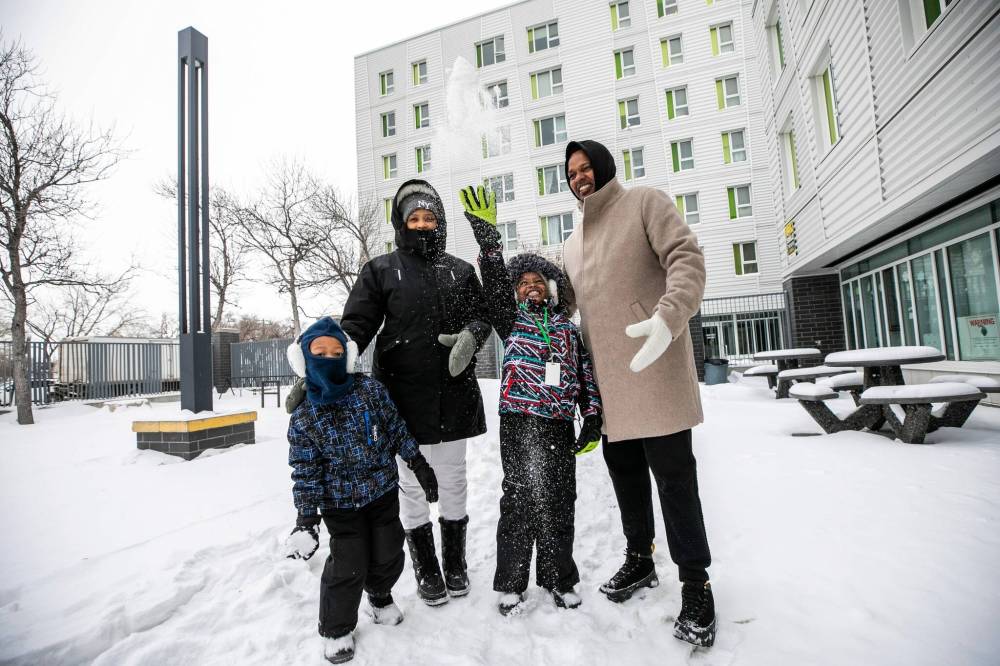
Clever has acclimatized pretty quickly.
His first winter was tricky, but these days the elementary school student is a pro at getting his gear on, although he draws the line at putting on a face warmer, grinning cheekily when Travor tries to get out of wearing one.
Outside their apartment on Isabel Street, the wind whips the snow, carving it into dunes that rise high above the pavement. The recent blizzard’s dump of powder has transformed the city into a picture-postcard scene, Winnipeg’s scarred and pockmarked roads buried under glittery crystals.
It’s a far cry from what the boys are used to.
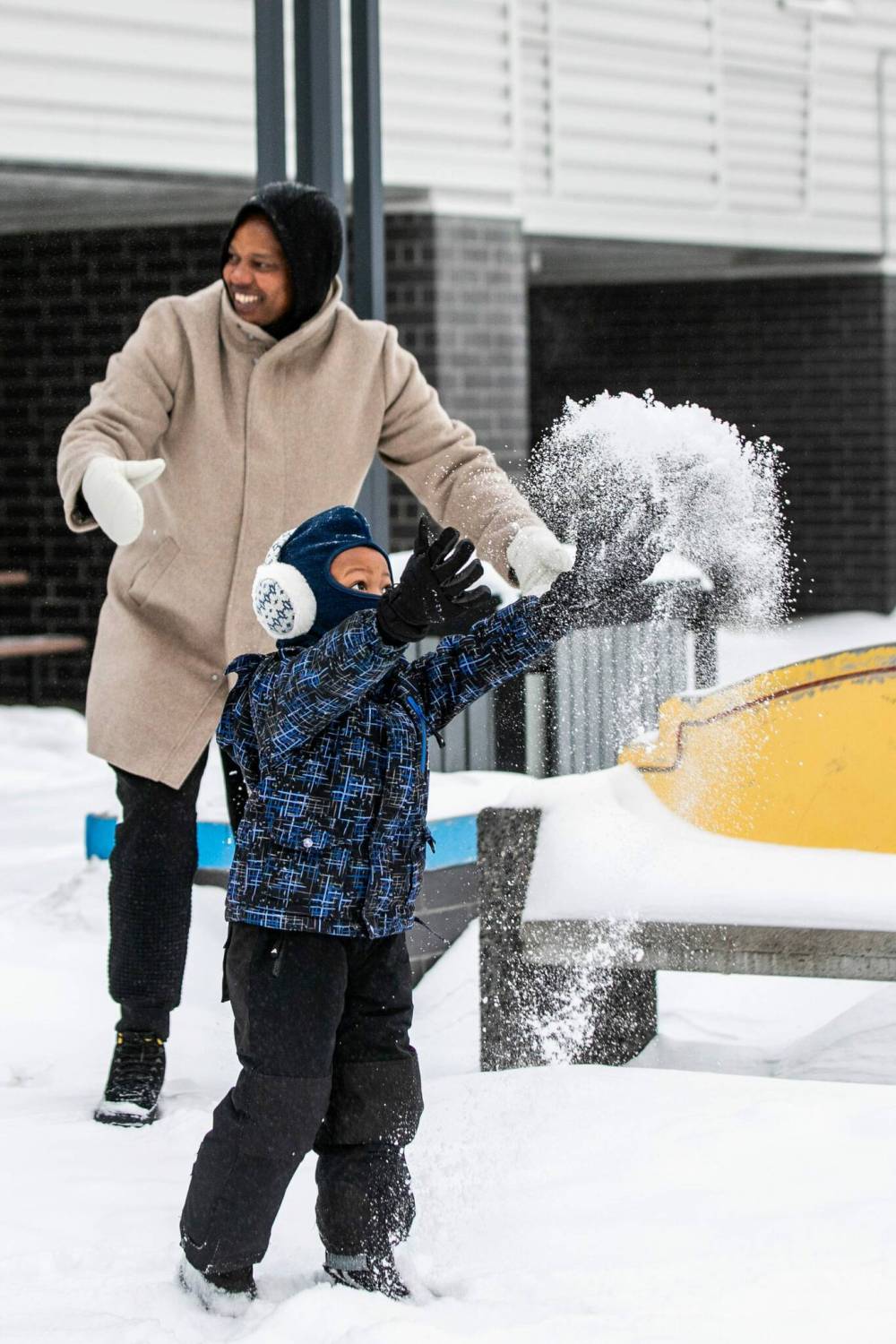
Typically at this time of year, the weather in Kenya, where the two brothers were born, is warm and mild, with temperatures rarely dipping below 22 C. It’s worlds apart from an average winter morning in the Prairies, where the latest forecast dips as low as -23 C.
“We have felt the cold, but not as much as here,” mom Minyone Mutoni, 27, says. “In Kenya, in the rainy season it can go down 10 degrees. When we came to Winnipeg, it was the first time in our lives we experience snow and this kind of cold.
“When we explain snow to friends from back home, they shout, ‘Wow, snow!’ but they don’t think about the coldness; they just see the snow. They don’t understand the real cold.”
Her husband, Ruhumuriza Mushumba Ndihano, 30, nods. The couple is originally from the Democratic Republic of the Congo, which has a hot and humid equatorial climate.
“My first time was really bad for me; I really don’t know how to explain it,” Ndihano says, switching to Kinyarwanda, the language the family primarily converses in, which his wife translates.
“The time we arrived was so very cold. We came out of the airport, and we were surprised to see the snow,” she relays.
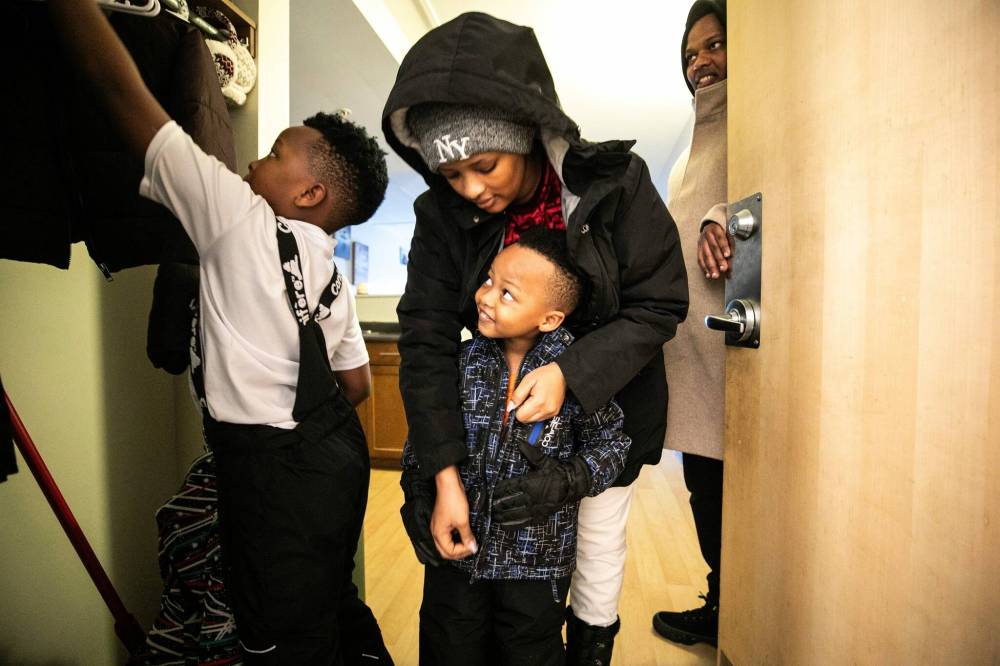
The family had been given coats when they landed in Toronto, but didn’t realize they would need them.
“The jackets were heavy, so we didn’t even wear, but when we reached outside the airport in Winnipeg we started looking for them because we had to use them,” she continues. “It was so cold.”
The temperature — and the concept of windchill — haven’t been the only things they’ve had contend with. Our shorter days have also taken some getting used to.
“We were not prepared,” Mutoni says. “This is something unique. Everything was new to us. We are just seeing things changing and we had many questions. When everyone comes to see us we are just asking ‘What’s wrong with this? Why is it now 4 p.m. and it’s nighttime? How come?” she continues as the couple giggle.
“We were surprised, of course, but we are used to it now. We have to live here, so we have to become used to it. We have to love it.”
“When a newcomer family arrives, they will have literally no knowledge of Canada, let alone the complications that come with our weather,” explains Yafet Ghebretnsae, the community resource programs manager of IRCOM (Immigrant and Refugee Community Organization of Manitoba).
The non-profit operates two transitional housing complexes in the city — one on Isabel Street and the other on Ellen Street — for refugees who have been granted asylum by the Canadian government to resettle in a safe environment.
The agency’s holistic approach to support sees traditional housing and services delivered in-house by staff who work in offices attached to the buildings.
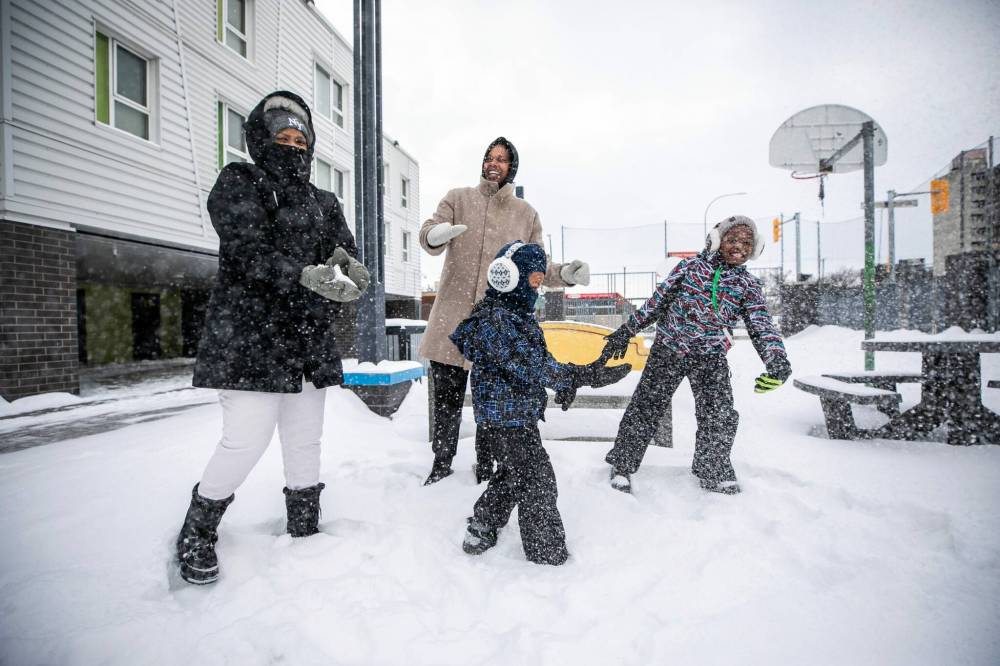
Apartments are available to families for up to three years after their arrival, by which time, the hope is, they will have been fully prepared for life in Canada.
Ghebretnsae oversees a multi-disciplinary team of social workers, family settlement co-ordinators, life-skill workers and inclusion support workers who deliver programs to fulfil the agency’s core pillars: education, empowerment, advocacy and self-determination.
There are a number of ways the team does this, including workshops covering Canadian winter preparation.
“We tell them everything from A to Z,” he says. “What kind of things they will need, what to look for when they are getting a tuque or gloves or mitts, what’s appropriate for their feet.
“We don’t promote brands, but we partner with organizations which offer free clothes for newcomers, like Koats 4 Kids, and the Canadian Muslim Women’s Institute, or we co-ordinate with thrift stores like MCC Thrift and Salvation Army to get affordable and decent winter gear for our tenants.”
The majority of clients are from hot countries. Displaced because of war or fear of persecution, there are some who have family here who can help, but more often than not, there is no one to rely on.
“They have nobody,” Ghebretnsae says. “This is like the first generation of people arriving in Canada; they have no friends, they have no way to connect, they have no clue.”
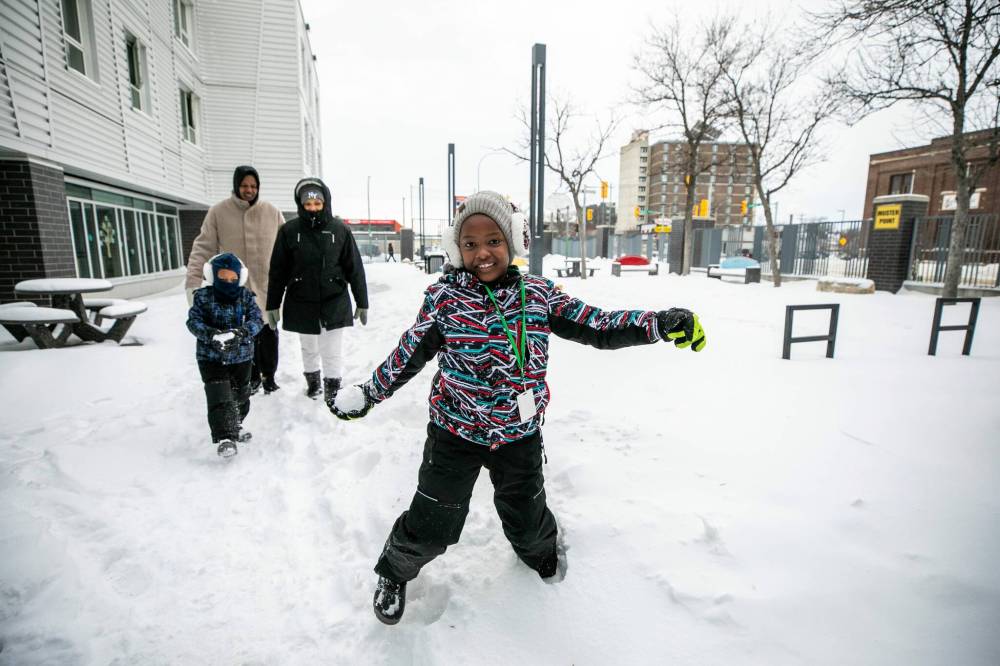
IRCOM’s life-skill workers are their lifeline. They establish strong relationships with the families, seeing them daily from the first day they arrive at the agency, right up to when they are ready to find a place of their own outside the housing complex.
In their first week here families learn how to access food, to find shops that cater to dietary restrictions, and overcome language barriers when purchasing groceries.
Then they are taught how to walk safely in winter, how to identify black ice and how to get to school.
“We do this hands-on, because even though they may understand theoretically what winter is, it is hard to get through via interpreters because things get lost in translation. So we walk them to school, we show them all those things,” he explains.
Lack of sunshine and our longer nights bring their own challenges which are addressed via mental health supports.
Needs are assessed on a case-by-case basis before clients are directed to support systems.
Lack of sunshine and our longer nights bring their own challenges which are addressed via mental health supports
Short-term counselling is offered in-house by trained social workers and IRCOM’s high-needs support teams, while those in crisis are referred to specialists who deal with specific mental health care, such as Resilia Community Wellness Centre, which is equipped to provide extensive support to the newcomer population.
“The concept of mental health is not easily understood or accepted culturally or generationally, so we go about it very tactfully,” Ghebretnsae says.
One approach that seems to have worked at tackling winter-specific depression is social activity programs that get people out of their houses and into the community.
“We had an elderly lady from Afghanistan who was depressed because everything is dark. Her apartment was not facing the sun, so she didn’t get any light, even during the morning. So we created some space in our hallways, organized a tea party and invited some people her age to attend,” Ghebretnsae says.
“Everyone got together to talk about things. And you know, everyone could communicate, even though some don’t speak the same language. And for those hours they spend together they’re laughing and sharing pictures of their families back home. You have no idea how amazing it is to see.”
It’s been 13 months since Clever and Travor arrived in Winnipeg and the boys have taken things in their stride.
They are excited by the weather, despite below-freezing temperatures, and all they want to do is get outside and throw snowballs at each other, tugging on their boots in a rush to be off.
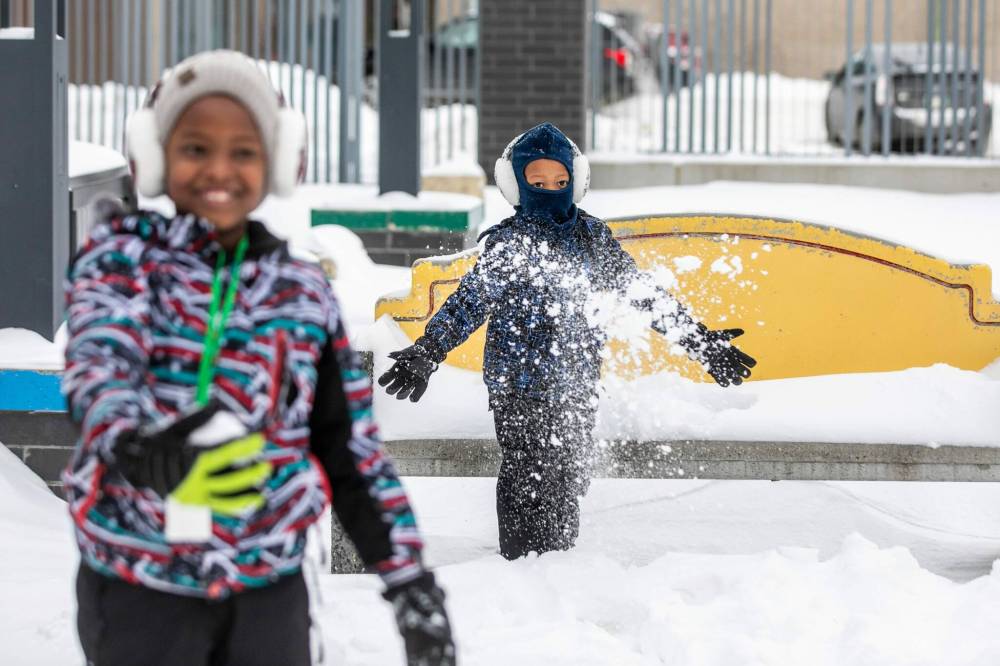
“I like the snow,” Clever says. “I like it because it’s so fun. I like making snowballs. I like going to school in the winter because every day we go outside and make snowballs and sometimes I make five. I want to build a snowman this year.”
Beside him, Travor’s eyes widen at the thought of building a snowman.
Here’s hoping the next blanket of snow that comes our way is the sticky kind.
winnipegfreepress.com/avkitching

AV Kitching is an arts and life writer at the Free Press. She has been a journalist for more than two decades and has worked across three continents writing about people, travel, food, and fashion. Read more about AV.
Every piece of reporting AV produces is reviewed by an editing team before it is posted online or published in print — part of the Free Press‘s tradition, since 1872, of producing reliable independent journalism. Read more about Free Press’s history and mandate, and learn how our newsroom operates.
Our newsroom depends on a growing audience of readers to power our journalism. If you are not a paid reader, please consider becoming a subscriber.
Our newsroom depends on its audience of readers to power our journalism. Thank you for your support.