From the ground up
Field guide focuses on variety of architectural styles in Canada

Advertisement
Read this article for free:
or
Already have an account? Log in here »
To continue reading, please subscribe:

Digital Subscription
One year of digital access for only $205*
- Enjoy unlimited reading on winnipegfreepress.com
- Read the E-Edition, our digital replica newspaper
- Access News Break, our award-winning app
- Play interactive puzzles
*First annual payment billed as $205.00 + GST for one year. This annual subscription will automatically renew at $233.00 + GST every 52 weeks (10% off the regular annual price of $259.35). Offer available to new and qualified returning subscribers only. Cancel any time.
To continue reading, please subscribe:
Add Free Press access to your Brandon Sun subscription for only an additional
$1 for the first 4 weeks*
- Enjoy unlimited reading on winnipegfreepress.com
- Read the E-Edition, our digital replica newspaper
- Access News Break, our award-winning app
- Play interactive puzzles
*Your next Brandon Sun subscription payment will increase by $1.00 and you will be charged $17.95 plus GST for four weeks. After four weeks, your payment will increase to $24.95 plus GST every four weeks.
Read unlimited articles for free today:
or
Already have an account? Log in here »
Hey there, time traveller!
This article was published 08/01/2026 (219 days ago), so information in it may no longer be current.
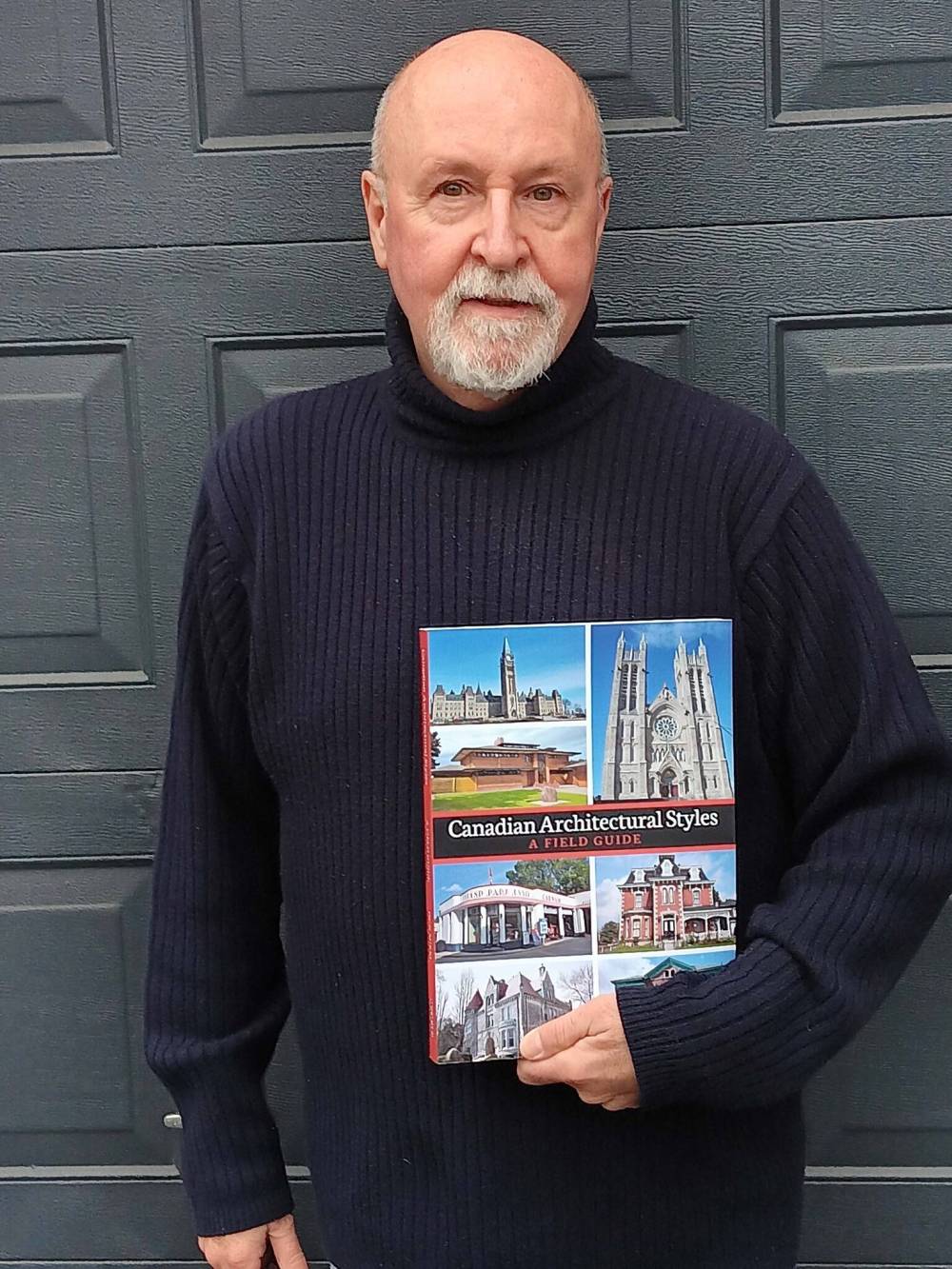
Don Mikel is used to being compared to a bird watcher.
The author and architectural enthusiast says he walked 40,000 steps in one day in downtown Winnipeg, his eyes peeled for our best examples of the Chicago School, Brutalism and quirkier, more regionally specific buildings.
Whether or not he can distinguish a black-capped chickadee from a boreal chickadee, he’d never foolishly confuse classical revival with gothic revival.
SUPPLIED
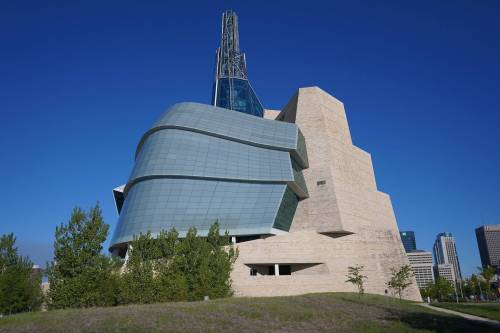
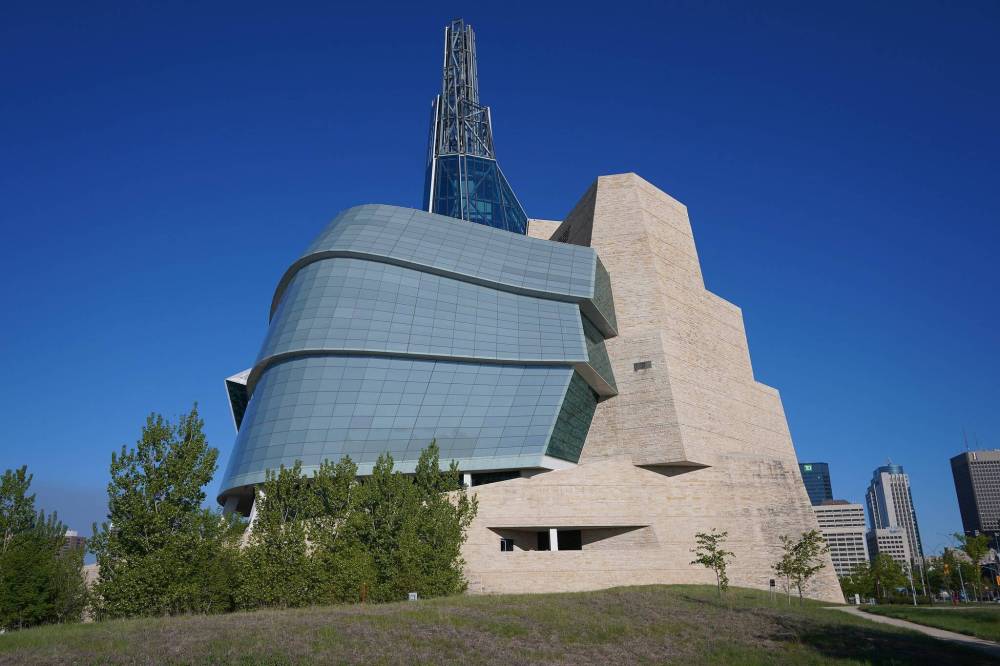
The Canadian Museum for Human Rights.
His book, Canadian Architectural Styles: A Field Guide (published in fall 2025), aims to save you from similarly embarrassing gaffes. It’s the fruit of 75,000 photos (more than 1,100 appear in the book, all but eight taken by Mikel) and many, many more steps across 171 communities.
As a local field guide, it joins the more focused Winnipeg Places + Spaces published a year ago, with a wider scope aiming to serve tourists and residents across the country.
“I realized that we don’t have a definitive or clear book on architectural styles in Canada, but it’s taken me another 50 years to get around to doing it right. One of my reviewers made that exact point — that it was like the Roger Tory Peterson bird book, only for buildings,” he says, referring to the late father of the modern field guide.
A key difference is that birds have natural histories, not social histories, meaning that buildings evolve far more quickly and say much about their all-too-human makers.
Mikel says Winnipeg and Canadian buildings have a lot to tell us about our culture — and how Canadian design has resisted or absorbed American and global influences through the ages.
“There is a language of architecture, and it does express the values of society. You can (also) tell when city’s boom periods are just by the amount of building in that particular period,” he says.
SUPPLIED
Architectural enthusiast Don Mikel.
It’s not surprising that so many American film productions flock to Winnipeg to shoot their period Chicago and American scenes against backdrops of the Exchange District and its more than century-old buildings.
It’s there we find several shining examples of the so-called Chicago School and its “commercial style.” At the turn of the 20th century through to the 1910s, this style reflected modernism’s emerging emphasis on utility and function while still showing a restrained sense of classical fanciness: modern capitalist efficiency with a touch of Old World pomp.
A style well-suited, in other words, for a time when Winnipeg still enjoyed its short-lived promise of becoming the Chicago of the North — a promise, underwritten by our railway and grain industry, of attracting movers, shakers and strivers, the more prosperous of whom soon formed a new city elite with their own private social clubs.
“Winnipeg has a spectacular example of the Chicago School, which is the Confederation Building,” says Mikel, singling out this 10-storey building at 457 Main St. as early echo of innovations soon to come.
“This is where the Chicago School architects developed the system of steel reinforced concrete buildings, which allowed people to be able to build skyscrapers. It was the beginning of the modern era.”

SUPPLIED
The Confederation Building on Main Street is a ‘spectacular example of the Chicago School’ says Mikel.
But Mikel highlights that, in other ways, Winnipeg and Canadian architecture of that era reflected a rejection of American values. Modern colonial Canada was shaped in large part by loyalists — monarchists who rejected the American Experiment and stayed committed to British rule.
This legacy is written all over all our federal parliamentary buildings built in the mid- to late 19th century.
“Canadian Parliament buildings are considered the greatest collection of Gothic Revival buildings in North America, and one of the reasons (is that it was) considered Britain’s national style,” says Mikel.
“We were telling the country to the south of us that we are British, and if you look at their capitol buildings, they’re built in the classical style: ‘We’re republican.’”
Things can get a little more idiosyncratic at the provincial level. For instance, the Manitoba Legislative Building (completed in 1920) is classical in a Beaux Arts accent. But the extra classical elements — sly references to Aphrodite, Hermes and so on — that make up its mystical “hermetic code” owe much to the Masonic influences of its British architect.
SUPPLIED
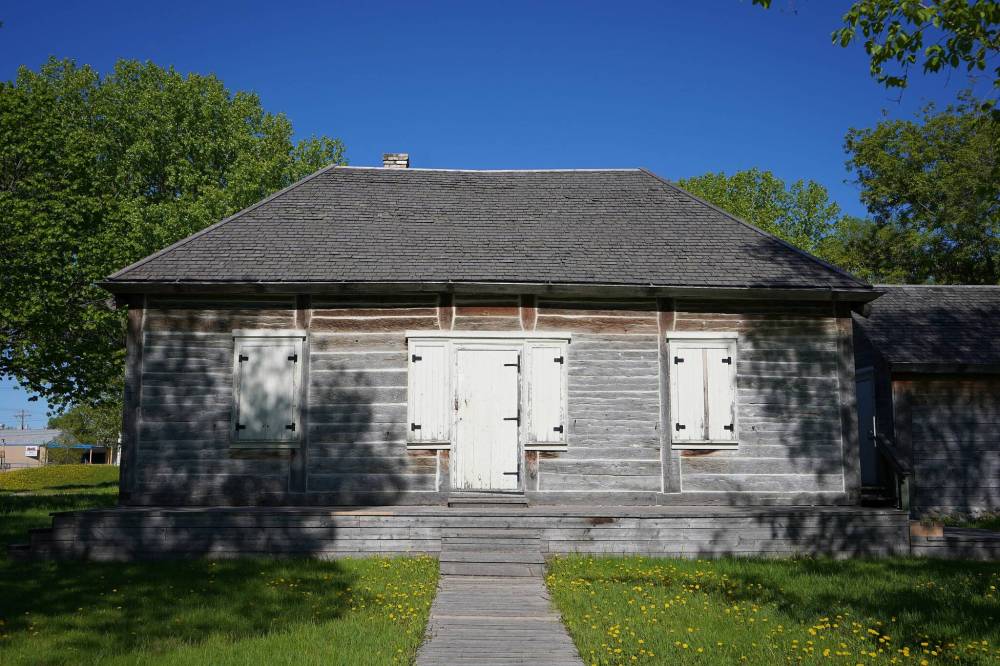
The Ross House Museum.
It’s easy to get caught up in the architecture from Manitoba’s boom period, but Mikel is grateful that there’s been much attention to later developments in our architecture.
“You’ve got good examples from almost every period. I was really impressed with Winnipeg when I was there. And you see great things. It isn’t just in the boom period,” he says before listening off a litany of local, sometimes surprising, favourites: the Eastern Provincial Jail, Uptown Theatre, the Winnipeg Civic Centre (city hall), Government House, Union Station and St. Nicholas Ukrainian Catholic Church.
Mikel’s knowledge for the nooks and crannies of Canadian cities can feel encyclopedic, even if many of his casual observations are based on the walk-around experiences of an avid enthusiast.
Our architecture’s eclecticism may seem authentically Canadian, a mirror of values such as multiculturalism. And yet so many of the styles mentioned have been foreign in origin — British, American and continental European — as have the architects who imprinted them on our buildings.
So, what’s distinct about Canadian in architecture? Do we have a national voice?
SUPPLIED
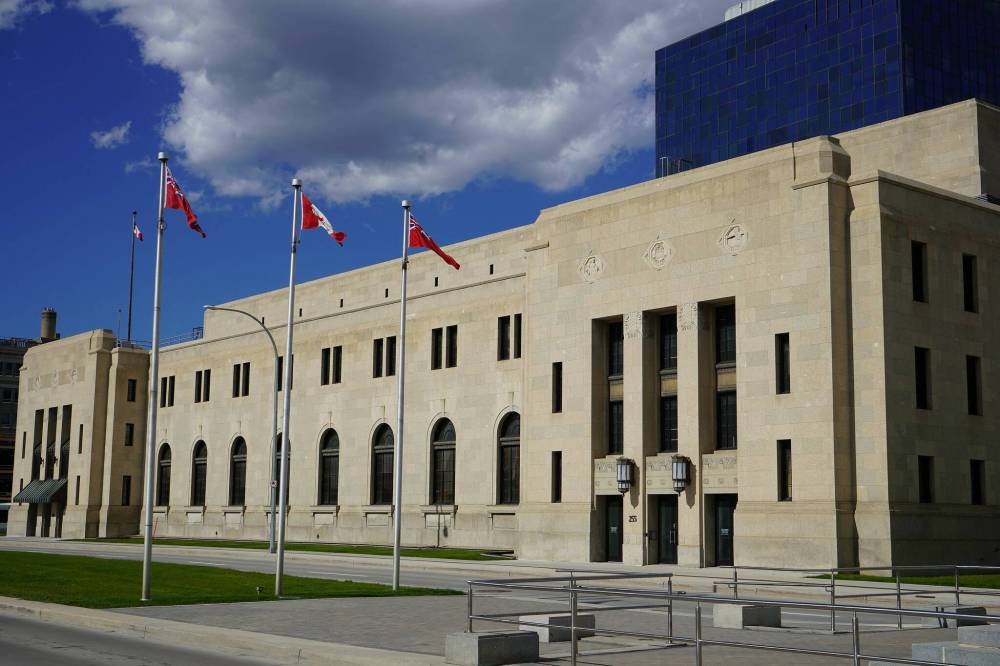
The Archives of Manitoba building was originally the Winnipeg Auditorium, completed in 1932.
These sorts of questions have been asked many times and answers can focus on regional adaptations to climate and geography, such as the use of logs in the Georgian-styled Ross House or locally sourced Tyndall stone in giving body to Winnipeg Art Gallery’s late modernist design.
Mikel also highlights key Indigenous influences and innovations in Canadian architecture.

Most famously, there’s Douglas Cardinal, the architect for Thunderbird House at Higgins and Main. His innovative use of curving forms reflecting Indigenous traditions and deviating from modernism’s angularity pushed engineers and architects to explore advanced areas of math.
Mikel further applauds the work of the late Métis architect Etienne Gaboury, considered Manitoba’s greatest architect, whose winding design for the Precious Blood Church in St. Boniface he singles out as “a fantastic example of expressionism.”
But on the whole, Mikel thinks it’s misplaced to complain when international architects design our buildings because it’s a two-way street.

SUPPLIED
Precious Blood Roman Catholic Church was designed by architect Etienne Gaboury.
“We want to promote the expression of Canadian creativity, but the world’s leading architect who just died, Frank Gehry, was a Canadian. And if we don’t allow other architects in to design our buildings, then people won’t let us be international architects either.”
winnipegfreepress.com/conradsweatman
Conrad Sweatman is an arts reporter and feature writer. Before joining the Free Press full-time in 2024, he worked in the U.K. and Canadian cultural sectors, freelanced for outlets including The Walrus, VICE and Prairie Fire. Read more about Conrad.
Our newsroom depends on a growing audience of readers to power our journalism. If you are not a paid reader, please consider becoming a subscriber.
Our newsroom depends on its audience of readers to power our journalism. Thank you for your support.
Conrad Sweatman is an arts reporter and feature writer. Before joining the Free Press full-time in 2024, he worked in the U.K. and Canadian cultural sectors, freelanced for outlets including The Walrus, VICE and Prairie Fire. Read more about Conrad.
Our newsroom depends on a growing audience of readers to power our journalism. If you are not a paid reader, please consider becoming a subscriber.
Our newsroom depends on its audience of readers to power our journalism. Thank you for your support.
Advertisement Advertise With Us
Advertisement Advertise With Us