Resale law getting touch up Visual artists to earn royalties when work resold on secondary market
Read this article for free:
or
Already have an account? Log in here »
To continue reading, please subscribe:

Digital Subscription
One year of digital access for only $205*
- Enjoy unlimited reading on winnipegfreepress.com
- Read the E-Edition, our digital replica newspaper
- Access News Break, our award-winning app
- Play interactive puzzles
*First annual payment billed as $205.00 + GST for one year. This annual subscription will automatically renew at $233.00 + GST every 52 weeks (10% off the regular annual price of $259.35). Offer available to new and qualified returning subscribers only. Cancel any time.
To continue reading, please subscribe:
Add Free Press access to your Brandon Sun subscription for only an additional
$1 for the first 4 weeks*
- Enjoy unlimited reading on winnipegfreepress.com
- Read the E-Edition, our digital replica newspaper
- Access News Break, our award-winning app
- Play interactive puzzles
*Your next Brandon Sun subscription payment will increase by $1.00 and you will be charged $17.95 plus GST for four weeks. After four weeks, your payment will increase to $24.95 plus GST every four weeks.
Read unlimited articles for free today:
or
Already have an account? Log in here »
Hey there, time traveller!
This article was published 08/01/2026 (244 days ago), so information in it may no longer be current.
Artwork often becomes more valuable over time, yet artists rarely reap the financial benefits of a growing creative portfolio.
Following years of lobbying, that dynamic is finally set to change in Canada.
In its 2025 budget, the federal government announced plans to add an artist’s resale right to the Copyright Act, granting visual artists royalties whenever their work is resold on the secondary market.
The pending amendment has been cause for celebration and raised questions among local artists and advocates.
“It’s pretty exciting; this is long overdue,” says Patricia Bovey, a former Manitoba senator and a longtime proponent for artist copyright issues.
The proposed update would bring Canada in line with 90 other countries that have existing artist resale rights legislation; including France, where the provision has been on the books since 1920.
The latest federal budget has yet to receive royal assent. The timing and final details of the Copyright Act amendment are currently unknown.
Canadian Artists’ Representation (CARFAC) — which made its first artist-resale-right pitch to parliament in 2010 — recommends a five per cent royalty on work sold for more than $1,000 in the secondary market through auction houses or commercial galleries.
“It’s both a human right and an economic right.”
The resale right aims to improve compensation for Canadian creators, many of whom fit the “starving artist” stereotype. In 2015, visual artists earned a median income of $20,000, less than half the median income of all other workers.
“I think it’s going to make a significant difference. It’s both a human right and an economic right. If (an artist) sold something for $20 when they were a student, then 30 or 40 years later it sells for $10,000, why should they only have $20? There’s a big disconnect there,” Bovey says.
The provision is expected to be particularly beneficial for Indigenous artists, who make up a higher percentage of visual artists in Canada and whose work is regularly resold for exponentially more than the original price tag.
The record-breaking sale of The Enchanted Owl — a print by Inuit artist Kenojuak Ashevak — is an oft-cited example. Ashevak earned an estimated $24 on the initial sale of the artwork in 1960 and neither the artist nor her estate received royalties when the print was resold at auction for $216,000 in 2018. A test version of the print sold for $366,000 in 2024.
Dorset Fine Arts handout Enchanted Owl by Kenojuak Ashevak sold for $24 in 1960 and resold years later for more than $200,000.
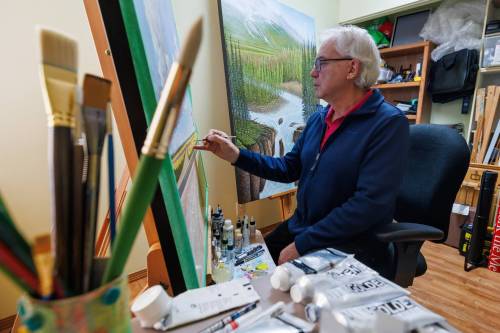
Manny Schulz, a Winnipeg painter and president of the Manitoba Society of Artists, believes the aspirations of resale rights are “constructive and positive,” but he’s unsure how many artists will benefit from the legislation in practice.
“It’s rare, I think, for artists to achieve the type of acclaim whereby their artwork would be sold on a secondary market,” he says. “Most art that I see is bought and held by clients and patrons, not often do I see them purchased as investments.”
Schulz questions how the legislation will be enacted.
“How would you actually find the artist? What happens if they’re deceased?” he says.
CARFAC recommends that resale royalties be paid to the artist and their estate for the duration of copyright, which is 70 years after death in Canada.
The national body representing visual artists also recommends that art market agents and sellers be jointly responsible for payment and that royalties be managed and paid through CARFAC’s copyright management organization, Copyright Visual Arts.
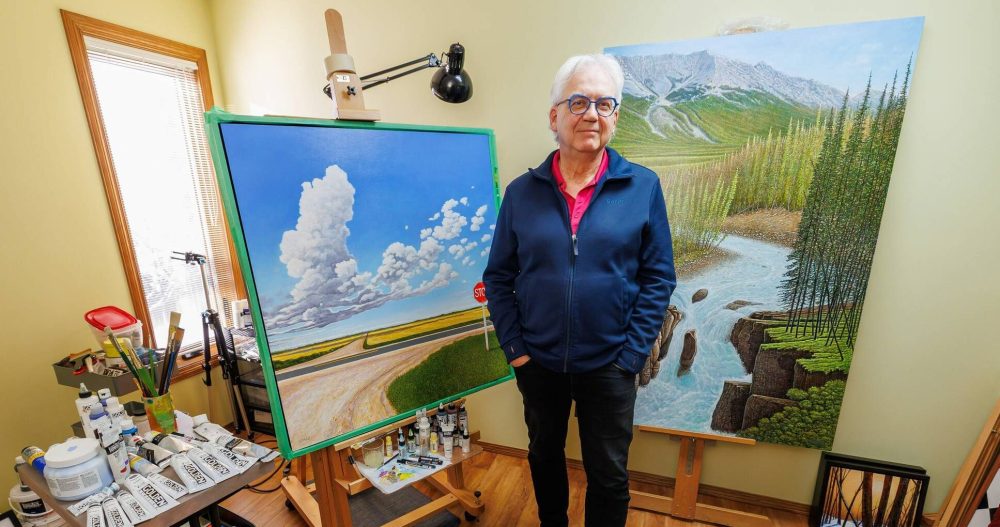
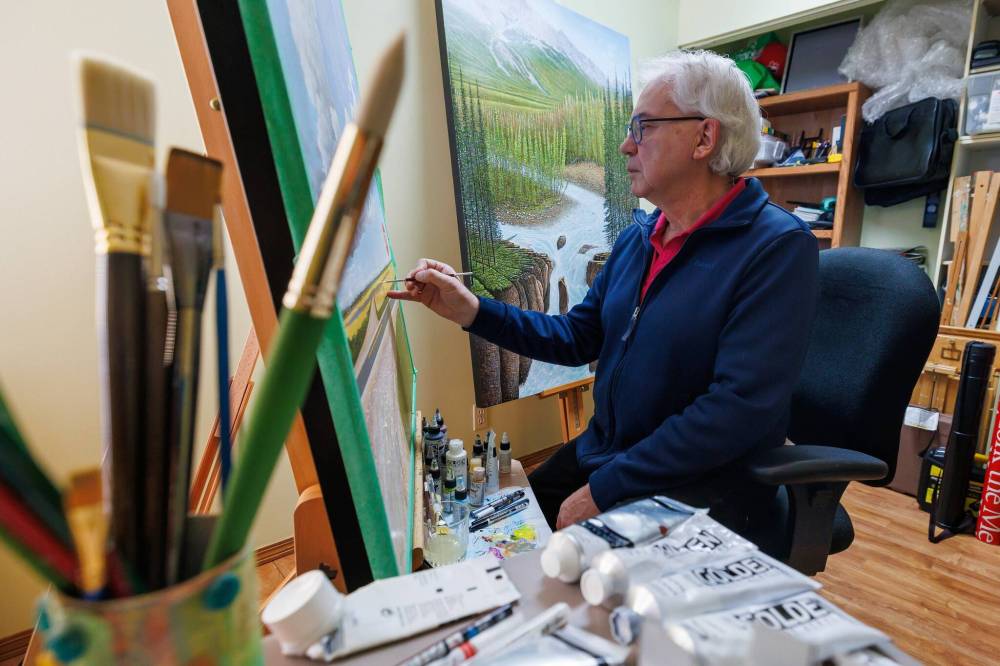
So far, Schulz — who is also the past president of the Society of Canadian Artists — hasn’t fielded many questions about resale rights from his membership. A more pressing topic is the impact of artificial intelligence on artistic creation and authenticity, he says.
“I honestly get asked about that (multiple) times every week at both the provincial and national levels. That issue is not going away. It’s getting bigger and bigger and I do not know how the government is going to solve that,” Schulz says.
Documentation is one way artists can protect the provenance of their work in the age of AI and with future sales in mind.
“Sign your work,” says Nick Slonosky, a lawyer and co-founder of the Manitoba Legal Clinic for the Arts at the University of Manitoba.
“Sign your work.”
“The (resale right) is essentially an additional copyright. It’s a right to receive payment for your creative work after it’s been sold and resold and resold. So, copyright being copyright, you have to prove it and the best way is to sign your work and put a date on it.”
Slonosky also advises taking photos of completed works, creating an inventory and keeping track of sales.
winnipegfreepress.com/evawasney

Eva Wasney has been a reporter with the Free Press Arts & Life department since 2019. Read more about Eva.
Every piece of reporting Eva produces is reviewed by an editing team before it is posted online or published in print — part of the Free Press‘s tradition, since 1872, of producing reliable independent journalism. Read more about Free Press’s history and mandate, and learn how our newsroom operates.
Our newsroom depends on a growing audience of readers to power our journalism. If you are not a paid reader, please consider becoming a subscriber.
Our newsroom depends on its audience of readers to power our journalism. Thank you for your support.