It can be easy being green
Writer looks back on five years of covering environmental issues
Advertisement
Read this article for free:
or
Already have an account? Log in here »
To continue reading, please subscribe:

Digital Subscription
One year of digital access for only $205*
- Enjoy unlimited reading on winnipegfreepress.com
- Read the E-Edition, our digital replica newspaper
- Access News Break, our award-winning app
- Play interactive puzzles
*First annual payment billed as $205.00 + GST for one year. This annual subscription will automatically renew at $233.00 + GST every 52 weeks (10% off the regular annual price of $259.35). Offer available to new and qualified returning subscribers only. Cancel any time.
To continue reading, please subscribe:
Add Free Press access to your Brandon Sun subscription for only an additional
$1 for the first 4 weeks*
- Enjoy unlimited reading on winnipegfreepress.com
- Read the E-Edition, our digital replica newspaper
- Access News Break, our award-winning app
- Play interactive puzzles
*Your next Brandon Sun subscription payment will increase by $1.00 and you will be charged $17.95 plus GST for four weeks. After four weeks, your payment will increase to $24.95 plus GST every four weeks.
Read unlimited articles for free today:
or
Already have an account? Log in here »
Hey there, time traveller!
This article was published 17/01/2026 (185 days ago), so information in it may no longer be current.
This is my love letter to the Earth.
For nearly five years I’ve been writing a monthly Free Press feature called the Green Page. As that has come to an end I can’t help thinking about how writing these stories has enriched my life immensely and made me realize how much there is to learn about issues affecting our environment.
From things close to home such as composting, recycling, backyard gardening and reducing food waste, to global concerns, such as climate change, air pollution, fossil fuels, greenhouse gases, deforestation, veganism and green agriculture, it’s clear there’s growing interest in green issues and education.
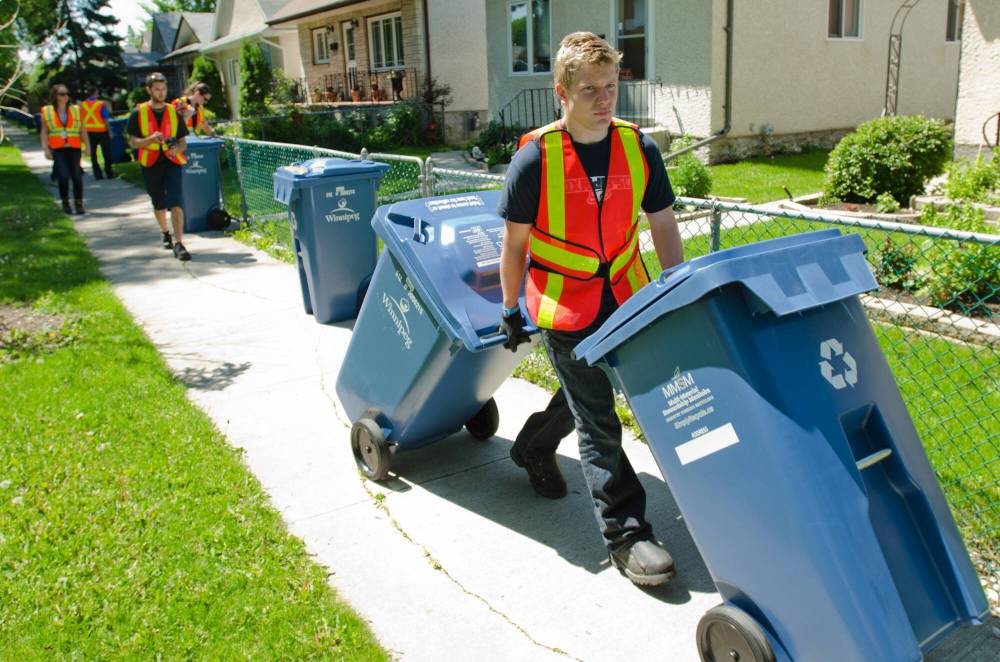
Cole Breiland / Free Press files
Recycling isn’t hard and helps reduce waste that will end up in the landfill.
Many of us want to know what we can do to make a positive difference in the world in all ways, including environmentally. Fortunately, there are things we can do, and experts agree that many of us making small changes can lead to significant and powerful results affecting the health of the Earth.
National Cut Your Energy Costs Day in January aims to educate consumers about little tasks that can help lower their utility bills and reduce their carbon footprint: things such as weatherproofing, replacing old windows with new energy-efficient ones and trading in an old furnace for a new model that saves on energy.
Other small changes include taking shorter showers, unplugging appliances when they are not in use, turning off lights when leaving a room and carpooling when possible.
National Walking Day happens in April and serves to encourage healthier habits. Whether walking on your own or strolling with a friend, a regular walking practice helps improve both physical and mental well-being. Walking Day is another opportunity to encourage physical movement, as opposed to relying on vehicles to get us everywhere — no fuel costs, no carbon emissions and no air pollution.
There’s also a good chance your mood will be lifted and your everyday stress will be lowered. Walking is good medicine.
World Environment Day, celebrated in June, is another global initiative that encourages sustainable practices that have a positive impact. Art competitions on themes such as biodiversity, conservation and climate action can be meaningful and rewarding for young people in and out of schools.
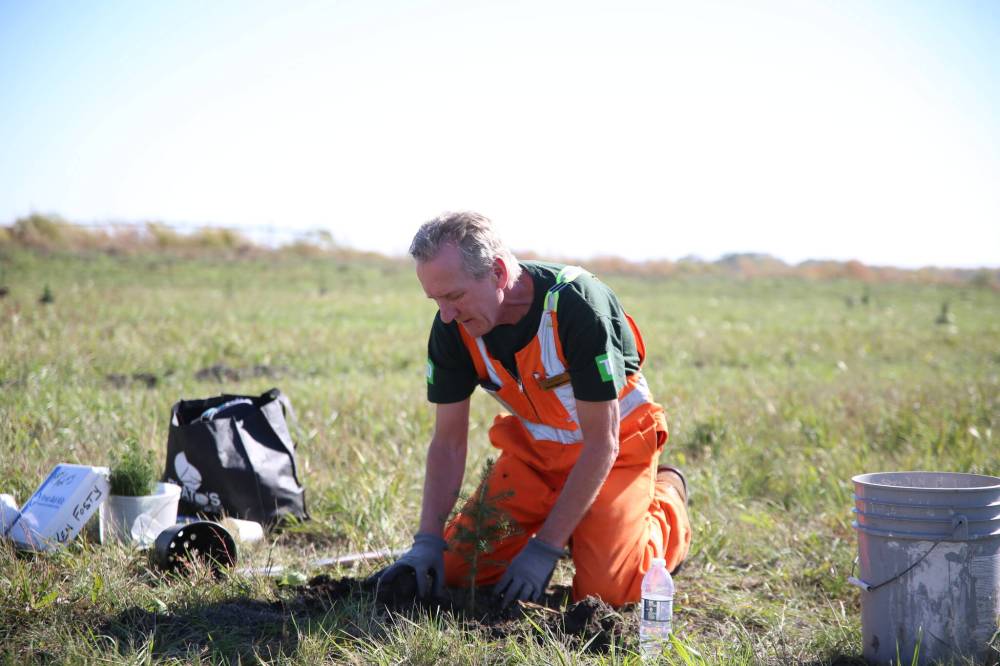
Abiola Odutola / The Brandon Sun files
Plant a tree, which are crucial to providing habitat for wildlife, cleaning the air and giving humans shade and shelter.
Organizing community cleanups brings people up close and personal with the land to pick up litter and help reduce pollution and protect ecosystems.
And, my personal favourite, planting trees, which is crucial to providing habitat for wildlife, cleaning the air and giving humans shade and shelter — among many other benefits.
The list of designated green holidays continues to expand, currently numbering well over a hundred. There’s a day, a week or even an entire month to celebrate everything from the Earth to trees, water, bicycling, birds, wind, flowers and wildlife. I love that all of these special days exist to remind us of our precious natural resources. We need to take care of them so they continue to exist.
As I reviewed some of my favourite green interviews, I noted common themes. Words such as mindfulness, intention, awareness, care and compassion began to swirl in my head. Sounds almost spiritual, doesn’t it?
I think it is. Much has been written about the therapeutic effects of being in nature.
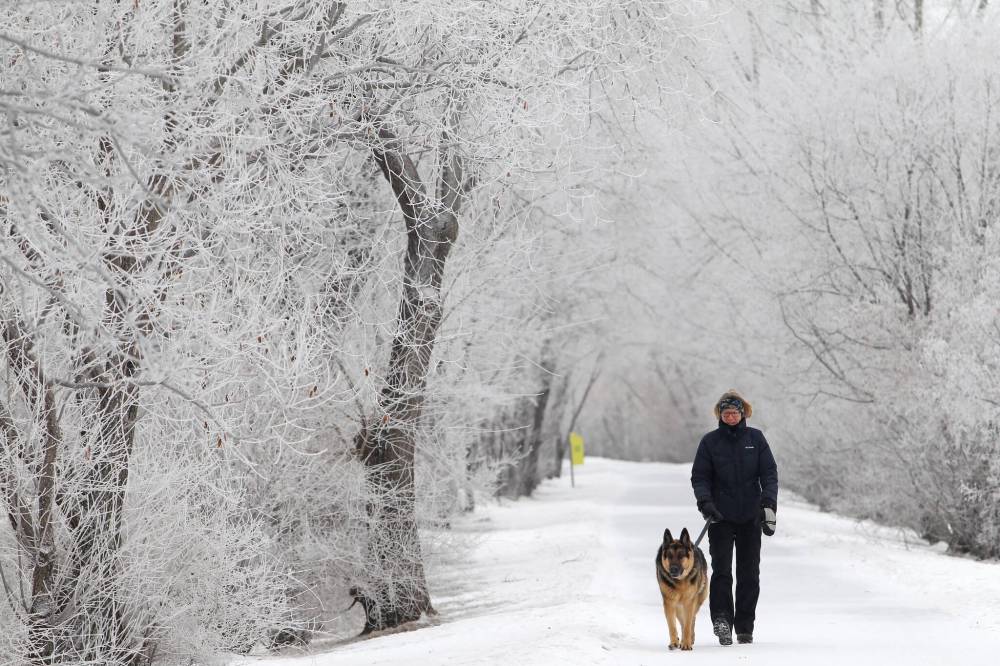
Tim Smith / Brandon Sun files
Get out and go for a walk — it’s good medicine.
Just the other day I took a walk during a particularly stressful time, and despite dealing with some pretty serious personal issues, just looking up at the brilliant blue sky, feeling the soothing warmth of the sun and stopping to notice the beauty of the frost on the trees made everything better.
As someone with hypertension, I’m sure if I’d checked my blood pressure, it would have been considerably lower in those outdoor moments. Getting outside even for a few short minutes can bring peace and calm, and provide a sense of connection and refuge.
For me, this is awe-inspiring spirituality.
I remember interviewing young people a few years back about their worries about the future. I learned the term eco-anxiety for the first time. There is notable concern about the irreparable damage to the environment, species loss and the food system that continues to occur.
The only way to stop it is to pay attention to what has happened, what is happening and to change the way we live with the Earth.

RUTH BONNEVILLE / FREE PRESS files
Green Action Centre director of operations Kristen Malec adds to her home compost.
It’s easy to take things for granted; most of us are guilty of that at least sometimes. But in order to ensure there is a bright future for everyone, we need to cherish the Earth. Nourish it. Appreciate it. Respect it. From the ground to the sky and everything in between.
Consider taking time to watch films and programs that encourage that. There are many of them. I loved Kiss the Ground, and My Octopus Teacher.

Locally, there’s Vitality Gardening on APTN hosted by Coleen Rajotte, which explores traditional methods of organic farming throughout different cultures; and films by Katharina Stieffenhofer which focus on environmental, social and community health including her latest, Everything We Need is Here, which will be soon be available on Bell/MTS Fibe TV1.
World-renowned primatologist and conservationist Jane Goodall, famous for her ground-breaking work with chimpanzees, became a passionate advocate for animal welfare. In her final interview for the Netflix documentary Famous Last Words, she offered uncensored honesty combined with hope at a time of widespread anxiety about the state of the environment.
“We depend on Mother Nature for clean air, for water, for food, for clothing, for everything, and as we destroy one ecosystem after another, as we create worse climate change, worse loss of diversity, we have to do everything in our power to make the world a better place for the children alive today, and for those that will follow,” Goodall said.

MIKAELA MACKENZIE / FREE PRESS
Karrie Blackburn, Compost Winnipeg sales and customer service lead, with community food-waste drop-off bins the public can contribute to at the River Osborne Community Club.
“You have it in your power to make a difference. Don’t give up. There is a future for you.”
fparts@winnipegfreepress.com