Modern, historic letters showcase love in dangerous times
Read this article for free:
or
Already have an account? Log in here »
To continue reading, please subscribe:

Digital Subscription
One year of digital access for only $205*
- Enjoy unlimited reading on winnipegfreepress.com
- Read the E-Edition, our digital replica newspaper
- Access News Break, our award-winning app
- Play interactive puzzles
*First annual payment billed as $205.00 + GST for one year. This annual subscription will automatically renew at $233.00 + GST every 52 weeks (10% off the regular annual price of $259.35). Offer available to new and qualified returning subscribers only. Cancel any time.
To continue reading, please subscribe:
Add Free Press access to your Brandon Sun subscription for only an additional
$1 for the first 4 weeks*
- Enjoy unlimited reading on winnipegfreepress.com
- Read the E-Edition, our digital replica newspaper
- Access News Break, our award-winning app
- Play interactive puzzles
*Your next Brandon Sun subscription payment will increase by $1.00 and you will be charged $17.95 plus GST for four weeks. After four weeks, your payment will increase to $24.95 plus GST every four weeks.
Read unlimited articles for free today:
or
Already have an account? Log in here »
Hey there, time traveller!
This article was published 14/02/2026 (243 days ago), so information in it may no longer be current.
Love is in the air at Oseredok.
The Ukrainian cultural and educational centre’s current exhibition, Love Letters: A Timeless Experience, bears witness to the fraught and emotional journeys of past and present Ukrainian-Canadian couples through historical love letters, digital declarations and personal artifacts as they navigated courtship, separation and reunion.
Spanning the 20th and 21st centuries, the exhibition draws on a combination of archival material, including the cultural centre’s collection of rare wedding photographs and studio portraits, and visual installations to trace the love lives of Ukrainian-Canadians across the decades.
RUTH BONNEVILLE / FREE PRESS
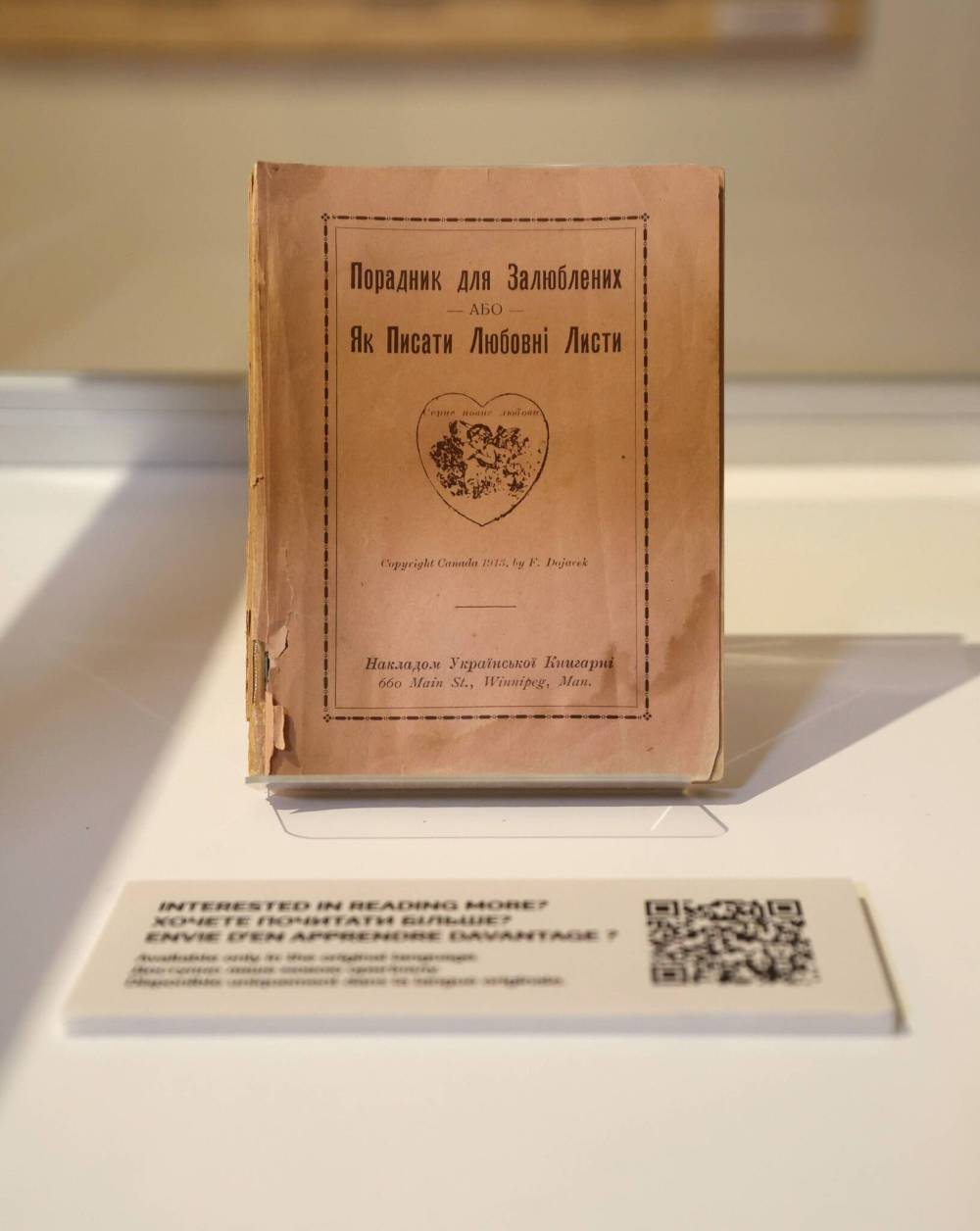
A letter-writing manual penned in 1913 by linguist and author F. Dojacek is a centrepiece of the exhibit.
A letter-writing manual penned in 1913 by linguist and author F. Dojacek forms the backbone of the immersive show.
“The book Guide for Lovers or How To Write Love Letters offered invaluable advice and sample letters for gentlemen and ladies in Manitoba,” media historian and exhibition co-curator Olga Khamedova says.
The slim volume was written to educate male immigrants on the art of romantic letter writing in order to woo Ukrainian ladies who were either still in Ukraine or had already settled in this country, and came complete with examples of imagined responses along with prompts for suitable replies.
“It was very convenient for both men and women to read the book because there is an acceptance response and a refusal response, too,” Khamedova says.
From initial declarations of affection to first dates — which often took place in diners and dance halls — to records of traditional weddings and recollections of modern marriages, the exhibition brings to life the community’s love stories amid times of hardship and transition.
Carefully preserved photos of rural weddings, captured by amateur photographers, provide a rare glimpse into the past.

RUTH BONNEVILLE / FREE PRESS
The exhibition is about how love conquers war and death, says co-curator Olga Khamedova.
“One striking image shows a bride, groom and their guests dancing on a wooden platform set against the backdrop of the Manitoba Prairies,” Khamedova says.
“Scenes like this reflect the spirit of Ukrainain Canadian weddings from between the 1920s to the 1960s, festive occasions for the community to gather, sing traditional songs and play traditional instruments like the tsambaly, a type of dulcimer.”
There are also wedding portraits of young couples taken by Charles Krasnopera in Winnipeg’s (now defunct) Vogue Photo Studio during the 1950s and 1960s showing traditional korovai, the intricately decorated Ukrainian wedding bread, placed beside North American wedding cakes, reflecting a merging of cultures as Ukrainian Canadians started adopting Western wedding traditions while preserving their heritage.
Alongside joyful occasions are also photos of more restrained ceremonies held in displaced persons camps in Germany and Austria between 1946 and 1948.
The exhibition also celebrates modern love, highlighting more recent relationships, including those conducted in times of war.
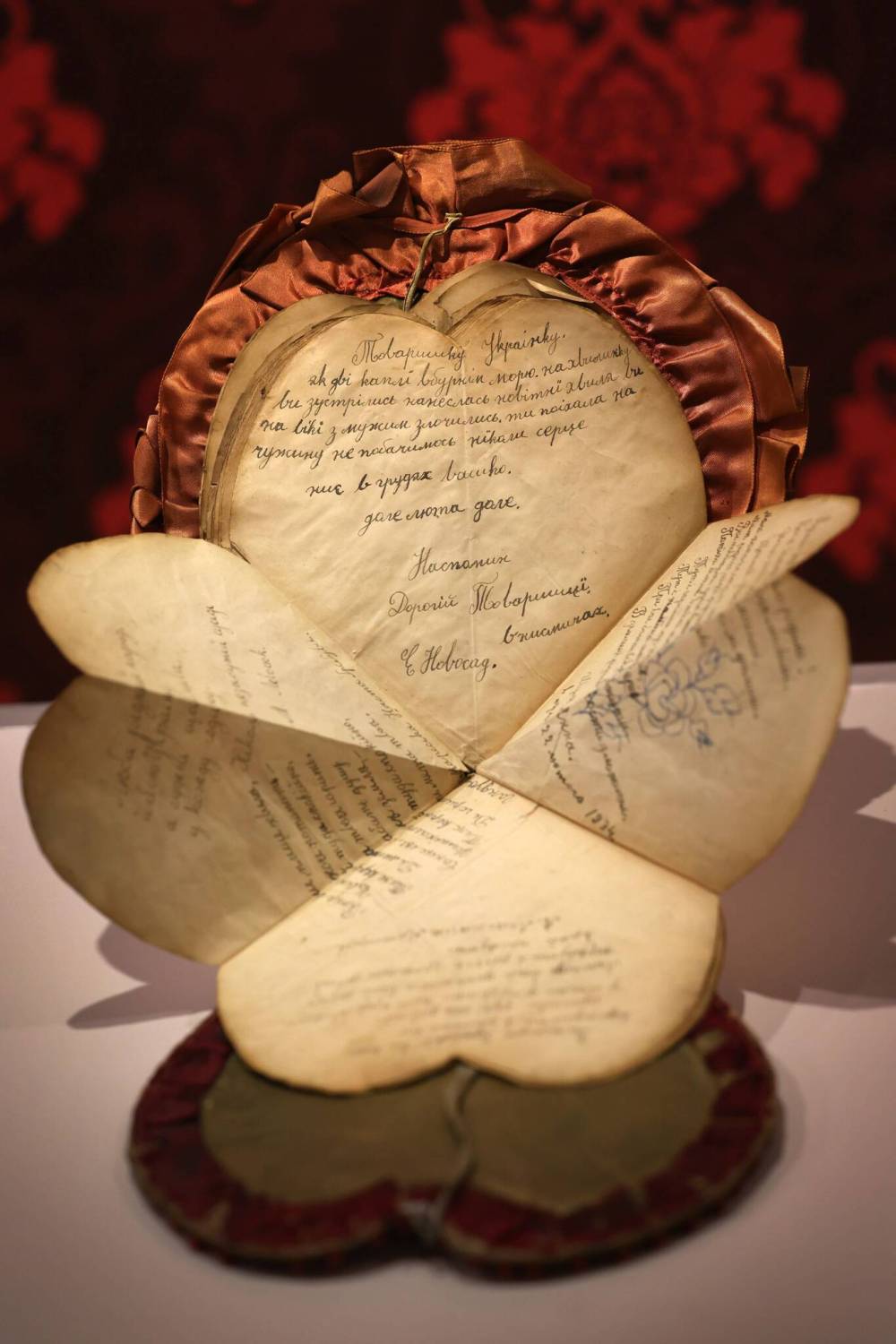
“The archives of Oseredok preserve true treasure with many fascinating materials. There are many emotional moments in archival work, and the most touching one for me was finding letters published in newspapers — letters from Ukrainian wives to their husbands who were working in Canada during the First World War,” Khamedova says.
RUTH BONNEVILLE / FREE PRESS
The exhibition features historic love letters between Ukrainian Canadians.
“And now, as the war continues in Ukraine, many families are once again separated. That is why this exhibition was born — to connect these two realities and highlight the theme of love and war.”
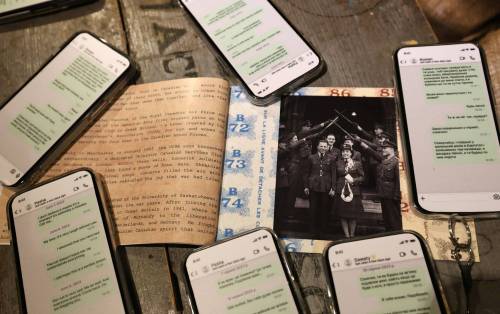
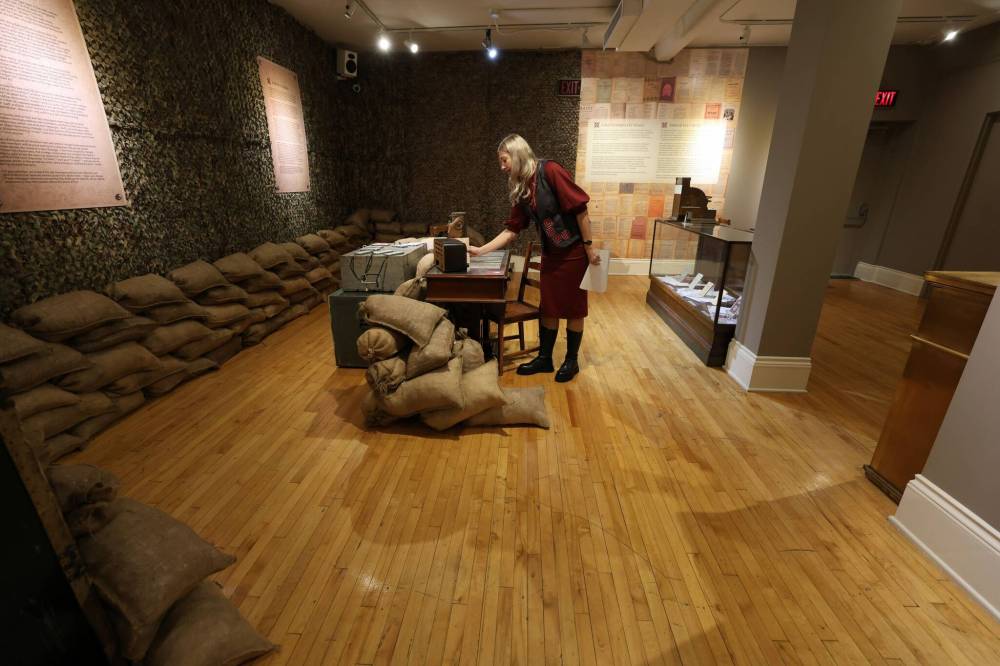
Juxtaposed with letters written during the First World War are printed text messages sent by women to their husbands who were on the front line. Many of them were left unread.
In 2023 the women began to share the texts online, posting screenshots of their last messages to loved ones with whom they had lost contact.
“This exhibition is about the idea that love conquers war and death,” Khamedova says. “For me this is more than just an exhibition. It’s a symbol of hope.”
winnipegfreepress.com/avkitching
Exhibition preview
Love Letters: A Timeless Experience
● Oseredok Ukrainian Cultural and Educational Centre, 184 Alexander Ave. E.
● Tuesday to Saturday until May, 10 a.m. to 4 p.m.
● Visit oseredok.ca for more information
RUTH BONNEVILLE / FREE PRESS
The gallery showcases letters exchanged during wartimes past and present.


AV Kitching is an arts and life writer at the Free Press. She has been a journalist for more than two decades and has worked across three continents writing about people, travel, food, and fashion. Read more about AV.
Every piece of reporting AV produces is reviewed by an editing team before it is posted online or published in print — part of the Free Press‘s tradition, since 1872, of producing reliable independent journalism. Read more about Free Press’s history and mandate, and learn how our newsroom operates.
Our newsroom depends on a growing audience of readers to power our journalism. If you are not a paid reader, please consider becoming a subscriber.
Our newsroom depends on its audience of readers to power our journalism. Thank you for your support.