From guitar hero to human frailities
Following chart-topping success, legendary Winnipeg musician found peace living in obscurity
Advertisement
Read this article for free:
or
Already have an account? Log in here »
To continue reading, please subscribe:

Digital Subscription
One year of digital access for only $205*
- Enjoy unlimited reading on winnipegfreepress.com
- Read the E-Edition, our digital replica newspaper
- Access News Break, our award-winning app
- Play interactive puzzles
*First annual payment billed as $205.00 + GST for one year. This annual subscription will automatically renew at $233.00 + GST every 52 weeks (10% off the regular annual price of $259.35). Offer available to new and qualified returning subscribers only. Cancel any time.
To continue reading, please subscribe:
Add Free Press access to your Brandon Sun subscription for only an additional
$1 for the first 4 weeks*
- Enjoy unlimited reading on winnipegfreepress.com
- Read the E-Edition, our digital replica newspaper
- Access News Break, our award-winning app
- Play interactive puzzles
*Your next Brandon Sun subscription payment will increase by $1.00 and you will be charged $17.95 plus GST for four weeks. After four weeks, your payment will increase to $24.95 plus GST every four weeks.
Read unlimited articles for free today:
or
Already have an account? Log in here »
Hey there, time traveller!
This article was published 28/02/2026 (214 days ago), so information in it may no longer be current.
Long after he fell off the Winnipeg music radar, guitarist and songwriter John Hannah had retained a loyal following.
He had been living in his birth country of Scotland for many years but would frequently come back to Winnipeg to appear at local clubs. For many, he became a bit of a mystery man, a legend with occasional sightings. Although he recently died at age 73 in relative obscurity, Hannah left an indelible mark on Canadian music and on me.
Hannah came into my orbit through bandmate and high school buddy Ralph James. “John was in my Grade 10 class at Grant Park,” James recalls, “and I noticed The Who stickers on his binder.”
Supplied
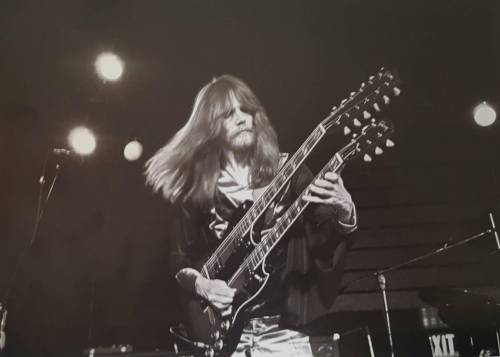
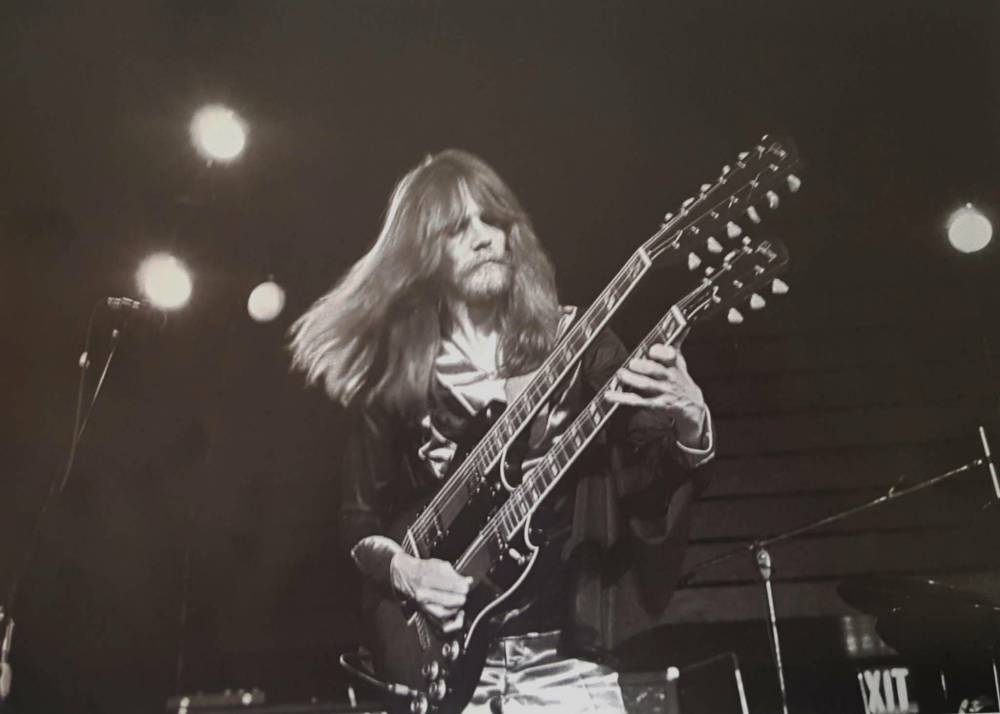
John Hannah and his double neck guitar.
Hannah’s family arrived in Canada in 1957. His father was an architect and artist. Hannah had been at a boarding school in Switzerland prior to arriving at Grant Park High School. A huge British rock music fan, Hannah had been playing guitar since age seven. In the fall of 1969, James invited me to a jam at drummer Rod McFayden’s Campbell Street house. Hannah was there and the jam ultimately led to the formation of electric blues band Pig Iron.
“We were just high school kids but we really had fun playing together,” James says.
Indeed, within a matter of weeks, Pig Iron was making waves on the local scene. Hannah’s abilities as a guitarist and songwriter grew by leaps and bounds. He also had a knack for creating songs spontaneously, including setting the Fireplace restaurant menu, where we often played for food, to music.
“John just loved playing in a band,” James says. “He was naturally talented and one of the funniest guys I’ve ever met. A total individual.”
Hannah left Pig Iron in early 1970, having outgrown our Savoy Brown and John Mayall covers. While the rest of us carried on for another six months, Hannah became a journeyman musician, serving time in several name bands such as Chopping Block and Blakewood Castle (with James) before fronting his own groups that featured his original compositions.
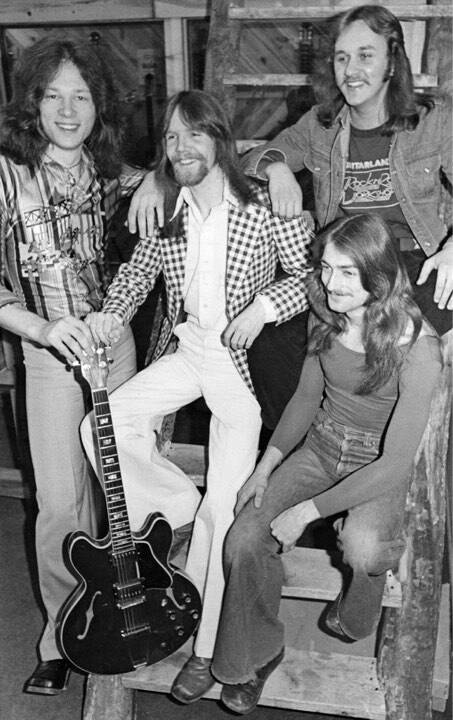
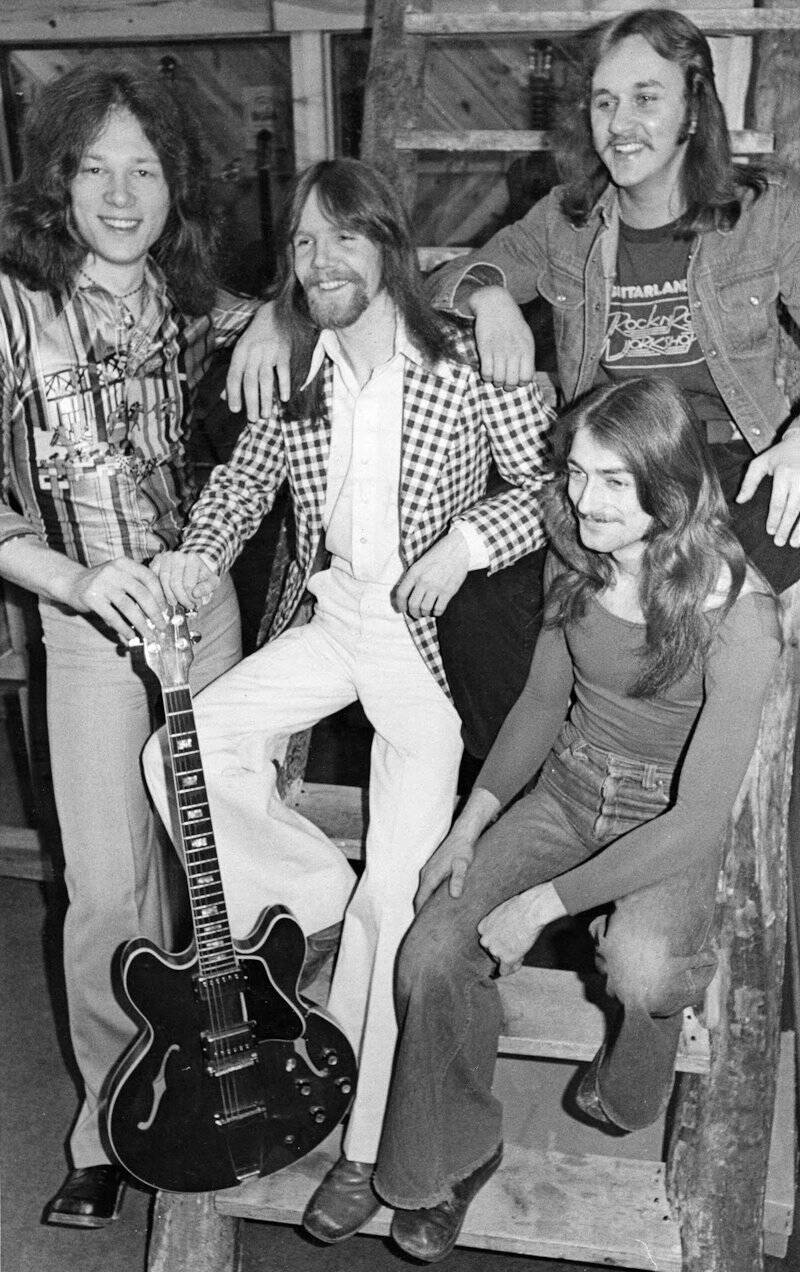
In succession, he had Wood ‘n’ Hannah (with equally talented guitarist Dave Wood), Hurricane Hannah and Holy Hannah, the latter with Hannah coming onstage sporting large angel wings and playing his distinctive double-neck guitar. In between, he formed the short-lived band Moon with jazz saxophone player Tommy Ponce, drummer Vance Masters and James.
“Moon was the band where Hannah really blossomed as a writer,” James says. “It’s a shame we never recorded.”
Hannah was also a founding member of Harlequin with James, having picked up the name from a Toronto band he played in briefly. If that wasn’t enough, Hannah also found time to offer guitar lessons at Guitarland on West Broadway.
I would run into him from time to time and was always pleased for his success.
“It was difficult being John’s sister,” says Lesley Hannah, two years younger than her famous brother. “He was such a legend. I had guys wanting me to introduce them to him and girls who befriended me because they wanted to sleep with him.” Lesley left Winnipeg in 1975 but remained close to her brother for the rest of his life. “I was very protective of him.”
Supplied
Wood ‘n’ Hannah - left to right: Dave Wood, John Hannah, Harvey Kostenchuk, Rob Wallace
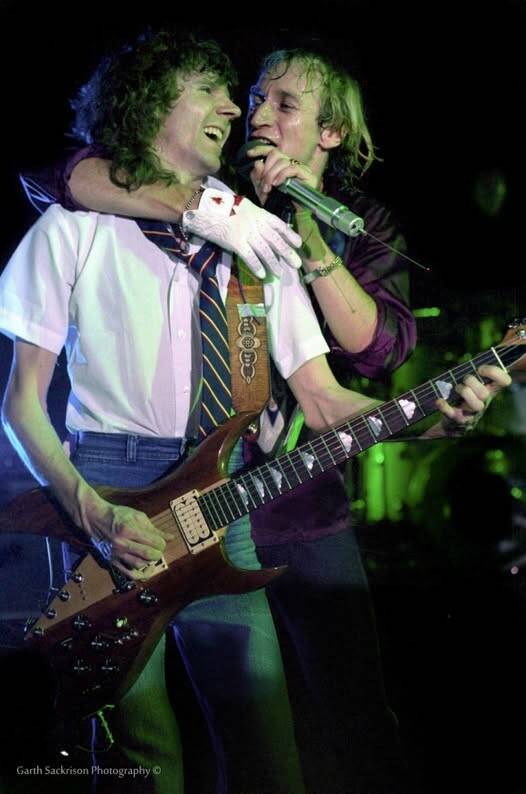
Already a celebrity on the local scene, Hannah’s star rose nationally in 1979 when he was invited to join what was then one of the finest bands on the Canadian rock scene, Streetheart, which was fronted by singer Kenny Shields. Hannah brought his considerable guitar chops and songwriting experience to the band, touring tirelessly, appearing on three of the band’s platinum-selling albums and earning a Juno Award.
“His arrival kind of saved the band,” notes longtime Streetheart keyboard player Daryl Gutheil. “Paul Dean (guitarist, songwriter and founding member) had left and there was so much momentum around us that we needed to get a replacement quickly and carry on. We had a big tour booked opening for Rush as well as a second album to record. We were based in Winnipeg by then and knew of John. There was no time nor need to audition him, he came to a practice, we played a bit and that was it.” Hannah brought a backlog of original songs to the band. “That lick in Hollywood, that was so clever and so John Hannah,” Gutheil notes. “He had a gift. He was very prolific, always writing songs.”
Joining Streetheart was life in the rock ‘n’ roll fast lane and Hannah coped well initially. He was living his dream. But as one former associate noted, “John had all the talent any could ever imagine but he had his demons.”
In Los Angeles with the band to meet with record executives, Hannah suffered a nervous breakdown. “It was quite sudden, and we got him back to Winnipeg as fast as we could,” Gutheil remembers. Hannah checked into the psych ward at the Health Sciences Centre. He was quickly replaced in Streetheart by Vancouver-based guitarist Jeff Neill and once again the band soldiered on. Few outside his family knew Hannah had been diagnosed as bipolar years earlier. “He was a very private person,” his sister Lesley says. “It was nobody’s business.”
Hannah’s career never fully recovered. He continued to write and record, including several songs written with local studio guitarist Ari Lahdekorpi and recorded with Dave Zeglinski at Mid-Ocean Studios. “He was in recovery at the time,” Lahdekorpi remembers. “A couple of the songs were apparently sent to the Jefferson Starship producer for consideration.”

Supplied
Early Harlequin, back row left to right: Gary Golden, Ralph James; front row John Hannah, Dave Budzak
In 1993, John released his one and only solo album of original compositions, Desperate Times, in the form of a limited edition 10-song cassette tape that revealed his creativity remained strong. He even appeared with Ron Paley’s Big Band.
Soon after, he moved back to Scotland where he enjoyed the support of a large extended family. It was there, Lesley notes, that her brother was happiest away from the glare of being a rock star in Winnipeg. He continued to play guitar and write songs until his death.

“In his mind, things were always better for him in Scotland,” Lesley says. “He had a very full life there without having to be the rock star.”
Reflecting on his old friend’s impact, James, now senior vice-president of Paquin Entertainment in Toronto, is emphatic: “I wouldn’t have had a career in music or be where I am today without John Hannah.”
Lesley displays her brother’s Juno Award in her home in British Columbia.
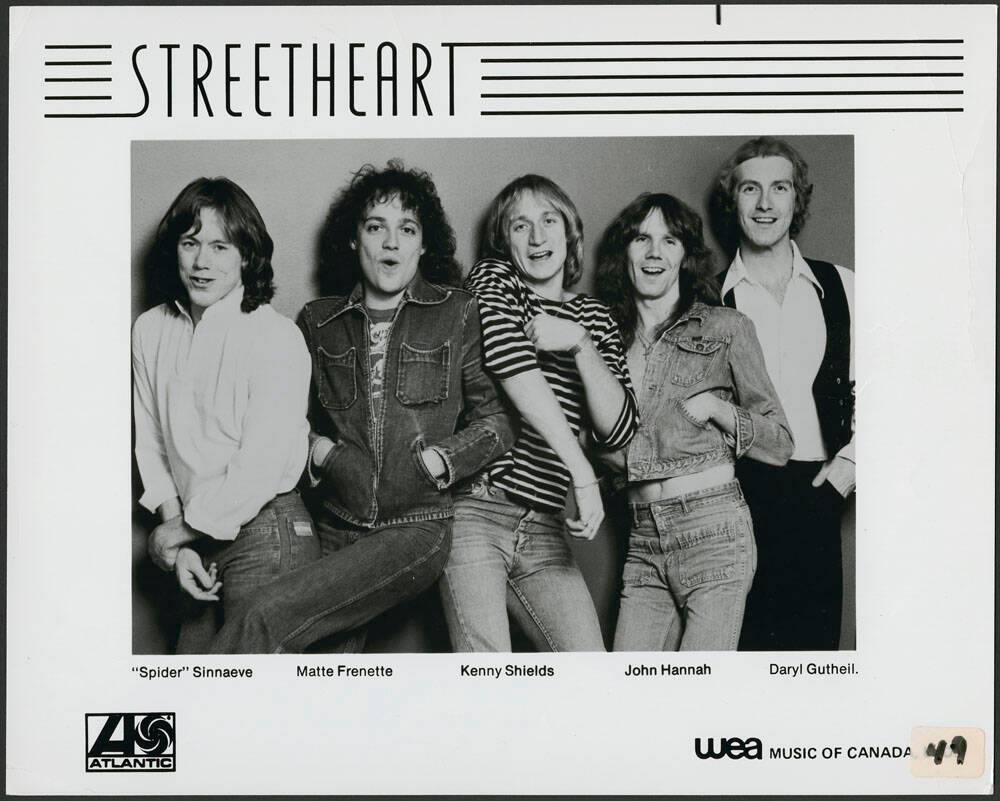
Streetheart circa 1980
“I’m very proud of his accomplishments and we never discussed his failures,” she says. ”He was so talented and that’s what we need to remember. To the end of his life, he was loved.”
John Einarson is a Winnipeg music historian.