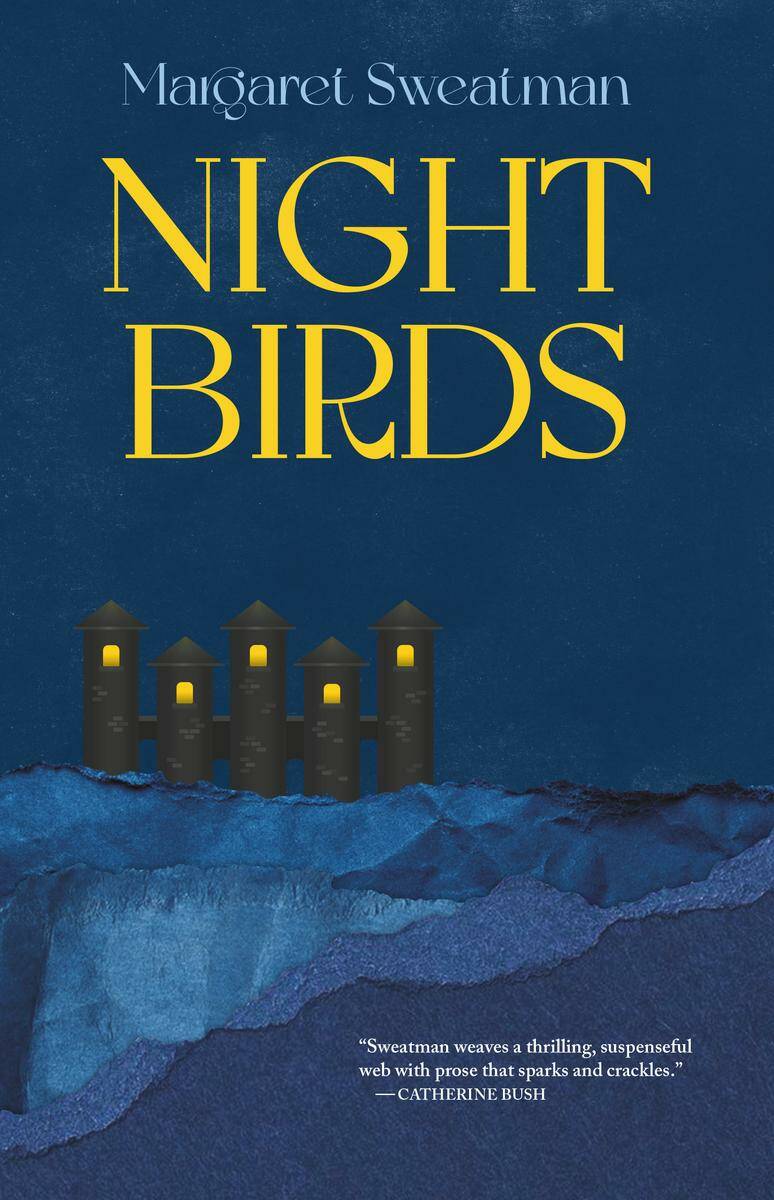
Author Margaret Sweatman mines dreamworld before striking gold in ‘Night Birds’

Advertisement
Read this article for free:
or
Already have an account? Log in here »
To continue reading, please subscribe:

Digital Subscription
One year of digital access for only $205*
- Enjoy unlimited reading on winnipegfreepress.com
- Read the E-Edition, our digital replica newspaper
- Access News Break, our award-winning app
- Play interactive puzzles
*First annual payment billed as $205.00 + GST for one year. This annual subscription will automatically renew at $233.00 + GST every 52 weeks (10% off the regular annual price of $259.35). Offer available to new and qualified returning subscribers only. Cancel any time.
To continue reading, please subscribe:
Add Free Press access to your Brandon Sun subscription for only an additional
$1 for the first 4 weeks*
- Enjoy unlimited reading on winnipegfreepress.com
- Read the E-Edition, our digital replica newspaper
- Access News Break, our award-winning app
- Play interactive puzzles
*Your next Brandon Sun subscription payment will increase by $1.00 and you will be charged $17.95 plus GST for four weeks. After four weeks, your payment will increase to $24.95 plus GST every four weeks.
Read unlimited articles for free today:
or
Already have an account? Log in here »
Margaret Sweatman didn’t initially set out to write an eco-thriller about the perils of global capitalism.
The Winnipeg novelist, lyricist and playwright started out writing Night Birds, her seventh novel, around the outset of the COVID-19 pandemic and initially had other ideas.
“I was talking to one of my grandsons when I was starting the book — when he asked what I was writing about, I said dreams. He said, ‘I love dreams’ — we love our dreaming minds,” Sweatman says.

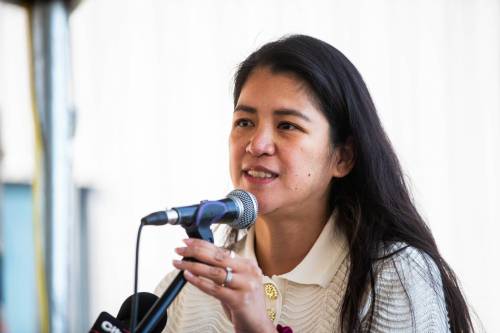
MIKAELA MACKENZIE / FREE PRESS
Margaret Sweatman launches her seventh novel, Night Birds, on Thursday.
And so it began.
“The first draft was really kind of the marvellous romance with a capital R — like nobility and ancient alchemy, metallurgy, studying minerals and metals and blacksmithing and dreams and hypnosis,” she explains.
“It became more of a crime story, but it began as a kind of dream story.”
The crime story emerged as Sweatman’s research took her deeper into the subject of gold mining, and the history of Gabriel Resources, a Toronto-based company that planned on mining gold in Romania in the early 2000s near a western Transylvanian town named Rosia Montana.
The company remains mired in court battles, with the potential environmental fallout (via spills of cyanide, which is used in silver and gold mining) and the impact on neighbouring communities prompting protests and injunctions.
With gold prices having recently topped $US5,000 per ounce, as countries shy away from the U.S. dollar, Sweatman’s new novel feels all the more timely. She launches Night Birds at McNally Robinson Booksellers Thursday at 7 p.m., where she will be joined in conversation by Charlene Diehl.
The novel follows Clio and Farrar, a couple in Winnipeg who receive a cash infusion via the hawala system of money transferring — a trust-based network of brokers operating outside banking institutions — to help fund Farrar’s business.
The money comes via a man named Mark who had known Clio’s late mother, who was also in mining. Unbeknownst to Clio and Farrar, the fund’s origins are with Peter Zugravi, a gruff Romanian businessman/thug involved in gold mining near Rosia Montana.
When a cyanide spill kills hundreds and wreaks havoc on the area, Farrar and Clio’s connections to Zugravi’s laundered money and his ruthless global reach see the pair tangled up in a dangerous situation, with Clio and their daughter Sydney fleeing to a remote island in northwestern Ontario, leaving Farrar to deal with the fallout.
While characters grapple with the consequences of the spill, those core themes of dreams, persuasion and the subconscious persist.
“We are partially submerged in the subconscious and in the drive that is instilled in us by others and by our environment. When I’m writing characters, I love that feeling that they sometimes rise into moments of clarity that are quite frightening. And then they see how little they matter, which is another aspect of being alive right now,” Sweatman says
Sweatman particularly enjoyed unpacking the character of Zugravi, a somewhat typical “bad guy” whose character is fleshed out throughout the novel.
“He brings certain narrative lines into crisis — so he’s functional, he’s fabulous for the narrative. You get this kind of cliché guy who gradually becomes a person, and his values completely switch,” she says.
The book’s Manitoba and northwestern Ontario settings will be abstractly familiar to local readers.
“I didn’t want it to be anywhere. I didn’t want it to be Lake of the Woods. And I didn’t want to even identify Winnipeg — I liked the idea of a place that was out of time in a book that’s about time. But gradually, in part through my editor, I got pulled into more realism,” Sweatman says.
The fluidity of place also permeates notions of culpability and how it transcends borders — and, with companies such as Gabriel Resources in mind, how Canada isn’t the innocent do-gooder nation we might like to think it is.
“I think I’m always writing about that — about the kind of funny puritanism and self-image of Canadians, of our flannel shirts and goodness. There are a lot of Canadian mining companies all over the world — we’re not innocent,” Sweatman says.
“That being said, it is quite stark how much better our system is than the American system. We have a much higher level of social discourse.”

Much in the same way ideas are mined from the author’s subconscious and formed into books, precious gems and metals are extracted from the earth, transformed from a base material for art into objects of commodity.
“Gold didn’t initially have a value — it was art, and then it was turned into empire,” Sweatman says. “I was interested in that transformation, the way a blacksmith can turn a lump of iron into something beautiful, and then make Damascus steel out of it. And the way gold can be this work of art, and then be traded and passed between people.”
Sweatman is keenly aware of the subjective value of her own art.
“I remember handing one of my books to a friend — he said thanks, then promptly rested his gin and tonic on it,” she says, laughing.
winnipegfreepress.com/bensigurdson
Ben Sigurdson
Literary editor, drinks writer
Ben Sigurdson is the Free Press‘s literary editor and drinks writer. He graduated with a master of arts degree in English from the University of Manitoba in 2005, the same year he began writing Uncorked, the weekly Free Press drinks column. He joined the Free Press full time in 2013 as a copy editor before being appointed literary editor in 2014. Read more about Ben.
In addition to providing opinions and analysis on wine and drinks, Ben oversees a team of freelance book reviewers and produces content for the arts and life section, all of which is reviewed by the Free Press’s editing team before being posted online or published in print. It’s part of the Free Press‘s tradition, since 1872, of producing reliable independent journalism. Read more about Free Press’s history and mandate, and learn how our newsroom operates.
Our newsroom depends on a growing audience of readers to power our journalism. If you are not a paid reader, please consider becoming a subscriber.
Our newsroom depends on its audience of readers to power our journalism. Thank you for your support.
Event preview
Margaret Sweatman
Reading from Night Birds
- McNally Robinson Booksellers, 1120 Grant Ave.
- Thursday, 7 p.m.
- Free
Ben Sigurdson
Literary editor, drinks writer
Ben Sigurdson is the Free Press‘s literary editor and drinks writer. He graduated with a master of arts degree in English from the University of Manitoba in 2005, the same year he began writing Uncorked, the weekly Free Press drinks column. He joined the Free Press full time in 2013 as a copy editor before being appointed literary editor in 2014. Read more about Ben.
In addition to providing opinions and analysis on wine and drinks, Ben oversees a team of freelance book reviewers and produces content for the arts and life section, all of which is reviewed by the Free Press’s editing team before being posted online or published in print. It’s part of the Free Press‘s tradition, since 1872, of producing reliable independent journalism. Read more about Free Press’s history and mandate, and learn how our newsroom operates.
Our newsroom depends on a growing audience of readers to power our journalism. If you are not a paid reader, please consider becoming a subscriber.
Our newsroom depends on its audience of readers to power our journalism. Thank you for your support.
Advertisement Advertise With Us
Advertisement Advertise With Us