Festival celebrates the brilliance of baroque music

Advertisement
Read this article for free:
or
Already have an account? Log in here »
To continue reading, please subscribe:
Digital Subscription
One year of digital access for only $1.44 a week*
- Enjoy unlimited reading on winnipegfreepress.com
- Read the E-Edition, our digital replica newspaper
- Access News Break, our award-winning app
- Play interactive puzzles
*Billed as $5.77 plus GST every four weeks. After 52 weeks, price increases to the regular rate of $19.95 plus GST every four weeks. Offer available to new and qualified returning subscribers only. Cancel any time.
To continue reading, please subscribe:
Add Free Press access to your Brandon Sun subscription for only an additional
$1 for the first 4 weeks*
- Enjoy unlimited reading on winnipegfreepress.com
- Read the E-Edition, our digital replica newspaper
- Access News Break, our award-winning app
- Play interactive puzzles
*Your next Brandon Sun subscription payment will increase by $1.00 and you will be charged $17.95 plus GST for four weeks. After four weeks, your payment will increase to $24.95 plus GST every four weeks.
Read unlimited articles for free today:
or
Already have an account? Log in here »
Hey there, time traveller!
This article was published 10/04/2026 (195 days ago), so information in it may no longer be current.
Nolan Kehler doesn’t easily let on that he’s a little “senza fiato” right now — music speak for “out of breath.”
The young but seasoned tenor and Classic 107 radio personality articulates himself accordingly: his polished pitches for the Winnipeg Baroque Festival arc almost musically, without ums, uhs or swallowed consonants.
But as a key organizer, alongside local choral group Dead of Winter, for a festival that packs more than 10 concerts into a couple of weeks, he admits it’s been a whirlwind recently.
“Certainly a busy few weeks here for me personally. But it’s truly joyful work to be able to interact with patrons who come again and again to these concerts,” he says.
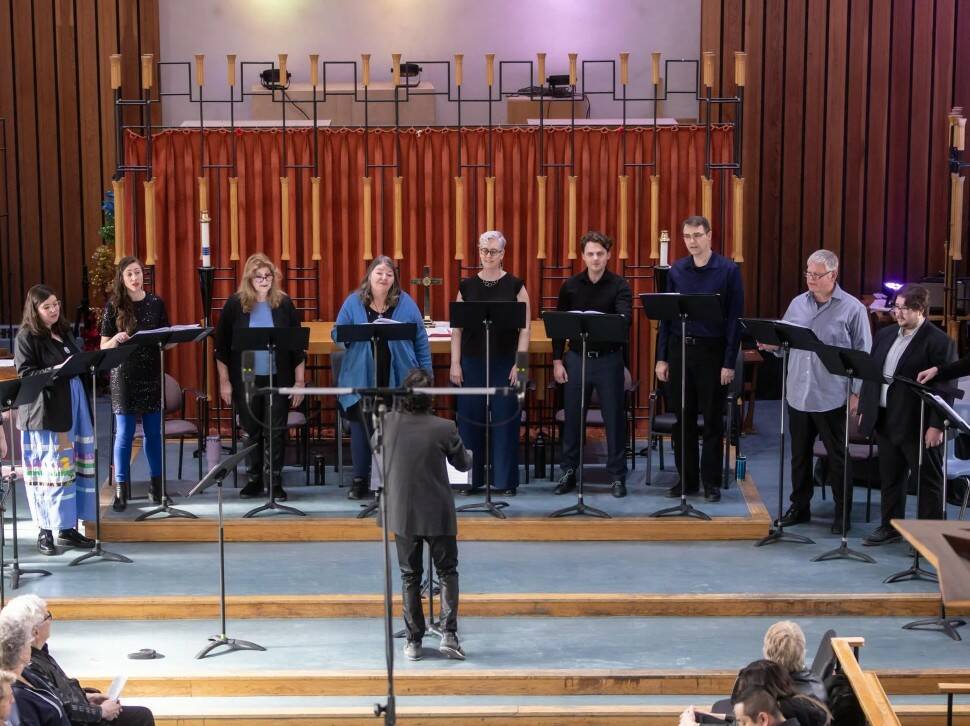
The festival, currently underway, has six shows left before its finale, the Bach Marathon concert on April 18 at Young United Church at 1 p.m., which Kehler says is a crowd favourite.
“It boils down to essentially a Bach talent show,” he says.
Hosted by the Royal Canadian College of Organists, the Bach Marathon’s open format — performers of all ages and skills are invited to take part — gives it a special populist feel.
But in another sense, it’s among the festival’s more musically conservative concerts, being dedicated to the baroque’s leading figure, J.S. Bach. The 17th-century composer was comparatively obscure in his lifetime. Now he’s regarded as one of classical music’s greatest geniuses — but this transformation is somewhat recent.
“Bach goes out of fashion for however many years. Then (19th-century composer Felix) Mendelssohn rediscovers it and goes, ‘Guys, this is incredible. We have to be doing this more.’ Sure enough, people pick it up again,” says Kehler.
Bach was famous Canadian musician Glenn Gould’s favourite composer, but Gould’s interpretations are idiosyncratic: performed on a piano — instead of a harpsichord, clavichord or organ as Bach had written — and known for their brilliant and eccentric expressivity.
Near the end of Gould’s short career as a public performer, Bach saw another revival, but partially in backlash to this more liberal, personal style of playing old J.S.
“There’s all this attention to how we’re going to do historically informed performance, which is a relatively modern phenomenon. And now we are obsessed with re-creation, trying to recapture this esthetic,” Kehler says.
An example of this “historically informed performance” approach (also cheekily known as HIP) is the Nonsuch Ensemble’s L’art des Sons concert tonight at 7 p.m. at Laudamus Auditorium, Canadian Mennonite University.
The festival promises the evening will transport us to the “golden age of the baroque” with renditions of André Campra, Jean-Marie Leclair and Antonio Vivaldi played on period instruments by the Canadian quartet.
Kehler is also looking forward to concerts that put modern work and arrangements in conversation with traditional baroque.
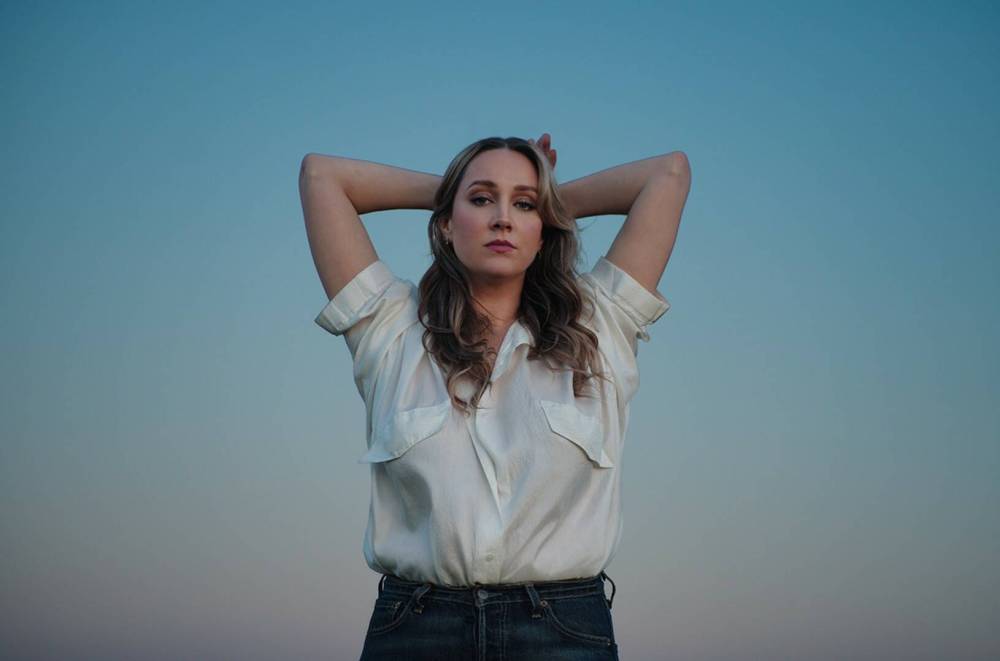
“We’re really excited to bring in Rachel Fenlon, who is a soprano and pianist from Canada, originally based in Berlin. She’s presenting an amazing program that mixes Bach with 20th-century avant-garde composer George Crumb, and her artistry really spans so many different traditions,” he says of the Wednesday concert at Eckhardt-Gramatté Hall, 7:30 p.m.
Last week’s Commentaries — featuring soprano Lara Secord-Haid, originally from Winnipeg, alongside Kehler in the singing roles — dramatized this conversation across history by having Kehler sing works on one side of the room and Secord-Haid sing modern arrangements of the same on the other.
The Winnipeg Baroque Festival doesn’t advertise all the pieces played at its concerts, but based on precedent, we might expect similar new-old blendings from Dead of Winter’s Monteverdi show Sunday at St. Margaret’s Anglican Church.
And we’ll get a rather modern take on the baroque from Tacamis Trio on Saturday at St. Andrews River Heights United Church (255 Oak St.).
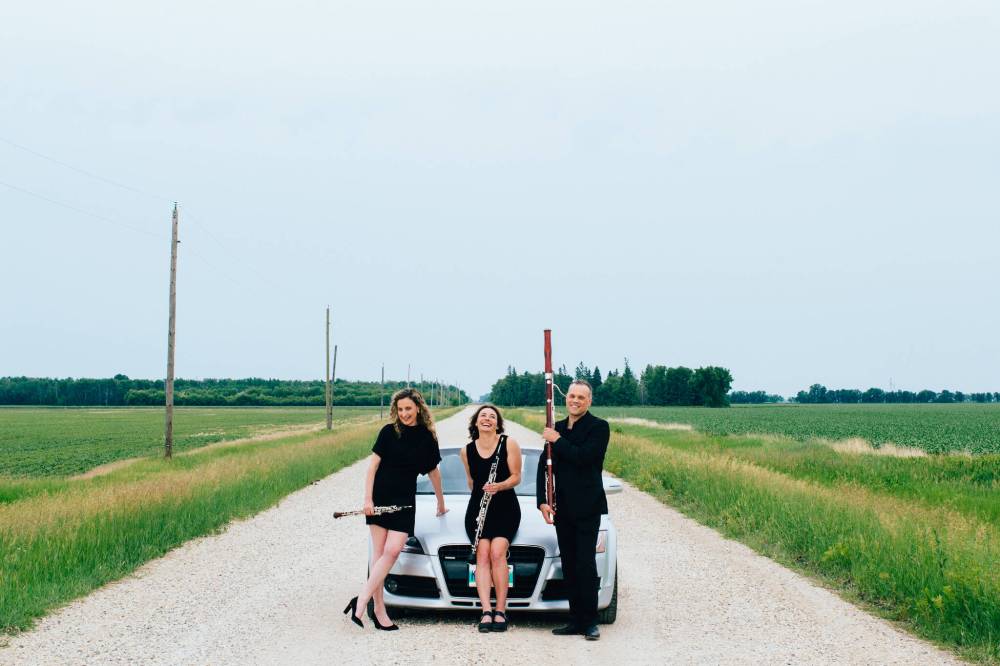
This year, the trio — oboist Caitlin Broms-Jacobs, English hornist Tracy Wright and bassoonist Allen Harrington — released a new record featuring Broms-Jacobs’ interpretation of Bach’s Goldberg Variations, written originally for harpsichord. In some ways, Tacamis goes a step further than even Gould in modernizing him.
In today’s pop music, we generally hear a melody, usually sung, against a chord progression. Baroque composers worked differently — treating each note as an independent musical voice with its own melodic logic. Chord changes emerge as harmonies from interlocking melodies, helping to give baroque music the Escher-like intricacies for which it’s known.
“You have these incredibly ornate structures that are still awe-inspiring all these years later because you think about the detail and mastery that had to go into (them),” Kehler says.
Tacamis lets the details of Bach’s keyboard works shine by letting individual melodies breathe independently on contrasting instruments such as the modern bassoon, oboe and English horn.
Even if few musicians today write in the strict grammar of the baroque, many of pop’s greatest songwriters — the Beatles, Paul Simon, Nina Simone — have woven melodies that intuitively or deliberately echo baroque ideas.
For Kehler, these elements, rendered faithfully or reinterpreted by strong performers, speak to the era’s enduring appeal.
“I think that authenticity of intentionality makes this music remain relevant for people on whatever level they want to engage at (and) they can tell that there is a sincerity from the performance,” he says.
For a full list of performances and tickets, click here.
winnipegfreepress.com/conradsweatman
Conrad Sweatman is an arts reporter and feature writer. Before joining the Free Press full-time in 2024, he worked in the U.K. and Canadian cultural sectors and freelanced for outlets including The Walrus, VICE and Prairie Fire. Read more about Conrad.
Our newsroom depends on a growing audience of readers to power our journalism. If you are not a paid reader, please consider becoming a subscriber.
Our newsroom depends on its audience of readers to power our journalism. Thank you for your support.
Festival preview
Winnipeg Baroque Festival
- Various venues
- Until April 18
- Tickets available online
Conrad Sweatman is an arts reporter and feature writer. Before joining the Free Press full-time in 2024, he worked in the U.K. and Canadian cultural sectors and freelanced for outlets including The Walrus, VICE and Prairie Fire. Read more about Conrad.
Our newsroom depends on a growing audience of readers to power our journalism. If you are not a paid reader, please consider becoming a subscriber.
Our newsroom depends on its audience of readers to power our journalism. Thank you for your support.
Advertisement Advertise With Us
Advertisement Advertise With Us