

Parallel lines
Two plights unfold, two stories told in new Martel novel

Advertisement
Read this article for free:
or
Already have an account? Log in here »
To continue reading, please subscribe:
Digital Subscription
One year of digital access for only $1.44 a week*
- Enjoy unlimited reading on winnipegfreepress.com
- Read the E-Edition, our digital replica newspaper
- Access News Break, our award-winning app
- Play interactive puzzles
*Billed as $5.77 plus GST every four weeks. After 52 weeks, price increases to the regular rate of $19.95 plus GST every four weeks. Offer available to new and qualified returning subscribers only. Cancel any time.
To continue reading, please subscribe:
Add Free Press access to your Brandon Sun subscription for only an additional
$1 for the first 4 weeks*
- Enjoy unlimited reading on winnipegfreepress.com
- Read the E-Edition, our digital replica newspaper
- Access News Break, our award-winning app
- Play interactive puzzles
*Your next Brandon Sun subscription payment will increase by $1.00 and you will be charged $17.95 plus GST for four weeks. After four weeks, your payment will increase to $24.95 plus GST every four weeks.
Read unlimited articles for free today:
or
Already have an account? Log in here »
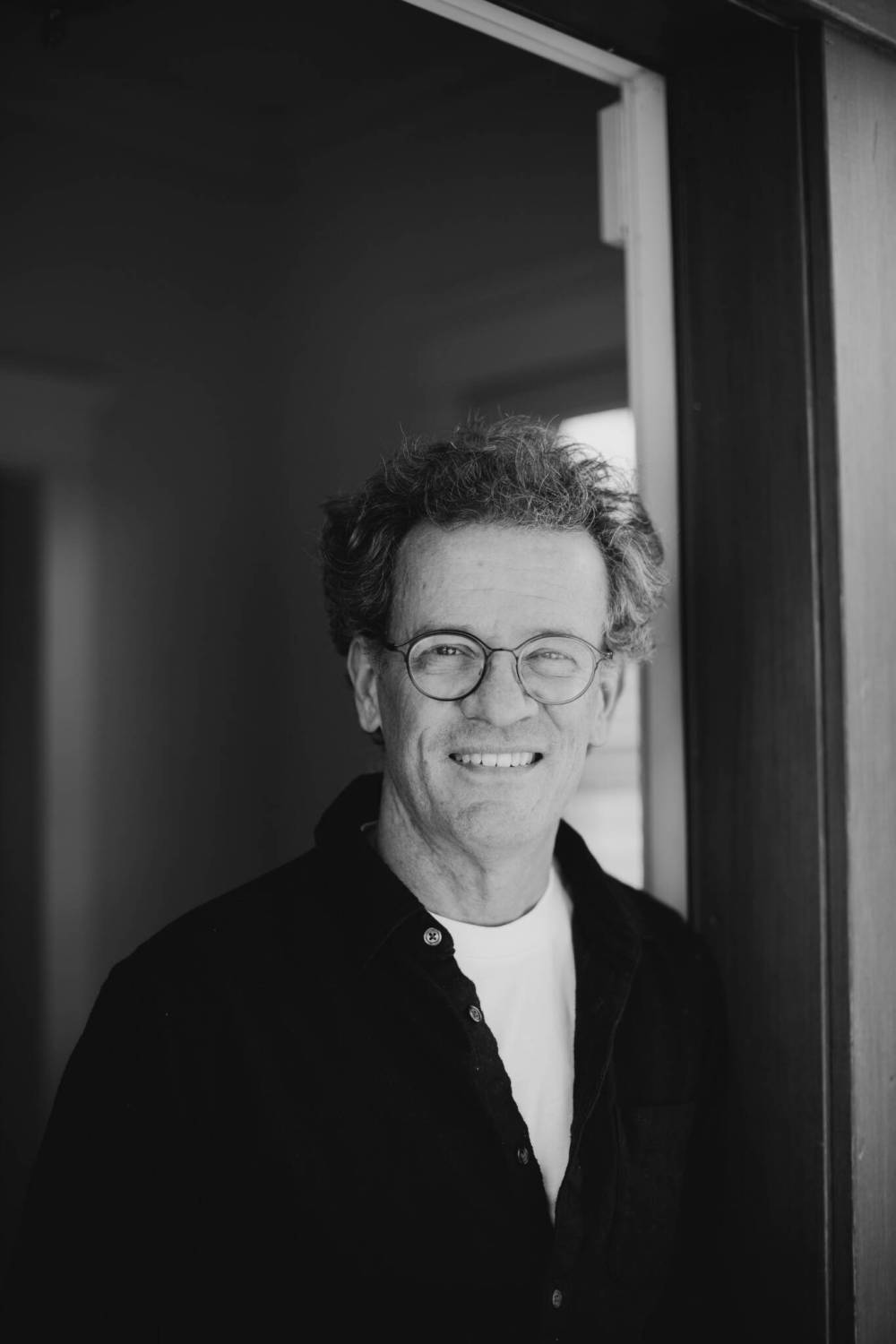
It’s been 10 years since Yann Martel’s last book, The High Mountains of Portugal, hit bookstore shelves, and 25 since Life of Pi, his breakout novel which sold millions of copies and was made into an Oscar-winning film (and stage production). The Spanish-born, Saskatoon-based author’s new novel, Son of Nobody, which was published March 31, is just his fifth book since Life of Pi.
A new book by the 62-year-old Martel, in other words, is an event. In Winnipeg, that event takes place Tuesday at 7 p.m. at McNally Robinson Booksellers’ Grant Park location, where Martel will read from and discuss Son of Nobody.
Martel’s latest offers two storylines sharing the pages, spanning continents and millennia but bound by the plight of its two main characters.
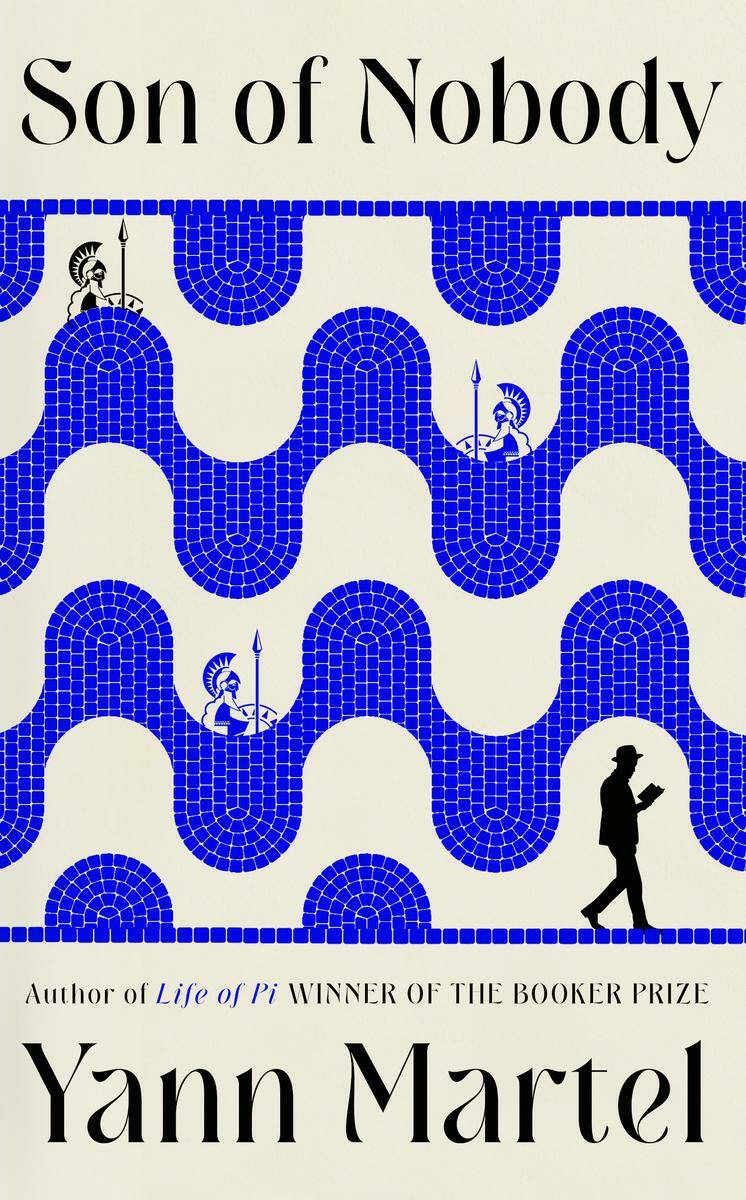
Harlow Donne is an academic from the Canadian Prairies who specializes in Greek translation and lands a scholarship at Oxford. He discovers an ancient text about a man named Psoas, a Greek foot soldier in the Trojan War (and constantly referred to as “son of nobody”), which he translates and names The Psoad. That epic poem takes up the top half of the pages of Martel’s latest.
Pages are split in half by a horizontal line running through the middle; the bottom half is taken up by footnotes, which offer historical insight into the Trojan War and Homer’s works, as well as a window into Harlow’s disintegrating marriage and his yearning to see his daughter Helen.
The idea for Son of Nobody came shortly after the publication of The High Mountains of Portugal, when Martel’s wife, author Alice Kuipers, suggested he read Homer’s The Iliad.
“It wasn’t what I expected,” says Martel from Toronto, where he had just landed after book launches in the U.S. and U.K. “Unlike other books where you read them, they might stay with you, but it doesn’t mean you pick up a pen. I just started getting ideas right away — the question was if I could do something with them.”
Martel was surprised by the anger that runs through Homer’s epic poem.
“The first word of The Iliad is ‘rage’ — I knew it was about anger, but I didn’t realize it was so focused on that single emotion of anger and its consequences,” he says.
In doing research while writing Son of Nobody, Martel visited Troy, in what is now Turkey, and was surprised how uninspiring the site is today versus how it is portrayed in Homer’s works.
“You don’t want to meet your heroes … you don’t want the material reality,” he says. “One of the points of these mythical stories is that they are myths, and so they should remain myths because then they speak to you and they’re malleable.
“Troy is a dumpy place, with little worn bricks — no height. It’s nearly laughable, and yet it is the birthplace of this legendary city in story.”
Writing The Psoad portion of Son of Nobody saw Martel working in the style of the Greek classics, albeit outside of dactylic hexameter, the typical poetic meter of texts such as The Iliad and The Odyssey.
“I’m a writer that’s attached to syntax, punctuation, sentence and ultimately meaning, not rhythm — I guess, in that sense, I announce myself as a non-poet,” he says, laughing. “To me, the music of a language is a music of meaning. And I guess the music of sound, but in the sense of things like alliteration, the actual sounds of the words, not necessarily their metrical musicality — which, to be honest, I’m totally tone deaf to.
“That’s why The Psoad is free verse, although I’ve limited myself to 10 to 12 syllables — no line is fewer than 10, no more than 12.”
For Martel, writing within those constraints proved invigorating — particularly once the split-page structure with the footnotes at the bottom took shape.
Son of Nobody
“In some ways the restrictions were actually freeing. The conventional way of telling the story would have been full-page prose with the present invoking the past on a platter,” he says. “Harlow invoking The Psoad at his convenience in flashbacks or something would be really tiresome. Splitting up the page right away gave the past its own space. I could comment on Homer and comment on The Psoad and then have Harlow talk about his life in dialogue, and that could be side by side, cheek by jowl.”
As the book progresses, the similarities between the plight of Psoas and Harlow become ever clearer. “I wanted to parallel the present. And what better parallel for a war than a couple falling apart? In a sense, Harlow looks at the disaster of Troy, and it echoes the disaster in his own life,” Martel says.
And while the footnotes dominate at the outset of the book, they become more sparse as Son of Nobody progresses, with The Psoad taking over in longer, deeper stretches.
“Initially it’s about Harlow, not necessarily in a positive way — right away, he’s accounting for difficulties with his wife, he’s missing Helen, but nonetheless there’s this purpose,” he says. “But then I wanted The Psoad to assert itself, so the passages get longer — Harlow’s disintegrating life gets shorter and shorter shrift in the footnotes.

“I wanted the past to reassert itself: ‘Hey, we’re still here, and you still are children of us. You can’t forget us, and you will eventually become us.’ A footnote will eventually become the narrative upstairs.”
Martel sees stories such as Homer’s epic poems persevering in a way more fact-based historical texts rarely do, the powerful nature of these fictions gripping each reader differently.
“The Psoad is a fiction I created, but so was Homer’s The Iliad. Myths tend to propagate, to spread, to talk, to echo. That’s their very nature, unlike history, which can be forgotten, literally entirely. Entire civilizations have no history, and others get forgotten because there are so many stories.
“As I say in the book, we’re all footnotes to a greater story.”
winnipegfreepress.com/bensigurdson
Ben Sigurdson
Literary editor, drinks writer
Ben Sigurdson is the Free Press‘s literary editor and drinks writer. He graduated with a master of arts degree in English from the University of Manitoba in 2005, the same year he began writing Uncorked, the weekly Free Press drinks column. He joined the Free Press full time in 2013 as a copy editor before being appointed literary editor in 2014. Read more about Ben.
In addition to providing opinions and analysis on wine and drinks, Ben oversees a team of freelance book reviewers and produces content for the arts and life section, all of which is reviewed by the Free Press’s editing team before being posted online or published in print. It’s part of the Free Press‘s tradition, since 1872, of producing reliable independent journalism. Read more about Free Press’s history and mandate, and learn how our newsroom operates.
Our newsroom depends on a growing audience of readers to power our journalism. If you are not a paid reader, please consider becoming a subscriber.
Our newsroom depends on its audience of readers to power our journalism. Thank you for your support.
Event preview
An evening with Yann Martel
- Reading from and discussing Son of Nobody
- McNally Robinson Booksellers, 1120 Grant Ave.
- Tuesday, 7 p.m.
- Free
Ben Sigurdson
Literary editor, drinks writer
Ben Sigurdson is the Free Press‘s literary editor and drinks writer. He graduated with a master of arts degree in English from the University of Manitoba in 2005, the same year he began writing Uncorked, the weekly Free Press drinks column. He joined the Free Press full time in 2013 as a copy editor before being appointed literary editor in 2014. Read more about Ben.
In addition to providing opinions and analysis on wine and drinks, Ben oversees a team of freelance book reviewers and produces content for the arts and life section, all of which is reviewed by the Free Press’s editing team before being posted online or published in print. It’s part of the Free Press‘s tradition, since 1872, of producing reliable independent journalism. Read more about Free Press’s history and mandate, and learn how our newsroom operates.
Our newsroom depends on a growing audience of readers to power our journalism. If you are not a paid reader, please consider becoming a subscriber.
Our newsroom depends on its audience of readers to power our journalism. Thank you for your support.
Advertisement Advertise With Us
Advertisement Advertise With Us
History
Updated on Monday, April 13, 2026 8:58 AM CDT: Corrects date of event