Stirring oratorio pays homage to Indigenous veterans

Advertisement
Read this article for free:
or
Already have an account? Log in here »
To continue reading, please subscribe:

Digital Subscription
One year of digital access for only $205*
- Enjoy unlimited reading on winnipegfreepress.com
- Read the E-Edition, our digital replica newspaper
- Access News Break, our award-winning app
- Play interactive puzzles
*First annual payment billed as $205.00 + GST for one year. This annual subscription will automatically renew at $233.00 + GST every 52 weeks (10% off the regular annual price of $259.35). Offer available to new and qualified returning subscribers only. Cancel any time.
To continue reading, please subscribe:
Add Free Press access to your Brandon Sun subscription for only an additional
$1 for the first 4 weeks*
- Enjoy unlimited reading on winnipegfreepress.com
- Read the E-Edition, our digital replica newspaper
- Access News Break, our award-winning app
- Play interactive puzzles
*Your next Brandon Sun subscription payment will increase by $1.00 and you will be charged $17.95 plus GST for four weeks. After four weeks, your payment will increase to $24.95 plus GST every four weeks.
Read unlimited articles for free today:
or
Already have an account? Log in here »
‘My war wasn’t in Europe. My war was when I came back to Canada and I couldn’t vote until 1962,” says composer Andrew Balfour.
He’s paraphrasing a quote by an Indigenous veteran and the inspiration for his oratorio notinikew (i went to war).
Its soaring choral and orchestral soundscapes have been captured by Dead of Winter on a new record, which was launched in the Manitoba Legislative Building’s neo-classical Rotunda on Wednesday, hosted by MLA David Pankratz, Special Envoy for Military Affairs.
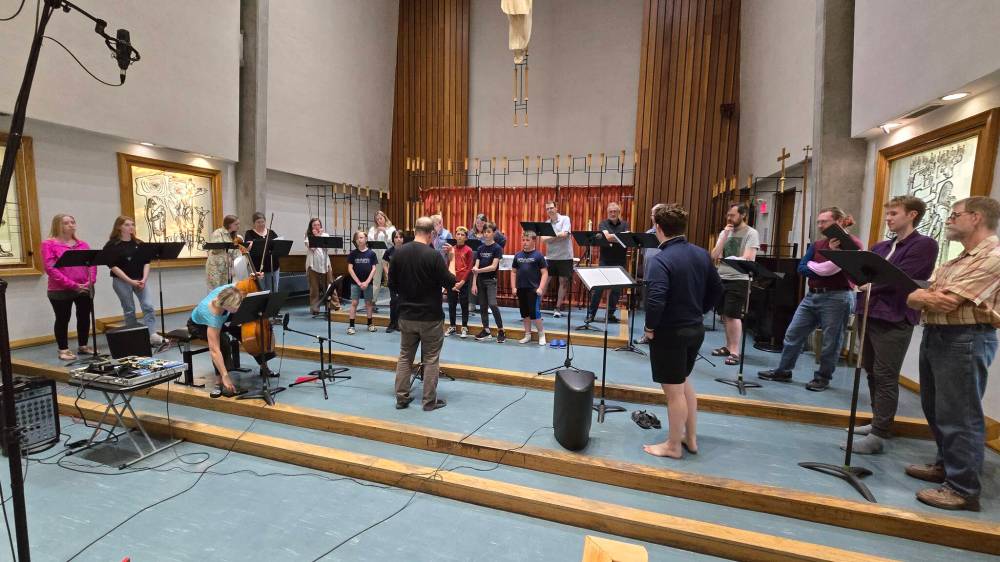
Photo from Dead of Winter
Notinikew (i went to war) was recorded by Dead of Winter with members of the Winnipeg Boys’ Choir at the Chapel of St. John the Evangelist, St. John’s College, at the University of Manitoba.
A central narrative voice in notinikew is an Indigenous sniper, based on an actual man from Norway House who ultimately found himself in France’s killing fields during the First World War.
“During the first two years of the First World War, the British wouldn’t take anybody of colour, but then when they were losing men so badly they thought, ‘Well, why not? Indigenous people, they’re good at hunting,’” says Balfour, co-artistic director of Dead of Winter alongside Mel Braun, who heads the University of Manitoba’s choral music program.
The record was recorded over three days with 14 singers at the U of M with a chamber ensemble, notably cellist Leanne Zacharias, who Balfour credits as a co-creator of the work.
“The other thing that fascinated me when I did research: you talk to (almost) any white soldier and if they ever fought with an Indigenous soldier, they were brothers,” says Balfour, speaking from Montreal, where he was collaborating with Studio de musique ancienne.
While Balfour describes notinikew as antiwar, he said it’s an ode to the sacrifices of Indigenous veterans who, especially in the war against Nazism during the Second World War, defended freedoms, many of which they themselves did not enjoy back home.
It’s unsurprising such themes resonate with Balfour, whose life and career is inflected by related tensions.
The 58-year-old Cree artist cut his teeth musically as an Anglican choirboy in Winnipeg in the 1980s.
The Anglican boys choir systems in the United Kingdom and Canada are as well known for their sonic richness and strictness: from their intensive rehearsal schedules to their stiff sense of diction in the Queen’s English, at least of a Canadian approximation.
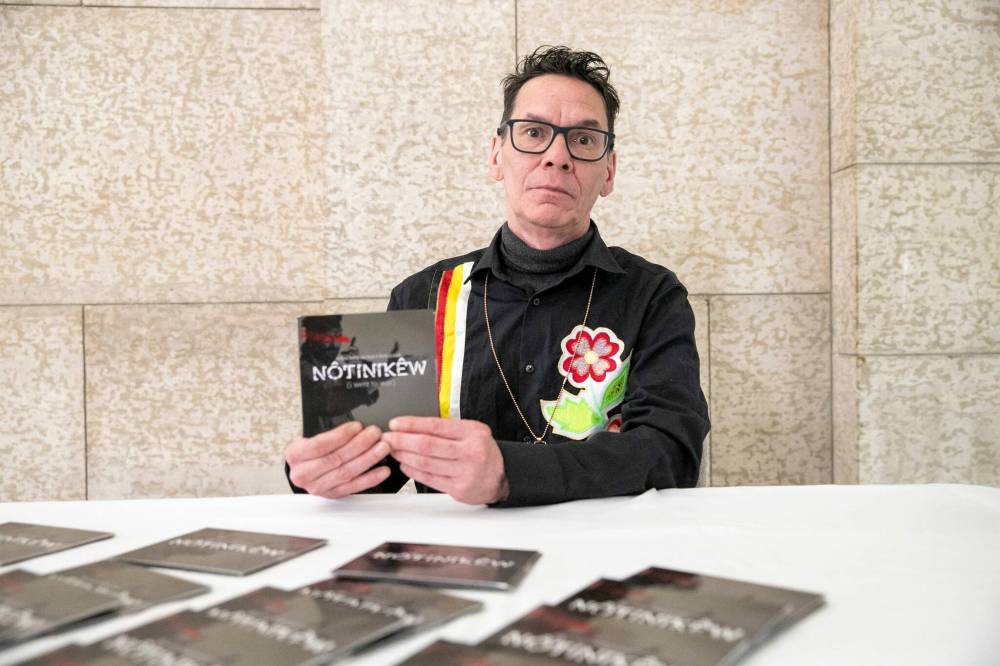
BROOK JONES / FREE PRESS
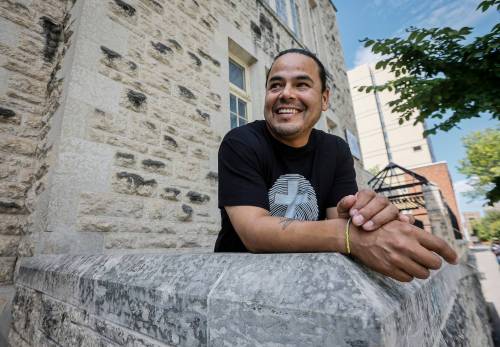
Composer Andrew Balfour holds Dead of Winter’s new album, released Wednesday at the legislative building.
Alumni of certain Winnipeg Anglican choirs can attest to hymn books being chucked at them by choirmasters and the peasant revolts by the boys that ensued. While Balfour can regale you with his own stories of youthful hijinks from his chorister days, he emphasizes how decisively this early experience moulded his musical interests.
Balfour later spent time as a musician in the Canadian Armed Forces, and in 2007 joined Dead of Winter (formed in 1996 as Camerata Nova), becoming its artistic director.
It was there he shaped the esthetic for which both he and Dead of Winter are known, blending early classical music, Indigenous influences and contemporary experimentation.
Unlike orchestras, choirs are almost always amateur outfits, and Dead of Winter’s earlier seasons charmingly reflected this — with their pop-friendly Christmas concerts, didgeridoos and sense of intonation that gradually found its centre.
But Balfour recalls the freedom this milieu gave him to hone his ideas and shape his ambitious oratarios, like notinikew.
“Orchestra (by contrast) is the least creative organization out there. They really don’t have the time to workshop things. (And) every major conductor of every major orchestra in Canada is non-Canadian, they don’t live in the community,” he says.
Talking to Balfour about the identity of both Canada and classical music today invites responses that sound a little like his music’s poignantly unresolved harmonies.

BROOK JONES / FREE PRESS
Dead of Winter choir members warm up before their performance.
He’s increasingly a darling of Canada’s early music scene, even if that scene’s emphasis on “historically informed practices” — with its strong loyalty to the original instruments and articulations of Renaissance and Baroque music — can feel conservative next to Balfour.
“Why do we always go to a museum and listen to museum pieces?” he asks.
His passion for early music is expressed through reimaginings across cultures, not literalism.
In March 2025, on his way to perform selections from his work Tapwe: Songs of Truth at Carnegie Hall in New York City, Balfour was denied entry into the United States and detained for several hours before being escorted by armed guards onto a plane headed back to Canada.
“I don’t think it was about being Indigenous,” he said of the ordeal at the time.
Nevertheless, this rattling experience made him reflective during Canada’s early moments of Elbow’s Up.

“I still call myself a Canadian, and I’m still thankful in a lot of ways. What I (envision) is a Canada that I want to live in. I see thousands of singers who want to sing in Cree, that say, ‘Tell me about your teachings,’” he says.
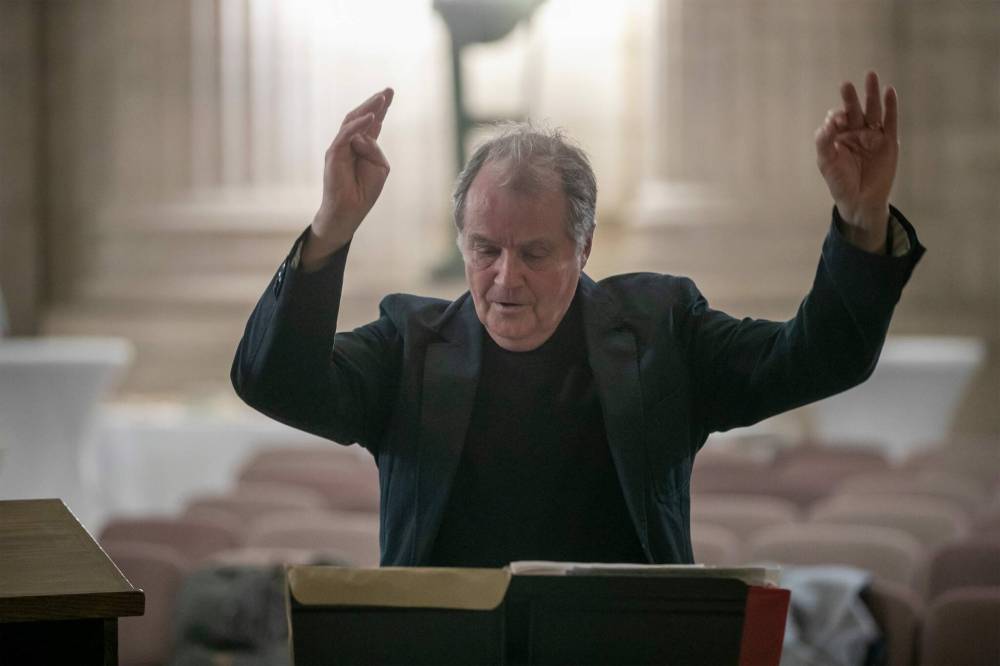
bROOK JONES / FREE PRESS
Dead of Winter conductor Mel Braun leads a vocal warm-up before the choir’s presentation of notinikew (i went to war).
Balfour says he had this experience recording notinikew, which blends English and Indigenous text. While notinikew evokes Indigenous soldiers fighting for recognition of their rights and identities, Balfour finds a little grace and humour in seeing singers of European descent grapple with reconciliation through something as basic as getting pronunciation right.
“The way I would think about it: (Canada is) unfinished,” he says.
“Cory Campbell, who’s one of the song keepers, he said, ‘We’re all Anishinaabeg, two-legged creatures in our land. We don’t have any anthems, we don’t have any borders, we don’t have any colours. We’re just two-leggeds.’”
winnipegfreepress.com/conradsweatman
Conrad Sweatman is an arts reporter and feature writer. Before joining the Free Press full-time in 2024, he worked in the U.K. and Canadian cultural sectors, freelanced for outlets including The Walrus, VICE and Prairie Fire. Read more about Conrad.
Our newsroom depends on a growing audience of readers to power our journalism. If you are not a paid reader, please consider becoming a subscriber.
Our newsroom depends on its audience of readers to power our journalism. Thank you for your support.
Conrad Sweatman is an arts reporter and feature writer. Before joining the Free Press full-time in 2024, he worked in the U.K. and Canadian cultural sectors, freelanced for outlets including The Walrus, VICE and Prairie Fire. Read more about Conrad.
Our newsroom depends on a growing audience of readers to power our journalism. If you are not a paid reader, please consider becoming a subscriber.
Our newsroom depends on its audience of readers to power our journalism. Thank you for your support.
Advertisement Advertise With Us
Advertisement Advertise With Us