David Allan Coe, who wrote ‘Take This Job and Shove It’ and other country hits, dies at 86
Advertisement
Read this article for free:
or
Already have an account? Log in here »
To continue reading, please subscribe:

Digital Subscription
One year of digital access for only $205*
- Enjoy unlimited reading on winnipegfreepress.com
- Read the E-Edition, our digital replica newspaper
- Access News Break, our award-winning app
- Play interactive puzzles
*First annual payment billed as $205.00 + GST for one year. This annual subscription will automatically renew at $233.00 + GST every 52 weeks (10% off the regular annual price of $259.35). Offer available to new and qualified returning subscribers only. Cancel any time.
To continue reading, please subscribe:
Add Free Press access to your Brandon Sun subscription for only an additional
$1 for the first 4 weeks*
- Enjoy unlimited reading on winnipegfreepress.com
- Read the E-Edition, our digital replica newspaper
- Access News Break, our award-winning app
- Play interactive puzzles
*Your next Brandon Sun subscription payment will increase by $1.00 and you will be charged $17.95 plus GST for four weeks. After four weeks, your payment will increase to $24.95 plus GST every four weeks.
Read unlimited articles for free today:
or
Already have an account? Log in here »
David Allan Coe, the country singer-songwriter who wrote the working-class anthem “Take This Job and Shove It″ and had hits with “Mona Lisa Lost Her Smile” and “The Ride” among others, has died. He was 86.
Coe’s wife, Kimberly Hastings Coe, confirmed his death to Rolling Stone on Wednesday.
She described him as one of the best singers and songwriters of our time.
“My husband, my friend, my confidant and my life for many years. I’ll never forget him and I don’t want anyone else to ever forget him either,” she wrote to the publication.
A statement from a Coe representative to People said he died around 5 p.m. Wednesday. The cause of death wasn’t disclosed.
Whether he was labeled outlaw or underground, Coe was clearly an outsider in Nashville’s music establishment, even throughout his successes as an in-demand songwriter and singer, eventually developing a core following around his raw, often obscene lyrics and a checkered, somewhat mysterious past.
His wife posted on Facebook in September 2021 that he had been hospitalized with COVID-19, and he made few appearances after that.
Coe toured over the years with Willie Nelson, Kid Rock, Neil Young and others. He wrote “Take This Job and Shove It,” a hit by Johnny Paycheck in 1977, and “Would You Lay With Me (in a Field of Stone),” a hit by Tanya Tucker in 1974. He was also the first country singer to record “Tennessee Whiskey,” penned by Dean Dillon and Linda Hargrove, which has since become a genre standard and a hit for both George Jones and Chris Stapleton.
Coe also appeared in a handful of movies, including “Stagecoach” and “Take this Job and Shove It,” which was named after his song.
“Spent so much time with David over the years, touring, writing songs and just hanging out,” Kid Rock wrote Thursday on X. “I knew a side of Dave most people never got to see. He was such a deep thinker, kind and about as real as an outlaw can get!”
Coe, born in Akron, Ohio, spent time in reformatories as a youngster and served time in an Ohio prison from 1963 to 1967 for possession of burglary tools. He also said he spent time with the Outlaws motorcycle club, but some tales about his prison time and his personal life have been wildly exaggerated over the years.
“I’d have never made it through prison without my music,” he said in a 1983 interview with The Associated Press. “No one could take it (music) away from me. They could put me in the hole with nothing to do, but I could still make up a song in my head.”
He recorded his first album, a blues album called “Penitentiary Blues,” using songs he wrote in prison. He later told reporters that he tried not to lean too heavily on prison as a song topic because of similarities to Merle Haggard’s backstory, but that his criminal history was all people seemed interested in.
Coe recorded next for Columbia Records and made the album “The Mysterious Rhinestone Cowboy,” which became his nickname after he performed in a rhinestone suit while wearing a mask.
In his debut at the Grand Ole Opry in Nashville, Coe performed “Get a Little Dirt on Your Hands” and “You Never Even Called Me By My Name.”
During the outlaw movement heyday, Coe placed himself at the center of the scene with songs like “Longhaired Redneck,” which featured lyrics about performing in dive bars, “where bikers stare at cowboys who are laughing at the hippies who are praying they’ll get out of here alive.”
He was featured in the acclaimed documentary about the outlaw country movement called “Heartworn Highways,” in which he performed a concert at a Tennessee prison.
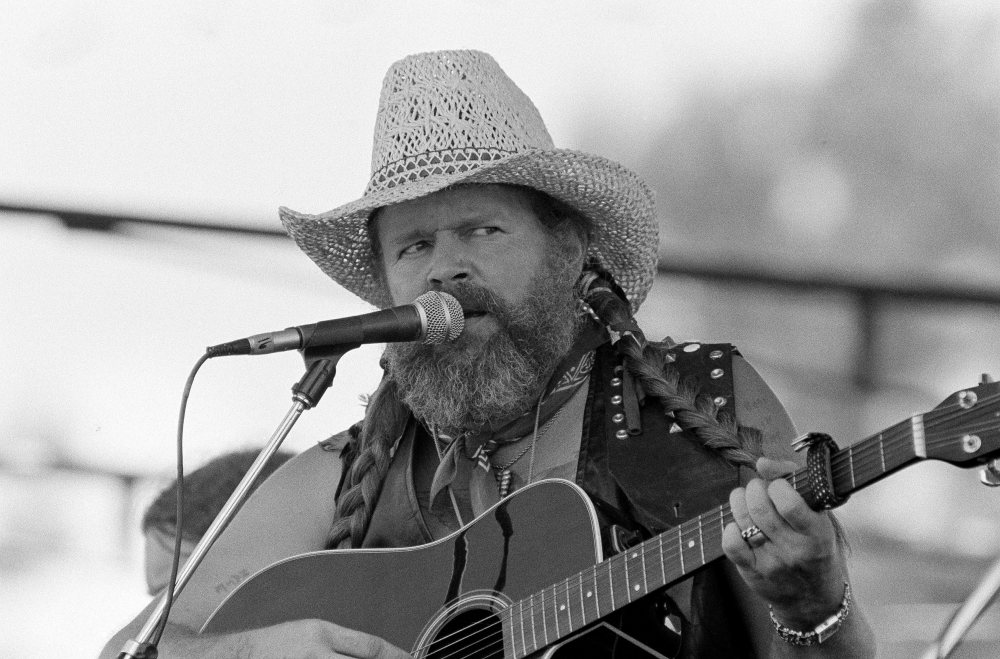
Coe, himself heavily tattooed and sporting long hair, claimed a diverse fan base that included bikers, doctors, lawyers and bankers. His last record, released in 2006, was a collaboration with Dimebag Darrell and other former members of the heavy metal group Pantera.
He released two R-rated albums, 1978′s “Nothing Sacred” and 1982′s “Underground Album,” that he sold via biker magazines. The songs on these albums have been criticized for being racist, homophobic and sexually explicit. He told “Billboard” magazine in 2001 that author and songwriter Shel Silverstein convinced him to record the songs he had written, something he had come to regret.
“Those were meant to be sung around the campfire for bikers, and I still don’t sing those songs in concert,” he said.
David Wade, a friend who worked on several projects with Coe, said the singer wanted people to be talking about him.
“He always said any press is good press,” said Wade, who runs music management company Neon Deuce.
They met in 1988 and Wade said he began working occasionally with Coe in 1996. Wade said a close family friend of Coe’s told him of the singer’s death.

“I learned a lot from David,” Wade said of Coe. “He was very complicated. I never found him to be racist. I never found him to be any of those things.”
They collaborated on a documentary about Coe that’s still in the works, according to Wade, who said he’s producing it along with actor Johnny Knoxville.
“David did hours of interviews for it,” Wade added. “It all comes down to money and getting the rights and clearances and everything for the songs.”
The documentary looks at Coe “being in prison, to being a biker gang member to being a songwriter,” Wade said.
In 2016, Coe was ordered to pay the IRS more than $980,000 in restitution for obstructing the tax agency and was sentenced to three years’ probation. Court documents say Coe earned income from at least 100 concerts yearly from 2008 through 2013 and either didn’t file individual income tax returns or pay taxes when he did file.