Exhibition reveals buttons contain beautiful, tiny histories
Read this article for free:
or
Already have an account? Log in here »
To continue reading, please subscribe:
Digital Subscription
One year of digital access for only $1.44 a week*
- Enjoy unlimited reading on winnipegfreepress.com
- Read the E-Edition, our digital replica newspaper
- Access News Break, our award-winning app
- Play interactive puzzles
*Billed as $5.77 plus GST every four weeks. After 52 weeks, price increases to the regular rate of $19.95 plus GST every four weeks. Offer available to new and qualified returning subscribers only. Cancel any time.
To continue reading, please subscribe:
Add Free Press access to your Brandon Sun subscription for only an additional
$1 for the first 4 weeks*
- Enjoy unlimited reading on winnipegfreepress.com
- Read the E-Edition, our digital replica newspaper
- Access News Break, our award-winning app
- Play interactive puzzles
*Your next Brandon Sun subscription payment will increase by $1.00 and you will be charged $17.95 plus GST for four weeks. After four weeks, your payment will increase to $24.95 plus GST every four weeks.
Read unlimited articles for free today:
or
Already have an account? Log in here »
What Rose-Marie Sherwood doesn’t know about buttons isn’t worth knowing.
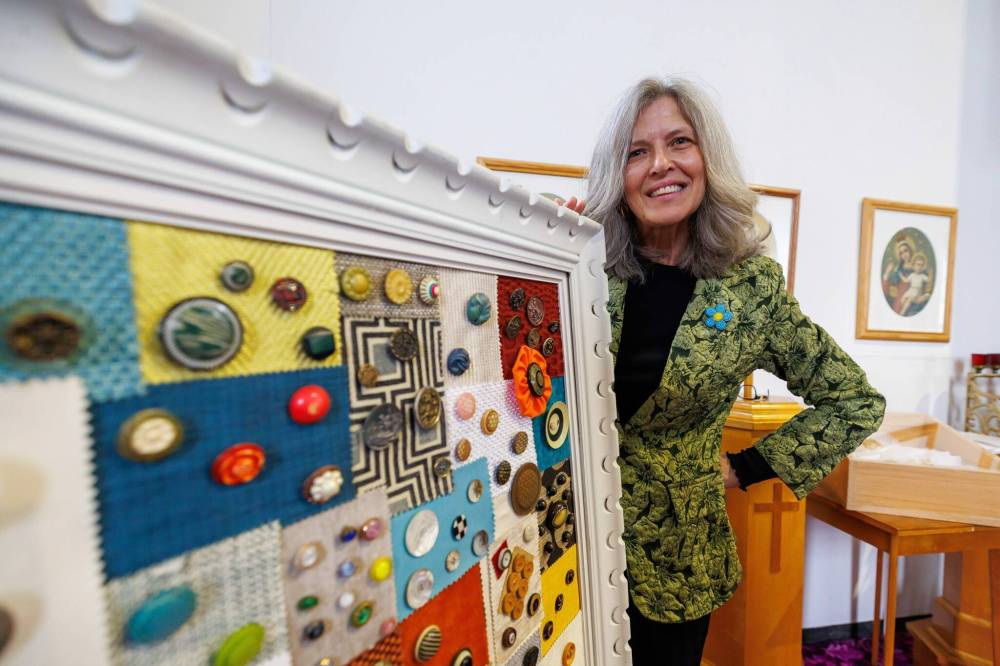
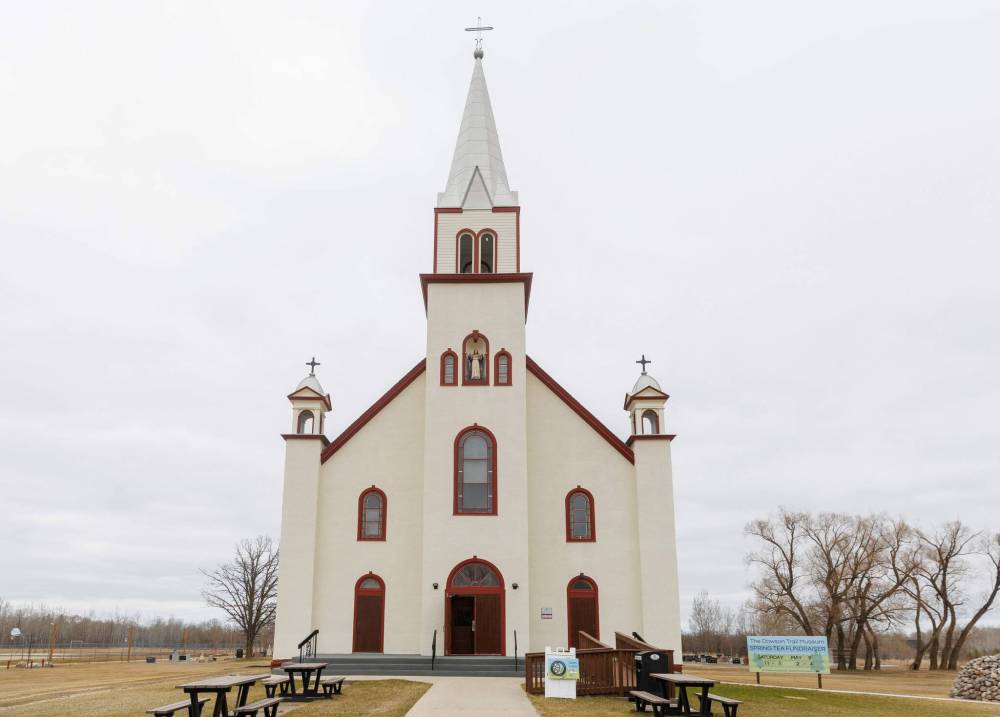
The Métis artist has spent nearly three decades amassing a collection of more than 30,000 buttons, some of which she’s incorporated in her art exhibit Small Objects, Big Stories, which runs until Sunday at the Dawson Trail Museum, a former Catholic church in Richer, about 30 minutes east of Winnipeg.
Sherwood considers buttons more than just parts of clothing — for her, these tiny objects carry far more weight.
MIKE DEAL / FREE PRESS
Rose-Marie Sherwood, with her button exhibition at the Dawson Trail Museum in Richer, started her collection with buttons from the Victorian and Edwardian eras.
When European settlers made their way across the Atlantic for the Americas, they were often restricted in what they could bring, arriving only with their garments and a small number of family heirlooms.
The buttons on their clothes became “silent passengers,” witnessing hardships and trying times, as well as good memories and joyful occasions.
“What I really want to do with my exhibit is make people stop and pay attention to what they have. It doesn’t have to be a button. Perhaps its something else that’s small, a tiny object that is representative of something much bigger,” she says.
Sherwood’s foray into the world of buttons began in 1994 after her neighbour Mary introduced Sherwood to her mother, Bertha Grosjean, an antique-store owner and passionate button collector.
Sherwood, a history enthusiast, was intrigued when she heard about Grosjean’s fascination with and deep knowledge of buttons. The collector taught her such tricks as how check the shank (the back of the button) to correctly discern its age.
MIKE DEAL / FREE PRESS
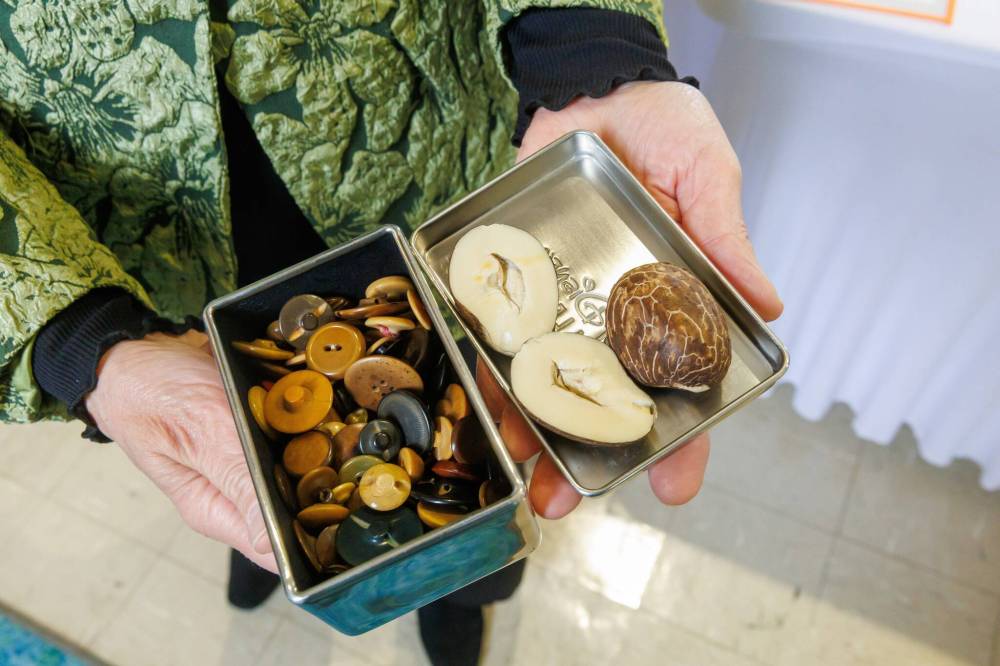
A tin of vegetable ivory buttons and a tagua nut, which is used to make them.
When Grosjean died in 1998, Sherwood was notified that she had inherited her extensive button documentation and reference materials. The meticulously handwritten notes were invaluable, written before the internet made such information easily accessible.
Sherwood’s desire to become a collector deepened, leading her to purchase a number of antique metal buttons from Grosjean’s daughter Mary.
“The buttons were from the Victorian and Edwardian era and formed the start of my very first collection. To this day buttons from that era are still my favourites,” Sherwood says.
In her studio, Sherwood is both collector and mixed media artist. She is a member of the National Button Society, which was founded in the United States in 1938, and categorizes her buttons based on the society’s classification guidelines.
Her buttons are grouped by the material they are made from — glass, metal, plastic and mother-of-pearl — and stored in glass jars, left unlidded not only for ease of access, but to prevent corrosion and “button disease.”
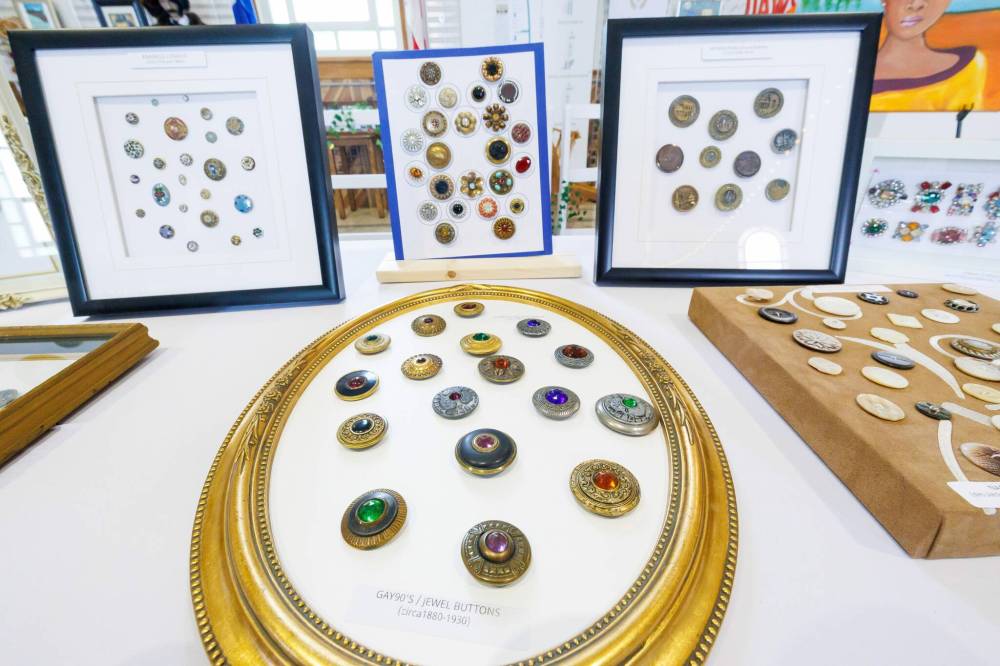
MIKE DEAL / FREE PRESS
A display of buttons from the 1700s to the early 1900s from Rose Marie Sherwood’s button exhibition the Dawson Trail Museum.
Some vintage plastic buttons, specifically those made from early plastics such as Bakelite and celluloid, can break down over time. If they are stored in airtight containers, the vapours they release can cause buttons to crack or crumble.
Sherwood’s walls are full of buttons hung in frames, works of art on their own. She also incorporates buttons into her paintings, carefully going through her collection to pick out ones she deems suitable.
Some are not destined to be part of her art; those revealing stories of history and identity, culture and creativity remain within the collection, but visually strong buttons often make their way into her paintings.
“When I create my mixed media, I paint my background first, and then I build my story around the buttons, they become character,” she says.
“Sometimes I may have a button that just has to be part of something bigger visually. That’s when I decide to put it with my painting.”
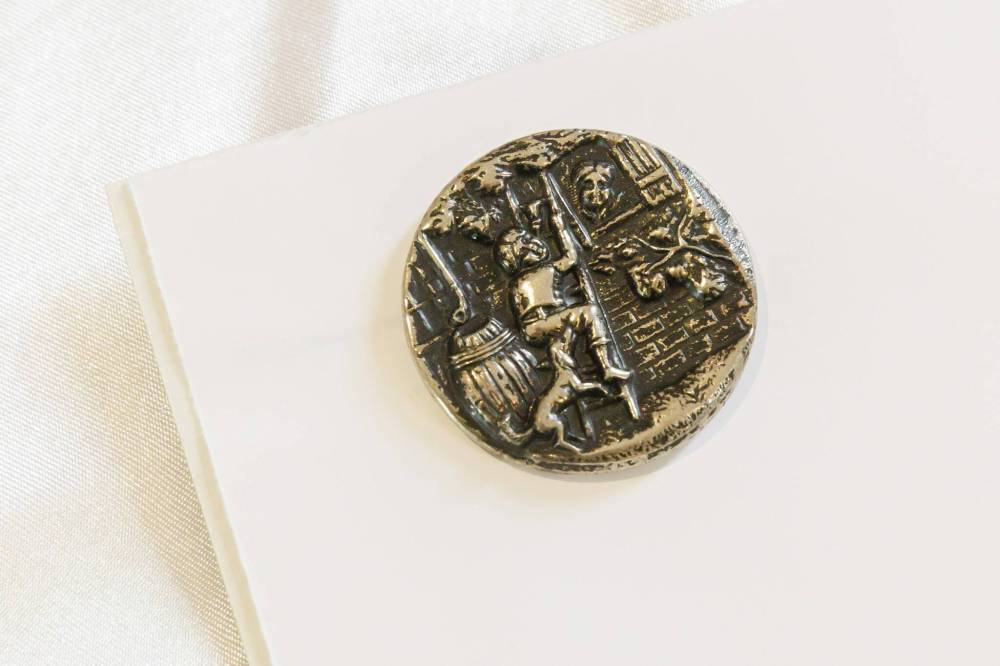
MIKE DEAL / FREE PRESS
Picture buttons have a story or theme.
winnipegfreepress.com/avkitching
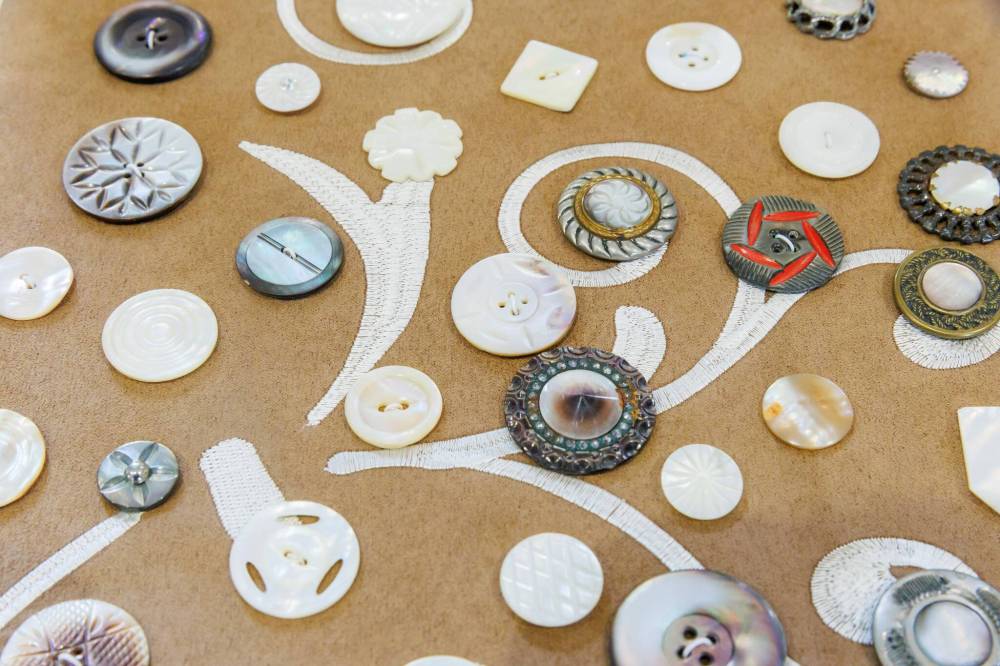
MIKE DEAL / FREE PRESS
Mother-of-pearl buttons, some from the 1890s
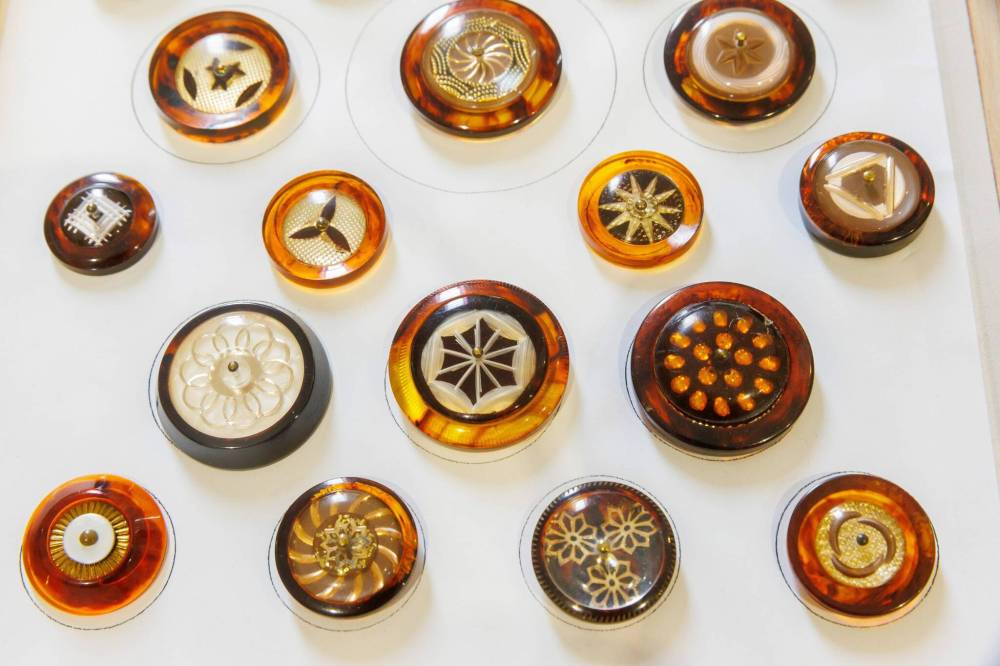
MIKE DEAL / FREE PRESS
Bakelite buttons have a beautiful amber glow.
MIKE DEAL / FREE PRESS
The Dawson Trail Museum was once a Catholic church in Richer.
MIKE DEAL / FREE PRESS
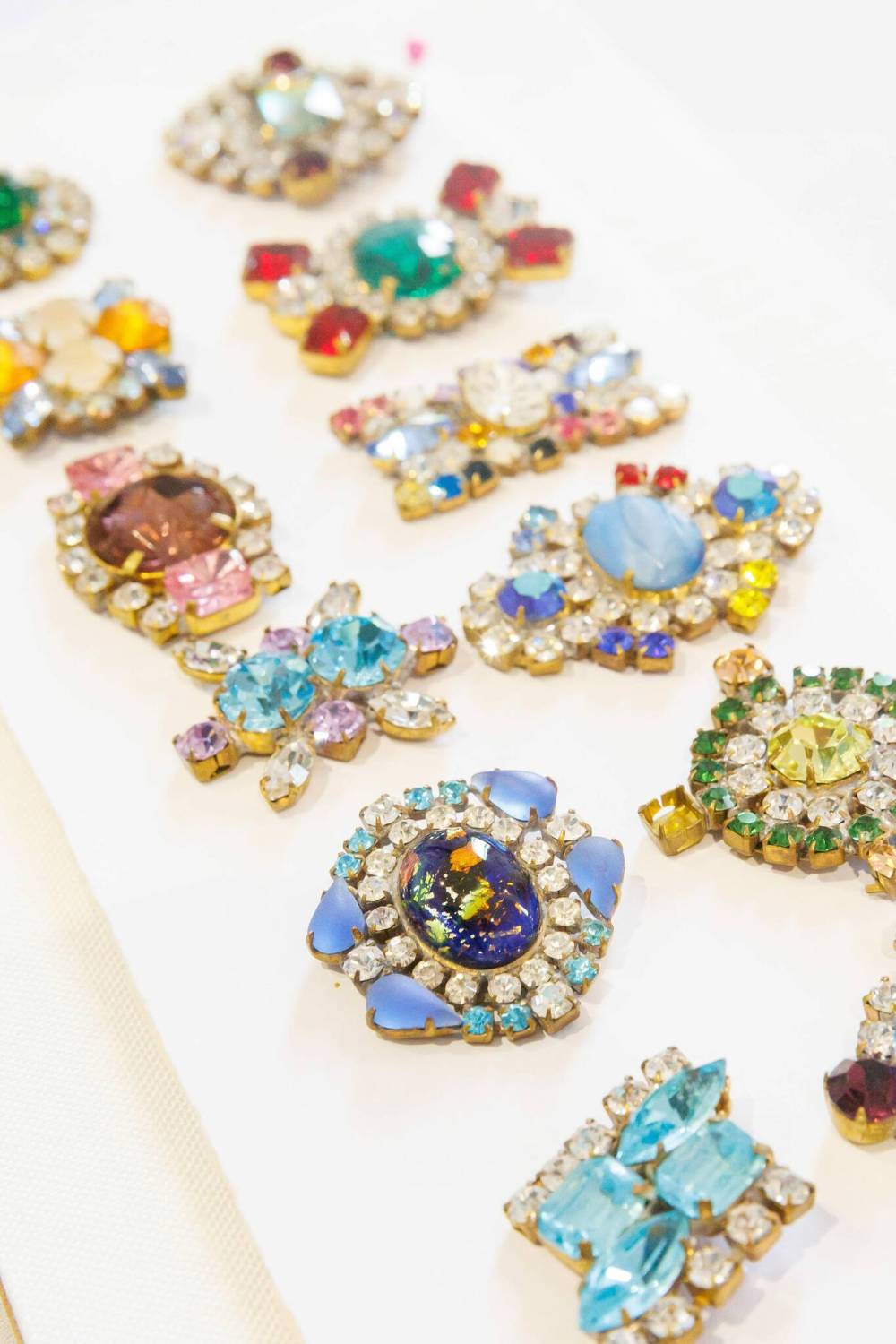
Czech rhinestone buttons from the early 19th century.
Exhibition preview
Small Object, Big Stories Button and Art Exhibit
● Dawson Trail Museum, 67 Dawson Rd., Richer
● Runs until Sunday
● Admission: $4 with a button, $5 without a button, free for children 9 and under
● Explore: What’s in your button jar
A hands-on story and material culture workshop
● May 14, 2:30-4:30 p.m. and 6.30-8 p.m.
● Learn how to identify button materials and styles and how to best preserve and care for buttons. Attendees are invited to bring along a meaningful button and share a memory behind it (optional).
● Admission $10. Register at 431-374-7139.

AV Kitching is an arts and life writer at the Free Press. She has been a journalist for more than two decades and has worked across three continents writing about people, travel, food, and fashion. Read more about AV.
Every piece of reporting AV produces is reviewed by an editing team before it is posted online or published in print — part of the Free Press‘s tradition, since 1872, of producing reliable independent journalism. Read more about Free Press’s history and mandate, and learn how our newsroom operates.
Our newsroom depends on a growing audience of readers to power our journalism. If you are not a paid reader, please consider becoming a subscriber.
Our newsroom depends on its audience of readers to power our journalism. Thank you for your support.