Family matters
Canadian drama Blue Heron gets meta in layered exploration of mental health

Advertisement
Read this article for free:
or
Already have an account? Log in here »
To continue reading, please subscribe:

Digital Subscription
One year of digital access for only $205*
- Enjoy unlimited reading on winnipegfreepress.com
- Read the E-Edition, our digital replica newspaper
- Access News Break, our award-winning app
- Play interactive puzzles
*First annual payment billed as $205.00 + GST for one year. This annual subscription will automatically renew at $233.00 + GST every 52 weeks (10% off the regular annual price of $259.35). Offer available to new and qualified returning subscribers only. Cancel any time.
To continue reading, please subscribe:
Add Free Press access to your Brandon Sun subscription for only an additional
$1 for the first 4 weeks*
- Enjoy unlimited reading on winnipegfreepress.com
- Read the E-Edition, our digital replica newspaper
- Access News Break, our award-winning app
- Play interactive puzzles
*Your next Brandon Sun subscription payment will increase by $1.00 and you will be charged $17.95 plus GST for four weeks. After four weeks, your payment will increase to $24.95 plus GST every four weeks.
Read unlimited articles for free today:
or
Already have an account? Log in here »
Delicate and devastating, this small Canadian drama starts with a voiceover narrative. A filmmaker (Amy Zimmer) speaks about the unreliability of childhood memory — how certain moments stand out with bright clarity while the larger context can be hazy.
She remembers her troubled older brother through images, through feelings, but as she has become older, she wonders what she might have misunderstood or missed.
Blue Heron, Toronto-based writer- director Sophy Romvari’s semi-autobiographical feature debut, becomes a layered investigation into family narratives and the elusive line between art and life. Excavating an often painful past, Romvari’s work is ambitious and quietly assured, but it maintains a frank humility in the face of difficult, perhaps unanswerable questions.
The film (in English, with some subtitled Hungarian) begins as an extended flashback to the 1990s as a Hungarian-Canadian family of six moves to Vancouver Island hoping for a fresh start.
Romvari doesn’t give us much explication. She just drops us into an immersive experience of what seems, at first, like an idyllic summer in a leafy green suburb.
There are kids playing in sprinklers, messing around at the beach and riding bikes along lanes. There is the hypnotized TV-watching of young children. Like the recent Icelandic film The Love That Remains, Blue Heron is incredibly good at catching the intimate rhythms and textures of everyday family life.
But even as eight-year-old Sasha (Eylul Guven) spends a lot of time doing regular kid stuff, we catch glimpses of her unhappy, isolated teenage brother, Jeremy (Edik Beddoes).
Wondering about Jeremy’s moods, waiting for the next explosion, noticing every little thing, Sasha becomes watchful, vigilant. Through her shooting style, Romvari suggests Sasha’s childhood has formed the adult filmmaker.
Fraught family dynamics are conveyed through overheard conversations and sounds in other rooms, through gestures and expressions seen from a distance as the camera moves cautiously around the family’s home and yard.
We follow the increasingly desperate parents (Iringo Reti and Adam Tompa) as they struggle to get help for their son, trying to sort out conflicting expert opinions about whether Jeremy is just “acting out” or whether he has a serious psychiatric disorder.
We see, again in brief glimpses, the strains in their marriage — though they can at least bond over their shared dislike of a particularly condescending child psychiatrist.
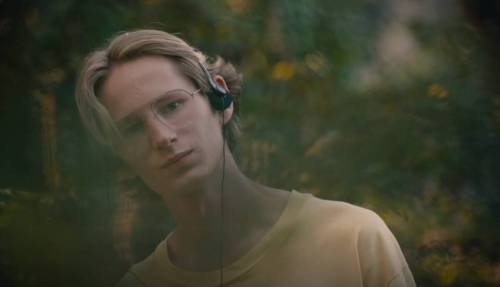
Looking at how Jeremy’s issues affect the whole family, Romvari relies on the understated work of her ensemble cast, getting unforced, naturalistic work from the child actors and particularly from Beddoes, who handles a challenging, almost wordless role with subtlety and restraint.
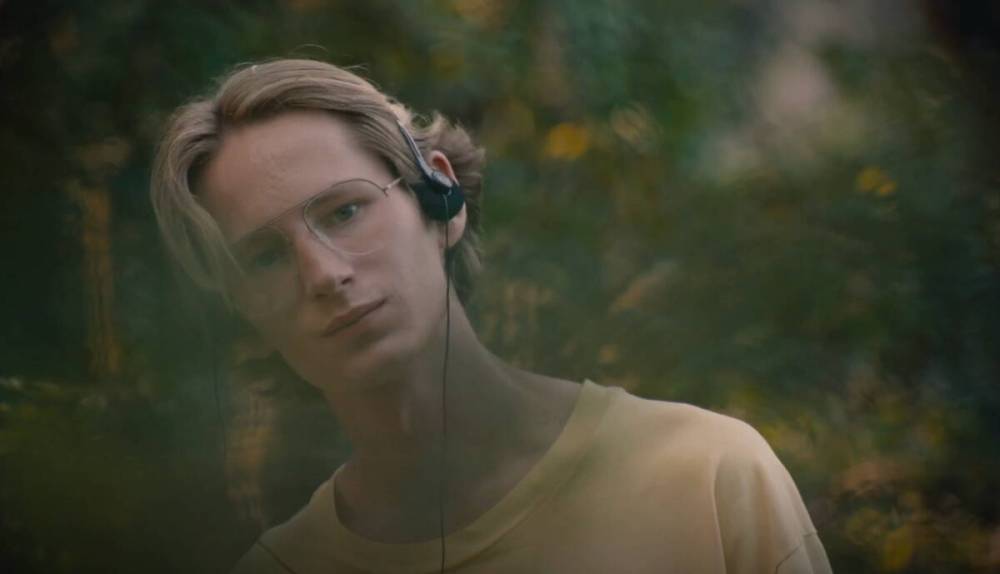
Janus Films
Edik Beddoes plays a troubled teen in the semi-autobiographical Blue Heron.

The film shifts suddenly at its midpoint to two decades ahead, becoming an even more experimental mix of truth and fiction. (This complexity has been foreshadowed by a scene of the kids watching that fantastic Canadian television PSA about “the North American House Hippo.” If you know, you know. If you don’t, you should Google it right now.)
The adult Sasha is now a documentarian attempting to reconstruct aspects of her childhood, trying to figure out how the system failed her brother and her family. She meets with social workers and medical people (played by real-life professionals).
The film becomes more and more meta, but this isn’t some clever, showoffy exercise. Rather, Blue Heron is constructed to evoke a poetic, poignant sense of the layered interactions of reality and representation, past and present, love and loss.
Ultimately, there are no pat answers here, just a clear-eyed vision of how we use art to give meaningful form to our grief, guilt and uncertainty. This is a hushed film that makes an important statement, marking Romvari as a filmmaker to watch.
winnipegfreepress.com/alisongillmor
Studying at the University of Winnipeg and later Toronto’s York University, Alison Gillmor planned to become an art historian. She ended up catching the journalism bug when she started as visual arts reviewer at the Winnipeg Free Press in 1992.
Our newsroom depends on a growing audience of readers to power our journalism. If you are not a paid reader, please consider becoming a subscriber.
Our newsroom depends on its audience of readers to power our journalism. Thank you for your support.
Movie review
Blue Heron
Starring: Amy Zimmer, Eylul Guven, Edik Beddoes
● Dave Barber Cinematheque, to May 24
● 90 minutes, PG
★★★★½ out of five
Other voices
This is a movie that gets under your skin and soaks its way into your soul without resorting to maudlin or melodramatic moments; it leaves its mark in under 90 minutes.
— Odie Henderson, Boston Globe
Romvari does an effective job of highlighting the fragility of our remembrances and how the actions from the past affect us to this day.
— Randy Myers, San Jose Mercury News
With very little dialogue and no cookie-cutter story beats, this fraught family life is vividly, tenderly rendered by Romvari and her naturalistic cast.
— Kimberley Jones, Austin Chronicle
Blue Heron becomes something truly masterful.
— Alison Willmore, New York Magazine
Studying at the University of Winnipeg and later Toronto’s York University, Alison Gillmor planned to become an art historian. She ended up catching the journalism bug when she started as visual arts reviewer at the Winnipeg Free Press in 1992.
Our newsroom depends on a growing audience of readers to power our journalism. If you are not a paid reader, please consider becoming a subscriber.
Our newsroom depends on its audience of readers to power our journalism. Thank you for your support.
Advertisement Advertise With Us
Advertisement Advertise With Us